对等关税

Search documents
为求关税减免,高市早苗送给美国730亿美元投资“大礼”
中国能源报· 2026-03-20 11:53
Group 1 - The core viewpoint of the article highlights the agreement between Japan and the U.S. during Prime Minister Suga's visit, which includes a $73 billion investment project aimed at easing tariff issues [1][2] - A significant part of the investment includes a $40 billion nuclear reactor project to be constructed in Tennessee and Alabama, along with a $33 billion investment in natural gas power facilities in Pennsylvania and Texas [1] - This investment is part of Japan's commitment to a larger $550 billion investment plan to gain tariff reductions from the U.S., which includes opening markets for various products [1] Group 2 - Following the U.S. Supreme Court ruling that invalidated the "reciprocal tariffs" policy of the Trump administration, Japan remains committed to fulfilling the $550 billion investment agreement to avoid escalating tensions with the U.S. [2]

特朗普“对等关税”从外战转为内战
财富FORTUNE· 2026-03-10 13:15
Core Viewpoint - The article discusses the legal and administrative challenges faced by the Trump administration regarding tariffs imposed under the International Emergency Economic Powers Act (IEEPA), particularly following a Supreme Court ruling that deemed such tariffs illegal [1][3]. Group 1: Legal Developments - The U.S. Supreme Court ruled 6-3 that the president's imposition of "reciprocal tariffs" under IEEPA was unlawful, which has intensified Trump's anger, leading him to announce new tariffs starting at 10% and later increasing to 15% [3]. - FedEx became the first major company to file a lawsuit for full tax refunds following the Supreme Court's ruling, while Costco had already initiated legal action in November 2022 [4]. - Judge Richard Eaton of the U.S. Court of International Trade stated he would be the sole judge to hear refund cases, indicating that the outcome could open channels for importers to seek refunds [6]. Group 2: Administrative Challenges - The Customs and Border Protection (CBP) has rejected urgent "Post-Entry Amendments" submitted by companies seeking refunds, and has suspended refund claims for settled IEEPA tariffs [5]. - CBP defended its current administrative measures in court, stating that the termination of IEEPA tariff settlements is unprecedented and that a new online refund application system is being developed [5]. - The confusion surrounding the refund process is largely attributed to the Supreme Court's decision, which left the issue of refunds unresolved and transferred the legal complexities to the Court of International Trade [5][6]. Group 3: Economic Implications - The uncertainty regarding the refund process has led to concerns among businesses about the potential for delays in receiving refunds, with estimates suggesting that the process could take weeks, months, or even years [3][4]. - Conservative economists have indicated that the government may not take an active role in the refund process, suggesting that businesses may need to negotiate among themselves [3].

中信建投期货:2月27日能化早报
Xin Lang Cai Jing· 2026-02-27 01:15
Group 1: Rubber Market Insights - Domestic RSS rubber prices decreased to 16,950 CNY/ton, down by 100 CNY/ton from the previous day, while Thai mixed rubber prices also fell to 15,900 CNY/ton, a decrease of 100 CNY/ton [2][26] - As of February 23, 2026, China's natural rubber social inventory reached 1.366 million tons, an increase of 70,000 tons, or 5.4% from the previous period [2][26] - The market anticipates a significant upward pricing trend for natural rubber due to the easing of tariffs that previously suppressed growth in the tire industry, with expectations for continued demand growth [3][27] Group 2: PX Market Dynamics - The PX industry in China saw a load increase of 0.4 percentage points to 92.4%, while the Asian industry load rose by 1.2 percentage points to 84.9%, indicating a robust supply outlook [4][30] - The demand side is expected to improve significantly in April due to the recovery of downstream PTA facilities, with a notable increase in production anticipated [4][30] - Brent crude oil prices experienced fluctuations due to positive developments in US-Iran negotiations, which may impact PX pricing in the near term [5][28] Group 3: PTA and Polyester Sector - The PTA industry load increased by 1.8 percentage points to 76.6%, reaching a neutral level for the season, with downstream polyester production also expected to rise [6][30] - The market is currently cautious as downstream orders have not yet fully resumed, and there are concerns about high raw material prices affecting production recovery [6][30] - The PTA supply-demand balance is expected to improve in March, with potential price support in the 5,150-5,300 CNY range for mid-term positions [6][30] Group 4: EG Market Overview - The domestic ethylene glycol industry load increased by 2.2 percentage points to 79.0%, with a notable rise in synthetic gas production load [9][33] - The overall import dependency for ethylene glycol is approximately 27.2%, with limited impact from Iranian sources [9][33] - Short-term price movements are expected to be constrained within the 3,650-3,750 CNY range, with potential for a rebound based on low valuation logic [9][33] Group 5: Other Chemical Markets - The soda ash market is experiencing stable prices, with production slightly increasing to 791,000 tons, while inventory levels are also rising [14][39] - The glass market is facing supply pressures with an increase in inventory to 3.8 million tons, reflecting a 13.2% year-on-year rise [16][41] - The PVC market is under pressure due to high inventory levels and slow recovery in downstream production, with prices expected to fluctuate between 4,600-5,000 CNY/ton [22][47]


美国高院叫停“对等关税” 各方利益博弈进入新阶段
Sou Hu Cai Jing· 2026-02-26 07:49
Core Viewpoint - The U.S. Supreme Court ruled that President Trump did not have the authority to impose large-scale tariffs under the International Emergency Economic Powers Act (IEEPA), leading to the cessation of "reciprocal tariffs" and an increase in global trade uncertainty [3][5]. Group 1: Supreme Court Ruling and Its Implications - The Supreme Court's decision, which was passed with a 6-3 vote, denied Trump's ability to impose tariffs under IEEPA, stating that while the act allows the president to manage imports in emergencies, it does not grant the power to levy tariffs [5]. - The ruling signifies a critical check on presidential power, emphasizing the need for legal constraints on executive authority, particularly in the context of Trump's attempts to expand presidential powers [5]. Group 2: Continuation of High Tariffs - Despite the Supreme Court ruling, Trump's administration plans to maintain high tariffs, with a new 15% tariff on goods from all countries announced immediately after the ruling [6]. - The effective tariff level in the U.S. has reached 16.9%, the highest since World War II, with specific tariffs of 50% on steel and aluminum and 25% on automobiles still in place [6]. Group 3: Economic Impact and Political Ramifications - The U.S. trade deficit is projected to reach a record high of $1.24 trillion in 2025, indicating that Trump's tariff policies have not effectively reduced the trade deficit or revitalized U.S. manufacturing [8]. - Public sentiment regarding inflation remains negative, with many Americans attributing price increases to tariffs, potentially leading to a decline in Trump's support [8]. Group 4: Reactions from Trade Partners - Major trading partners have cautiously welcomed the Supreme Court's ruling but expressed concerns over the uncertainty introduced by Trump's new tariffs under the Trade Act of 1974 [9]. - The ability of Trump to leverage high tariffs as a threat against trade partners is expected to be significantly limited due to legal constraints on imposing tariffs above 15% without substantial evidence of unfair trade practices [9].

印度举起反旗,输了官司的特朗普遭遇第一棒
Sou Hu Cai Jing· 2026-02-26 05:25
Group 1 - The core issue revolves around India's response to the U.S. Supreme Court ruling that deemed reciprocal tariffs invalid, leading to the cancellation of a planned trade negotiation between India and the U.S. [1] - The agreement reached on February 3 required India to halt oil purchases from Russia and commit to buying $500 billion worth of U.S. goods over five years, which India viewed as an unequal treaty [3] - India's trade with the U.S. is significant, with the U.S. accounting for 18% of India's exports and 6.22% of its imports, indicating the importance of this relationship [5] Group 2 - The fluctuating tariff policies under Trump's administration have created uncertainty for Indian businesses, with tariffs rising from 10% to as high as 50% due to geopolitical tensions [5] - Trump's approach to trade has been characterized by emotional political maneuvers rather than precise economic strategies, leading to instability in trade negotiations [5][7] - The U.S. has signed framework agreements with nearly 20 trade partners, utilizing a strategy of increasing tariffs to pressure countries into making investments in the U.S. [7][9] Group 3 - Following the Supreme Court ruling, Trump raised tariffs to 15% and initiated investigations into more industries for potential tariffs, causing confusion among countries with existing agreements [11] - Countries like Canada and France have publicly criticized the legality of Trump's tariff actions, while the EU has prepared a list of retaliatory tariffs worth over €90 billion [11] - Despite global discontent with Trump's tariff policies, no country has taken significant action against them, with India notably adopting a cautious and strategic approach [13]
跟美国毁约的机会来了?日本压根不敢说不!
Sou Hu Cai Jing· 2026-02-26 04:50
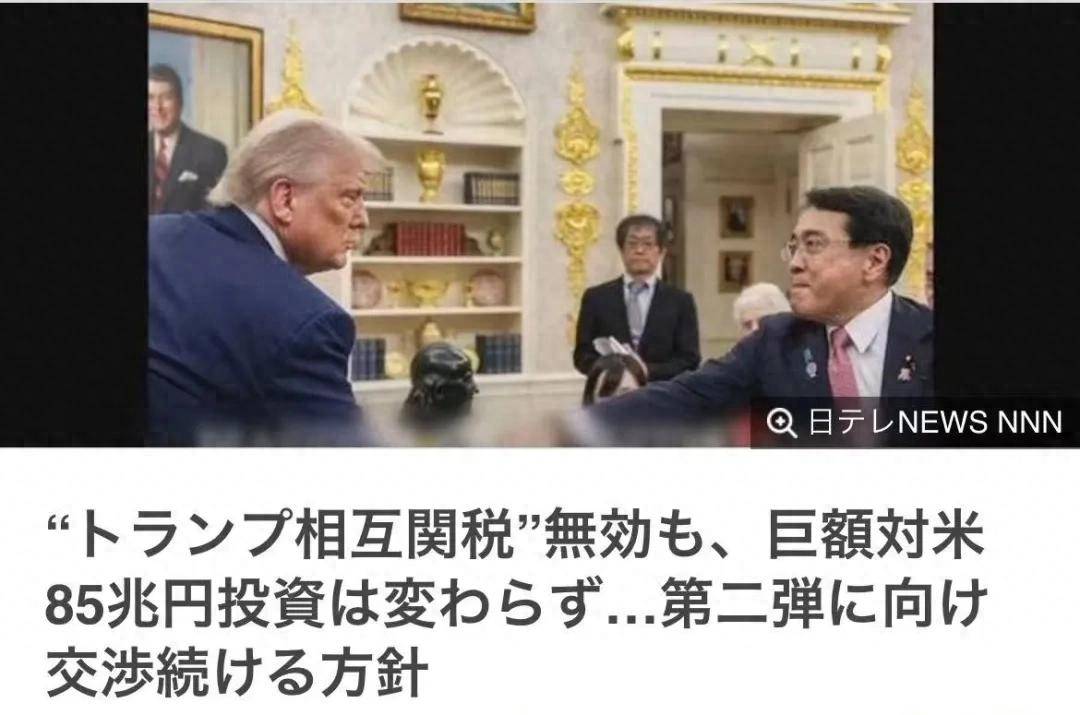
Core Viewpoint - Japan will maintain its substantial investment plan of 85 trillion yen in the U.S. despite the U.S. Supreme Court ruling the tariffs imposed by Trump as invalid, indicating a commitment to the investment strategy [1][7]. Group 1: Investment Commitment - Japan's investment plan of 85 trillion yen was initially a response to Trump's demands for reciprocal tariffs and a 15% reduction in auto tariffs, and this plan will not change even after the court ruling [7][12]. - The investment is expected to yield returns, but the distribution of profits is heavily skewed in favor of the U.S., with a 90% to 10% split [12]. - There are concerns that if the investment fails, Japan may struggle to recover its principal, potentially requiring government intervention to cover losses [12]. Group 2: Domestic Economic Considerations - There is a debate on whether the 85 trillion yen should be invested domestically instead, as this could provide a more significant economic stimulus and potentially yield higher returns [14]. - Investing in domestic industries, such as rare earth extraction and semiconductor manufacturing, could result in returns that far exceed those anticipated from the current investment plan in the U.S. [14]. - The discussion around the funding for this investment raises questions about the appropriateness of using taxpayer money for foreign investments when domestic economic needs are pressing [12][14]. Group 3: Public and Political Reactions - Japanese citizens express frustration over the government's perceived submissiveness to U.S. demands, questioning why Japan does not assert its national interests more forcefully [11][20]. - A senior member of the ruling party has voiced concerns that the current situation could lead to a deterioration in U.S.-Japan relations, highlighting the political sensitivity surrounding the investment plan [9]. - The media's cautious language shift from "illegal" to "invalid" regarding the court ruling reflects a careful approach to avoid escalating tensions with the U.S. [3][4].
ATFX:特朗普107分钟国情咨文 破历史纪录
Sou Hu Cai Jing· 2026-02-25 14:37
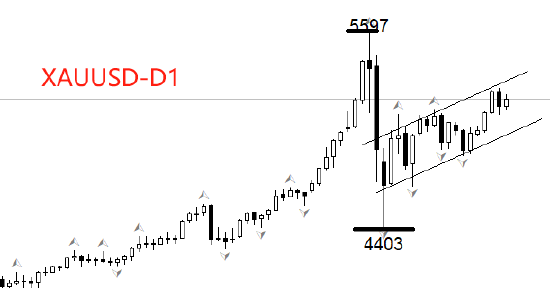
Group 1: Economic Policies and Impacts - Trump's urgent need to achieve unexpected successes to improve declining support ahead of the midterm elections is highlighted, particularly regarding tariffs which have been ruled illegal by the Supreme Court [1] - Trump's assertion that inflation is sharply decreasing and that core inflation has reached its lowest level in over five years suggests a belief that the Federal Reserve should abandon restrictive interest rate policies and consider significant rate cuts [2] - If the Federal Reserve responds to Trump's pressure for rate cuts, especially after Powell's potential departure, the dollar index may face significant downward pressure [2] Group 2: Geopolitical Relations and Market Reactions - The U.S. and Iran's relationship remains a major global focus, with upcoming negotiations in Geneva indicating potential easing of tensions, although military presence in the region raises risks of conflict [3] - Observers no longer view Trump as solely applying extreme pressure on Iran, suggesting that any military action could lead to significant price increases in gold and oil [3] - Current gold prices show a mid-term high of $5,597 and a low of $4,403, with the latest price at $5,187, indicating a potential downturn if the upper channel line fails to break [6]
特朗普刚宣布向全球加关税,白宫马上向中国解释:一切不变!
Sou Hu Cai Jing· 2026-02-25 12:49
Core Viewpoint - The article discusses the implications of the U.S. Supreme Court ruling that deemed Trump's use of the International Emergency Economic Powers Act (IEEPA) to impose tariffs as unconstitutional, leading to a shift in U.S. trade policy towards China and other partners, while highlighting the anxiety behind Trump's aggressive stance on tariffs [1][3]. Group 1: Legal and Policy Changes - The Supreme Court ruled that Trump's tariffs under IEEPA were unconstitutional, prompting him to raise the baseline tariff rate from 10% to 15% [1][5]. - U.S. Trade Representative Lighthizer emphasized that agreements with partners, including China, remain valid despite the tariff changes, indicating a need for reassurance [3][5]. - The Trump administration is now considering using the Trade Act of 1974, Section 122, to impose tariffs, although this legal basis is less stable and requires a fundamental international balance of payments issue [9][11]. Group 2: Impact on U.S.-China Relations - The tariffs imposed on China, particularly the "equal tariffs," have been a significant tool for Trump, with rates reaching as high as 145% at one point [7][13]. - The Supreme Court's ruling undermines the legal foundation for these tariffs, complicating U.S.-China negotiations and potentially leading to a reevaluation of commitments made under previous agreements [13][15]. - China's response to the U.S. actions indicates a readiness to reassess its commitments, especially if the U.S. continues to impose tariffs under different legal frameworks [15][19]. Group 3: Future Trends and Strategic Considerations - The U.S. is likely to explore other legal avenues for maintaining trade barriers, such as trade investigations and national security claims, despite the change in tariff strategy [19][21]. - The balance of power in U.S.-China negotiations may shift in favor of China, as the credibility of U.S. threats diminishes following the Supreme Court ruling [21][23]. - The uncertainty in U.S. trade policy is becoming a systemic risk, prompting businesses and countries to reassess their engagement with the U.S. market [21][23].
“对等关税”一周年,终究是美国人抗下了所有?
Hua Er Jie Jian Wen· 2026-02-25 08:44
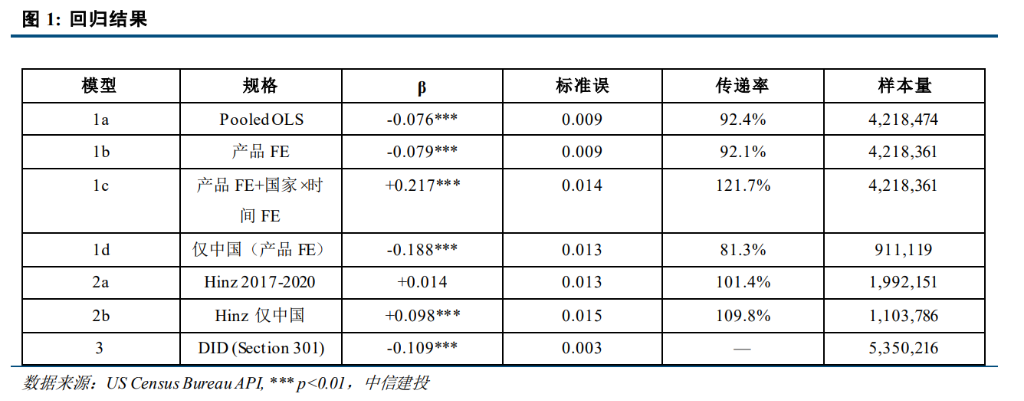
Core Insights - The report from CSC indicates that high tariffs primarily burden U.S. importers and consumers rather than foreign exporters, with a tariff pass-through rate of 92% by 2025 [1][3] - The cumulative effect of tariffs is projected to increase the Personal Consumption Expenditures (PCE) inflation rate by approximately 0.72 percentage points by December 2025, raising the actual PCE to 2.90% [1][10] Group 1: Tariff Impact on Importers and Consumers - The study reveals that U.S. importers absorb 92% of the tariff costs, with foreign exporters only reducing prices by an average of 0.08% for every 1% increase in tariffs [3][6] - A detailed analysis of 44 NAICS industry codes shows an average pass-through rate of 83%, with a median of 97% [4] - The report highlights that industries with high pass-through rates include toys, furniture, and apparel, where U.S. importers have absorbed significant costs [5][7] Group 2: Inflation and Economic Implications - The additional inflation of 0.72 percentage points due to tariffs suggests that the Federal Reserve may face more persistent inflation than previously anticipated, potentially affecting interest rate decisions [5] - The report indicates that companies in high pass-through rate industries may see profit margins squeezed if they cannot fully pass on the increased costs to consumers [5] - The analysis identifies sectors with substantial domestic production capacity, such as agriculture and basic chemicals, as more resilient to tariff impacts, providing potential investment opportunities [5][8] Group 3: Time Lag in Inflation Transmission - The report outlines a "time-lag trap" where the impact of tariffs on consumer prices is initially minimal, becoming significant only after existing inventories are depleted [9] - The pass-through coefficient rises sharply after 6-7 months, indicating that the true inflationary effects of tariffs manifest over time [9][10] - By December, the report estimates that 0.65% of the theoretical 1% price increase due to tariffs has translated into actual consumer inflation [9][10]
特朗普遭遇重大打击,日本面临天赐良机,却不敢动手?
Sou Hu Cai Jing· 2026-02-25 07:42
Group 1 - The U.S. Supreme Court's ruling invalidating the tariffs imposed by the Trump administration has not led Japan to terminate the U.S.-Japan investment agreement, which was signed at a cost of $550 billion [1][3] - Japan's automotive industry, which accounts for over 30% of its total exports and supports approximately 5.5 million jobs, remains under pressure due to the potential for tariffs under Section 232, which is still in effect [3][5] - The investment agreement is seen as a means for Japan to maintain U.S. support, which is crucial for political stability and military cooperation, especially in light of Japan's reliance on U.S. technology for its defense capabilities [7][9] Group 2 - Japan's cautious approach is influenced by its historical relationship with Trump and the need to avoid political backlash, as any move to terminate the agreement could be perceived as undermining U.S. relations [5][9] - The $550 billion investment is viewed as a "toll" that Japan pays to ensure U.S. leniency in its military and economic endeavors, highlighting the intertwined interests of both nations [7] - Japan's political landscape has shifted towards the right, but any significant changes in military policy require U.S. approval, making the investment agreement a critical factor in Japan's defense strategy [7][9]