
产业链转型

Search documents
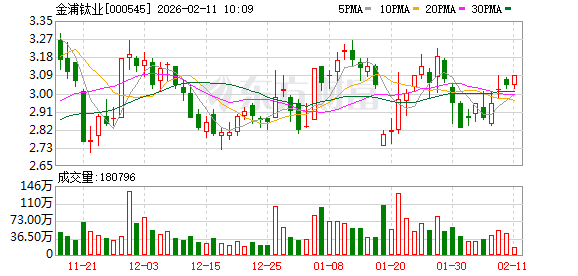
公司快评|三家子公司连环“停产”,叠加业绩承压,金浦钛业亟待从根本上寻找新增长极
Mei Ri Jing Ji Xin Wen· 2026-02-11 02:08
Core Viewpoint - Jinpu Titanium Industry is facing significant operational challenges, including multiple temporary shutdowns of subsidiaries due to financial strain, reduced market demand, and declining product prices, which may lead to a prolonged period of losses and uncertainty in recovery [2][3][4]. Financial Performance - The company's revenue is projected to decline from 25.10 billion yuan in 2022 to 21.33 billion yuan in 2024, indicating a downward trend [2]. - Jinpu Titanium has reported consecutive annual losses, with net profit attributable to shareholders worsening from 1.45 billion yuan to 2.44 billion yuan over three years [2]. - The company anticipates a further loss of 4.2 billion to 4.89 billion yuan in 2025, representing a year-on-year reduction of 75% to 100% [2]. Operational Challenges - The temporary shutdown of Nanjing Titanium and the complete halt of Xuzhou Titanium, which accounts for 50% of the company's total titanium dioxide production capacity, raises concerns about the company's revenue base [2][3]. - Frequent shutdowns may lead to customer attrition and loss of market share to competitors, complicating recovery efforts once the industry rebounds [3]. Strategic Considerations - The company is caught in a cycle of "losses - shutdowns - revenue decline - expanding losses," raising doubts about its ongoing viability [3]. - To navigate these challenges, Jinpu Titanium may need to explore several strategic avenues, including vertical integration towards high-end products, horizontal expansion into the new energy sector, and optimizing asset restructuring to attract external strategic investments [3]. Industry Context - The chemical industry is experiencing increased concentration, which may further pressure Jinpu Titanium to find a breakthrough or secure external funding to sustain operations [3][4].


椒香何以更远——武都花椒的链式突围
Xin Lang Cai Jing· 2026-02-08 00:58
Core Viewpoint - The transformation of the Wudu pepper industry is driven by a systematic restructuring that enhances the entire supply chain, with Tianze Company playing a pivotal role in this process [2][3]. Industry Overview - Wudu is the largest pepper production area in China, with an annual output of over 34,500 tons and a planting area of 1 million mu, generating a comprehensive output value of 4.4 billion yuan [1]. - Historically, the Wudu pepper industry has faced challenges such as low product added value, lack of unified quality standards, and weak bargaining power for farmers [1]. Company Role - Tianze Company has established a modern pepper industry park that includes intelligent sorting and quality control systems, which help improve product quality and market competitiveness [2]. - The company has implemented a model that integrates leading enterprises, professional cooperatives, farmers, and bases, enhancing the overall efficiency of the supply chain [3]. Quality Control and Financial Support - The establishment of a quality supervision warehouse ensures that all peppers meet green food A-level standards, thereby improving the quality from the source [2]. - Farmers can store their peppers in the supervision warehouse and wait for favorable market conditions to sell, which also allows them to use warehouse receipts for financing, alleviating financial pressures during the spring farming season [2][3]. Government Support - The local government has prioritized the pepper industry as a key sector, providing supportive policies related to land, finance, and talent to strengthen the industry chain and enhance value [3]. Industry Transformation - The transformation of the Wudu pepper industry is characterized by a focus on quality improvement and value enhancement rather than merely increasing area and output [3]. - Training sessions for farmers have become a crucial part of this transformation, emphasizing the importance of technical knowledge in cultivation and processing [4].
中国经济样本观察·“镇”了不起|“内衣小镇”织出500亿元“里子产业”
Xin Hua Wang· 2025-06-10 07:48
Core Insights - Deep Hu Town in Jinjiang, Fujian Province, produces over 20% of the world's underwear, with an annual output value exceeding 50 billion yuan [1][2] Group 1: Historical Development - Deep Hu Town transitioned from a fishing port to a major underwear production hub over 40 years, starting with home-based workshops making "foreign underwear" [2][3] - The local population recognized the business opportunity in the comfortable materials of "foreign underwear" sent by overseas relatives, leading to a surge in home-based production [2] Group 2: Industry Transformation - The industry evolved from "processing with supplied materials" to a complete industrial chain, including weaving, dyeing, and packaging, significantly reducing costs and increasing profits [3][4] - By the late 1990s, many local entrepreneurs invested in the full supply chain, leading to the establishment of various supporting enterprises and the formation of a comprehensive industry ecosystem [3] Group 3: Operational Efficiency - Deep Hu Town hosts over 500 underwear companies and employs more than 50,000 people, allowing for rapid material sourcing and production [4] - The local industry can assemble all materials for a piece of underwear within half an hour, showcasing its operational efficiency and responsiveness to customer demands [4] Group 4: Product Innovation - The town has developed a range of innovative underwear products with features like cooling, antibacterial, and moisture-wicking properties, expanding beyond basic underwear to include thermal wear and socks [5] - Companies in Deep Hu are increasingly utilizing technology in production, with automated systems enhancing quality and efficiency, reflecting a shift from traditional labor-intensive methods [5]
兄弟科技业绩扭亏为盈大幅增长 药品研发成果渐显成效
Zheng Quan Shi Bao Wang· 2025-04-29 04:17
Core Viewpoint - Brothers Technology (002562) has reported a turnaround in its financial performance for 2024, achieving significant growth and shifting its strategic focus towards a "manufacturing + service" model in key areas such as animal nutrition and human health [1][2] Financial Performance - In 2024, the company achieved total revenue of 3.441 billion yuan, a year-on-year increase of approximately 22% - The net profit attributable to shareholders was 40.81 million yuan, marking a return to profitability - For Q1 2025, total revenue reached 919 million yuan, up 12.1% year-on-year, with a net profit of 20.91 million yuan, also indicating a return to profitability [1] Strategic Focus and Market Position - The company aims to deepen its presence in its core sectors by expanding product applications and extending its existing industrial chain - Brothers Technology's main business includes pharmaceutical food and specialty chemicals, with leading market shares in vitamins and chromium salts, showcasing strong competitive advantages in brand, R&D, quality control, cost management, and marketing [1][2] Growth Drivers - The significant growth in 2024 is attributed to the company's efforts to align with industry policies and development directions, focusing on technological innovation and enhancing the entire industrial chain - The company has seen price increases in some vitamin products, higher sales volumes of vitamins, spices, and chromium salts, and a reduction in inventory costs, contributing to improved profitability [2] Project Developments - Brothers Technology is advancing projects such as the "Phenol Phase II Project" and "Annual Production of 50,000 Tons of Inorganic Chromium Powder," both of which commenced production in the first half of 2024 - The company is also enhancing its channel construction and market expansion to boost production capacity and sales [2] R&D and Product Development - The company is actively pursuing the development of raw materials and formulation products, with successful registrations for iodinated contrast agents and ongoing progress in other pharmaceutical registrations - In March 2025, the company's subsidiary received a drug registration certificate for a specific injection, with other formulation products also advancing through the registration process [3]
