人力资源战略

Search documents
Coca-Cola’s 3 Step Strategy for HR: Structure That Delivers Clarity
HR Daily Advisor· 2025-10-21 09:25
Core Insights - The Coca-Cola Company (TCCC) is transforming its HR function from a reactive support role to a strategic business driver by creating a "networked organization" from 32 fragmented business units [1] Group 1: Strategic Shift - The people strategy must be built from the business outward, serving as a direct engine for future business success and predicting talent needs years ahead [5] - Enforcing strategy requires a clear structure; without defined "rules for engagement," decentralized groups may lead to inefficiencies and resource wastage [6] - Measuring behavioral change is essential to demonstrate the impact of the new people strategy [7] Group 2: Actionable Solutions - Conduct "Future-Back" trend analysis to focus on long-term talent needs, exemplified by TCCC's recruitment of food scientists to meet consumer trends for healthy beverages [8] - Prioritize business acumen among HR Business Partners to ensure the people strategy aligns with business objectives [8] - Implement a "One Backlog" system to centralize all strategic HR projects, ensuring clarity and prioritization [9] Group 3: Accountability and Metrics - Clearly define roles in the strategic planning process to establish accountability, using markers for listening, participation, and leadership [9] - The true ROI of the new people strategy includes measurable increases in employee trust, clarity, and engagement, indicating successful cultural and political changes [10] - Track metrics of trust and fairness; TCCC reported a 14% increase in employees believing resource allocation procedures are fair, reflecting transparency [11] - Measure strategic clarity by assessing if employees understand the mission; TCCC noted a 5% increase in employees linking their work to company objectives, validating the new strategy [11]


业务部门需要的职能BP,长什么样?
3 6 Ke· 2025-07-29 03:30
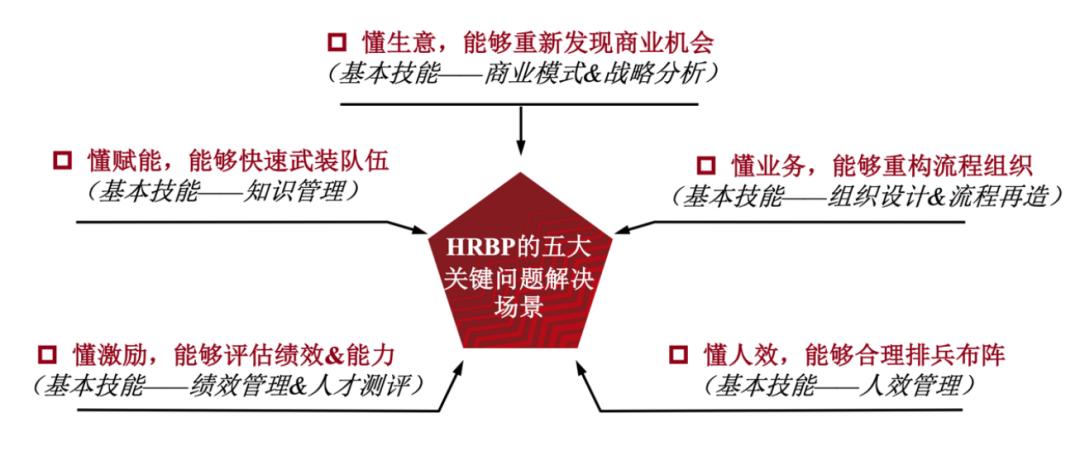
Group 1 - The trend of deploying Business Partners (BPs) from functional departments to frontline operations is essential to address bureaucratic issues and improve relevance to business needs [1] - Business departments often resist the involvement of BPs, viewing them as threats to their established success, which complicates collaboration [1] - BPs have opportunities to collaborate with business leaders primarily during crises, which can serve as a catalyst for cooperation [1] Group 2 - Crises can be categorized into three levels: operational crises, management crises, and human resource crises [2] - Operational crises arise when business units face high market pressure, often triggered by organizational changes that require collaboration between business leaders and BPs [2][3] - Management crises occur when performance issues become evident, necessitating the involvement of HRBPs and financial BPs to address inefficiencies [3] Group 3 - Human resource crises manifest as team conflicts due to unclear personnel rules, which can be mitigated by establishing clear guidelines for promotions and rewards [4] - In emergency situations, business leaders may seek BPs to act as intermediaries to resolve internal conflicts, as they may be reluctant to confront team members directly [4] Group 4 - High-level crises foster deeper collaboration and camaraderie between BPs and business leaders, transforming their relationship from adversarial to cooperative [5] - Business leaders often prioritize short-term gains over long-term organizational development, making it crucial for BPs to seize crisis moments to demonstrate their value [5] Group 5 - Effective BPs must prepare their skill sets to address business challenges, including understanding business models, restructuring processes, and optimizing human resources [6][8][9] - BPs should be adept at performance evaluation and employee capability assessment, often requiring collaboration with financial BPs to enhance analytical accuracy [11] Group 6 - Knowledge management is vital for BPs, enabling them to extract and share best practices across projects to enhance organizational learning [12] - The relationship between BPs and business units is characterized by a cycle of initial resistance followed by eventual collaboration, emphasizing the importance of skill preparation and crisis readiness [13]