人工智能+中医药

Search documents
面向大海 承古启新(深度观察)
Ren Min Ri Bao· 2026-02-27 06:14
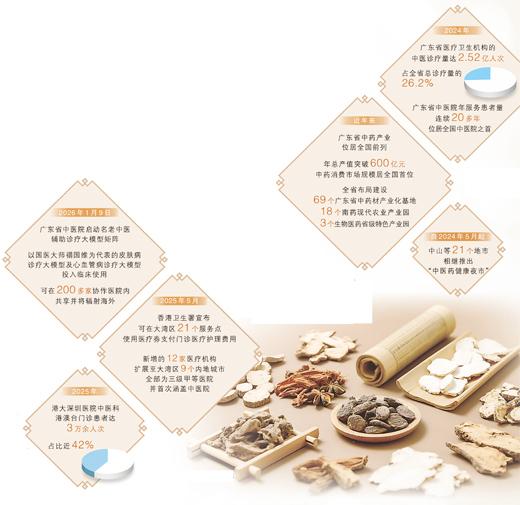
Core Viewpoint - The Chinese medicine industry is experiencing significant growth and modernization, driven by government support and innovative practices, particularly in Guangdong Province, which aims to promote traditional Chinese medicine (TCM) globally [1][2][4]. Group 1: Government Support and Initiatives - President Xi Jinping emphasized the importance of inheriting and innovating TCM, highlighting it as a treasure of Chinese civilization during his visits to Macau and Zhuhai [1][2]. - Guangdong Province has implemented various measures to promote the inheritance and innovation of TCM, establishing a comprehensive reform demonstration zone for TCM and aiming to create a TCM hub in the Greater Bay Area [1][2]. Group 2: TCM Practices and Popularity - In Guangdong, TCM is deeply integrated into daily life, with many residents familiar with herbal remedies and health practices [2][4]. - The Guangdong Provincial Hospital of Traditional Chinese Medicine has seen a significant increase in TCM consultations, with 252 million visits in 2024, accounting for 26.2% of the total medical consultations in the province [4]. Group 3: Innovative TCM Therapies - The Guangdong Provincial Hospital has introduced unique therapies such as bee therapy, which combines acupuncture and bee venom for treating various ailments [5][6]. - The hospital has also been active in preserving and promoting traditional TCM techniques through initiatives like the "杏林寻宝" program, which has introduced numerous unique therapies and trained over 330 practitioners [6][7]. Group 4: TCM Industry Development - Guangdong's TCM industry is one of the largest in China, with an annual output value exceeding 60 billion yuan, and the province is home to 69 TCM industrialization bases [12]. - The province is recognized for its rich medicinal plant resources, with over 4,500 species, contributing to its leading position in the national TCM market [12]. Group 5: Integration of Technology and TCM - The Guangdong Provincial Hospital has launched a smart pharmacy service that utilizes technology to enhance the preparation and delivery of herbal medicines, significantly reducing human error [7]. - AI-driven models have been developed to assist in TCM diagnosis and treatment, leveraging the expertise of renowned TCM practitioners [8][9]. Group 6: Internationalization of TCM - The Guangdong-Macao Traditional Chinese Medicine Technology Industrial Park serves as a strategic point for the internationalization of TCM, facilitating collaboration and product registration in Portuguese-speaking countries [17][19]. - Successful registration of TCM products in international markets, such as the "华佗再造丸," demonstrates the potential for TCM to penetrate global healthcare markets [20].

让群众看上好中医、用上好中药
Guang Xi Ri Bao· 2026-02-13 04:20
Core Viewpoint - The Guangxi Traditional Chinese Medicine (TCM) system aims to enhance its services and integration into healthcare reform by 2026, focusing on six key areas to meet public expectations for quality TCM services and products [1][2]. Group 1: Key Areas of Focus - The Guangxi TCM system will concentrate on deepening medical reform, improving service systems, promoting industry integration, strengthening talent and technology, establishing legal standards, and enhancing international exchanges [1]. - The region plans to accelerate the establishment of national TCM comprehensive reform demonstration zones and various pilot projects to further integrate TCM into the broader medical reform agenda [1]. - There will be a continued emphasis on strengthening grassroots TCM service capabilities and optimizing service networks, alongside deepening the collaboration between traditional Chinese and Western medicine [1]. Group 2: Development Tasks - During the "14th Five-Year Plan" period, Guangxi has outlined ten key tasks for TCM development, including improving health service capabilities, expanding service networks, and enhancing clinical collaboration between TCM and Western medicine [2]. - The region aims to enhance innovation capabilities by building a high-level research system for TCM and optimizing talent cultivation mechanisms to grow the TCM workforce [2]. - Guangxi will promote industrial upgrades and high-quality development of TCM, deepen international cooperation to expand TCM's global influence, and foster cultural innovation and transmission of TCM [2].
《郑州市中医药发展促进条例》3月1日起施行
Zheng Zhou Ri Bao· 2026-01-16 00:47
Core Viewpoint - The implementation of the "Zhengzhou Traditional Chinese Medicine Development Promotion Regulations" marks a significant step towards the legalization and standardization of traditional Chinese medicine (TCM) in Zhengzhou, effective from March 1, 2026, addressing public health needs and development challenges in the TCM sector [1][2]. Group 1: Legislative Framework - The new regulations aim to transform policy deployment into legal frameworks, providing legal guarantees for the establishment of a national TCM innovation development pilot zone and enhancing the Zhengzhou Qihuang cultural brand [2][3]. - The regulations address core issues such as service systems, industry development, and talent cultivation, establishing specific chapters for regulation [3]. Group 2: Industry Development - The regulations support the establishment of TCM research platforms and the transformation of TCM achievements into industrial applications, including the construction of regional TCM preparation centers and standardized preparation rooms in medical institutions [3][4]. - The integration of TCM with other industries such as food, culture, tourism, and health is encouraged to create a new ecological model for TCM industry in Zhengzhou [3]. Group 3: Talent and Technology Empowerment - A multi-level talent system is being developed, focusing on high-end, mid-level, and grassroots talent cultivation, with the introduction of high-end talent teams [5]. - The integration of artificial intelligence with TCM services, research, and regulation is highlighted as a new focus area, aiming to create a smart TCM ecosystem [5][6]. Group 4: Quality and Safety Measures - The regulations mandate the establishment of a quality traceability system for TCM materials, ensuring safety and quality throughout the supply chain [4][8]. - Measures to combat counterfeit products and promote international TCM cultural exchange are included to enhance Zhengzhou's global influence in TCM [4]. Group 5: Infrastructure and Investment - The government plans to clarify departmental responsibilities and promote collaboration among various departments to strengthen the grassroots TCM service foundation [8]. - Investment in infrastructure, talent, and research is prioritized, along with the optimization of medical insurance payment policies to reflect the value of TCM [8].
河南:全国唯一中医药国家人工智能应用中试基地揭牌 为古老中医装上智慧大脑
He Nan Ri Bao· 2026-01-05 09:21
Core Viewpoint - The establishment of the National Artificial Intelligence Application Pilot Base (Medical Field) in Henan marks a significant integration of traditional Chinese medicine (TCM) with modern AI technology, aiming to enhance the entire TCM industry chain through intelligent solutions [1][2]. Group 1: Reasons for Establishment - The pilot base is a response to the challenges faced by traditional Chinese medicine, such as difficulties in inheritance, standardization, and scalability, and aims to accelerate the application of AI technology in TCM [2]. - Henan, as a major birthplace of TCM and home to rich cultural and resource advantages, provides a unique environment for the development of AI in TCM, supported by a vast population and clinical data [2]. Group 2: Construction Plans - The pilot base will serve as an open public service platform focused on the deep integration of AI and TCM, addressing systemic challenges like data fragmentation and innovation transfer [7]. - It aims to build three foundational platforms: computing power, data, and models, with a focus on creating a high-quality, standardized public data resource pool [7]. - The base will concentrate resources on developing two vertical models: "TCM services" and "medical auxiliary diagnosis," enhancing innovation efficiency across the industry [7]. Group 3: Expected Impacts - The pilot base is expected to empower grassroots healthcare by promoting AI-assisted diagnostic systems and intelligent medical devices to community health centers, thus addressing the uneven distribution of medical resources [10]. - It will serve as a powerful incubator for the TCM industry, facilitating the standardization and branding of TCM products, and enhancing the overall value of the industry chain [10]. - The base will also contribute to establishing industry standards and best practices for AI applications in TCM, potentially influencing national guidelines and fostering the modernization and internationalization of TCM [11].
全国唯一中医药国家人工智能应用中试基地揭牌 为古老中医装上智慧大脑
He Nan Ri Bao· 2026-01-04 23:31
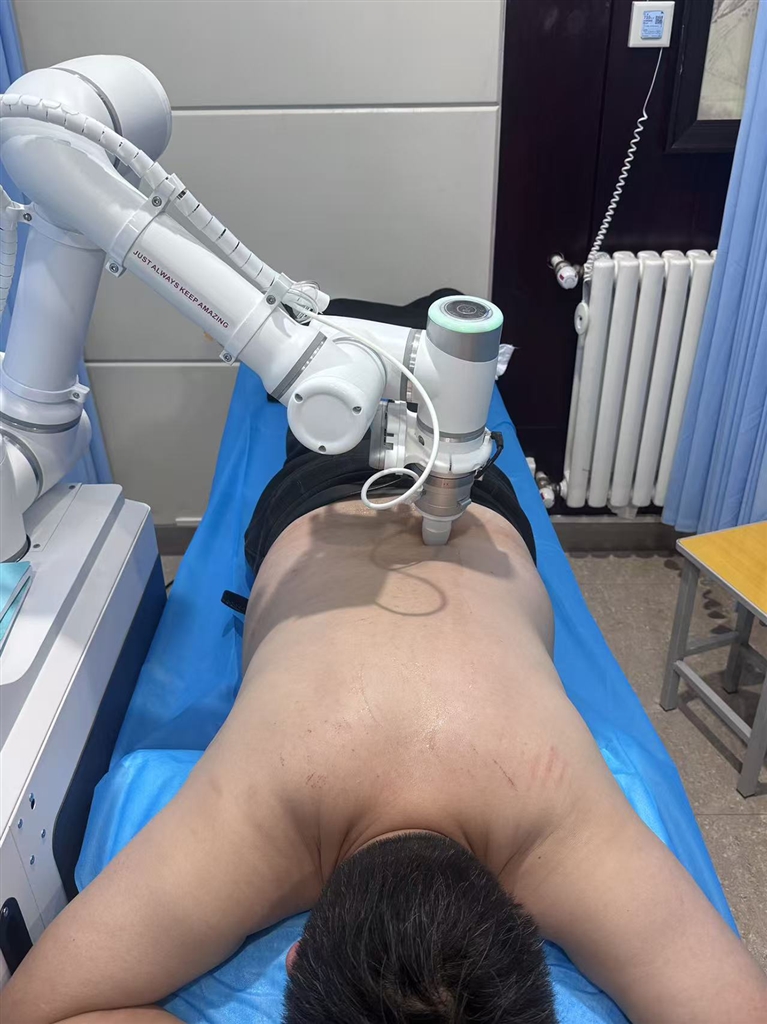
Core Viewpoint - The establishment of the National Artificial Intelligence Application Pilot Base (Medical Field) in Henan marks a significant integration of traditional Chinese medicine (TCM) with modern AI technology, aiming to enhance the efficiency and standardization of TCM practices [6][7][10]. Group 1: Reasons for Establishment - The pilot base is strategically located in Henan due to its rich cultural heritage in TCM and vast clinical data resources, which are essential for training AI models [7][8]. - The base aims to address challenges in TCM such as inheritance, standardization, and scalability by accelerating the application of AI technologies [7][10]. Group 2: Development Plans - Henan has introduced several policies to promote the integration of AI and healthcare, including the "Artificial Intelligence + Healthcare" three-year action plan [9][10]. - The pilot base will focus on building three foundational platforms: computing power, data resources, and model development to support TCM innovation [12][14]. Group 3: Technological Innovations - Recent achievements include the development of an AI-assisted TCM diagnosis model with an 85% agreement rate with expert evaluations, and a precision massage robot that enhances treatment efficiency by 50% [10][11]. - The base will also create a public service platform for AI applications in TCM, facilitating the transition from research to market [12][14]. Group 4: Expected Impact - The pilot base is expected to empower grassroots healthcare by providing AI-assisted diagnostic systems and smart treatment devices to local medical institutions [16][17]. - It aims to foster a new ecosystem in TCM that includes smart planting, intelligent manufacturing, and health management, thereby enhancing the overall value of the industry [17][18]. - The base will also contribute to establishing standards for AI applications in TCM, potentially influencing national guidelines and practices [18][19].