人工智能与大数据应用

Search documents
综述:内联外通 聚力赋能——香港助力全球航运业脱碳转型
Xin Hua Wang· 2025-11-20 09:13
Core Viewpoint - The 2025 World Shipping Conference highlighted the need for dialogue and cooperation in addressing the shipping industry's challenges, including decarbonization, geopolitical impacts, and crew shortages, with Hong Kong positioned as a stabilizing force in the global shipping landscape [1] Group 1: Hong Kong's Role in Global Shipping - Hong Kong serves as a critical hub connecting mainland China and international markets, leveraging its geographical advantages, quality investment environment, and legal framework to attract global shipping enterprises [2][3] - The city has maintained its position as the fourth largest international shipping center for six consecutive years, hosting over 1,200 port and maritime-related companies [2] - Hong Kong's financial capabilities, including its status as the third-largest financial center globally, provide essential capital support for the shipping industry's development [2] Group 2: Green Transition Initiatives - Hong Kong is actively pursuing a green transition in its ports, having invested nearly 200,000 tons in green fuels and preparing for methanol bunkering to meet the International Maritime Organization's 2050 net-zero emissions target [4][6] - Legislative changes have expanded the types of bunkering fuels to include liquefied natural gas and methanol, facilitating the transition to greener alternatives [4] - The Hong Kong government is implementing a "Green Incentive Program" to financially support compliant vessels, demonstrating responsiveness to industry needs [4][6] Group 3: Collaborative Efforts for Decarbonization - The global nature of the shipping industry necessitates breaking down regional barriers and fostering global collaboration for effective decarbonization [7] - Hong Kong is establishing partnerships with ports in mainland China and Chile to enhance cooperative efforts in the shipping sector [8] - The city aims to integrate its financial advantages with mainland China's alternative fuel production capabilities to create a comprehensive production-financing-application chain [8]

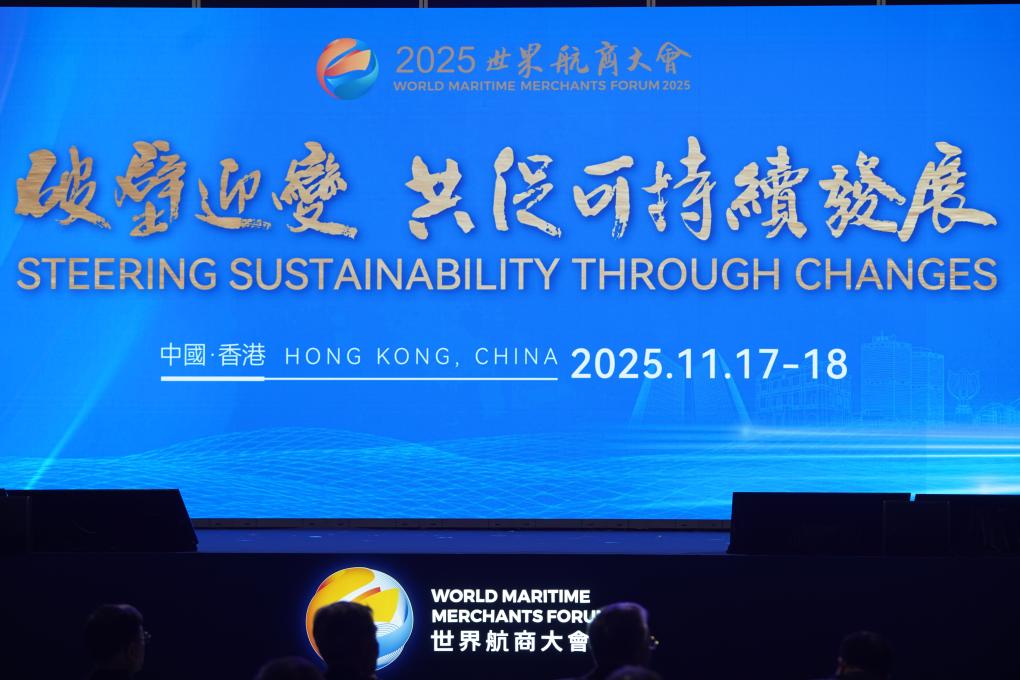
2025世界航商大会将在港启幕 共探航运业可持续发展
Xin Hua She· 2025-11-14 14:28
Core Viewpoint - The 2025 World Shipping Conference, themed "Breaking Walls and Embracing Change: Collaborative Pathways for Sustainable Development in the Global Shipping Industry under Major Changes," will be held in Hong Kong on November 17, focusing on the industry's transition towards efficiency, sustainability, and green practices in a complex economic landscape [1]. Group 1: Conference Details - The conference will adopt a hybrid format, combining online and offline participation, and will feature seven parallel forums covering various segments of the shipping industry, green ship technology, and shipping finance [1]. - The event aims to gather industry professionals from shipping, ports, logistics, trade, equipment manufacturing, finance, and maritime services to discuss key topics such as trade barriers, carbon emission management, and the application of artificial intelligence and big data [1]. Group 2: Organizational Structure - The conference is led by China Merchants Group in collaboration with the Hong Kong SAR Government's Transport and Logistics Bureau, the Baltic International Maritime Council, the International Chamber of Shipping, and the Hong Kong Shipowners Association, with support from various local associations [2]. - The inaugural World Shipping Conference took place in Hong Kong in 2021, aiming to create a global platform for the shipping industry, with over 1,500 guests expected to attend this year's event [2]. Group 3: Initiatives and Standards - The conference will introduce the "Global Shipping Companies' Net Zero Pathway Practice Guide" and upgrade the "Shipping ESG Evaluation Standards," along with releasing two group standards related to marine fuels, providing measurable benchmarks and actionable pathways for low-carbon transformation in the shipping sector [1].
财经新闻网发稿平台:助力财经资讯高效传播
Sou Hu Cai Jing· 2025-07-07 09:30
Group 1 - The emergence of online financial press release platforms has transformed the traditional model of financial information dissemination, breaking the limitations of time and geography [3][4] - These platforms enable real-time publishing, allowing journalists and analysts to instantly share important news, such as policy changes or earnings reports, with global audiences [4] - The integration of multimedia formats enhances the presentation of financial news, making it more engaging and accessible to diverse user groups [5] Group 2 - Financial news platforms like Caijing.com emphasize professionalism and authority, gathering experienced journalists and analysts to provide high-quality financial reporting [8] - A strict review mechanism ensures the quality and reliability of information published on these platforms, filtering out false information and low-quality submissions [9] - In-depth analysis and interpretation of financial events are prioritized, offering readers insights into the underlying causes and potential impacts of economic changes [10] Group 3 - Pindar Press Release stands out by offering personalized services tailored to the diverse needs of different client groups, such as businesses and media professionals [12][13] - The platform provides flexible publishing options, allowing clients to choose between immediate, scheduled, or periodic releases based on their specific requirements [14] - A professional service team supports clients throughout the process, from planning and writing to post-release monitoring and feedback [15] Group 4 - Financial news release platforms play a crucial role in the financial market by acting as a bridge for information, helping market participants make informed investment decisions [16] - These platforms contribute positively to economic development by reporting on national policies and industry trends, aiding various stakeholders in understanding economic conditions [17] - Future advancements may include the integration of AI and big data for personalized content delivery and the application of blockchain technology for enhanced information security [18]