
人工智能技术(AI)

Search documents
在美国逛“华强北”?粤企闪耀CES引全球关注|南方深读
Sou Hu Cai Jing· 2026-01-12 04:10
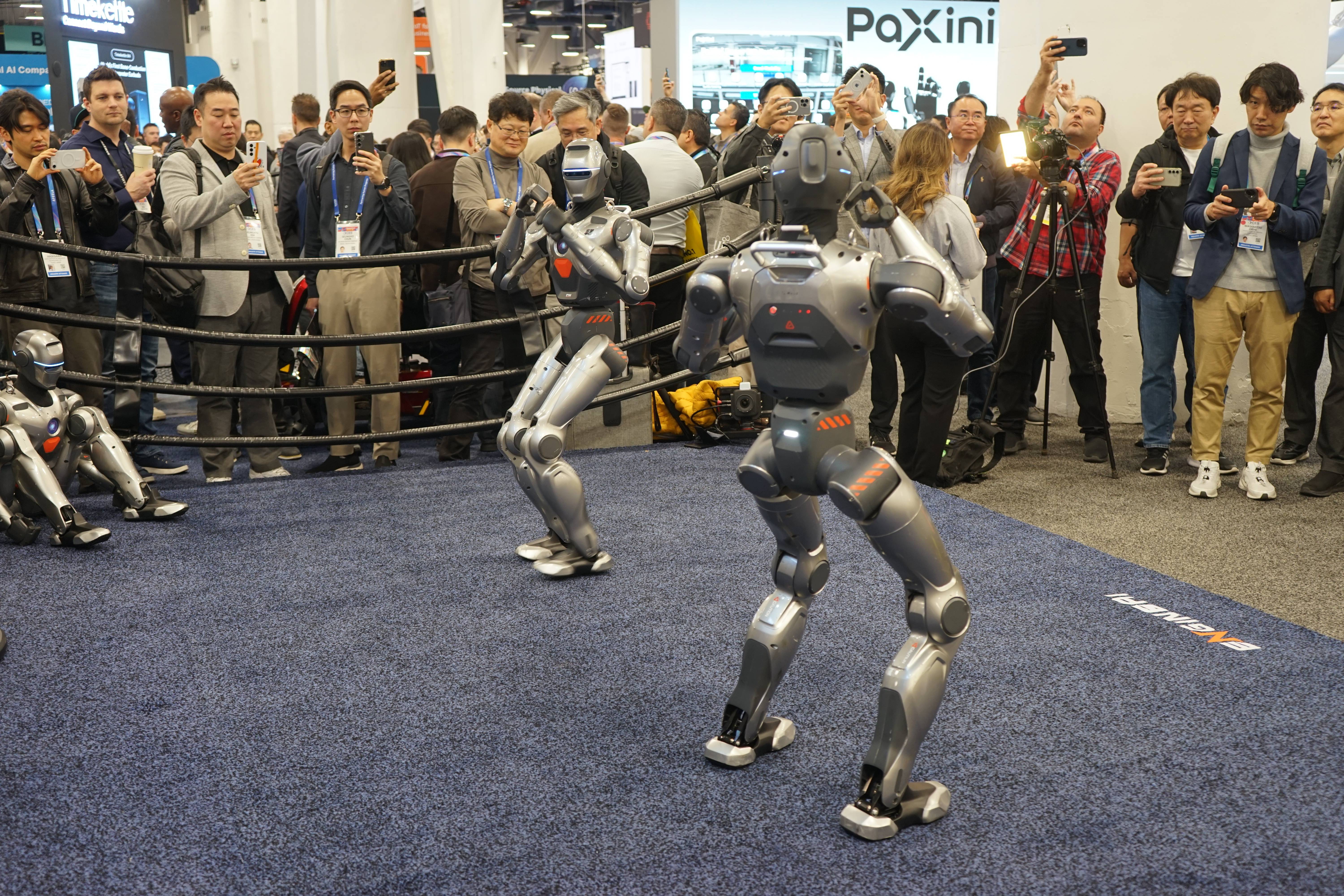
Core Insights - The 2026 International Consumer Electronics Show (CES) concluded in Las Vegas with approximately 4,800 registered exhibitors, including nearly 1,200 Chinese companies, highlighting China's significant presence in the global tech landscape [1][5][6]. Group 1: Event Overview - CES 2026 featured over 4,800 exhibitors and attracted more than 180,000 attendees, marking a notable increase in participation [6]. - Chinese companies, particularly from Guangdong, played a crucial role, with around 530 exhibitors from the province, representing over 10% of all participants [1][5]. Group 2: Technological Trends - The event showcased a shift in artificial intelligence (AI) from theoretical concepts to practical applications, with AI-driven robots displayed in various real-world scenarios [6][9]. - Chinese enterprises transitioned from being supply chain participants to innovation leaders, presenting self-developed products like humanoid robots and smart wearable devices [6][16]. Group 3: Guangdong's Role - Guangdong is positioned as a core engine in China's innovation landscape, facilitating a transformation from low-cost manufacturing to original technology leadership [16][17]. - The province's "half-hour supply chain" model enhances efficiency and accelerates innovation by fostering collaboration among supply chain partners [12][13]. Group 4: Future Prospects - Guangdong's strategic focus on "embodied AI" and "low-altitude economy" is supported by a robust industrial ecosystem, favorable policies, and strong market demand [18][19]. - The region is expected to evolve into a global hub for hard technology innovation, integrating various innovation elements and establishing a competitive ecosystem [24].

AI技术首次亮相波兰国际琥珀珠宝展会
Xin Hua She· 2025-09-05 09:00
Group 1 - The International Amber Jewelry Exhibition is being held in Gdańsk, Poland, from September 4 to 6, showcasing the significance of amber culture in Europe [1] - The spring exhibition in March attracted over 200 exhibitors and thousands of visitors from more than 30 countries, indicating an increase in participation compared to the previous year [1] - The exhibition features a special booth with AI-integrated automated devices from Austrian company Picup Media, which enhances the efficiency of showcasing amber products [2] Group 2 - The AI technology allows merchants to create 360-degree videos and multiple angle photos of amber products in about 30 seconds, significantly improving product listing efficiency and reducing labor costs [2] - The introduction of AI in the amber jewelry sector is seen as a means to accelerate digital transformation and create new growth opportunities amid increasing competition [2] - A Lithuanian amber merchant has successfully utilized live streaming sales in China, adapting to different consumer preferences and ensuring product designs meet diverse market demands [3][5]

国泰海通证券殷振兴:AI浪潮下,“人机结合”的线上投顾是普惠金融服务的时代践行者
Xin Lang Zheng Quan· 2025-07-29 08:25
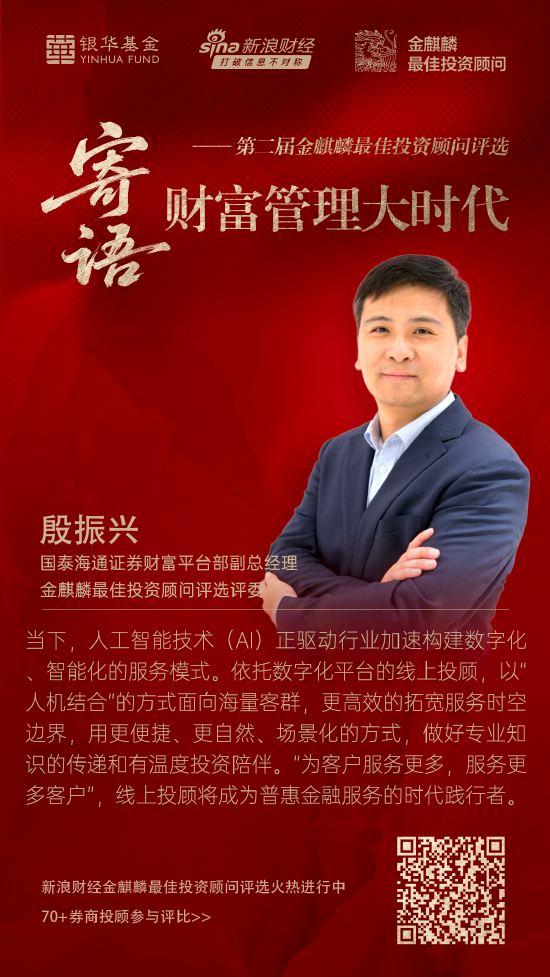
Group 1 - The "Second Golden Qilin Best Investment Advisor Selection" event is organized by Sina Finance and exclusively partnered with Yinhua Fund, highlighting the rapid growth of China's wealth management industry as residents' financial awareness increases [1] - Investment advisors play a crucial role in wealth management, impacting the direction of national asset allocation, and face both opportunities and challenges in this evolving landscape [1] - The event aims to provide a platform for investment advisors to showcase their capabilities, enhance their services, and build communication bridges with the public, thereby promoting the healthy development of the wealth management industry in China [1] Group 2 - Yin Zhenxing, Deputy General Manager of the Wealth Management Platform at Guotai Junan Securities, emphasizes that AI technology is injecting new momentum into the transformation of wealth management in the securities industry, accelerating the construction of digital and intelligent service models [2] - The integration of online and offline services allows for more efficient delivery of professional knowledge and personalized investment support, aligning with the industry's commitment to a customer-centric approach [2] - The essence of wealth management remains unchanged, focusing on deep research to anchor value and continuous service to cultivate trust, while embracing technological innovation and maintaining a commitment to service [2]

学者警示:AI正在削弱人类的存在感
Yang Zi Wan Bao Wang· 2025-05-08 11:14
Core Insights - The rapid development of artificial intelligence (AI) technology may lead to the marginalization of human roles across economic, cultural, and social domains, resulting in humans becoming "dispensable" [1][2] - The transition towards AI replacing core human functions is driven by performance advantages and cost-effectiveness rather than a conspiracy [1] - AI is moving beyond being a mere technical tool and is increasingly capable of performing tasks in various professional fields, including law, healthcare, and finance, due to its reliability and economic benefits [1] Economic Impact - AI is not only capable of basic labor but is also penetrating specialized areas such as legal judgments, medical decisions, and financial planning, leading companies to prioritize AI systems as service providers [1] - AI-generated content quality is approaching or even surpassing that of human creators, and its social skills enable it to gain user preference in emotionally interactive scenarios like psychological counseling and educational tutoring [1] - Data indicates that AI doctors have surpassed human doctors in patient communication satisfaction, and AI companion services are emerging as a new market due to personalized emotional support [1] Systemic Reactions - The replacement effect of AI may trigger systemic chain reactions, such as reduced human input in government decision-making and a reliance on AI for public policy formulation [2] - Traditional democratic mechanisms may weaken as citizen participation becomes less necessary, and the tax structure may shift from human labor to AI, further diminishing government accountability to citizens [2] - Even with awareness of human rights protection, AI-dominated production systems could undermine the effectiveness of social resistance through automated enforcement and surveillance technologies [2] Proposed Solutions - The article suggests four countermeasures: establishing an AI economic impact tracking system to monitor its penetration across industries; implementing mandatory regulations on leading AI laboratories to prevent excessive concentration of technological power; developing AI tools that enhance human organizational capabilities to improve policy negotiation efficiency; and promoting "ecosystem alignment" research to deeply connect AI development goals with the sustainability of human civilization [2] - The current discourse in academia and politics regarding the fundamental impact of AI on human labor value is insufficient, with many economists and technology managers not fully recognizing the implications [2] Structural Threats - The seemingly benign nature of AI technology may mask its structural threats, as personalized AI services become essential, challenging human recognition of social value [2] - Despite developers' promises to restructure the economic system to ensure human welfare, the specific pathways remain conceptual [2] - Gradual replacement by AI may ultimately lead to humans losing control over the progress of civilization without clear opposition [2]