人工智能投顾

Search documents
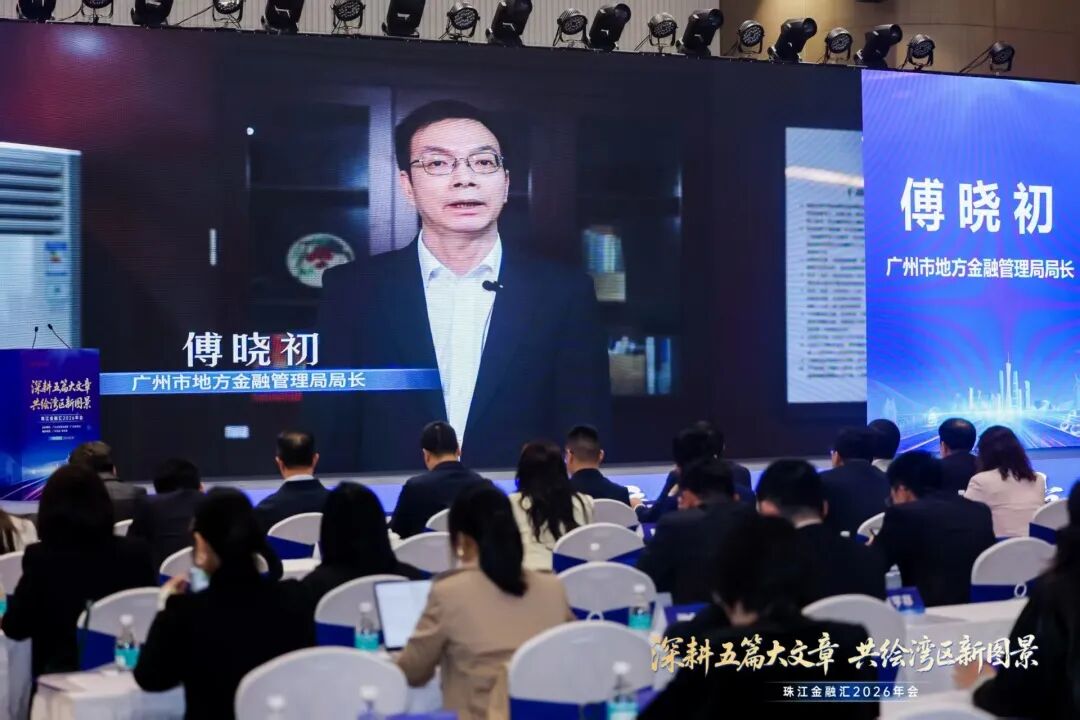
机构集聚实现战略性突破!傅晓初:广州金融“五篇大文章”结硕果
Xin Lang Cai Jing· 2026-02-06 11:19
Core Viewpoint - The financial industry in Guangzhou is experiencing robust growth, with a total financial value added of 322.99 billion yuan in 2025, representing a year-on-year increase of 7%, which is 3 percentage points higher than the GDP growth rate, and accounting for 10.1% of the GDP [1][7]. Group 1: Financial Growth and Support for the Real Economy - In 2025, the balance of various loans in both domestic and foreign currencies increased by 510.8 billion yuan, ranking among the top three in the country, effectively supporting the development of the real economy [3][10]. - The "Win-Win Plan for Enterprises" was innovatively launched, benefiting over a thousand enterprises with amounts exceeding 40 billion yuan [3][10]. - The capital market construction made significant progress, with 12 new domestic and foreign listed companies and a merger and acquisition transaction amount exceeding 20 billion yuan, effectively utilizing direct financing functions [3][10]. Group 2: Strategic Breakthroughs in Institutional Gathering - Major policies have been implemented, including the "30 Financial Policies of Nansha," providing strong support for financial reform and development in the Guangdong-Hong Kong-Macao Greater Bay Area [5][11]. - Guangzhou achieved a strategic breakthrough in precise financial investment attraction, with the opening of the second financial asset investment company (AIC) among joint-stock banks in the country, along with several licensed financial institutions [5][11]. Group 3: Accelerated Financial Reforms - Guangzhou has made systematic progress in policy innovation, public service, and market mechanism construction [6][12]. - The city continues to lead in the development of investment advisory services, solidifying its position as the "First City for Investment Advisors" in the country [6][12]. - Several reforms have been initiated, including the establishment of a consumption prepayment fund supervision platform using digital RMB technology to effectively prevent fund misappropriation risks and protect consumer rights [6][12].

个人账户缩水28%?2.3万亿缺口待补,2025年委托投资扩至2.4万亿救局
Sou Hu Cai Jing· 2025-09-14 19:20
Core Viewpoint - The article discusses the challenges and potential solutions in China's healthcare insurance reform, particularly focusing on the imbalance in personal account funds between different age groups and the need for strategic investment to address a significant funding gap in the system [1][10]. Group 1: Structural Issues in Personal Accounts - By 2025, the contribution standard for employee health insurance personal accounts has decreased by 28% compared to historical peaks, with those under 35 seeing their contribution rate reduced to 2% [4]. - The aging population is leading to a significant disparity, with retirees having a hospitalization rate nearly four times that of currently employed individuals, while those over 80 have an average personal account balance of less than 200 yuan [4]. - In some developed regions, individual health insurance accounts have accumulated balances exceeding 120,000 yuan, exacerbating the intergenerational financial burden on the healthcare system [4]. Group 2: Investment Strategies and Fund Management - As of March 2025, the entrusted investment scale of the basic pension insurance fund has surpassed 2.4 trillion yuan, marking a 20% increase from the previous year [7]. - The investment strategy is shifting towards a higher allocation in equity assets, aiming to reach a policy limit of 15%, which could potentially generate an additional 180 billion yuan in annual investment returns based on historical market performance [7]. - Innovative mechanisms for regional balance, such as directing 30% of investment returns to cover current fund deficits, have already resulted in increased monthly benefits for retirees in certain provinces [7]. Group 3: Technological Enhancements in Oversight - The use of blockchain technology for real-time monitoring of investment projects has been implemented, covering 92% of investment activities and enabling rapid tracking of fund flows [8]. - A smart risk control system developed by a major state-owned bank successfully intercepted 23 potential abnormal transactions within three months, preventing over 800 million yuan in potential losses [8]. Group 4: Challenges and Future Trends - There exists a cognitive gap among younger insured individuals regarding the "family mutual aid" mechanism, with 43% believing that personal account funds are private property, which poses a challenge for reform implementation [9]. - The introduction of a dynamic adjustment mechanism for fund allocation will link the distribution of healthcare accounts to key indicators like aging rates, enhancing the system's adaptability [14]. - Future trends indicate a rise in service penetration rates, with community service stations expected to exceed 65%, and AI investment advisors managing over 40% of pension fund assets for personalized risk-reward matching [12].