人工智能电力危机

Search documents
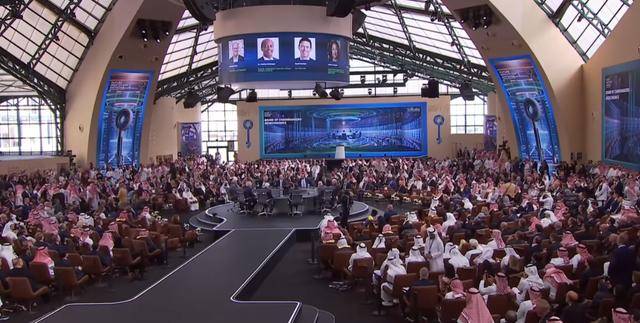
AI引爆全球危机!197个国家到沙特共商对策,中国却早已布局47年
Sou Hu Cai Jing· 2025-11-01 12:11
Core Viewpoint - The global AI power crisis is escalating, with 197 countries convening in Saudi Arabia to address urgent energy supply challenges, while China leverages its 47-year strategic energy planning to navigate the situation effectively [3][5][24]. Group 1: Global AI Power Crisis - The "Future Investment Initiative" in Saudi Arabia has shifted focus from attracting foreign investment to addressing the AI power crisis, highlighting the urgency of the situation [3][5]. - Major financial institutions, including JPMorgan and Goldman Sachs, acknowledge a projected 165% increase in global data center power demand by 2030, necessitating $720 billion in global infrastructure investment [7][8]. - The aging power infrastructure in Europe and the U.S. is struggling to meet the rising energy demands from AI, with the average age of the U.S. power grid exceeding 40 years and only 15% backup capacity remaining [11][13]. Group 2: AI Energy Consumption - AI's energy consumption is significantly underestimated, with the International Energy Agency warning that AI could account for 35%-50% of data center energy consumption by 2030, equating to Japan's total electricity usage [14][18]. - Tech giants like Microsoft and Google are rapidly expanding their AI capabilities, leading to substantial energy demands, with Google's AI division potentially consuming energy equivalent to that of Ireland [16][20]. - The energy crisis is already impacting consumers, with average electricity bills in Georgia, USA, increasing by over $40 monthly, and data centers in Ireland consuming 21% of the national electricity supply [20][23]. Group 3: China's Strategic Energy Planning - China has strategically positioned itself over 47 years, increasing its power generation capacity from 57.12 million kilowatts in 1978 to 3.35 billion kilowatts by the end of 2024, a 58-fold increase [24][29]. - The country has implemented significant reforms, including the establishment of the State Grid Corporation and the promotion of renewable energy sources, leading to a global leadership position in wind and solar power installations [31][35]. - China's "East Data West Computing" initiative aims to direct AI data centers to energy-rich areas, with new centers required to source 80% of their power from renewable energy [33][40]. Group 4: Future Prospects and Challenges - Innovations in energy storage and efficiency, such as Nvidia's 800-volt architecture and advancements in low-power AI chips, are crucial for addressing the energy volatility associated with AI [38][40]. - Despite the progress, challenges remain, including insufficient global renewable energy supply, high storage costs, and the potential rebound effect of increased energy demand from AI advancements [42][44]. - As 197 countries grapple with the energy crisis, China's long-term planning and commitment to green energy position it as a potential leader in resolving the global AI power dilemma [44].

AI芯片,大泡沫?
半导体行业观察· 2025-10-21 00:51
Core Viewpoint - The article discusses the current state of the AI industry, comparing it to the internet bubble of 1999-2000, highlighting the rapid rise in valuations and the potential risks associated with companies like Coreweave [3][5]. Valuation and Market Trends - As of September, the Nasdaq composite index had a P/E ratio of 33, with major companies like Amazon, Apple, Google, Microsoft, Meta, and TSMC ranging from 27 to 39 [6]. - Nvidia's P/E ratio is notably high at 52, reflecting its leadership in the AI sector, while AMD's P/E has surged to 140 due to its acquisition of OpenAI [6][7]. - GenAI revenue is experiencing rapid growth, with predictions of AI data center investments reaching $5 trillion by 2030, primarily from large, profitable companies [6][7]. Adoption Rates and Consumer Behavior - GenAI adoption is accelerating, with ChatGPT reaching 100 million users in just two months, significantly faster than other platforms like TikTok and Facebook [6][11]. - A consumer AI market valued at $12 billion has emerged within two and a half years, with 60% of U.S. adults using AI in the past six months [11][12]. Enterprise Use Cases and Productivity - GenAI is expected to be the largest market, with significant applications in enhancing productivity, particularly in programming and financial analysis [13][14]. - Companies like Walmart and Salesforce are leveraging AI to avoid hiring additional staff while still achieving growth [14][15]. Competitive Landscape and Future Outlook - The cost of training advanced models is projected to reach billions, limiting participation to companies with substantial resources [16]. - Major players like Anthropic, AWS, Google, and Microsoft are expected to dominate, while smaller companies may need to specialize in niche markets [30][31]. - The article suggests that multiple winners may emerge in the GenAI space, as differentiation and ecosystem bundling are likely to occur [40]. Hardware and Infrastructure Challenges - The demand for data center capacity is surging, with predictions that the scale of data centers will grow significantly by 2026 [32]. - There are concerns about the adequacy of power supply to meet the growing needs of AI data centers, with projections indicating that AI could consume a substantial portion of the U.S. electricity supply by 2024 [38][39].