人工智能穿戴设备普及化

Search documents
李迅雷:如何提高“以旧换新”受益人口覆盖率 | 立方大家谈
Sou Hu Cai Jing· 2026-01-29 03:49
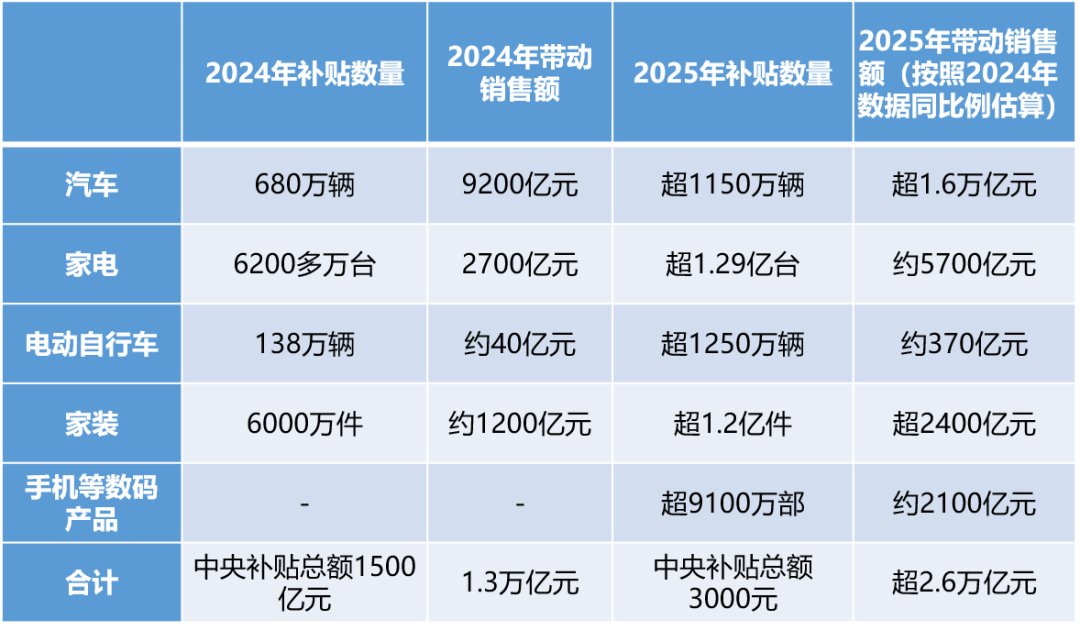
Core Viewpoint - The "old-for-new" policy for consumer goods, implemented from 2024 to 2025, is supported by a total of 450 billion yuan in long-term special government bond funding, aiming to stimulate consumer spending and boost retail sales, although its multiplier effect appears to be less than expected [1][2]. Group 1: Policy Implementation and Financial Support - The State Council issued measures in July 2024, allocating approximately 150 billion yuan in long-term special government bonds for the "old-for-new" policy, with an additional 300 billion yuan planned for 2025, expanding the range of eligible products from 8 to 12 categories [2]. - The estimated sales driven by the subsidies in 2024 and 2025 are projected to exceed 2.6 trillion yuan, with significant contributions from various sectors including automobiles and home appliances [3]. Group 2: Impact on Retail Sales - Retail sales growth for "old-for-new" related products showed an initial acceleration followed by a decline, with significant growth in categories like communication equipment and cultural office supplies, while automotive consumption lagged behind overall consumer spending [4][10]. - The first year after the policy implementation saw a 10% increase in sales for related categories, but the second year showed only a 2% increase, indicating a diminishing effect of the policy [7][10]. Group 3: Consumer Demographics and Coverage - The total number of beneficiaries from the "old-for-new" policy was only 480 million, with a notable drop to 80 million in the second half of 2025, suggesting limited reach among the broader population [25]. - The primary beneficiaries are higher-income groups, as the average price of eligible products, particularly automobiles, is high, limiting participation from lower-income consumers [25]. Group 4: Future Policy Adjustments - The 2026 policy adjustments include expanding the subsidy range to include smart glasses, standardizing subsidy amounts, and shifting from fixed to proportional subsidies for vehicle replacements, aiming to enhance fairness and effectiveness [24]. - To increase the coverage of the "old-for-new" policy, considerations include increasing funding, lowering average product prices, and focusing on job creation and income stability rather than solely on sales volume [26].