人工智能 + 能源

Search documents
湖南召开2026年能源和运行工作会议
Zhong Guo Fa Zhan Wang· 2026-01-12 02:46
Core Viewpoint - The Hunan 2026 Energy and Operation Work Conference emphasized the importance of high-quality energy development and outlined key tasks for the upcoming year, aiming to align with national energy strategies and ensure sustainable growth in the energy sector [1][4]. Summary by Sections Achievements in 2025 - The energy system in Hunan has made significant progress in 2025, completing all 18 target tasks set in the 14th Five-Year Plan, including the successful operation of major projects like ultra-high voltage and coal power plants [3]. - Energy supply capabilities have been notably enhanced, achieving zero power outages and ensuring stable supply of coal, oil, and gas for three consecutive years [3]. - The province has made strides in green and low-carbon transitions, with an expanding scale of renewable energy installations and improved energy storage facilities [3]. Key Focus Areas for 2026 - The conference outlined seven key areas of focus for 2026, including the high-quality implementation of the 15th Five-Year Energy Plan, which aims to establish a comprehensive provincial energy planning system [5]. - A total of 24 major energy projects are set to be advanced, with an annual investment target of 45.2 billion yuan, including significant expansions in power generation capacity [6]. Energy Infrastructure and Green Transition - The plan includes upgrading energy infrastructure, with expectations to add 2.32 million kilowatts of thermal power capacity and enhance energy networks [6]. - The promotion of renewable energy and clean coal utilization is prioritized, with initiatives to develop a reserve of new energy projects and expand public charging infrastructure [6][7]. Reform and Innovation - The conference stressed the need for deepening energy system reforms, including the introduction of quality low-cost energy resources and the establishment of a robust electricity market [7]. - There is a focus on cultivating energy industry clusters, particularly in electric equipment and renewable energy sectors, to enhance local manufacturing capabilities [7]. Energy Supply and Safety Measures - Ensuring energy supply during peak winter demand is critical, with measures to enhance safety protocols and emergency preparedness [8]. - The energy system is tasked with maintaining a reliable supply chain for electricity, coal, and natural gas, especially during extreme weather conditions [8]. Workforce Development - Strengthening the capabilities of the energy workforce is essential, with an emphasis on enhancing professional skills and fostering a culture of integrity and accountability [8].


专家解读丨深入践行“人工智能+”行动 全面塑造能源高质量发展新未来
国家能源局· 2025-09-21 05:03
Core Viewpoint - The article emphasizes the importance of integrating artificial intelligence (AI) into the energy sector to enhance innovation, ensure energy security, and support the transition to a green and low-carbon energy system [2][3][4]. Group 1: Strategic Guidance - The implementation of AI in the energy sector is seen as a strategic choice to seize opportunities in technological competition and industrial transformation [3][4]. - The release of the "Implementation Opinions" serves as a guiding framework for the energy industry to deeply integrate AI, providing direction and a blueprint for development [3][4]. Group 2: Clear Objectives - The "Implementation Opinions" outlines a systematic approach to the "AI + Energy" initiative, focusing on high-value application scenarios and enhancing innovative application technology levels [5]. - The initiative aims to drive a comprehensive transformation in the energy sector through coordinated planning and sustained efforts [5]. Group 3: Application Focus - The article highlights the need to overcome common bottlenecks in AI applications within the energy sector, such as insufficient high-value scenarios and low resource sharing [6]. - It identifies eight key high-value application areas, including AI + power grid and AI + renewable energy, to facilitate the integration of AI into the energy system [6]. Group 4: Practical Exploration - The Southern Power Grid Company has proactively engaged in AI practices, establishing significant infrastructure and launching the first self-controlled large model "Da Watt" [7]. - The company aims to support the construction of a new power system and energy system through its AI initiatives [7]. Group 5: Accelerating Application Scenarios - The development of AI in the energy sector is expected to address challenges posed by the transition to a new power system, enhancing the capacity for clean energy consumption [8][9]. - The company has planned over 350 application scenarios across various business domains, demonstrating significant empowerment effects [9]. Group 6: Strengthening Key Technology Supply - The article stresses the importance of core elements such as computing power, data, and models in supporting the development of AI in the energy sector [10]. - The establishment of a self-controlled computing power cluster and high-quality data sets is crucial for driving innovation in electric power AI [10]. Group 7: Ensuring Development Support - A comprehensive approach is needed to ensure the long-term and complex integration of AI and energy, including the establishment of AI companies and research centers [11]. - The company aims to build a high-level talent pool and foster collaborative development within the AI ecosystem [11]. Group 8: Embracing AI for Future Development - The Southern Power Grid is committed to leveraging its digital transformation achievements to create a "digital grid intelligent body" that promotes efficient human-machine collaboration [12]. - The company aims to contribute to national AI innovation and support global green and low-carbon energy transitions [12].

专家解读丨系统谋划赋能,推动能源领域人工智能与行业深度融合发展
国家能源局· 2025-09-19 09:46
Core Viewpoint - The article emphasizes the urgent need for the integration of artificial intelligence (AI) in the energy sector, highlighting its role as a key technological engine for building a new energy system and driving industry innovation [3][4]. Group 1: Necessity for Breakthrough - AI is recognized as a strategic force leading a new wave of technological revolution and industrial transformation, significantly impacting energy production and consumption [3]. - Current AI applications in the energy sector are fragmented, leading to resource redundancy and systemic barriers, which hinder long-term development [3][4]. Group 2: Development Goals - The "Implementation Opinions" set two key development targets for 2027 and 2030, focusing on foundational work and establishing benchmarks in the initial phase, followed by comprehensive empowerment and ecosystem construction in the later phase [4]. - The 2027 goal aims to establish industry-level professional large models and typical scenario exploration, while the 2030 goal seeks to achieve world-leading levels in AI technology within the energy sector [4]. Group 3: Implementation Pathways - The article outlines a systematic approach to enhance the quality and efficiency of AI in the energy sector, focusing on key technological breakthroughs, widespread application of industry-level large models, and deep empowerment of high-value scenarios [5][6]. - Key technical directions include solidifying data foundations, enhancing computational power, and improving model capabilities to address common challenges in the energy sector [7]. Group 4: Deep Application of AI - The "Implementation Opinions" propose focusing on high-value application scenarios in areas such as power grids, new energy, and traditional energy sources, aiming to enhance AI's role in energy supply-demand balance and safety monitoring [9]. - The goal is to create an intelligent closed-loop system for perception, analysis, decision-making, and execution, driving energy security and green transformation [9]. Group 5: Innovation Ecosystem - The article stresses the importance of building an open and collaborative industrial ecosystem to support systemic changes in the energy sector [10]. - It highlights the need for pilot demonstrations to stimulate innovation, establish standard norms for orderly development, and strengthen collaborative innovation mechanisms [11][13][14].

从园区降碳到聚变研发:AI能源深度融合重塑未来
Jing Ji Guan Cha Wang· 2025-09-12 06:43
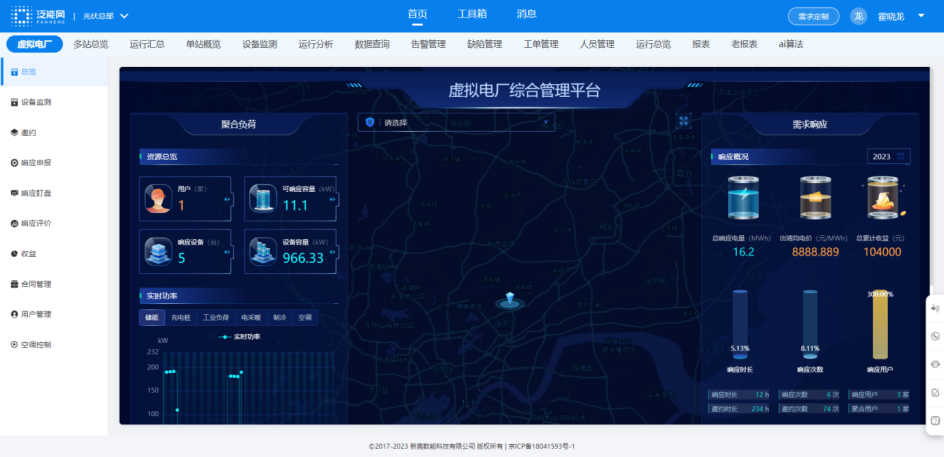
Core Insights - The article emphasizes the integration of artificial intelligence (AI) in the energy sector, particularly through the implementation of policies by the National Development and Reform Commission and the National Energy Administration to promote "AI + Energy" initiatives [1][5] - New Hope Group is highlighted as a leading example of successfully transforming technological innovations into green practices within the energy industry [1][5] Group 1: AI Applications in Energy Management - New Hope Group has developed a virtual power plant platform in Zhejiang Linping Economic Development Zone, utilizing AI algorithms for efficient resource aggregation and response, achieving a load aggregation of nearly 12.6 MW since its launch in July 2023, increasing revenue by approximately 0.5 yuan per kilowatt-hour [2] - The "Four Networks Integration" project in Anhui Xuancheng Economic Development Zone showcases AI's capability for comprehensive governance in regional energy systems, resulting in an annual carbon reduction of about 130,000 tons and significant cost savings in steam and electricity [3] Group 2: Advancements in Fusion Energy - New Hope Group is pioneering the application of AI in the field of nuclear fusion, aligning with national policies that support AI technology exploration in advanced energy sectors [4][5] - The company has established a digital twin system for fusion devices, enhancing the development of hydrogen-boron technology and achieving significant advancements in data integration and simulation analysis, which are crucial for future intelligent operations in fusion energy [4] Group 3: Strategic Vision and Industry Impact - The article outlines New Hope Group's dual approach of driving AI applications in current energy systems while also investing in cutting-edge technologies like fusion energy, positioning itself as a leader in the transition to a more intelligent and sustainable energy framework [5] - The integration of AI is portrayed as a core driving force behind the transformation of the energy sector, focusing on both immediate economic benefits and long-term environmental goals [5]