人机协同生态

Search documents
贝恩:未来5至10年人形机器人产业将进入黄金发展期
Xin Hua Cai Jing· 2025-11-26 13:59
Core Insights - The global humanoid robot industry is currently in an early exploration phase, with applications primarily in research, guidance, and limited industrial manufacturing, and is expected to ship only a few thousand units in 2024 [1] - The market is projected to enter a golden development period in the next 5 to 10 years, with humanoid robots set to reshape industrial production and significantly impact commercial services and home life, ushering in an era of "general-purpose labor" [1] - The large-scale deployment of humanoid robots will depend on key factors such as cost reduction and technological breakthroughs [1] Industry Overview - By 2035, global annual sales of humanoid robots are expected to reach 6 million units, with a market size exceeding $120 billion; in optimistic scenarios, sales could surpass 10 million units, reaching a market size of $260 billion [1] - The industry is expected to see a diversification of business models, including core component supply, R&D outsourcing, and original equipment manufacturing (OEM) and original design manufacturing (ODM), forming a complete ecosystem [1] Cost and Technology Insights - In terms of hardware, planetary roller screws and six-dimensional force sensors account for the highest cost components of humanoid robots, approximately 40% of total costs, with potential cost reductions of 70%-80% in the future [2] - Eight key technological bottlenecks have been identified in the humanoid robot industry, covering areas such as AI chips, battery and thermal management, and sensors [2] Market Phases - The humanoid robot industry is expected to undergo three phases over the next decade: early commercial exploration, initial applications in industrial sectors, and widespread adoption in commercial and home scenarios [2] - The initial market will be driven by tech enthusiasts and industrial pilots, followed by sectors like automotive, electronics, and machinery manufacturing, and ultimately expanding into medical, logistics, commercial cleaning, and home companionship [2] Strategic Recommendations - Financial investors should focus on market size, profitability, technological barriers, cost reduction potential, and cross-industry application prospects, with planetary roller screws, tactile sensors, and AI chips identified as the most attractive hardware areas [3] - Potential industry participants must clarify strategic goals, select competitive tracks, develop commercialization paths, and build differentiated advantages [3] - Clients planning to deploy humanoid robots should evaluate from two dimensions: value creation and implementation feasibility [3]

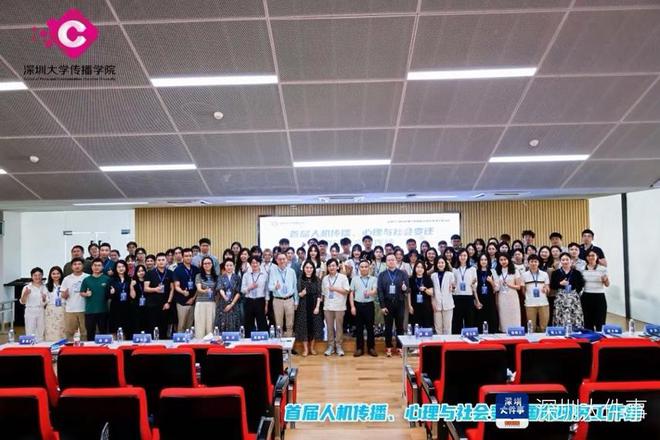
首届人机传播、心理与社会变迁国际研究工作坊在深大举办
Nan Fang Du Shi Bao· 2025-05-22 02:18
Group 1 - The workshop focused on the impact of AI chatbots and intelligent agents on communication behavior, psychological mechanisms, and social structure changes [1][4] - It attracted over 60 experts and scholars from more than 20 universities, including National University of Singapore and Renmin University of China, to discuss theoretical construction and practical paths in human-machine collaboration [1][3] - The event was part of the 40th anniversary celebrations of the journalism and communication discipline at Shenzhen University, emphasizing the importance of interdisciplinary research and international cooperation in the field of human-machine communication [3][9] Group 2 - Keynote speeches addressed the intersection of artificial intelligence with communication, psychology, and society, with notable contributions from scholars like Professor Zhu Jianhua from Hong Kong City University [4][6] - Research findings included the "enculturation theory" related to long-term human-machine interaction and cultural influences on AI privacy perceptions, providing new perspectives on AI's social impact [6][9] - The workshop featured six parallel forums discussing various themes such as relationship reconstruction in human-machine communication and emotional connections, highlighting the ongoing academic discourse in this emerging field [9]