人民币汇率升值预期

Search documents
【中金外汇 · 月报】美元指数能否在年初企稳
Sou Hu Cai Jing· 2026-01-04 10:04
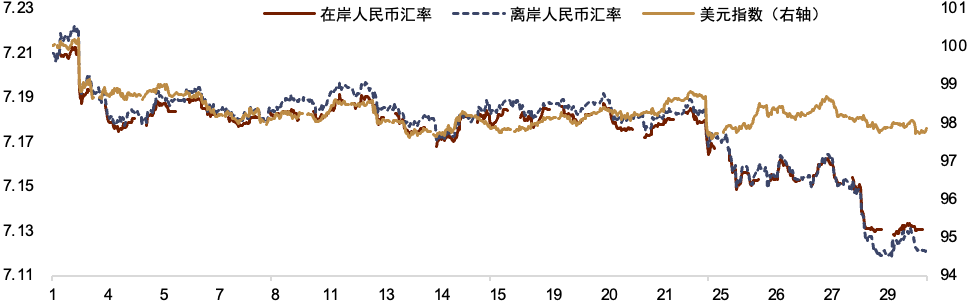
Group 1: US Economic Data and Federal Reserve Outlook - The US economic data released in December indicates a weakening economy, leading to market skepticism about the Federal Reserve's cautious stance potentially ending sooner than expected [1] - The upcoming Federal Reserve meeting at the end of January is expected to maintain the policy interest rate unchanged unless significant downward pressure on economic data emerges [2] - The nomination of a new Federal Reserve chair could significantly impact the US dollar, with market concerns about a potentially dovish candidate [2] Group 2: RMB Exchange Rate Trends - The RMB exchange rate is projected to break the 7.0 mark by the end of 2025, driven by a weak US dollar and seasonal settlement demands [3] - In January, the RMB is expected to maintain upward momentum, supported by seasonal factors and foreign trade enterprises' hedging needs [4][6] - The RMB's appreciation may be moderated by the central bank's policies aimed at stabilizing the exchange rate [5][12] Group 3: USD Exchange Rate Predictions - The USD is forecasted to trade within a range of 96.5 to 99.5 in January, with a central tendency around 98 [25] - The USD index has shown a downward trend, influenced by weak economic data and expectations of future interest rate cuts by the Federal Reserve [26][27] - The market anticipates limited upward movement for the USD in January, particularly if upcoming labor market data continues to reflect weakness [39] Group 4: Eurozone Economic Outlook - The Eurozone's economic data showed signs of stabilization in December, with inflation trends indicating a slowdown [40][41] - The European Central Bank (ECB) maintained its interest rates in December, reinforcing market expectations that the current rate cycle has ended [49] - The Euro is expected to maintain a high-level oscillation in January, supported by the ECB's stance and the absence of further rate cuts [53]

【中金外汇 · 月报】就业数据或成影响美元的关键变量
Sou Hu Cai Jing· 2025-08-31 09:28
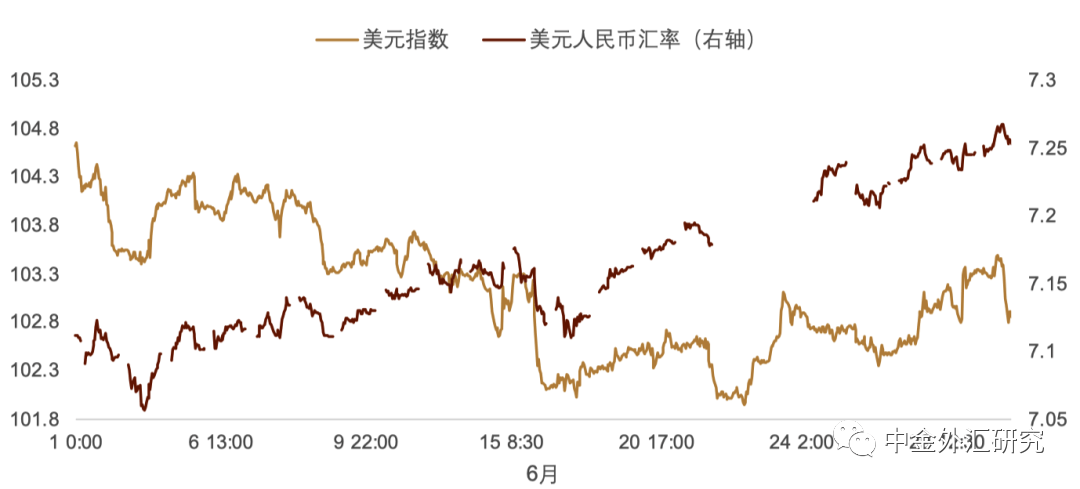
Group 1 - The core viewpoint of the articles revolves around the anticipated movements of the US dollar and the Chinese yuan, influenced by employment and inflation data, as well as central bank policies [1][2][30]. - The US employment data released in early August significantly impacted the dollar's performance, leading to a decline in the dollar index, which stabilized later in the month [1][30]. - The Federal Reserve is expected to lower interest rates by 25 basis points in September, with market participants closely monitoring the guidance provided post-meeting [2][34]. Group 2 - Chinese assets showed strong performance in August, with the CSI 300 index rising over 10%, driven by improved corporate profits and a positive market sentiment [3][4]. - The appreciation of the Chinese yuan in August was attributed to the strong performance of A-shares and an influx of cross-border equity funds [3][4]. - The prediction for the USD/CNY exchange rate in September is set between 7.00 and 7.20, with a central tendency around 7.10, influenced by the yuan's middle price and domestic risk appetite [4][6]. Group 3 - The external environment for the yuan is favorable, with a weak dollar index and stable Sino-US trade expectations supporting the yuan's appreciation [5][6]. - The middle price of the yuan appreciated by approximately 0.6% in August, marking a significant increase and widening the gap with the spot rate, which is expected to guide market expectations [14][15]. - The overall sentiment in the foreign exchange market remains positive, with cross-border capital inflows expected to continue if the strong risk appetite persists [6][27]. Group 4 - The dollar index experienced a decline of about 2.2% in August, primarily due to weak employment data and dovish signals from the Federal Reserve [30][31]. - The upcoming FOMC meeting is crucial, with a high probability of a rate cut, which could further pressure the dollar [34][36]. - Market risk appetite remains high, limiting the potential rebound of the dollar, as evidenced by strong performances in US equities [36][37]. Group 5 - The euro is expected to maintain a high-level fluctuation in September, supported by stable economic data from the Eurozone and a low likelihood of further rate cuts from the ECB [44][45]. - The Eurozone's economic indicators showed signs of stabilization in August, with PMIs indicating growth, which supports the euro's strength [46][47]. - Political uncertainties in France may pose risks to the euro, particularly if the government faces challenges that could impact market confidence [49][51]. Group 6 - The Japanese yen appreciated by approximately 2.5% against the dollar in August, influenced by weak US employment data and ongoing market dynamics [59][60]. - Japan's inflation data indicates a gradual improvement, with CPI showing signs of peaking, which may influence the Bank of Japan's future policy decisions [60][61]. - Political uncertainties in Japan, particularly regarding potential leadership changes, could create volatility in the yen's performance [62].