
美元指数走势

Search documents
建信期货棉花日报-20260320
Jian Xin Qi Huo· 2026-03-20 01:49
1. Report Information - Reported Industry: Cotton [1] - Date: March 20, 2026 [2] - Researchers: Yulan Lan, Zhenlei Lin, Haifeng Wang, Chenliang Hong, Youran Liu [3] 2. Core Viewpoint - The Zhengzhou cotton futures price is in a short - term shock correction. The supply - demand pattern in the 2026/27 season supports the medium - and long - term price trend. There are opportunities to go long at low prices [8]. 3. Summary by Directory 3.1 Market Review and Operation Suggestions - Market Review: Zhengzhou cotton continued to correct. The latest 328 - grade cotton price index was 16,722 yuan/ton, down 175 yuan/ton from the previous trading day. The cotton yarn market had good trading, but downstream orders weakened marginally. The cotton fabric market had stable prices and continuous sales [7]. - Macro and Market Conditions: The Fed kept interest rates unchanged, the dollar index was strong. The international cotton market was in shock correction. After the release of the 3 - million - ton sliding - scale duty processing trade quota, the price difference between domestic and foreign cotton converged. Cotton farmers' enthusiasm for spring plowing was high. From January to February 2026, China imported 380,000 tons of cotton, a year - on - year increase of 41%. The downstream finished product inventory decreased, and the production start - up rate increased significantly [8]. - Operation Suggestions: Pay attention to the realization of the expected reduction in cotton planting area in spring plowing, and look for opportunities to go long at low prices [8]. 3.2 Industry News - Import Data: In February 2026, China imported 170,000 tons of cotton, a year - on - year increase of 50,000 tons (44.1%); from January to February, the cumulative import was 380,000 tons, a year - on - year increase of 110,000 tons (41%). In February 2026, China imported 130,000 tons of cotton yarn, a year - on - year increase of 20,000 tons (13.1%); from January to February, the cumulative import was 290,000 tons, a year - on - year increase of 80,000 tons (40.2%) [9]. - Inspection Data: As of March 18, 2026, 1,100 cotton processing enterprises had processed and inspected 7.5762 million tons of cotton, a year - on - year increase of 12.1%, including 7.4736 million tons in Xinjiang and 64,000 tons in inland areas [9]. 3.3 Data Overview - The report provides multiple data charts, including the China Cotton Price Index, cotton spot price, cotton futures price, cotton basis change, price spreads between different contract months, cotton commercial inventory, cotton industrial inventory, warehouse receipt volume, and exchange rates of the US dollar against the RMB and the Indian rupee [16][17][18][20][27][29]
华创张瑜:关税、美元与中国复苏验证
Xin Lang Cai Jing· 2026-02-27 23:44
Group 1: Major Power Relations - The upcoming visit of the US to China in April is a highly certain event, indicating a likely low-level stability in Sino-US relations for the first half of the year [2][24] - Historical experience suggests that bilateral relations can maintain a low-level stable state for about 3-6 months following a meeting between major leaders [2][24] Group 2: Global Tariffs - The recent ruling by the US Supreme Court declaring reciprocal tariffs unconstitutional is expected to lead to their cancellation, benefiting China's export relative advantage [3][25] - If the proposed 10% tariff is implemented, the tariff differential between the US and China will narrow, reducing China's relative tariff disadvantage by 6.5 percentage points [3][26] - Industries most likely to benefit from the tariff changes include semiconductors, electronics, automotive, and pharmaceuticals [4][26] Group 3: US Dollar Index - The strength of the US dollar can be analyzed through short-term interest rate differentials and long-term debt issues, with current market conditions being chaotic [5][27] - Two scenarios are presented: one where economic growth leads to inflation and delays in interest rate cuts, and another where AI-driven growth allows for rate cuts without inflation [5][28] - The core variable influencing the long-term strength of the dollar is the successful implementation of AI technology and improvements in supply [6][29] Group 4: China's Economic Recovery - The economic recovery in China will be validated through three stages, with the first stage showing positive signals from January CPI and PPI data [7][31] - The second stage involves analyzing January financial data, which shows positive trends but requires further validation from February data [10][33] - The third stage will assess combined economic data from January and February, focusing on supply-demand gaps and consumer behavior during the Spring Festival [12][36] Group 5: Structural Economic Trends - The midstream manufacturing sector is identified as the most certain area of economic growth for the year, supported by favorable tariff policies and stable Sino-US relations [13][38] - The economic structure is showing a divergence, with new economy sectors like exports and midstream manufacturing performing well, while traditional sectors like real estate remain weak [21][46] - Current economic dynamics suggest that the combination of strong export and travel data may be sufficient to support a weak recovery, with potential for improvement in traditional sectors [21][46]

非农数据扰动美元偏弱格
Jin Tou Wang· 2026-02-12 02:44
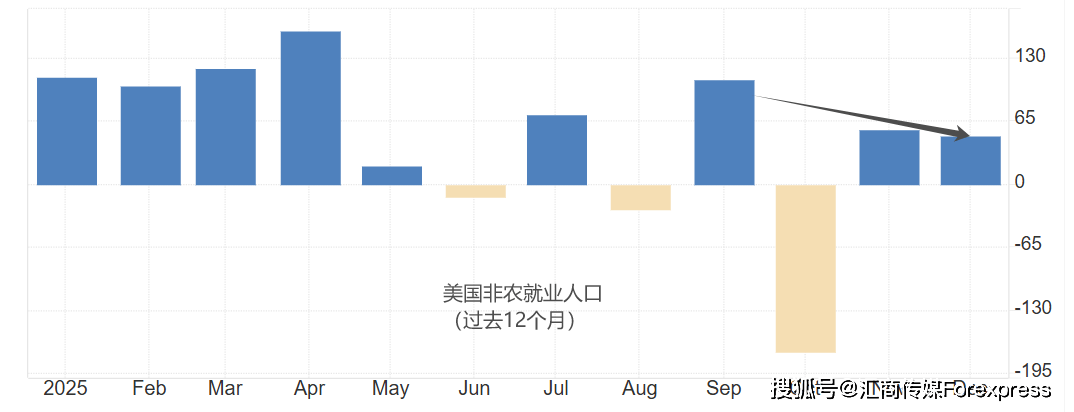
Group 1 - The U.S. non-farm payroll data for January unexpectedly showed strong growth, with an addition of 130,000 jobs, significantly higher than the expected 55,000, and the unemployment rate fell to 4.3% [1][2] - Employment growth was driven primarily by the healthcare (+82,000) and social assistance (+42,000) sectors, while the federal government (-34,000) and financial services (-22,000) saw job losses [1][2] - The report included a benchmark revision showing a downward adjustment of 898,000 jobs for the previous year, indicating a trend of weak employment in 2025 [1] Group 2 - Following the non-farm report, market expectations for interest rate cuts were slightly adjusted, with the next anticipated cut pushed from June to July, and the probability of a 25 basis point cut in March at 23.2% [2] - Federal Reserve officials expressed mixed views, with some suggesting the need for further rate cuts to address labor market weaknesses, while others noted the current stability of the job market [2] - Analysts believe that despite the strong non-farm data, the overall employment situation remains weak, and inflation is still above the 2% target, which may delay the first rate cut until June [2] Group 3 - The U.S. dollar index experienced a brief rise to 97.272 following the non-farm report but subsequently retreated, closing at 96.834, indicating a cautious market sentiment [2] - Major non-U.S. currencies showed mixed movements, with the euro fluctuating around 1.1878 and the pound maintaining support at 1.3632, while the dollar-yen pair traded in a range around 152.98 [3] - Technical analysis suggests a bearish outlook for the dollar index, with key support levels identified between 96.50 and 96.20, and a potential drop below these levels could lead to further declines [3]
金价:大家不必继续等待了!接下来,金价有可能会重演历史!
Sou Hu Cai Jing· 2026-02-06 17:32
Core Viewpoint - The gold market experienced significant volatility on February 5, with international gold prices fluctuating over $200 in a single day, closing at $4901.26 per ounce, down 0.91% [1][3]. Market Reactions - The immediate trigger for the volatility was the nomination of Kevin Walsh as the new Federal Reserve Chairman, which led to a sharp decline in gold prices, with a nearly 10% drop on January 30, marking the largest single-day decline in 13 years [3][5]. - The Shanghai Gold Exchange reported a closing price of 1108.6 yuan per gram for gold T D, down 1.84%, with further declines noted on February 6 [3]. Technical Factors - The Shanghai Gold Exchange increased margin requirements for common gold contracts, leading to more cautious short-term speculative trading and triggering some high-leverage fund liquidations [5]. - The U.S. private sector employment data for January fell short of expectations, reinforcing market bets on a potential interest rate cut by the Federal Reserve in 2026 [5]. Central Bank Actions - Global central banks have not reduced their gold holdings, with net purchases reaching 863 tons in 2025, maintaining a historically high level [7]. - The People's Bank of China has increased its gold reserves for 14 consecutive months, adding 41 tons in 2025 [7]. Long-term Outlook - Major investment banks like UBS and JPMorgan predict that gold prices could reach $6200 and $6300 per ounce, respectively, in 2026, indicating a potential upside of 30% from current levels [9]. - Historical analysis shows that gold is currently in its third major bull market since 1971, with significant price increases and volatility expected to continue [10]. Market Sentiment - Analysts suggest that the recent price drop may be a natural cooling of an overheated gold market rather than a panic sell-off [5][9]. - The current market is characterized by a lack of clear directional drivers, leading to increased emotional trading and volatility [5]. Investment Strategies - Investors are advised to consider a long-term structural approach to gold investment, especially in light of potential political pressures on the Federal Reserve and rising inflation expectations [19]. - Regular investment strategies, such as dollar-cost averaging, are recommended to mitigate market volatility impacts [19].

宏观经济深度研究:分位数视角下的美元指数走势
工银国际· 2026-01-30 07:19
Group 1: Dollar Index Trends - Since 2025, the volatility of the dollar exchange rate has increased significantly, showing short-term weakness and long-term strength characteristics[1] - The short-term changes reflect a recalibration phase in market expectations regarding interest rates, cross-border capital flows, and risk pricing[1] - The dollar index remains supported by its status as a reserve currency and relatively robust economic fundamentals, despite changes in its operational dynamics[1] Group 2: Quantile Analysis Results - The rolling quantile analysis indicates that the 2-year quantile position of the dollar index has significantly declined, suggesting a temporary easing of the dollar's strength[2] - In contrast, the 15-year long-term quantile remains in a relatively high range, indicating strong structural support for the dollar[2] - The comparison of short-term and long-term quantiles reveals a growing divergence, with short-term pricing pressures dominating volatility while long-term support persists[8] Group 3: Future Outlook - The dollar is expected to continue oscillating within a wide range as it navigates the interaction between short-term corrections and long-term support[12] - The analysis predicts that uncertainty will accumulate over the next 12 months, with the distribution range of the dollar index expanding over time[12] - The dollar's future path will be systematically constrained by interest rate differentials and risk pricing mechanisms, maintaining a balance between short-term fluctuations and long-term stability[11]
宏观动态报告:1 ? FOMC 会议点评:偏鹰派暂停,等待新任联储主席提名
Yin He Zheng Quan· 2026-01-29 01:01
Group 1: Federal Reserve Policy - The pause in interest rate cuts aligns with market expectations, with no signals on the timing of the next cut, emphasizing data and economic outlook assessments[2] - The Fed upgraded its assessment of economic activity, stating it is expanding at a "robust" pace, while uncertainties remain high[2] - The employment market shows signs of stabilization, with the Fed removing previous language about rising downside risks in employment[2] Group 2: Future Leadership and Implications - Market predictions suggest Rieder has nearly a 50% chance of being nominated as the next Fed Chair, while Warsh's probability has dropped below 20%[2] - Trump's ideal candidate would be a loyal and credible dovish figure, but loyalty may take precedence over credibility[2] - If Rieder is nominated, the dollar index is expected to decline further, despite support for dollar assets[2] Group 3: Economic Risks and Projections - Risks include the potential for U.S. labor market and economic data to exceed expectations[6] - There is a risk of unexpected liquidity issues in the U.S. Treasury market[6] - Trump's policies may stimulate inflation beyond expectations[6] - The dollar index is projected to decline further in 2026, benefiting multinational corporate profits[2]
加元承压下探创日内新低 油价与政策分化主导走势
Jin Tou Wang· 2026-01-26 02:47
Core Viewpoint - The USD/CAD exchange rate is under pressure, trading at 1.3677, influenced by a weaker US dollar index, rising oil prices supporting the Canadian dollar, and monetary policy dynamics between the US and Canada [1][2]. Group 1: Exchange Rate Dynamics - The USD/CAD pair has seen a decline of 0.1679% with a trading range between 1.3697 and 1.3709 during the day, reflecting a lack of upward momentum [1]. - The US dollar index fell by 0.79% to 97.51, driven by delayed interest rate cuts from the Federal Reserve and weakening US economic data, which increased selling pressure on the dollar [1][2]. - The Canadian dollar, as a commodity currency, is supported by stable oil prices due to geopolitical risks affecting energy supply, improving expectations for Canadian crude oil export revenues [1]. Group 2: Monetary Policy and Market Sentiment - The Bank of Canada maintains a benchmark interest rate of 2.25%, with 75% of institutions predicting stability throughout the year, providing a supportive backdrop for the Canadian dollar [2]. - The divergence in monetary policy between the US and Canada, with the Fed expected to cut rates by 54 basis points this year, narrows the interest rate differential, weakening the dollar's advantage [2]. - Trade uncertainties, particularly regarding the US-Canada-Mexico agreement and potential tariffs, pose direct challenges to the Canadian dollar, complicating its upward movement [2]. Group 3: Technical Analysis and Key Levels - The technical outlook indicates a slight bearish trend for USD/CAD, with the pair reaching a new low of 1.3677, and short-term moving averages showing downward momentum [2]. - Key support is identified at the 1.3677 low, with further declines possible towards 1.3650, while resistance is seen at the 1.3700 level, with a breakthrough potentially leading to 1.3750 [2]. - The overall market sentiment remains within a range of 1.3650 to 1.3750, with oil prices and the strength of the dollar being critical factors for short-term movements [3].
黄金早参|美就业数据强劲,对伊关系缓和,金价高位震荡
Mei Ri Jing Ji Xin Wen· 2026-01-16 03:00
Economic Data and Market Reaction - U.S. economic data, including employment and retail sales, exceeded expectations, contributing to a stronger dollar and a decline in gold prices [1] - Gold prices fluctuated, reaching a low of $4584 before recovering slightly, closing at $4620.50 per ounce, down 0.33% [1] - The U.S. dollar index hit a six-week high of 99.49, closing at 99.35, with a gain of 0.28% [1] Employment Data Insights - The U.S. Labor Department reported a surprising decrease of 9,000 in initial jobless claims, adjusted to 198,000, significantly lower than the expected 215,000 [1] - This unexpected employment data has implications for the strength of the labor market and the potential for future revisions that may reveal underlying weaknesses [1] Market Analyst Commentary - Lou Brien, a strategist at DRW Trading, cautioned that the "birth-death model" used in employment data may overestimate actual growth, suggesting potential vulnerabilities in the labor market [1] - The current strength of the dollar is identified as a primary factor driving the decline in gold prices, although there may be opportunities for gold to reverse in the future [1]
ATFX汇评:美联储褐皮书发布,8个储备区温和增长
Sou Hu Cai Jing· 2026-01-15 09:44
Economic Activity - The Federal Reserve's Beige Book indicates a neutral to optimistic outlook, with 8 out of 12 districts reporting slight or moderate economic growth, compared to the previous report where economic activity showed little change [1] - The recovery from the government shutdown in late 2025 is evident, as 8 districts have achieved growth, suggesting a rebound in the U.S. economy [1] Labor Market - The labor market remains stable, with 8 out of 12 districts reporting no changes in hiring, which is considered good news given the previous downturn [3] - Non-farm employment in December was reported at 50,000, lower than the previous 56,000 and below the average of 100,000 prior to May 2025, indicating ongoing challenges in the labor market [3] Inflation - Companies expect a slowdown in price increases, but prices are expected to remain high, which is a critical factor for the Fed's interest rate decisions [5] - Historical data suggests a higher probability of continued decline in inflation rather than an increase, with core CPI remaining at 2.6% in November and December 2025, compared to above 3% earlier in the year [5] Currency Impact - Following the Beige Book release, the dollar index closed with a bearish candlestick, indicating a short-term consolidation phase [5] - The neutral optimism reflected in the Beige Book suggests that the U.S. economy may not be as pessimistic as previously thought, potentially allowing for a continuation of the dollar's short to medium-term upward trend [5]
【2026年汇市展望】美联储政策仍是关键变量 2026年印尼卢比走势取决于内外博弈
Xin Hua Cai Jing· 2026-01-12 08:16
Core Viewpoint - The Indonesian Rupiah has undergone a pressure test in 2025 amidst increasing global financial uncertainty and diverging monetary policies among major economies, showing resilience despite external shocks and maintaining a dynamic balance with domestic fundamentals [1][2]. Exchange Rate Performance - In 2025, the USD/IDR exchange rate increased by 2.74%, with the Rupiah showing weaker performance among major Asian emerging market currencies but avoiding uncontrolled depreciation [2][7]. - The exchange rate fluctuated between 15,785 and 16,974, with a maximum amplitude of nearly 11% throughout the year [2][3]. Economic Fundamentals - Indonesia's GDP growth is projected at approximately 5% for 2025, remaining relatively high among major emerging markets, with Q1 growth at 4.87%, Q2 at 5.12%, and Q3 at 5.04% [5][6]. - The country maintained a trade surplus of $38.54 billion from January to November 2025, marking the 67th consecutive month of surplus, with foreign exchange reserves rising to $150.1 billion [6][7]. Inflation and Monetary Policy - The consumer price index rose by 2.92% year-on-year in December 2025, remaining within the central bank's target range of 1.5% to 3.5% [6]. - The central bank cut policy rates five times in 2025, maintaining a benchmark rate of 4.75% from October to December, and indicated potential for further easing depending on inflation and external conditions [9][10]. Future Outlook - For 2026, the Rupiah is expected to maintain a range-bound trading pattern rather than a unilateral trend, with the central bank targeting an exchange rate around 16,500 [8][10]. - The outlook for the Rupiah will depend on external financial conditions and domestic structural reforms, with potential for the exchange rate to range between 15,500 and 16,200 by the end of 2026 [10].