
人生选择

Search documents
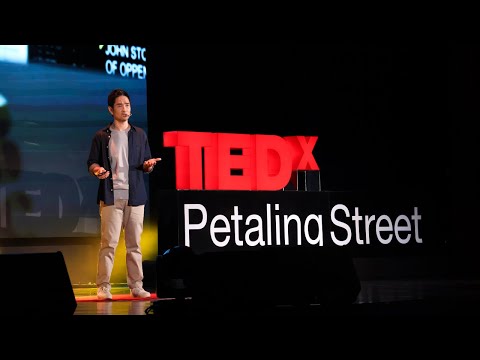
流动的追求梦想:怎么面对人生重要选择? Make Important Decisions in Life? | 翁书强 Lawrence Ong | TEDxPetalingStreet
TEDx Talks· 2026-01-30 16:18
“我的梦想就像一块块拼图,当我一个个实现它们时,也在慢慢拼凑出属于自己的人生构图。” 不安分的灵魂,不只是翁书强追求梦想的方式,更是他对生活的态度。 新闻人、背包客、外交官、演员......他的人生就是一块块拼图,用一次次 “不安分” 的选择拼凑而成。他舍弃稳定高薪的工作,奔赴欧洲流浪;离开联合国光环,转身走进剧场的灯光下。 对他而言,真正的财富从来不是物质的积累,而是源于对未知的尊重与信任,并由此获得的勇气、视野与自由。 他说:“我要自己做决定。” 于是,一片片拼图,在探索与流动中汇聚成独属于他的人生版图。 “My dreams are like pieces of a puzzle. Each one I achieve adds to the picture of my life.” For Lawrence Ong, being a restless spirit is not only his way of chasing dreams but also his attitude towards life. Journalist, backpacker, diplomat, actor… His l ...

父亲巴菲特教我的事
Sou Hu Cai Jing· 2025-10-14 13:29
Core Insights - The article discusses the life and values of Peter Buffett, son of Warren Buffett, emphasizing the importance of creating one's own path rather than relying on family wealth [4][5][6]. Group 1: Family Background and Values - Peter Buffett and his siblings have chosen careers that reflect their passions, such as music and organic farming, rather than depending on their father's wealth [2][3]. - The Buffett children have faced both advantages and pressures due to their last name, which has opened doors but also raised expectations [4][6]. Group 2: Education and Choices - Peter Buffett's admission to Stanford University was influenced by his father's reputation and connections, raising questions about privilege in education [6][7]. - He reflects on the complexities of choice and privilege, noting that having options does not always equate to true freedom in decision-making [11][14]. Group 3: The Nature of Privilege - The article explores the concept of privilege, suggesting that true privilege lies in the freedom to make choices rather than just material wealth [11][12]. - It highlights the paradox where individuals may have access to numerous options but feel constrained by societal expectations and family pressures [13][14]. Group 4: Personal Growth and Exploration - Peter Buffett shares stories of individuals who navigate various paths in search of their true calling, illustrating that exploration is a vital part of personal development [15][18]. - The narrative emphasizes that freedom requires responsibility and self-awareness, suggesting that individuals must actively engage with their choices to find fulfillment [19].
35 岁后,我终于敢说“我想要”
Hu Xiu· 2025-09-30 08:38
Core Insights - The article discusses the feelings of disillusionment and lack of motivation experienced by many individuals in their 30s and 40s, often attributed to financial pressures, relationship strains, and the challenges of aging [3][10][12] - It emphasizes the importance of recognizing and confronting personal desires rather than suppressing them, suggesting that many people live according to external expectations rather than their own [10][11][32] Group 1: Personal Reflection and Societal Expectations - Many individuals in their 30s and 40s feel a lack of energy and motivation, often leading to a "low-consumption" lifestyle [3][4] - The societal pressure to conform to certain life paths can lead to a disconnection from personal desires, resulting in a passive approach to life [8][10] - The article highlights that many people are conditioned to view desires as shameful, leading to a reluctance to pursue personal interests or ambitions [7][11] Group 2: Strategies for Self-Discovery - The author shares methods for individuals to reconnect with their desires, including reading autobiographical literature to find personal reference points [14][15] - Engaging with diverse experiences can help break free from conventional life patterns and reveal alternative ways of living [15][16][19] - Financial security is presented as a foundation for pursuing personal desires, with a recommendation to save a significant portion of income to create a "desire fund" [21][22][24] Group 3: Identity and Role Exploration - The article discusses the importance of distinguishing between societal roles and personal identity, suggesting that individuals should explore what they truly want beyond their assigned roles [25][26] - A "role stripping exercise" is proposed to help individuals identify their true desires by removing societal labels and expectations [26][27] - Establishing clear personal values and actionable goals can help translate abstract desires into concrete actions [28][30] Group 4: The Importance of Continuous Self-Inquiry - The article concludes that the most significant risk in midlife is not achieving specific goals but realizing that one has never truly lived for oneself [31][32] - It encourages individuals to continuously ask themselves what they truly want, emphasizing that it is acceptable to take time to explore and make mistakes [33][34] - Acknowledging and embracing desires, regardless of their size, is framed as a victory in personal growth [35]
中年醒悟:舍偏门,进窄门,悟空门
洞见· 2025-08-09 12:34
Core Viewpoint - The article emphasizes the importance of making wise life choices, particularly in middle age, by avoiding shortcuts, choosing less popular paths, and accepting the inevitability of change and impermanence [5][30][57]. Group 1: Avoiding Shortcuts - The article discusses the futility of seeking shortcuts in life, illustrated by the story of Ding Xiaohuai, who relied on connections rather than improving his skills, ultimately leading to his marginalization [7][12][15]. - It highlights that those who habitually take shortcuts may lose their ability to appreciate long-term value, resulting in stagnation and regression in their capabilities [16][18]. - The narrative of Lin Qingxuan, who chose hard work and writing over quick gains, serves as a contrast to those who pursue easy money, showcasing the long-term benefits of dedication [21][26]. Group 2: Choosing the Narrow Path - The article encourages individuals to make unique choices rather than following the crowd, as exemplified by the story of writer Huan Yan, who transitioned from a courier to a successful author by pursuing his passion [31][37]. - It stresses that each person has a unique position and path in life, which can only be discovered by resisting the temptation to conform [39][40]. - The author shares personal experiences of finding fulfillment in writing, reinforcing the idea that following one's passion can lead to success [42][51]. Group 3: Embracing Impermanence - The article reflects on the inevitability of aging and loss, using the metaphor of losing teeth to illustrate the acceptance of life's transient nature [58][60]. - It discusses the concept of "emptiness" in Buddhism, suggesting that understanding the impermanence of life can lead to inner peace and resilience [62][64]. - The story of Yang Jiang, who faced profound loss yet continued to live meaningfully, exemplifies the strength found in embracing life's uncertainties [67][74]. Group 4: Life Choices and Their Impact - The article posits that life is a series of choices, with each decision leading to vastly different outcomes, particularly at the age of forty, which is seen as a pivotal moment [77][80]. - It concludes that by avoiding shortcuts, choosing unique paths, and accepting impermanence, individuals can navigate life more effectively and find fulfillment [81][82].

柏林电影节入围动画电影《艺术学院1994》杭州路演
Hang Zhou Ri Bao· 2025-06-18 02:58
Group 1 - The animated film "Art College 1994" directed by Liu Jian is set to be released on June 21, with its first screening held in Hangzhou on June 16 [2] - The film tells the story of art and music students at the "Southern Art College" during a slower-paced era, exploring themes of love, friendship, and the search for artistic ideals [3][4] - Liu Jian emphasizes that the film does not provide answers but instead poses open-ended questions relevant to both his generation and today's youth [4][6] Group 2 - Liu Jian, who is also the dean of the Animation and Game School at China Academy of Art, involved many students and faculty in the film's production, highlighting the collaborative effort [5] - The film took five years to complete due to its unique hand-drawn animation style, which is rare in the current digital landscape, increasing the workload significantly [5] - "Art College 1994" has been recognized at over 90 international film festivals, including the 73rd Berlin Film Festival and the 97th Academy Awards, showcasing the international acclaim for Chinese hand-drawn animation [5]

那除不尽的,才是我们
Hu Xiu· 2025-04-22 02:55
Group 1 - The article reflects on the complexity of personal choices and the emotional weight of past decisions, suggesting a sense of regret and contemplation about the journey taken [4][6][10] - It discusses the transition from a media career to a more introspective writing practice, emphasizing the importance of authenticity in expression and the challenges faced in this shift [9][18][20] - The narrative highlights the significance of effective choices made throughout life, illustrating how these choices shape one's identity and path [14][15][26] Group 2 - The text explores the relationship between self and society, indicating that understanding oneself is intertwined with understanding the broader context of the world [31][32][36] - It critiques the tendency to conform to popular trends in writing and the media, advocating for a deeper, more meaningful engagement with content rather than mere audience appeasement [22][24][25] - The author emphasizes the necessity of continuous learning and adaptation in a rapidly changing environment, suggesting that true understanding comes from personal experience and reflection [36][38]