
人防+技防

Search documents
任何细微异常都不放过
Xin Lang Cai Jing· 2026-02-08 19:33
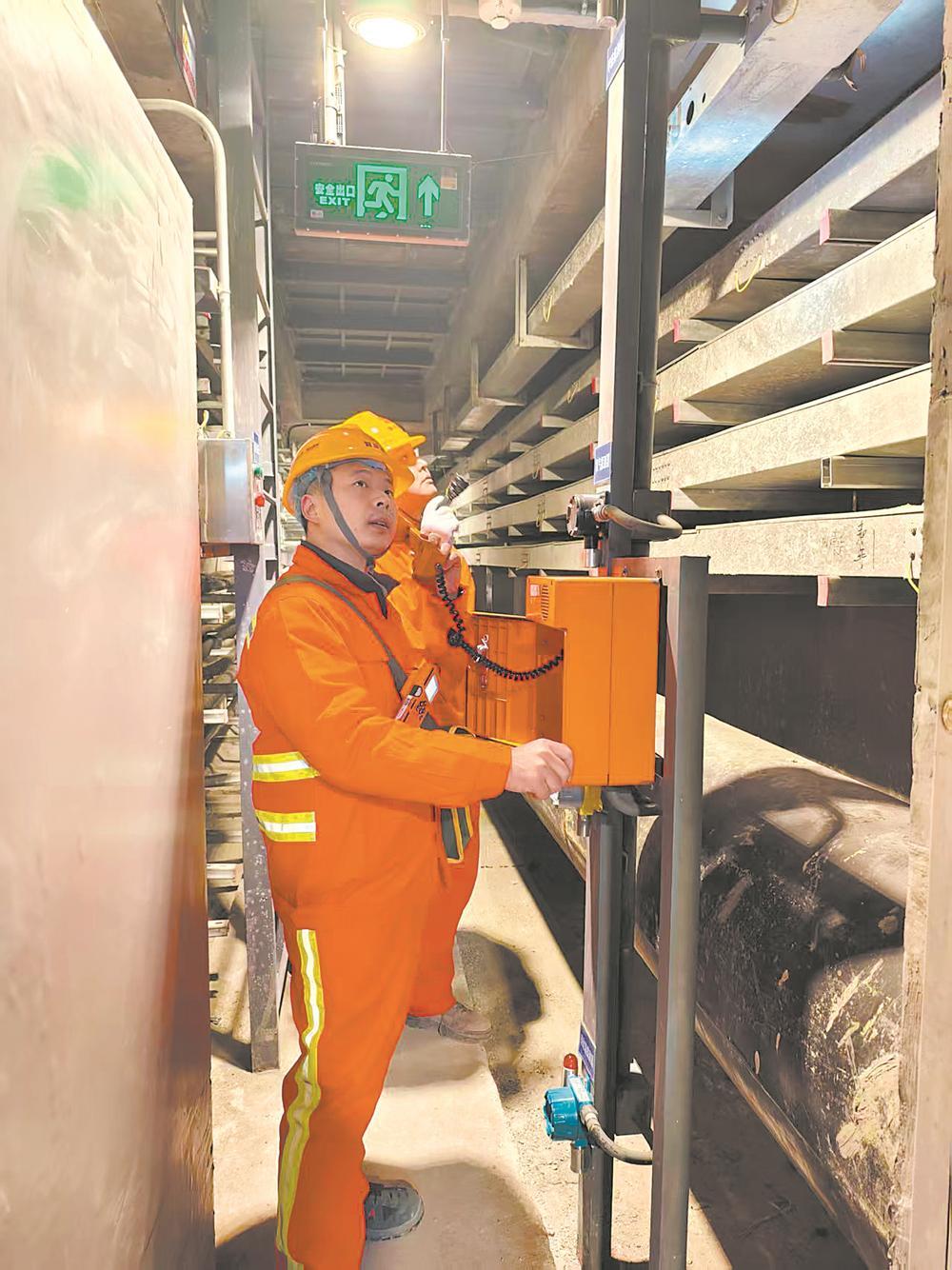
Core Viewpoint - The article highlights the importance of the underground comprehensive utility tunnel in Chengdu, which serves as the city's "lifeline" by housing essential municipal pipelines for electricity, communication, gas, and water supply, ensuring the stability and safety of urban infrastructure [3][5]. Group 1: Infrastructure Overview - The Dayun Avenue comprehensive utility tunnel spans approximately 7.3 kilometers and has a standard cross-section width of about 13.4 meters, connecting major urban areas and supporting critical infrastructure such as the Qingyang Industrial Headquarters and hospitals [3][4]. - The tunnel is organized with various municipal pipelines, including stainless steel cable trays for communication lines and DN600 water pipelines, ensuring efficient operation and maintenance [4]. Group 2: Monitoring and Maintenance - The tunnel is equipped with over 200 sensors per kilometer that monitor methane, oxygen, temperature, humidity, and hydrogen sulfide levels, acting as a comprehensive health monitoring system for the infrastructure [4]. - Inspection teams, consisting of two personnel, walk approximately 20,000 steps daily to check every interface, valve, and line, ensuring the safety and control of their designated sections [4]. Group 3: Operational Management - The monitoring center operates 24/7 with a system that includes information display, alarm monitoring, and operational management, automatically responding to any detected anomalies by activating ventilation and fire safety systems [4]. - During the Spring Festival, a dual security system combining human and technological monitoring will be in place to ensure the stability of the underground infrastructure, with emergency teams on standby and sufficient supplies [5]. Group 4: Urban Development - Chengdu has been actively promoting the construction of underground comprehensive utility tunnels, consolidating previously separate pipelines into a single underground system, which enhances urban aesthetics and functionality [5].

成都郫都织密“微网实格”打通服务群众“最后一米”
Xin Lang Cai Jing· 2026-02-03 19:46
Core Viewpoint - Chengdu's Pidu District has implemented a "micro-network real grid" model to enhance grassroots service networks, focusing on organizational restructuring, talent cultivation, technology integration, and mechanism reconstruction to improve service delivery to the community [1] Group 1: Strengthening the Professional Grid Worker Team - Pidu District has established a professional team of full-time grid workers to address issues of high turnover and lack of expertise among part-time workers, with over 80% of the new recruits being under 30 years old and holding at least an associate degree [2] - A comprehensive training system has been developed, including two weeks of intensive training covering policies, community work methods, and practical skills tailored to specific grid characteristics [2] - The district has integrated 1,689 grids into a single network and defined 47 key responsibilities for grid workers, creating a management model that enhances efficiency and accountability [2] Group 2: Building a Robust Safety Network - Pidu District has implemented a dual mechanism of "human defense + technical defense" to enhance risk prediction, integrating smart surveillance systems with manual inspections [3][4] - The district has established 5,767 micro-grids, staffed by various community members, to ensure comprehensive coverage and effective response to local issues [4] - Since the implementation of the "micro-network real grid" model, over 286,000 effective incidents have been reported, achieving a resolution rate of 98.2% [4] Group 3: Conflict Resolution and Mediation - Full-time grid workers are trained to become recognized mediators, with a structured certification process that includes specialized training in legal knowledge and communication skills [5] - The district has successfully resolved over 10,000 conflicts annually, with more than 80% of disputes settled at the community level, aiming to keep minor issues within the grid [5] Group 4: Efficient Problem-Solving Mechanism - The "whistle-blowing and reporting" mechanism allows grid workers to quickly alert relevant departments about issues, significantly reducing response times and improving resolution rates [6][7] - The average response time to grassroots alerts has been halved, leading to increased event acceptance and completion rates, as well as higher public satisfaction [7]
贵州“十四五”成功避让地灾183起 持续完善“人防+技防”防控体系
Zhong Guo Zi Ran Zi Yuan Bao· 2026-01-26 03:55
Core Insights - Guizhou has significantly improved its disaster prevention and mitigation capabilities through a comprehensive "human defense + technical defense" system, successfully avoiding 183 geological disasters since the start of the 14th Five-Year Plan, preventing 6,520 potential casualties and over 740 million yuan in direct economic losses [1][2][3] Group 1: Disaster Prevention Achievements - The proportion of successfully avoided geological disasters has steadily increased from 57.12% in 2021 to 86.79% in 2025 [1] - Guizhou's geological disaster-prone areas cover 152,800 square kilometers, accounting for 86.8% of the province's total area, indicating a severe disaster prevention situation [2] Group 2: Technical Defense Measures - Advanced technologies such as satellite remote sensing and synthetic aperture radar interferometry have been employed, leading to the identification of 5,809 new deformation areas and 725 geological disaster risk points [2] - Over 10,000 automated monitoring stations have been established for real-time monitoring and early warning of geological disaster hazards [2] Group 3: Human Defense Initiatives - Each year, over 400 technical personnel are deployed to the front lines during flood seasons to provide technical guidance and strengthen grassroots disaster prevention capabilities [2] - Continuous training and drills are conducted to enhance the public's ability to recognize and respond to disaster risks [2] Group 4: Future Plans and Policies - The Guizhou provincial government plans to implement relocation for 78,600 households and 318,800 individuals from 3,037 high-risk geological disaster points over the next five years [3] - The province aims to further enhance its comprehensive prevention system focused on risk control, supporting high-quality economic and social development [3]
视频丨电动自行车新国标今起实施 “人防+技防”守护充电安全
Yang Shi Xin Wen Ke Hu Duan· 2025-12-01 14:20
Group 1 - The new national standard for electric bicycles has been fully implemented, introducing stricter technical requirements in areas such as fire resistance, plastic content, anti-tampering, and braking performance, thereby raising safety thresholds [2] - In regions like Jiangsu and Zhejiang, electric bicycles that comply with the new standards have already begun to be sold [2][3] - Consumers are advised to recognize the new standard when purchasing electric bicycles, as vehicles that do not meet the new standards will not be able to be registered or sold [9] Group 2 - The new standard eliminates the mandatory installation of pedals, making it a notable feature of the new electric bicycles [11] - Local governments in Zhejiang have taken measures to enhance charging safety, including the construction of new charging facilities and the installation of smart charging piles [11][15] - In Huzhou, a community has established 900 charging ports and implemented smoke monitoring systems, along with fire extinguishers, to improve safety [13]

电动自行车新国标今起实施 “人防+技防”守护充电安全
Yang Shi Xin Wen Ke Hu Duan· 2025-12-01 13:11
Core Viewpoint - The new national standard for electric bicycles has been fully implemented, introducing stricter technical requirements in key areas such as fire resistance, plastic content, anti-tampering, and braking performance, thereby enhancing safety standards across the industry [1]. Group 1: Implementation of New Standards - The new standard has been officially implemented as of December 1, with electric bicycles meeting these standards already available for sale in regions like Jiangsu and Zhejiang [1]. - Retailers are actively stocking new standard vehicles, with consumers showing interest in purchasing them [2]. - The new standard prohibits the registration and sale of old standard vehicles, requiring consumers to ensure that the models they purchase comply with the new regulations [8]. Group 2: Safety Features and Consumer Impact - The new standard eliminates the mandatory installation of pedals, making this a notable feature of the new electric bicycles [10]. - The core objective of the new regulations is to ensure safety not only on the roads but also in residential areas and parking lots [10]. - Consumers have expressed that the transition to the new standard does not significantly impact their daily commuting needs, as long as they adhere to road regulations [6][8]. Group 3: Charging Safety Measures - Local governments in Zhejiang have implemented measures to enhance charging safety, including the construction of new charging facilities and the installation of smart charging stations [10][14]. - In Huzhou, a community has established 900 charging ports and introduced smoke detection systems, along with fire extinguishers, to improve safety during charging [12]. - Lishui has also developed 54 new charging facilities and installed 1,808 convenient charging stations, integrating smart features for enhanced safety [16].
如皋织密“人防+技防”监管网守护河道生态安全
Xin Hua Ri Bao· 2025-07-30 23:39
Core Viewpoint - Rugao City is implementing a "human defense + technical defense" approach to enhance river ecological safety and water environment governance, addressing challenges such as illegal sand mining and pollution [1][2][3] Group 1: Regulatory Framework - The city has established a "river chief system + grid management" to strengthen regulatory responsibilities and enhance the professionalism of inspection teams [2] - A comprehensive regulatory network has been created, combining human oversight with advanced technology, including drone surveillance and AI video monitoring [2] Group 2: Enforcement Actions - On July 15, a successful operation led to the seizure of an illegal sand mining vessel, showcasing the effectiveness of the city's regulatory measures [1] - Since the establishment of the Rugao Water Resource Dispatch Center in December 2024, the city has conducted 833 inspections, resulting in the identification and handling of five illegal sand mining cases [2] Group 3: Future Directions - Rugao City aims to continue innovating in water environment governance, enhancing public awareness of river protection, and ensuring the sustainability of river ecosystems [3]
【省自然资源厅】2024年度全国地质灾害成功避险十大典型案例公布 陕西一案例入选
Shan Xi Ri Bao· 2025-05-27 22:49
Core Viewpoint - The Ministry of Natural Resources has announced the top ten successful geological disaster risk avoidance cases for 2024, highlighting the importance of grassroots disaster prevention and mitigation experiences, with the Wangjiabawan landslide case in Lanhua County being recognized as a model for effective risk management [1][2]. Group 1: Case Details - On August 12, 2024, a landslide occurred in Wangjiabawan, Lanhua County, resulting in the complete destruction of a two-story building and partial encirclement of two other buildings by landslide debris [1]. - The successful evacuation of threatened individuals prior to the disaster was crucial in preventing casualties [1]. Group 2: Monitoring and Response - Crack meters installed at the geological disaster risk point issued two yellow warnings on May 18 and 19, 2024, indicating potential risks [2]. - Following multiple rounds of rainfall in July, local authorities organized the evacuation of at-risk residents on July 23 and restricted access to threatened buildings [2]. - A warning alert was issued at 1:34 AM on August 12, indicating signs of disaster at the Wangjiabawan site, leading to immediate action from monitoring personnel [2]. Group 3: Importance of Preparedness - The landslide occurred suddenly after 12 days of clear weather, emphasizing the need for continuous monitoring and preparedness [2]. - The monitoring equipment provided a 26-minute advance warning, showcasing the effectiveness of combining human and technical defenses in disaster prevention [2].