地质灾害防治

Search documents
广东地质系统要重点抓好这八项工作
Xin Lang Cai Jing· 2026-02-20 01:06
Core Viewpoint - The 2026 Provincial Geological Work Conference emphasized the need for a new system for geological exploration units and the implementation of a new round of mineral exploration strategies to support geological disaster prevention and ecological construction in Guangdong [1][2]. Group 1: Key Focus Areas for 2026 - Focus on completing the "second half" of the reform, transforming the effectiveness of geological exploration unit reforms into development and governance momentum [2]. - Enhance the quality and efficiency of the geological economy, with larger units taking on significant responsibilities and smaller units accelerating their development [2]. - Improve energy resource security by implementing a new round of mineral exploration strategies and strengthening basic geological surveys [2]. - Support geological disaster prevention by establishing a technical support system for provincial, regional, and municipal collaboration, creating a "1-hour response circle" for geological disaster management [2]. - Contribute to the ecological construction of a "Green and Beautiful Guangdong" by strengthening integrated protection and systematic governance research centers for natural resources [2]. - Assist in the implementation of major projects like the "Hundred-Thousand-Million Project" and support high-quality development in key areas [2]. - Promote geological technological innovation by improving institutional frameworks, building innovation platforms, and implementing technology innovation projects [2]. - Ensure safety production and risk prevention by strictly enforcing responsibility systems to prevent major accidents [2].


科技破题“冬春之困”
Zhong Guo Zi Ran Zi Yuan Bao· 2026-01-26 04:41
Core Viewpoint - A 5.1 magnitude earthquake occurred in Qiaojia County, Zhaotong City, Yunnan Province, highlighting the geological disaster risks in the Wumeng Mountain area, which has been experiencing frequent geological disasters, particularly during the winter and spring seasons [7][8]. Geological Disaster Analysis - The Wumeng Mountain area spans across the borders of Sichuan, Yunnan, and Guizhou provinces, covering 38 counties with an area of approximately 110,000 square kilometers and an average elevation of 2,500 meters, making it a key region for geological disaster prevention [10]. - The geological conditions in the Wumeng Mountain area are complex, situated at the junction of two major tectonic domains, leading to significant geological instability [10][11]. - The region has a high population density, with over 22 million people, and the town of Zhenxiong has a population density of 380 people per square kilometer, increasing the potential impact of geological disasters [13]. Seasonal Disaster Patterns - Geological disasters in the Wumeng Mountain area occur throughout the year, with a notable increase during the winter and spring seasons, which is contrary to the typical summer peak seen in other regions [14]. - The unique winter and spring disaster patterns are attributed to prolonged rain and snow, leading to internal mountain instability that is difficult to predict [14]. Technological Innovations in Disaster Prevention - A major scientific project has been initiated to study the mechanisms and risk prevention of geological disasters in the Wumeng Mountain area, led by the China Geological Environment Monitoring Institute [16]. - New technologies, such as thermal infrared detection and dendrochronology, are being explored for early identification of geological disaster risks [18][20]. - A scientific observation system has been established in Zhenxiong to monitor geological changes in real-time, providing critical data for disaster analysis [23]. Comprehensive Defense System Development - A comprehensive geological disaster risk defense system is being proposed, emphasizing the importance of land use planning and risk assessment in mitigating disaster risks [24][25]. - A special action plan has been launched to identify and prevent geological disaster hazards in the Wumeng Mountain area, utilizing advanced technologies like satellite remote sensing and drone surveys [27].

贵州“十四五”成功避让地灾183起 持续完善“人防+技防”防控体系
Zhong Guo Zi Ran Zi Yuan Bao· 2026-01-26 03:55
Core Insights - Guizhou has significantly improved its disaster prevention and mitigation capabilities through a comprehensive "human defense + technical defense" system, successfully avoiding 183 geological disasters since the start of the 14th Five-Year Plan, preventing 6,520 potential casualties and over 740 million yuan in direct economic losses [1][2][3] Group 1: Disaster Prevention Achievements - The proportion of successfully avoided geological disasters has steadily increased from 57.12% in 2021 to 86.79% in 2025 [1] - Guizhou's geological disaster-prone areas cover 152,800 square kilometers, accounting for 86.8% of the province's total area, indicating a severe disaster prevention situation [2] Group 2: Technical Defense Measures - Advanced technologies such as satellite remote sensing and synthetic aperture radar interferometry have been employed, leading to the identification of 5,809 new deformation areas and 725 geological disaster risk points [2] - Over 10,000 automated monitoring stations have been established for real-time monitoring and early warning of geological disaster hazards [2] Group 3: Human Defense Initiatives - Each year, over 400 technical personnel are deployed to the front lines during flood seasons to provide technical guidance and strengthen grassroots disaster prevention capabilities [2] - Continuous training and drills are conducted to enhance the public's ability to recognize and respond to disaster risks [2] Group 4: Future Plans and Policies - The Guizhou provincial government plans to implement relocation for 78,600 households and 318,800 individuals from 3,037 high-risk geological disaster points over the next five years [3] - The province aims to further enhance its comprehensive prevention system focused on risk control, supporting high-quality economic and social development [3]
四川“十四五”成功避让240起地灾
Zhong Guo Zi Ran Zi Yuan Bao· 2026-01-20 01:50
Core Insights - During the "14th Five-Year Plan" period, Sichuan Province issued 28,000 geological disaster meteorological risk warnings at yellow level and above, organized the evacuation of 6.048 million people, and successfully avoided 240 geological disasters, preventing potential casualties of 4,505 people [1][2] Group 1: Disaster Prevention Measures - Sichuan Province has experienced four earthquakes of magnitude 6 or above and frequent extreme weather events, leading to a complex and severe geological disaster prevention situation [1] - The province has implemented regulations such as the "Sichuan Province Geological Disaster Prevention Regulations" and integrated geological disaster risk assessment results into land spatial planning at all administrative levels [1][2] Group 2: Funding and Incentives - The province has initiated a three-year comprehensive remediation action plan for geological disasters (2021-2023) and an overall relocation plan (2023-2027), utilizing various funding models including government bonds and interest-subsidized loans [1] - An incentive mechanism for relocation has been established, along with strengthened legal protections [1] Group 3: Risk Assessment and Monitoring - Sichuan Province focuses on proactive, source-based, and scientific prevention of geological disasters, completing risk assessments at provincial, municipal, and county levels [2] - The province has conducted over 10 rounds of dynamic hazard inspections and identified 12,900 new geological disaster points for management [2] - Monitoring and early warning systems have been enhanced, with 4,968 comprehensive governance projects completed and 50,200 households relocated from disaster-threatened areas [2]
2025年底安徽省耕地面积达8434.97万亩 连续26年实现占补平衡
Xin Lang Cai Jing· 2026-01-15 16:20
Group 1 - The Anhui Province's natural resources system has made significant progress in land protection, farmland preservation, and efficient utilization, contributing to high-quality economic and social development [1] - In 2025, the province approved 326,500 acres of various construction land, a year-on-year increase of 31.0%, supporting major projects with a total investment of 220 billion yuan [1] - The total supply of state-owned construction land reached 332,600 acres, with contract prices amounting to 121.949 billion yuan, ranking 8th nationally, 3rd in the Yangtze River Delta, and 2nd in Central China [1] Group 2 - By the end of 2025, Anhui Province's arable land area reached 84,349,700 acres, exceeding planning targets and achieving a balance of arable land for 26 consecutive years [2] - The province has implemented 15 provincial mountain-water projects with a total investment of 1.167 billion yuan, restoring 3,750 abandoned mines over an area of 105,200 acres [2] - In 2025, Anhui Province resolved historical "registration difficulties" for 157,000 housing units, with cross-provincial natural resource registration recognized as a landmark achievement in the Yangtze River Delta integration [2]
贵州地质灾害避让率5年提升24个百分点
Xin Lang Cai Jing· 2026-01-11 22:25
Core Insights - Since the beginning of the 14th Five-Year Plan, Guizhou has strengthened its "human defense + technical defense" system for geological disaster prevention and mitigation, leading to a continuous improvement in disaster prevention levels [1] - A total of 183 geological disasters have been successfully avoided, preventing 6,520 casualties and avoiding direct economic losses exceeding 740 million yuan [1] - The success rate of avoiding geological disasters has steadily increased from 57.12% in 2021 to 86.79% in 2025, with a five-year average of 75.31%, up 24 percentage points from the 50.9% average during the 13th Five-Year Plan [1] Future Goals - The province aims to upgrade its "hidden danger points + risk areas" dual control mechanism by 2030, focusing on establishing a comprehensive prevention and control system for geological disaster risks [1] - The goal is to enhance the capacity for geological disaster prevention and mitigation, maximizing the prevention and resolution of geological disaster risks, and advancing geological disaster prevention work to new heights [1]
压紧压实防灾责任 凉山成功避让18起地质灾害
Si Chuan Ri Bao· 2026-01-04 06:14
Core Viewpoint - The article highlights the effective disaster prevention measures taken in Liangshan Prefecture, which successfully avoided multiple geological disasters during the flood season, resulting in the safe evacuation of thousands of residents and significant economic loss prevention. Group 1: Disaster Prevention Measures - Liangshan Prefecture successfully avoided 18 geological disasters through monitoring, early warning, and evacuation, relocating 625 households and 2,510 individuals, thereby preventing potential casualties and economic losses of approximately 23.24 million yuan [1] - A high-level meteorological risk warning was issued on July 6, prompting local governments to implement disaster prevention responsibilities and measures, leading to timely evacuations [2] - The proactive measures included notifying residents of imminent threats and conducting rehearsals for evacuation, which proved effective during sudden weather changes [2] Group 2: Impact of Geological Disasters - The scale of a significant disaster on July 6 was measured at approximately 25,000 cubic meters, causing direct economic losses of about 600,000 yuan [3] - On July 20, a landslide was detected, leading to the evacuation of residents just before a major landslide occurred, preventing casualties among 108 individuals [4] - In another incident, a mudslide caused damage to 8 households and infrastructure, but timely evacuations avoided casualties and reduced economic losses by 1.5 million yuan [6] Group 3: Monitoring and Responsibility - Liangshan Prefecture has established a comprehensive monitoring and warning system, identifying 3,941 geological hazard points and 410 key monitoring areas [8] - The local government has allocated 15.3 million yuan for disaster monitoring and has trained over 27,000 individuals in disaster response and evacuation drills [8] - A total of 3,117 households and 11,955 individuals have been proactively evacuated this year, with specific measures taken for areas at risk of secondary geological disasters due to forest fires [8]
自然资源部启动乌蒙山区冬春季地质灾害隐患排查防范专项行动
Yang Shi Wang· 2025-12-09 03:26
Core Viewpoint - The Ministry of Natural Resources has initiated a special action for geological disaster risk investigation and prevention in the Wumeng Mountain area, emphasizing the need for year-round disaster prevention awareness and robust organizational leadership to mitigate significant geological disaster risks [1][2] Group 1: Geological Disaster Characteristics - The Wumeng Mountain area is characterized by high frequency and severity of geological disasters, which are increasingly influenced by climate change, with a rising proportion of winter-spring disasters due to freeze-thaw effects and rain/snow infiltration [1] - Geological disaster risks are predicted to remain high this winter and spring due to low-temperature rain, snow, and freezing weather conditions [1] Group 2: Specific Requirements for Disaster Prevention - The meeting outlined specific requirements for geological disaster prevention, including strengthening top-level design, establishing monitoring networks, and enhancing risk assessment through comprehensive remote sensing technology [2] - A dynamic management platform will be created to accurately assess and manage geological disaster risks, with a focus on intelligent monitoring and early warning systems [2] - The initiative will also involve training and public awareness campaigns at the grassroots level, emphasizing collaboration among various stakeholders to effectively address disaster prevention [2]
乌蒙山区冬春季地质灾害排查工作启动
Zhong Guo Zi Ran Zi Yuan Bao· 2025-11-20 01:23
Core Points - The Southwest Five Provinces (Regions, Cities) Geological Disaster Prevention and Mitigation Experience Exchange Conference was held in Guiyang, Guizhou Province, focusing on extreme weather disaster factors and strengthening geological disaster control [1] - The region faces severe challenges in geological disaster prevention due to complex geological structures and frequent extreme weather events, with geological disaster points accounting for approximately one-third of the national total [1] - The conference emphasized the importance of practical experience, problem analysis, and collaborative strategies to enhance disaster prevention, reduction, and response capabilities [1] Summary by Sections Experience Exchange - The conference included various segments such as experience sharing, academic exchanges, thematic discussions, and on-site communication aimed at improving geological disaster prevention capabilities in the Southwest region [1] Risk Investigation - The meeting officially launched a winter-spring geological disaster investigation in the Wumeng Mountain area, covering 47 counties across 11 cities in Guizhou, Yunnan, and Sichuan provinces [2] - Relevant departments will utilize "air-space-ground" technology to enhance risk identification, install monitoring equipment, and improve public disaster reporting [2] Database and Mapping - The investigation will update the provincial geological disaster database based on county-level surveys and strengthen the interconnectivity and dynamic updates of national and provincial databases [2] - A comprehensive map for geological disaster prevention in key areas of the Wumeng Mountain region will be created [2] Expert Contributions - A specialized lecture was delivered by an academician from the Chinese Academy of Engineering, focusing on current geological disaster prevention and mitigation issues and recommendations [2] - Representatives from various natural resource departments shared experiences related to risk relocation, innovative work mechanisms, watershed management, freeze-thaw prevention, and intelligent disaster prevention [2]
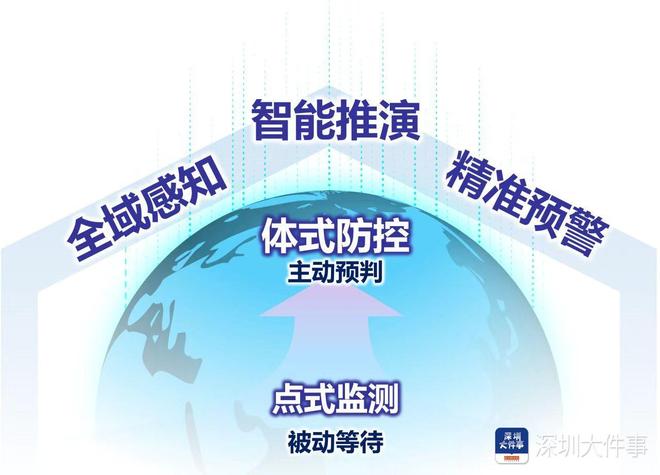
可实时预警岩体微小变化!深大团队研发地质灾害防治系统
Nan Fang Du Shi Bao· 2025-10-21 07:57
Core Viewpoint - The research team led by Professor Huang Hui from Shenzhen University has developed a new generation of intelligent monitoring system for geological disasters, which integrates computer vision, deep learning, and cloud-edge-end collaborative technology, transforming traditional point-based monitoring into comprehensive and intelligent monitoring [1][3]. Group 1: Traditional Monitoring Limitations - Traditional geological disaster monitoring methods rely heavily on embedded sensors and manual inspections, which have significant limitations [3]. - Sensors can only monitor preset points and cannot cover entire risk areas, while manual inspections are constrained by weather and terrain, making many dangerous areas inaccessible [3]. Group 2: Technological Innovations - The team proposed a core graphic information "cloud-edge-end" collaborative processing technology, achieving a transition from point monitoring to comprehensive prevention [3]. - The system utilizes a combination of computer graphics, computer vision, and deep learning, with breakthroughs in three key technical areas: effective capture of abnormal movements in monitored areas, over 85% accuracy in identifying rockfall events, and high-precision measurement of target displacement [3]. Group 3: Application and Impact - The system has demonstrated its application value in various scenarios, including 24-hour monitoring of tunnel entrances and high slope sections on mountain roads, rockfall disaster warnings for railways, stability monitoring in open-pit mining, and ensuring the safety of slopes in water conservancy projects [5]. - It has been implemented in Shenzhen's Jiangangshan Park, providing continuous monitoring and alarm for dangerous rocks and rockfalls [5]. - The monitoring device is equipped with a large-capacity solar power system for uninterrupted operation, showcasing strong environmental adaptability and energy self-sufficiency [5]. - The system captures minute changes in rock formations using high-resolution cameras and analyzes data in real-time with built-in intelligent algorithms, triggering multi-level alerts and uploading data to a cloud management platform via 4G/5G networks [5]. - This technology marks a shift from passive waiting to proactive prediction in geological disaster monitoring and early warning, entering a new phase of "full-domain perception, intelligent deduction, and precise warning" [5].