
代位求偿

Search documents
香港大埔火灾小区“火险”保额为20亿港元,保险公司或需足额赔偿!业内人士:保险公司有权向责任方追讨赔付款项
Mei Ri Jing Ji Xin Wen· 2025-11-28 13:44
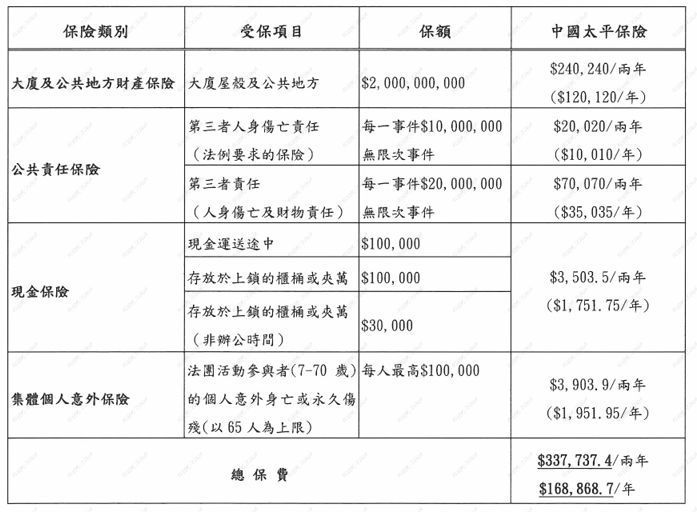
Core Viewpoint - A significant fire incident occurred at Hong Kong's Tai Po Wong Fuk Court, resulting in major casualties and prompting multiple insurance companies to initiate emergency claims processes. The insurance coverage primarily involves property-related insurance and contractor insurance, with the main insurer being China Taiping Insurance (Hong Kong) [1][2]. Insurance Arrangements - The fire incident involves two main types of insurance: property-related insurance at the estate level and contractor insurance covering engineering and employee protection. The property insurance includes public liability and personal accident insurance, with a total premium of approximately HKD 337,737.4 for two years [1][2][3]. - The property insurance covers the building structure and common areas with a sum insured of HKD 2 billion, while public liability insurance has a limit of HKD 20 million per incident [3][4]. Claims and Compensation - Insurance companies are required to compensate for the full value of the insured property before damage, or restore it to its original condition. The estimated losses from the fire are expected to exceed HKD 2 billion, indicating that full compensation may be necessary [4][6]. - The public liability insurance and accident insurance are anticipated to be fully compensated, with the public liability insurance covering third-party bodily injury and property damage [9][12]. Investigation and Liability - The Hong Kong Independent Commission Against Corruption has launched an investigation into potential corruption related to the renovation works at Wong Fuk Court, with several individuals arrested. The investigation focuses on whether the materials used complied with fire safety standards [6][8]. - If a third party is found liable for the fire due to negligence, the insurance company may invoke subrogation rights to recover the compensation paid to the insured [8][14]. Home Insurance - Personal home insurance policies are also relevant, as they cover damages to personal property within the insured premises. This type of insurance is gaining attention among homeowners and tenants [15][16]. - Home insurance typically covers personal belongings against various risks, including fire, theft, and water damage, while fire insurance primarily covers structural damages [19][20].



火险、责任险、工程险、家居险拆解香港大埔火灾“天价”保险:保哪些,怎么赔?
Mei Ri Jing Ji Xin Wen· 2025-11-28 10:54
Core Viewpoint - A significant fire incident occurred at Hong Kong's Macpherson Garden, resulting in major casualties and prompting multiple insurance companies to initiate emergency claims processes. The insurance coverage primarily involves property-related insurance and contractor insurance, with the main insurer being China Taiping Insurance (Hong Kong) [1][12]. Insurance Arrangements - The fire incident involves two main types of insurance: property-related insurance at the estate level and contractor insurance covering engineering and employee protection, both underwritten by China Taiping [1][12]. - The estate's management committee has decided to continue purchasing collective fire insurance from China Taiping for the period from January 1, 2025, to December 31, 2026, with a total premium of approximately HKD 337,737.4 for two years [2][3]. Insurance Coverage Details - The property insurance covers the building structure and common areas with a sum insured of HKD 2 billion, while public liability insurance covers third-party bodily injury with a limit of HKD 10 million per event [3][4]. - The insurance policy includes a "subrogation" clause, allowing the insurer to recover costs from third parties if negligence is proven [6][8]. Claims Process and Emergency Measures - Multiple insurance companies, including major players like China Life and AIA, have activated emergency claims protocols, offering streamlined services and support for affected clients [12]. - The banking sector, represented by Shanghai Bank, has also initiated a donation of HKD 10 million to support rescue and recovery efforts [12]. Home Insurance Insights - Home insurance, which covers personal property within the insured premises, is gaining attention as it provides compensation for losses due to incidents like theft, fire, and natural disasters [13][14]. - The distinction between home insurance and fire insurance is emphasized, with the former covering personal belongings and the latter covering structural damages [16][17]. Industry Perspective - The insurance industry views comprehensive insurance arrangements as essential for disaster recovery and urban stability, highlighting the importance of property and public liability insurance in providing financial support post-disaster [11][12].
最高法出手整治“开门杀”,交通事故责任认定迎来统一标准
Hua Xia Shi Bao· 2025-11-12 12:40
Core Viewpoint - The Supreme People's Court is seeking public opinion on a draft interpretation regarding traffic accident liability, specifically addressing the issue of "door kill" accidents, aiming to clarify responsibility and insurance compensation mechanisms [1][2][3] Group 1: Legal and Regulatory Changes - The draft interpretation aims to establish clear guidelines for liability in "door kill" accidents, which have become more frequent and complex, leading to significant legal disputes and resource consumption in the judicial system [1][2] - The new regulation allows victims to claim compensation from the passenger responsible for opening the door, categorizing it as a liability of the "motor vehicle party," thus obligating insurance companies to compensate under mandatory and commercial insurance [3][4] Group 2: Insurance Implications - Insurance companies can no longer refuse compensation by claiming that the passenger is not covered under the policy, fundamentally changing the insurance landscape for such accidents [3][4] - The draft also details the rights of insurance companies regarding subrogation, allowing them to pursue recovery from passengers only in cases of intentional harm, while generally prohibiting recovery from passengers unless they are family members of the insured [5] Group 3: Industry Impact and Risk Assessment - The implementation of the new rules is expected to lead to significant changes in car insurance product design and claims processes, with a focus on incorporating human factors such as driving habits and passenger types into risk pricing [6][7] - The new regulations may result in a structural adjustment of insurance premiums, with high-risk groups facing increased costs while low-risk users may benefit from lower premiums [6][7] Group 4: Recommendations for Improvement - Industry experts suggest that insurance companies should develop specialized insurance products for commercial vehicles and enhance risk management through technology, such as installing door reminders and cameras [7] - The overall effectiveness of the new regulations will depend on the collaboration between the judiciary, regulatory bodies, and insurance companies to promote a safer culture around passenger loading and unloading [7]