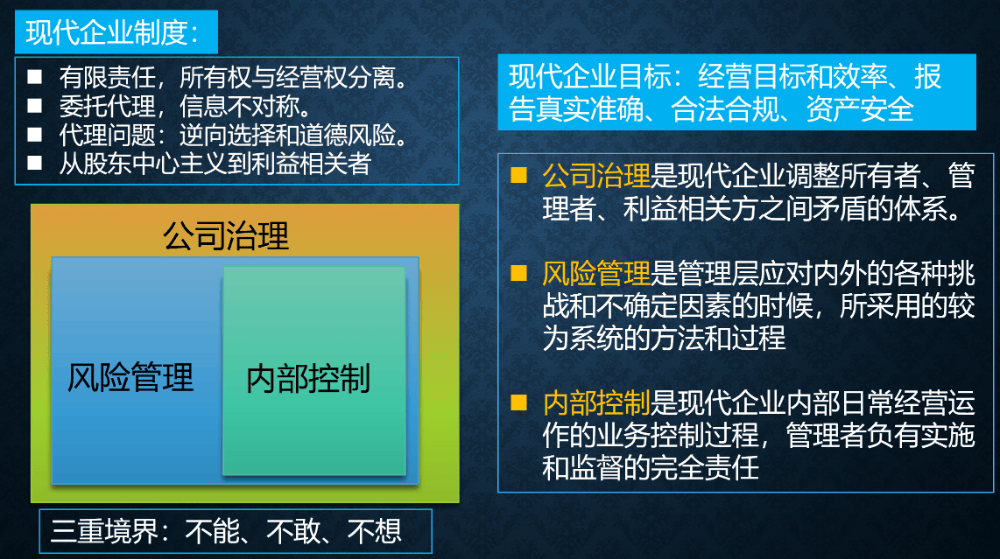
代理问题

Search documents
1万亿美元薪酬与8.5万亿美元市值,你愿意吗?马斯克1万亿美元超级股权激励为什么?
Sou Hu Cai Jing· 2025-09-11 00:11
Core Viewpoint - Equity incentives are a central topic in corporate governance, aimed at addressing agency problems arising from the separation of ownership and management, which can lead to conflicts of interest between shareholders and managers [1][3]. Group 1: Agency Problems and Solutions - The separation of ownership and management creates information asymmetry, leading to agency issues such as moral hazard and adverse selection, where managers' goals may not align with those of shareholders [1]. - Common solutions to agency problems include increasing legal penalties to deter misconduct, implementing governance structures like independent directors, and aligning interests through management equity ownership [3]. Group 2: Equity Incentives in Practice - Many equity incentive plans in China are often ineffective, functioning more as profit-sharing mechanisms rather than true incentives, primarily due to limited equity stakes offered [5]. - For effective incentives, the scale of equity rewards must be substantial enough to align the interests of management with those of shareholders [5]. Group 3: Tesla's Super Equity Incentive Plan - Tesla's board approved a 10-year performance-based equity incentive plan valued at approximately $1 trillion, contingent on achieving ambitious market and operational goals [7][11]. - Key targets include increasing Tesla's market value from about $1 trillion to $8.5 trillion, delivering 20 million vehicles, and achieving significant operational milestones [7][11]. - The plan is structured as a "betting agreement," where rewards are unlocked in batches upon meeting specific performance criteria, with a long lock-up period for the awarded shares [8][11]. Group 4: Strategic Considerations - The incentive plan aims to ensure that Elon Musk remains focused on Tesla amidst his involvement in multiple ventures, thereby aligning his personal wealth with the company's long-term growth [10][11]. - The board's decision reflects a commitment to retaining Musk and addressing previous legal challenges related to his compensation [10][11].