企业效率提升

Search documents
lululemon(LULU) - 2026 Q4 - Earnings Call Transcript
2026-03-17 21:32
Financial Data and Key Metrics Changes - Total net revenue for Q4 2026 rose 1% to $3.6 billion, with a 6% increase excluding the 53rd week and a 4% increase on a constant currency basis [26] - Comparable sales increased by 2%, with North America revenue flat and comparable sales down 2% [26] - Gross profit for Q4 was $2 billion, representing 54.9% of net revenue, a decrease of 550 basis points from the previous year [29] - Operating income was approximately $812 million, or 22.3% of net revenue, down from 28.9% in Q4 2024 [31] - Net income for the quarter was $587 million, or $5.01 per diluted share, compared to $6.14 for the same period last year [31] Business Line Data and Key Metrics Changes - Men's revenue increased by 3%, women's by 7%, and accessories and others grew by 4% [28] - In North America, new style penetration increased to approximately 35% [22] - The digital channel saw a revenue increase of 9%, contributing $1.9 billion to the top line [28] Market Data and Key Metrics Changes - In China Mainland, revenue increased by 28%, with comparable sales up 26% [26] - The rest of the world segment saw revenue growth of 12% and comparable sales increased by 5% [26] - North America revenue was flat, with a 3% increase in Canada and a 1% decrease in the U.S. [26] Company Strategy and Development Direction - The company is focused on returning to full price sales growth in North America through product newness and reducing markdowns [10] - Key initiatives include enhancing product design, improving speed to market, and maintaining high product quality [11][15] - The company is also investing in marketing strategies that engage guests and highlight new product offerings [55][72] Management's Comments on Operating Environment and Future Outlook - Management expressed optimism about the response to new product launches and activations, indicating a positive trend in full price sales [49][50] - The company anticipates revenue growth of 2%-4% for the full year 2026, with expectations for North America to decline by 1%-3% [34] - Management acknowledged the challenges posed by tariffs and markdowns but remains confident in the strategies being implemented [34][39] Other Important Information - The company announced the appointment of Chip Bergh to the board of directors, enhancing its retail and brand expertise [9] - Capital expenditures for Q4 were approximately $183 million, with plans for $725 million-$745 million for the full year 2026 [32][40] - The company repurchased approximately 1.4 million shares at an average price of $188 during the quarter [33] Q&A Session Summary Question: When will the product assortment be appropriate to deliver a return to an inflection in North America growth? - Management expects a meaningful inflection in full price sales in Q1, with a return to flat trends in Q2 and positive growth in the second half of the year [49] Question: Are you reassessing your marketing strategy to bring in new customers? - The company is looking at its marketing strategy, focusing on engaging guests and utilizing brand-appropriate influencers [55] Question: Can you elaborate on the newness percentage and what products are being sunsetting? - Newness penetration is moving from 23% in 2025 to 35% in 2026, with some SKU reductions to make room for new products [60] Question: How much of the CapEx is AI tech driven? - The company is investing in AI to enhance guest-facing initiatives and improve go-to-market strategies [61] Question: What is the expected revenue growth necessary to see operating margins return to expansion? - Management indicated that the majority of operating margin contraction is tied to transitory items, with expectations for improvement as revenue grows [77]

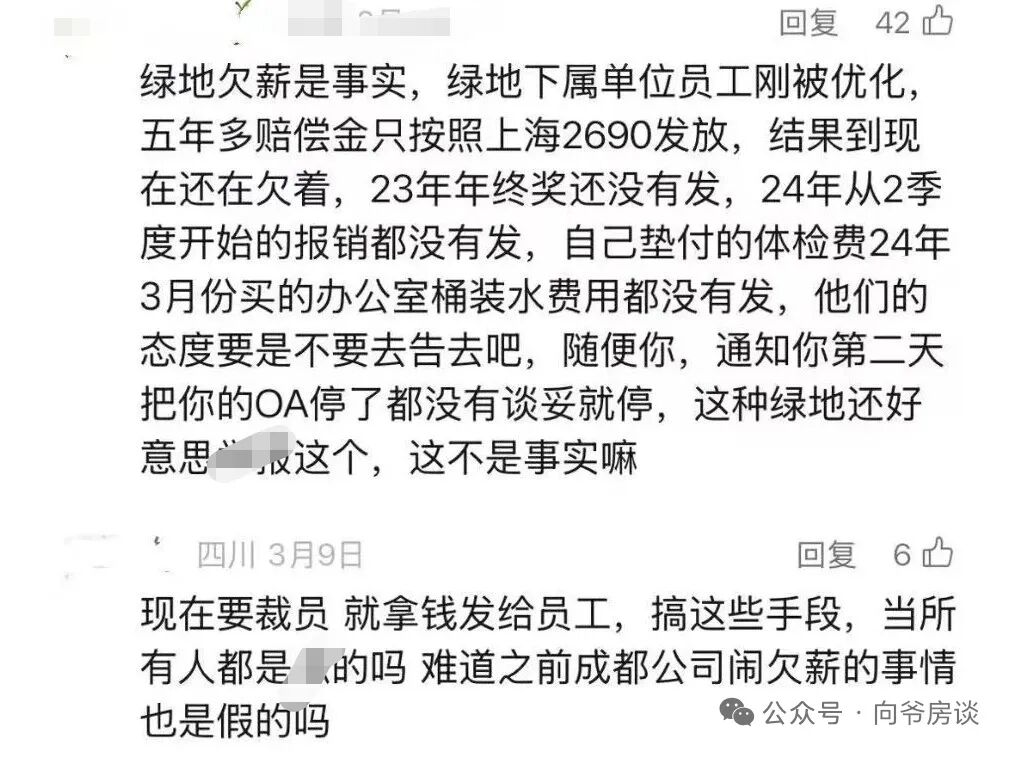
绿地,员工曝内部又有大动作!
Xin Lang Cai Jing· 2025-12-09 06:01
Core Viewpoint - Greenland Holdings is undergoing significant organizational restructuring, including layoffs and compensation disputes, amid financial difficulties and increasing litigation issues [1][3][10] Group 1: Organizational Changes - Greenland's subsidiary, Greenland Hong Kong, has eliminated seven project cluster departments and established three cross-regional centers for management [1] - The administrative and operational departments of project clusters have been streamlined and merged [1] - The company has conducted multiple rounds of personnel optimization and organizational adjustments throughout the year, including merging real estate divisions in January and initiating layoffs in March with a reported rate exceeding 30% [1][3] Group 2: Employee Compensation Issues - Employees have reported dissatisfaction with compensation packages, which are below legal standards, leading to disputes and arbitration [1][3] - Compensation discussions are ongoing, with previous feedback indicating that severance payments have been low and delayed for some employees [1] - Reports suggest that the company has employed coercive measures against employees who refuse compensation offers, including work stoppages and revoking access to facilities [2][9] Group 3: Financial and Legal Challenges - Greenland Holdings faces a significant financial burden, with total liabilities reaching 936.9 billion and a debt-to-asset ratio soaring to 89.05% [10] - The company has been involved in numerous legal disputes, with 1,834 new lawsuits filed between October 21 and November 13, totaling 6.587 billion [10] - The company's revenue is under pressure due to declining real estate turnover and slowing infrastructure business growth, exacerbating its liquidity crisis [10] Group 4: Management and Strategic Direction - Despite attempts at diversification, the effectiveness of Greenland's strategies has been questioned, as many new ventures are seen as poorly executed [10] - High executive compensation has drawn criticism, with total executive pay reported at 18.4 million, including 17 million for six top executives [10] - The company is expected to continue its restructuring efforts, impacting both departing and current employees amid ongoing financial instability [10]


3个发现讲透:华信人咨询如何用市场地位证明削减企业30%无效支出
Sou Hu Cai Jing· 2025-10-31 13:43
Core Insights - A smart cup brand experiences high sales but struggles with advertising due to lack of third-party validation, leading to lost traffic [1] - 73% of small and medium enterprises face challenges in ad approval due to absence of third-party proof [1] Group 1: Risk Management - Many companies have faced issues due to non-compliant advertising, with one home brand losing 700,000 yuan in three days after being delisted for claiming "sales leader" [4] - After obtaining market position proof, the same brand not only got reinstated but also saw an 18% lower return rate during promotions [5] - Companies using certification have seen a 67% increase in ad approval rates and an 80% reduction in customer complaints [6] Group 2: Internal Efficiency - Market position proof enhances internal operations, with job postings marked as "industry certified" receiving 45% more applications [7] - A biotech company reported an 18% decrease in sales team turnover after displaying their "top three in R&D patents" certification [7] - Employees feel more confident discussing clients when aware of the company's strong capabilities [8] Group 3: Cost Reduction - Third-party certification significantly impacts customer acquisition costs, with ads featuring such proof leading to 26 seconds longer user engagement and a 33% decrease in bounce rates [11] - A functional apparel brand tripled its sales from a single video after using "top-rated breathability" certification, reducing customer acquisition cost from 105 yuan to 63 yuan [11] - An eco-friendly packaging company reduced raw material costs by 8% and logistics costs by 12% after obtaining "fastest degradation speed" certification [13] Group 4: Action Steps for Companies - Companies should prioritize data transparency when selecting market position proof services, ensuring compliance with advertising laws [15] - Focus should be on identifying the most competitive niche dimensions, such as regional sales or user repurchase rates [16] - Adaptability to various application scenarios is crucial, with certifications supporting 12 different contexts [17] - Continuous value is essential, as market position is dynamic; quarterly data reviews help keep certifications updated [19] - A smart hardware company maintained a top-three position in its niche for three consecutive quarters through these strategies [20]