企业盈利模式

Search documents
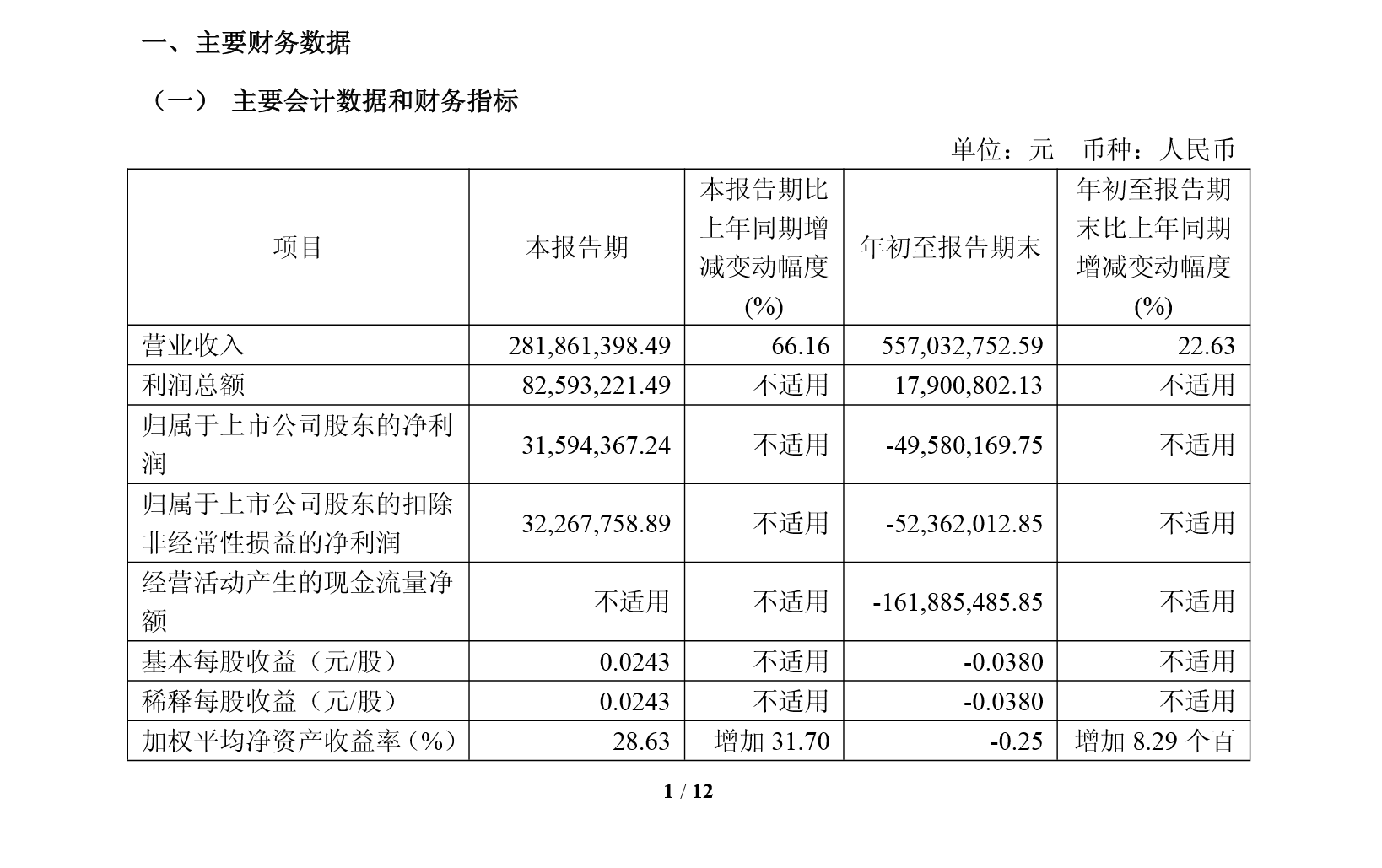
三季度扭亏,大唐电信遭高通索赔1.2亿
Guan Cha Zhe Wang· 2025-11-06 12:49
Core Viewpoint - 大唐电信 reported significant revenue growth in Q3 2025, driven primarily by its security chip business, although it still faced a net loss for the first three quarters of the year [1][2]. Financial Performance - For the first three quarters of 2025, the company achieved a revenue of 557 million yuan, a year-on-year increase of 22.63% [1]. - In Q3 2025, revenue reached 282 million yuan, marking a substantial year-on-year increase of 66.16% [2]. - The net profit attributable to shareholders in Q3 turned positive at 31.59 million yuan, compared to a loss of 28.74 million yuan in the same period last year [1][2]. - The main business segments included security chips generating 214 million yuan (77.71% of total revenue), special communications at 48.41 million yuan (17.59%), and other businesses at 12.92 million yuan (4.69%) [1]. Business Structure and Strategy - 大唐电信 has established a comprehensive industry layout focusing on "security chips + special communications" [3]. - The security chip business targets niche markets such as card security, identity recognition, financial payment, IoT security, and high-reliability applications [3]. - The special communications segment includes dedicated mobile communications, broadband radio stations, and information technology for the new energy sector [3]. Legal and Financial Concerns - The company is currently involved in an arbitration case with Qualcomm (China) Holdings, with a claim amounting to approximately 120 million yuan [3][6]. - The arbitration stems from a joint venture agreement where Qualcomm alleges that a subsidiary of 大唐电信 failed to meet performance targets, leading to unfulfilled capital contributions [4][5]. - The company asserts that any potential liabilities from the arbitration should be borne by its subsidiary and its controlling shareholder, thus not significantly impacting its financials [6].


康希诺中报亮眼背后或存隐忧:九成营收系于单一疫苗,竞品环伺与研发乏力下的生存挑战加剧
Hua Xia Shi Bao· 2025-10-11 02:04
Core Insights - The financial performance of CanSino Biologics in the first half of 2025 shows a revenue increase but raises concerns about the sustainability of this improvement due to ongoing losses in core operations [3][4][8] Revenue and Profitability - CanSino reported a revenue of 382 million yuan in the first half of 2025, a 26% year-on-year increase, while net losses narrowed to 13.49 million yuan, a 94.02% reduction compared to a loss of 225 million yuan in the same period last year [3][4] - The revenue growth is primarily driven by the sales of a single product, the meningococcal vaccine, which accounted for 95.3% of total revenue, with sales reaching 364 million yuan, a 38.43% increase [4][6] Product Dependency and Market Competition - The company's revenue structure is heavily reliant on the meningococcal vaccine "Mankai Xin," which poses risks as competition intensifies with three new entrants in the market [6][4] - The sustainability of "Mankai Xin" as a leading product is uncertain, with potential price pressures and market share erosion expected as competitors launch their products [6][4] Financial Stability and Cost Management - CanSino has struggled to establish a stable profitability model, with high operational costs consistently exceeding revenues, leading to significant losses [10][8] - The company’s total operating costs have remained around 2.4 billion yuan from 2021 to 2023, far surpassing revenues, which raises concerns about financial sustainability [10][8] Research and Development Expenditure - Over the past five years, CanSino has invested over 3.1 billion yuan in R&D, with 2024's R&D expenditure accounting for 60.35% of total revenue, significantly higher than the industry average [11][8] - Despite substantial R&D investments, no products other than the COVID-19 vaccine have achieved large-scale profitability [12][8] Sales and Marketing Efficiency - The company's sales expenses have been increasing, with promotional costs reaching 173 million yuan in 2023, indicating low marketing efficiency as revenue growth has not kept pace with these expenditures [14][8] - The sales expense ratio was 57.91% in 2023, significantly higher than the industry average, suggesting ineffective marketing strategies [14][8]