众议院解散

Search documents
高市内阁支持率暴跌
Xin Jing Bao· 2026-01-25 08:45
Group 1 - The latest public opinion poll indicates a significant drop in support for Prime Minister Kishi's cabinet, with a decrease of 10% to 57% compared to the previous poll conducted in December [1] - 41% of respondents disapprove of Kishi's decision to dissolve the House of Representatives, while 27% approve, and 31% are unsure [1] - The dissolution of the House of Representatives on January 23 marks the first time in 60 years that it has occurred on the opening day of a parliamentary session, which may delay the normal budget approval process [1] Group 2 - Opposition party leaders criticized Kishi's decision to dissolve the House, stating that it lacks rationality given the current accumulation of issues facing Japan [1] - The National Democratic Party leader expressed regret that economic issues are being overshadowed by the dissolution [2] - The Japanese Communist Party leader criticized Kishi for avoiding proper discussions with the public and opting for dissolution instead [2]
最新!日本众议院正式解散,将提前选举
Hua Xia Shi Bao· 2026-01-23 05:35
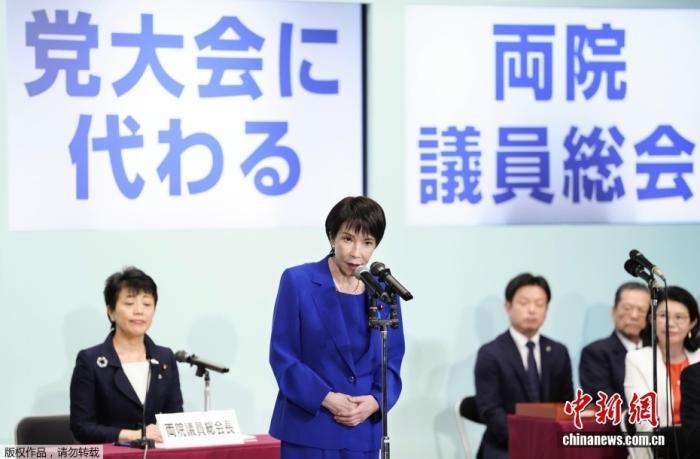
Core Viewpoint - The Japanese House of Representatives has been officially dissolved, with Prime Minister Suga Yoshihide aiming to consolidate power amid high domestic approval ratings [1]. Group 1: Political Context - The dissolution was announced by House Speaker Hiroshi Moriyama during a full session of the House of Representatives [1]. - Prime Minister Suga Yoshihide decided to dissolve the House during a cabinet meeting, with all cabinet members signing the dissolution decree [1]. Group 2: Strategic Implications - Analysts suggest that Suga's decision to dissolve the House is primarily to strengthen his administration before potential losses due to economic, diplomatic, and donation scandals [1]. - Yamaguchi University emeritus professor Akira Kawai indicated that if Suga did not hold new elections and instead convened a regular session of the Diet, his cabinet could face severe questioning and lose support [1]. Group 3: Legislative Timeline - The current term for the members of the House of Representatives was originally set to expire in October 2028 [1]. - According to the Japanese Constitution, a Diet session must be convened within 30 days after the House of Representatives election to hold a prime ministerial election [1].
高市早苗拟解散众议院,在野党批评:嘴上都是工作,实际制造空白
Zhong Guo Xin Wen Wang· 2026-01-12 13:07
Core Viewpoint - Japanese Prime Minister Fumio Kishida is considering dissolving the House of Representatives at the beginning of the regular Diet session scheduled for January 23, aiming to gain voter trust and enhance policy execution, despite potential criticism of creating a "political vacuum" [1]. Group 1: Election Schedule and Budget Concerns - The main proposals for the House of Representatives election schedule include announcing on January 27 and voting on February 8, or announcing on February 3 and voting on February 15 [2]. - There are concerns within the government about prioritizing the passage of the 2026 fiscal budget by the end of March, with indications that it may be difficult to achieve this timeline [2]. - Delays in passing the budget and tax-related legislation could negatively impact citizens' lives, raising alarms among political leaders [2]. Group 2: Political Reactions and Strategies - Opposition leader Noda Yoshihiko expressed skepticism about the rationale behind the potential dissolution, suggesting it may stem from self-preservation rather than legitimate reasons, and criticized the government's inaction on economic issues [2]. - Komeito Party leader Saito Tetsuo emphasized that addressing rising prices should take precedence over political maneuvers [2]. - The Liberal Democratic Party's policy research council chairman Kobayashi Takayuki stated that the dissolution of the House of Representatives is a prerogative of the Prime Minister, and the party is prepared for an election at any time [3]. Group 3: Coalition Discussions - The Japan Innovation Party leader Yoshimura Hirofumi indicated that their party is ready for an election, while discussions between Noda and Saito have begun regarding potential cooperation for the upcoming election [4]. - Both leaders agreed to explore higher-level cooperation, with Noda highlighting the importance of collaboration to counterbalance the ruling party [4]. - Noda also noted that Komeito is seen as a politically friendly force that could help correct excessive right-wing tendencies, aiming to build a political force capable of challenging the LDP [4].