众议院选举

Search documents
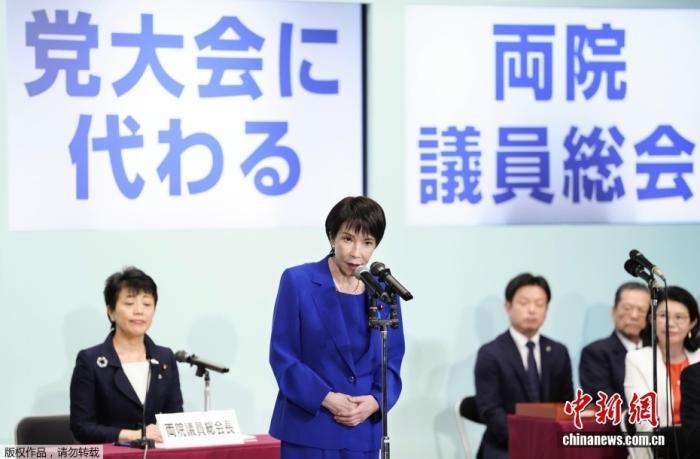
高市早苗豪赌开始,曾称“不过半数就辞职”
Xin Lang Cai Jing· 2026-02-08 04:03
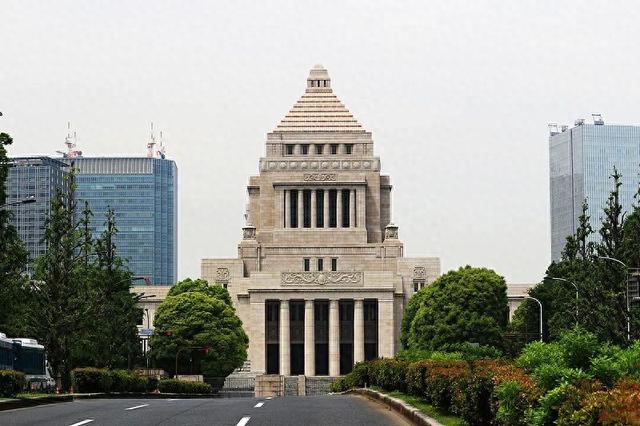
Group 1 - The Japanese House of Representatives election voting began on February 8, with polls closing at 20:00 local time [1] - The election involves 465 seats in the House of Representatives, including 289 from single-member districts and 176 from proportional representation [1] - The current Prime Minister, Sanna Takashi, pushed for the early dissolution of the House on January 23, just 1 year and 3 months after the last election [1] Group 2 - Sanna Takashi stated during a party leader debate on January 26 that she would resign immediately if the ruling party does not secure a majority in the election [3]

高市早苗,说着说着哭了……
Mei Ri Jing Ji Xin Wen· 2026-01-28 10:24
Group 1 - The core viewpoint of the article highlights Prime Minister Sanna Takashi's emotional appeal during her campaign, emphasizing her long struggle to reach her current position and her desire to accomplish previously unattainable goals [1] - Takashi announced the dissolution of the House of Representatives on January 23, aiming to leverage her current high approval ratings to solidify her power [1] - A recent poll indicated a significant drop in Takashi's cabinet approval rating, falling by 10 percentage points to 57% [1] Group 2 - The upcoming 51st House of Representatives election is scheduled for February 8, with opposition leader Mizuho Fukushima criticizing Takashi for prioritizing personal interests in calling for early elections [1] - Takashi expressed her hope for public trust in her leadership, stating that if her party and the Japan Innovation Party fail to secure a majority, she would resign as Prime Minister [2] - Takashi's emotional state has been noted as she attempts to connect with voters, showing rapid changes in her demeanor during public appearances [3][4]

高市早苗:若未过半数,即刻辞职
中国能源报· 2026-01-26 08:26
Group 1 - The core viewpoint of the article is that Japanese Prime Minister Fumio Kishida stated he would resign immediately if the ruling party does not secure a majority in the upcoming House of Representatives election [3]. - On January 27, the announcement for the House of Representatives election will be made, with voting and counting scheduled for February 8, marking a 16-day interval, the shortest since World War II [4]. - Analysts believe that Kishida's decision to dissolve the House of Representatives at this time is aimed at consolidating power by leveraging the current high domestic approval ratings [4].
高市内阁,暴跌
Xin Lang Cai Jing· 2026-01-25 09:59
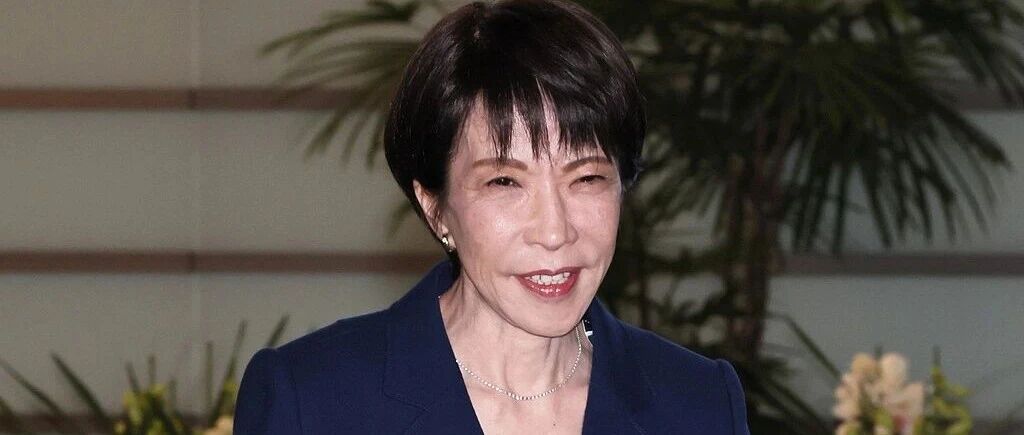
Core Viewpoint - Recent polls indicate a significant drop in public support for Prime Minister Kishi's cabinet, decreasing by 10% compared to the previous poll, now standing at 57% [2][3]. Group 1: Public Opinion and Political Context - The decision to dissolve the House of Representatives has led to public dissatisfaction, with 41% of respondents disapproving of Kishi's decision, while only 27% approve [3]. - The dissolution of the House of Representatives on January 23 marks the first time in 60 years that it occurred on the same day as the opening of the regular Diet session, highlighting a unique political maneuver [3]. - Analysts suggest that Kishi's timing for the dissolution is aimed at consolidating power while public support is still relatively high, as failure to hold elections could expose the cabinet to scrutiny over various issues [3]. Group 2: Election Timeline and Legislative Implications - Kishi announced that the election announcement for the House of Representatives will be made on January 27, with voting scheduled for February 8, creating the shortest interval between dissolution and voting since World War II [4]. - The current term for the House of Representatives was originally set to expire in October 2028, and the constitution mandates that a new Diet session must convene within 30 days following the election [4].
高市内阁支持率暴跌
Xin Jing Bao· 2026-01-25 08:45
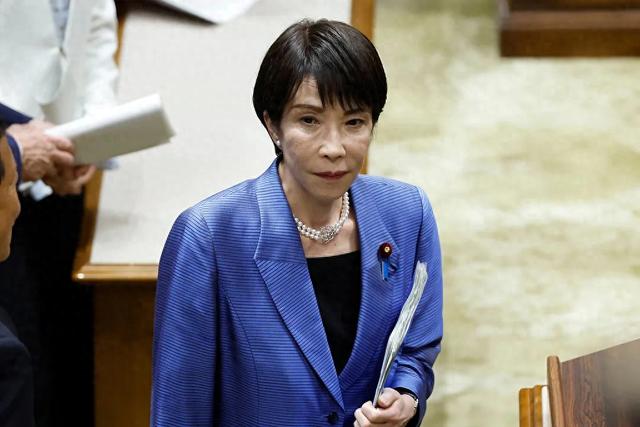
Group 1 - The latest public opinion poll indicates a significant drop in support for Prime Minister Kishi's cabinet, with a decrease of 10% to 57% compared to the previous poll conducted in December [1] - 41% of respondents disapprove of Kishi's decision to dissolve the House of Representatives, while 27% approve, and 31% are unsure [1] - The dissolution of the House of Representatives on January 23 marks the first time in 60 years that it has occurred on the opening day of a parliamentary session, which may delay the normal budget approval process [1] Group 2 - Opposition party leaders criticized Kishi's decision to dissolve the House, stating that it lacks rationality given the current accumulation of issues facing Japan [1] - The National Democratic Party leader expressed regret that economic issues are being overshadowed by the dissolution [2] - The Japanese Communist Party leader criticized Kishi for avoiding proper discussions with the public and opting for dissolution instead [2]
高市早苗放话:如果此次选举执政联盟未获半数席位,我将辞任首相
券商中国· 2026-01-20 04:13
Group 1 - The core viewpoint of the article is that Japanese Prime Minister Sanna Takashi announced the dissolution of the House of Representatives on January 23, leading to early elections, which she stated would determine her political future [1] - The House of Representatives in Japan consists of 465 seats, with a majority requiring 233 seats. Currently, the ruling Liberal Democratic Party (LDP) holds 196 seats, and the Japan Innovation Party has 34 seats, totaling 230 seats [1] - The upcoming election is notable as it occurs only 1 year and 3 months after the last election, despite the standard four-year term for members of the House of Representatives, which has sparked significant controversy in Japan [1]

日本组建新政党,高市早苗阵营被对抗,外交部回应
中国能源报· 2026-01-15 09:15
Group 1 - The largest opposition party in Japan, the Constitutional Democratic Party, has decided to form a new party with the Komeito party [1] - The agreement was reached during a meeting between the leaders of both parties, with the aim to strengthen cooperation and expand their support base ahead of the upcoming House of Representatives election [1] - Komeito left the ruling coalition with the Liberal Democratic Party in October last year, transitioning to an opposition role [1] Group 2 - The Chinese Foreign Ministry responded to a question regarding this political development, stating that it is an internal matter of Japan and refrained from further comments [1]

日本立宪民主党与公明党将结成新党
日经中文网· 2026-01-15 07:48
Group 1 - The core viewpoint of the article is that the Constitutional Democratic Party of Japan and the Komeito Party have reached an agreement to form a "new party" for the upcoming House of Representatives election, aiming to support each other in single-member districts and proportional representation elections [1][3] - The two parties are responding to the conservative shift in Prime Minister Kishi's administration regarding security policies and constitutional amendments, and they are attempting to unite the centrist forces [1][3] - The parties will create a "unified list" of candidates to reduce wasted votes and enhance their electoral strength, with a focus on collaborating in both single-member districts and proportional representation [3] Group 2 - The new party will primarily operate at the House of Representatives level, while members of the House of Councillors and local assemblies are likely to remain affiliated with their respective parties in the short term [3] - The collaboration is seen as a way to compensate for each party's weaknesses, with the Constitutional Democratic Party considering prioritizing Komeito candidates in proportional representation [3] - Komeito, having ended its coalition with the Liberal Democratic Party, faces challenges in winning single-member districts on its own, thus the partnership with the largest opposition party is expected to improve its chances [3]
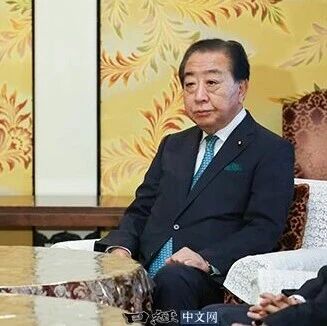
参考消息:日媒称自民党已进入战时状态
Xin Lang Cai Jing· 2026-01-13 14:35
Core Viewpoint - The Japanese government, led by Prime Minister Fumio Kishida, is expected to dissolve the House of Representatives at the start of the regular Diet session on January 23, marking the first House election since October 2024. This move aims to strengthen the ruling Liberal Democratic Party's (LDP) position amid rising political tensions and economic challenges [1]. Group 1: Political Context - The ruling LDP and the Japan Innovation Party have entered a "wartime state," preparing for the upcoming election while opposition parties are also gearing up for battle [1]. - Possible election schedules include public announcements on January 27 and February 3, with voting dates set for February 8 and February 15, respectively [1]. Group 2: Economic Implications - The dissolution of the House may delay the budget proposal for the fiscal year 2026 until April, potentially requiring a temporary budget that could significantly impact citizens' lives [1]. - There are concerns that political negotiations on expanding the ruling coalition and social security reforms will stall, as consensus with opposition parties is likely to be difficult [1]. Group 3: Opposition Response - Opposition parties criticize the dissolution as contradictory to Kishida's previous commitment to prioritize addressing rising prices, intensifying their attacks on the government [1]. - Constitutional Democratic Party leader Yukio Edano has expressed skepticism about the necessity of the dissolution, indicating a lack of perceived justification for the timing [1]. - National Democratic Party representative Yuichiro Tamaki stated that cooperation with Kishida's government will become challenging, as the budget for fiscal year 2026 may not pass in the current fiscal year, undermining trust between the parties [1].
高市早苗拟解散众议院,在野党批评:嘴上都是工作,实际制造空白
Zhong Guo Xin Wen Wang· 2026-01-12 13:07
Core Viewpoint - Japanese Prime Minister Fumio Kishida is considering dissolving the House of Representatives at the beginning of the regular Diet session scheduled for January 23, aiming to gain voter trust and enhance policy execution, despite potential criticism of creating a "political vacuum" [1]. Group 1: Election Schedule and Budget Concerns - The main proposals for the House of Representatives election schedule include announcing on January 27 and voting on February 8, or announcing on February 3 and voting on February 15 [2]. - There are concerns within the government about prioritizing the passage of the 2026 fiscal budget by the end of March, with indications that it may be difficult to achieve this timeline [2]. - Delays in passing the budget and tax-related legislation could negatively impact citizens' lives, raising alarms among political leaders [2]. Group 2: Political Reactions and Strategies - Opposition leader Noda Yoshihiko expressed skepticism about the rationale behind the potential dissolution, suggesting it may stem from self-preservation rather than legitimate reasons, and criticized the government's inaction on economic issues [2]. - Komeito Party leader Saito Tetsuo emphasized that addressing rising prices should take precedence over political maneuvers [2]. - The Liberal Democratic Party's policy research council chairman Kobayashi Takayuki stated that the dissolution of the House of Representatives is a prerogative of the Prime Minister, and the party is prepared for an election at any time [3]. Group 3: Coalition Discussions - The Japan Innovation Party leader Yoshimura Hirofumi indicated that their party is ready for an election, while discussions between Noda and Saito have begun regarding potential cooperation for the upcoming election [4]. - Both leaders agreed to explore higher-level cooperation, with Noda highlighting the importance of collaboration to counterbalance the ruling party [4]. - Noda also noted that Komeito is seen as a politically friendly force that could help correct excessive right-wing tendencies, aiming to build a political force capable of challenging the LDP [4].