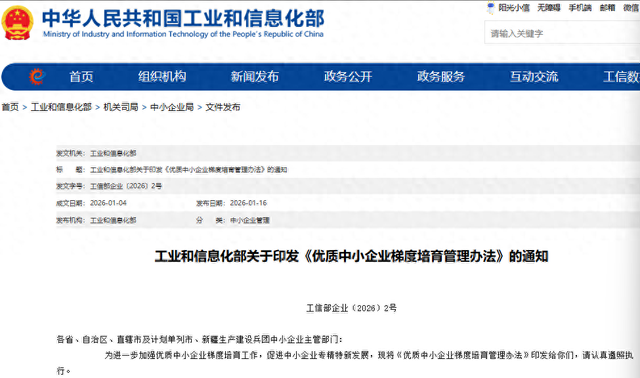
优质中小企业梯度培育

Search documents
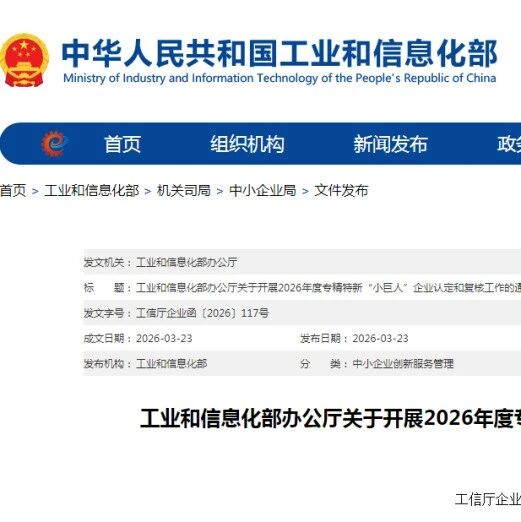
工业和信息化部办公厅关于开展2026年度专精特新“小巨人”企业认定和复核工作的通知
机器人圈· 2026-03-24 09:14
Core Viewpoint - The Ministry of Industry and Information Technology of China is initiating the recognition and review process for the 2026 "Specialized, Refined, Characteristic, and Innovative" small giant enterprises, aiming to support the development of high-quality small and medium-sized enterprises [3]. Group 1: Application Requirements - Provincial specialized small and medium-sized enterprises can apply for the eighth batch of "small giant" enterprises, and those recognized in 2023 can apply for review without any fees [3]. - Enterprises must fill out the application form truthfully and provide supporting materials as required, with the application process being conducted through the Ministry's platform [4]. - To reduce the burden on applicants, third-party market share proof and domestic invention patent certificates are not required, except for specific intellectual property [4]. Group 2: Review Process - The application and review process will combine online submissions and offline document delivery, with the online application period set from April 25 to May 25, 2026 [5]. - Financial data must be based on audit reports from registered accounting firms, and discrepancies will affect the application outcome [5]. - The Ministry will utilize data extraction, AI, and big data technologies to analyze application data and prevent fraud, with severe penalties for any detected data falsification [5]. Group 3: Recommendation Requirements - Provincial departments are responsible for organizing the initial review and recommendation of new applications and reviews for "small giant" enterprises [6]. - Recommendations must ensure data authenticity and technical innovation, with a focus on improving the quality of recommendations [6]. - Enterprises that are already recognized as champions or have controlling relationships with recognized "small giant" enterprises will not be recommended [6]. Group 4: Important Notes - Applicants are advised to confirm their login credentials for the Ministry's platform in advance to avoid issues during the application process [8]. - The Ministry will publish the list of recognized and reviewed "small giant" enterprises after the review process, with previous recognitions becoming invalid upon the release of the new list [9]. - For enterprises that do not pass the review, provincial departments should conduct a review based on the submitted materials to avoid redundant processes [9].

“十四五”以来,培育专精特新“小巨人”企业1.76万家
Ren Min Ri Bao· 2026-01-19 23:39
Core Viewpoint - The Ministry of Industry and Information Technology has revised the management measures for cultivating high-quality small and medium-sized enterprises (SMEs), expanding the scope to include technology-based SMEs for the first time [1] Group 1: Policy Changes - The revised measures now encompass technology and innovation-driven SMEs, specialized and innovative SMEs, and "little giant" enterprises [1] - The cumulative number of specialized and innovative "little giant" enterprises cultivated since the 14th Five-Year Plan has reached 17,600, leading to the cultivation of over 140,000 specialized and innovative SMEs and more than 600,000 technology and innovation-driven SMEs [1] Group 2: Objectives and Mechanisms - The measures aim to enhance the demonstration and foundational strengthening roles of high-quality SMEs, introducing a proactive discovery mechanism to identify potential high-quality SMEs through various data sources [1] - The recognition standards have been optimized, with increased thresholds; for instance, the revenue requirement for "little giant" enterprises has been raised to over 50 million yuan, and R&D expenses must total no less than 12 million yuan over the past two years [1]
“十四五”以来,培育专精特新“小巨人”企业1.76万家 科技型中小企业纳入梯度培育范围
Ren Min Ri Bao· 2026-01-19 22:24
Core Viewpoint - The Ministry of Industry and Information Technology has revised the "Management Measures for the Gradual Cultivation of High-Quality SMEs," expanding the cultivation base to include technology-based SMEs for the first time, aiming to enhance the role of high-quality SMEs in the economy [1] Group 1: Policy Changes - The revised measures now include technology and innovation-based SMEs, specialized and innovative SMEs, and "little giant" enterprises in the cultivation framework [1] - The initiative aims to better leverage the demonstration and foundational strengthening roles of high-quality SMEs, introducing a proactive discovery mechanism to identify potential high-quality SMEs [1] Group 2: Achievements - Since the start of the 14th Five-Year Plan, a total of 17,600 specialized and innovative "little giant" enterprises have been cultivated, leading to the development of over 140,000 specialized and innovative SMEs and more than 600,000 technology and innovation-based SMEs [1] Group 3: Standards and Requirements - The recognition standards have been optimized, with increased thresholds; for example, the revenue requirement for "little giant" enterprises has been raised to over 50 million yuan, and R&D expenses must total no less than 12 million yuan over the past two years [1] - The requirement for first-class intellectual property has been increased to four or more items [1]
“科技型中小企业”将纳入优质中小企业梯度培育范围
Zheng Quan Ri Bao Wang· 2026-01-19 04:47
Core Viewpoint - The Ministry of Industry and Information Technology has revised the "Management Measures for the Gradual Cultivation of High-Quality Small and Medium-sized Enterprises," which will take effect on April 1, 2026, expanding the scope to include "technology-based small and medium-sized enterprises" and raising the recognition standards for specialized and innovative "little giant" enterprises [1][2]. Group 1: Inclusion of Technology-based SMEs - The new measures include "technology-based small and medium-sized enterprises" for the first time, creating a "reserve" tier in the cultivation system, allowing for earlier policy support in the enterprise lifecycle [1]. - This change aims to alleviate funding and policy pressures on early-stage technology companies that face a "research first, revenue lag" phase [1]. Group 2: Recognition Standards for Specialized and Innovative SMEs - The new recognition standards require an annual revenue of over 15 million yuan or a total of over 20 million yuan in new equity investment from qualified institutional investors in the past two years, compared to the previous requirement of 10 million yuan [2]. - The retention of the investment criterion establishes a dual evaluation system of "financial indicators + market recognition," acknowledging the importance of capital validation for hard-tech companies [2]. Group 3: Stricter Standards for "Little Giant" Enterprises - The new measures set a minimum annual revenue of over 50 million yuan and increase the requirement for I-type intellectual property (e.g., invention patents) from "2 or more" to "4 or more" [3]. - Additionally, the requirement for R&D expenses has been set at no less than 12 million yuan over the past two years, with an annual revenue ratio of at least 3% [3]. - The quality evaluation score must be above 60, ensuring that only high-quality enterprises are recognized [3]. Group 4: Standardization and Fairness in the Review Process - The new measures eliminate the previous regional "specialization indicators," implementing a nationwide standard for recognition [4]. - The introduction of a "double random" review process aims to enhance fairness and reduce human intervention in the evaluation process [4]. - Companies that have completed credit restoration will no longer face a three-year ban on reapplication, reflecting a balanced regulatory approach [4]. Group 5: Long-term Implications - The revised measures signify a shift from broad coverage to precision in cultivating high-quality SMEs, potentially leading to the emergence of more "little giant" enterprises with core technologies [4]. - This is expected to strengthen the resilience of economic development by nurturing capable SMEs in critical areas of the industrial chain [4].
科技型中小企业纳入优质中小企业梯度培育范围
Ke Ji Ri Bao· 2026-01-19 02:13
Core Viewpoint - The Ministry of Industry and Information Technology has issued a revised management method for the cultivation of high-quality small and medium-sized enterprises (SMEs), which now includes technology-based SMEs in its scope, aiming to enhance the quality and support for these enterprises [1][2]. Group 1: Cultivation System - The revised method expands the cultivation scope to include technology-based SMEs alongside innovative SMEs, collectively referred to as technology and innovation-based SMEs [1]. - A total of 17,600 specialized and innovative "little giant" enterprises have been cultivated since the start of the 14th Five-Year Plan, leading to the development of over 140,000 specialized and innovative SMEs and more than 600,000 technology and innovation-based SMEs [1]. Group 2: Discovery Mechanism - The new method introduces a proactive discovery mechanism to identify potential high-quality SMEs through data related to supply chains, equity investments, intellectual property, technology awards, and talent cultivation [2]. - The recognition standards for SMEs will not be lowered, but the thresholds for revenue, R&D investment, and intellectual property will be raised to ensure quality [2]. Group 3: Support Policies - The method emphasizes the need for local SME authorities to effectively utilize financial, technological, and talent support policies, tailoring services based on the characteristics and positioning of different enterprises [2]. - The aim is to implement policies that allow for immediate benefits to enterprises without the need for application, ensuring quick access to support [2].
工信部:首次将科技型中小企业纳入梯度培育范围
Cai Jing Wang· 2026-01-19 02:06
Core Viewpoint - The Ministry of Industry and Information Technology has revised and released the latest "Management Measures for the Gradual Cultivation of High-Quality Small and Medium-sized Enterprises," expanding the cultivation base to include technology-based SMEs for the first time [1] Group 1 - The new measures will include technology and innovation-driven SMEs, specialized and innovative SMEs, and "little giant" enterprises that are specialized and innovative [1]
科技型中小企业首次纳入优质中小企业梯度培育范围
Xin Lang Cai Jing· 2026-01-18 21:31
Core Viewpoint - The Ministry of Industry and Information Technology has issued a revised management method for cultivating high-quality small and medium-sized enterprises (SMEs), expanding the scope to include technology-based SMEs, which will be implemented from April 1, 2026 [1][2]. Group 1: Expansion of Cultivation Scope - The revised method includes technology and innovation-based SMEs, specialized and innovative SMEs, and "little giant" enterprises as part of the high-quality SME cultivation framework [1]. - Since the 14th Five-Year Plan, 17,600 specialized and innovative "little giant" enterprises have been cultivated, leading to over 140,000 specialized and innovative SMEs and more than 600,000 technology and innovation-based SMEs [1]. Group 2: Optimization of Recognition Standards - The revised method raises the threshold for recognition, increasing requirements for operating income, R&D investment, and intellectual property. For example, "little giant" enterprises must have operating income above 50 million yuan and R&D expenses totaling no less than 12 million yuan over the past two years [2]. - The method introduces a proactive discovery mechanism to identify potential high-quality SMEs through data related to supply chains, equity investments, intellectual property, awards, and talent cultivation [1][2]. Group 3: Strengthening Process Management - The revised method standardizes local review processes and promotes a "double random" review mechanism, ensuring that expert groups include industry and financial experts [2]. - It clarifies specific circumstances for direct cancellation of recognition and allows companies that have rectified issues to reapply without the three-year restriction [2]. Group 4: Support Policies - The method encourages local SME authorities to effectively utilize financial, technological, and talent support policies, providing tailored services based on different enterprise characteristics [2]. - The Ministry of Industry and Information Technology will continue to optimize the cultivation, service, and management of high-quality SMEs, supporting their specialized and innovative development [2].
工信部:科技型中小企业首次纳入梯度培育范围
Zheng Quan Shi Bao· 2026-01-18 18:18
Core Viewpoint - The Ministry of Industry and Information Technology has issued a revised management method for cultivating high-quality small and medium-sized enterprises (SMEs), expanding the scope to include technology-based SMEs and enhancing recognition standards for specialized and innovative enterprises [1][4]. Group 1: Expansion of Cultivation Framework - The revised method includes technology and innovation-based SMEs, specialized and innovative SMEs, and "little giant" enterprises in the cultivation framework [1]. - Since the start of the 14th Five-Year Plan, 17,600 specialized and innovative "little giant" enterprises have been cultivated, leading to over 140,000 specialized and innovative SMEs and more than 600,000 technology and innovation-based SMEs [1]. Group 2: Optimization of Recognition Standards - The recognition standards have been improved to include international market share for export-oriented enterprises and to standardize criteria nationwide by removing province-specific indicators [2]. - The thresholds for recognition have been raised, with "little giant" enterprises now required to have revenue exceeding 50 million yuan and R&D expenses totaling at least 12 million yuan over the past two years [2]. Group 3: Quality Evaluation and Management - A quality evaluation score has been introduced, requiring specialized and innovative SMEs to achieve a score above 50 and "little giant" enterprises to score above 60 [3]. - The revised method promotes a "double random" audit mechanism and includes measures to limit the number of recommended "little giant" enterprises from regions with low quality evaluation scores [3]. Group 4: Enhanced Support Services - The revised method emphasizes the integration of various support policies, including financial, technological, and talent resources, to provide tailored services for different types of enterprises [3][4]. - The aim is to enhance the demonstration and foundational strengthening roles of high-quality SMEs, making the cultivation process more scientific and standardized [4].
工信部修订印发《优质中小企业梯度培育管理办法》
Xin Jing Bao· 2026-01-18 08:29
Core Viewpoint - The Ministry of Industry and Information Technology has issued a revised management approach for the cultivation of high-quality small and medium-sized enterprises (SMEs), expanding the scope to include technology-based SMEs and enhancing standards for recognition [1] Group 1: Overview of the New Management Approach - The revised management approach includes five chapters: general principles, recognition procedures and standards, dynamic management, cultivation services, and supplementary provisions [1] - It introduces recognition standards for specialized, refined, unique, and innovative SMEs, as well as for "little giant" enterprises [1] Group 2: Expansion of Cultivation Scope - The new approach incorporates technology-based SMEs into the cultivation framework, aiming to enhance the quality of high-quality SMEs [1] - The cultivation framework will now include innovative SMEs, specialized and refined SMEs, and specialized "little giant" enterprises [1] Group 3: Quality Assurance and Management - The revised approach emphasizes dynamic management and cultivation services to ensure the quality of the enterprises being nurtured [1] - It integrates experiences from the "14th Five-Year Plan" period, focusing on quality evaluation, random audits, dynamic management, and precise services [1]
工信部重磅发文,科技型中小企业首纳梯度培育体系
Xin Lang Cai Jing· 2026-01-18 01:56
Core Viewpoint - The Ministry of Industry and Information Technology has officially revised and released the "Management Measures for the Gradual Cultivation of High-Quality Small and Medium-sized Enterprises," aiming to enhance recognition standards and management service mechanisms for small and medium-sized enterprises (SMEs) [1][2] Group 1: Key Changes in the New Measures - The new regulations will be implemented on April 1, 2026, and will comprehensively upgrade the existing SME cultivation system, notably including technology-based SMEs in the cultivation scope for the first time [1] - The new framework establishes a clear three-tier system for high-quality SMEs: the foundational level includes technology and innovation-based SMEs, the second tier consists of specialized and innovative SMEs, and the top tier comprises specialized "little giant" enterprises [1][2] Group 2: Revised Recognition Standards - The recognition standards have been significantly reformed, raising the revenue threshold for "little giant" enterprises to over 50 million yuan and requiring R&D expenses to be no less than 12 million yuan over the past two years, along with possessing more than four Class I intellectual property rights [2] - A new "Quality Evaluation Score for Specialized and Innovative Development of SMEs" has been introduced, requiring scores of 50 and 60 for specialized and innovative SMEs and "little giants," respectively, to emphasize the importance of development quality [2] Group 3: Management Mechanism Enhancements - The new measures strengthen dynamic management throughout the entire process, with the establishment of a cultivation platform and enterprise database to reduce reporting burdens through data sharing [2] - Local authorities will implement proactive discovery mechanisms to identify potential high-quality enterprises across various dimensions, and a three-year dynamic management period will be enforced for recognized enterprises, with strict penalties for those involved in major safety incidents or data fraud [2] Group 4: Implications for SMEs - Analysts indicate that the revision of these measures marks a significant milestone in the national push for SMEs to transition towards "specialized, refined, unique, and innovative" directions, fostering innovation potential in early-stage enterprises [3] - The increased recognition standards and introduction of a quality evaluation system aim to break the cycle of superficial reporting and ensure the credibility of recognized enterprises, compelling SMEs to enhance R&D investments and focus on niche markets to improve core competitiveness [3]