传统工艺传承

Search documents
给千年手感一个“云端备份”!震泽建了一座“会思考”的丝绸未来工厂
Yang Zi Wan Bao Wang· 2026-01-06 07:39
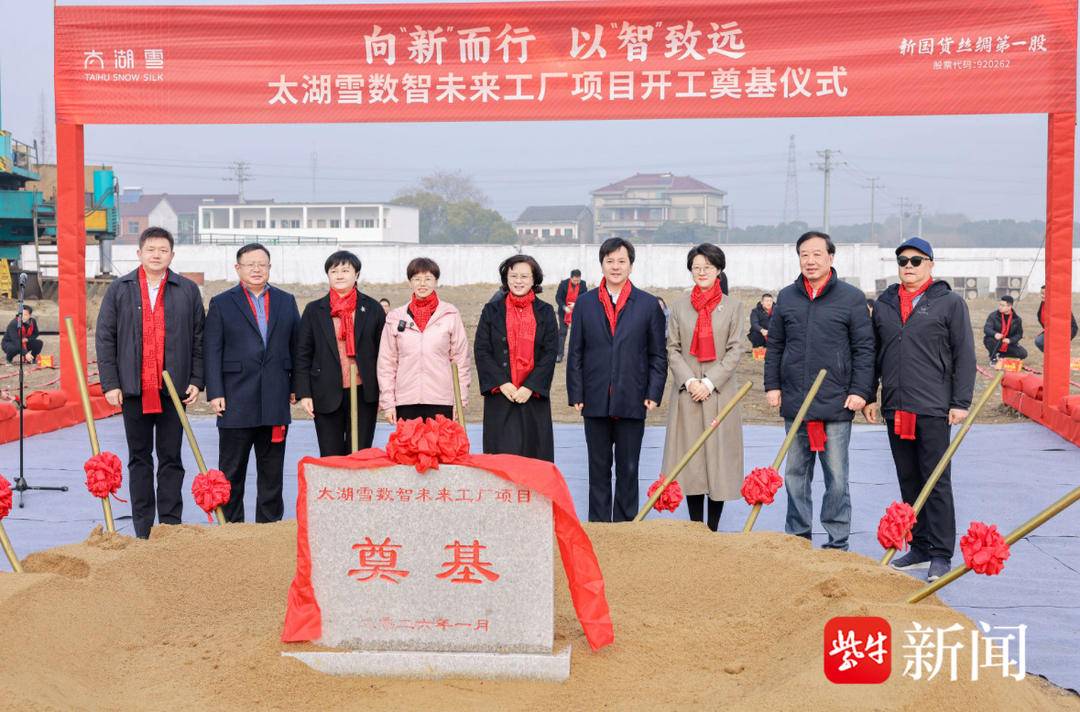
Core Insights - The article highlights the symbolic transformation of the Chinese silk industry with the groundbreaking of the "Smart Future Factory" by Suzhou Taihu Snow Co., Ltd, representing a significant investment of 300 million yuan and covering an area of 43.2 acres [1][3]. Group 1: Company Background - Suzhou Taihu Snow Co., Ltd, originally started as a small workshop in the silk market, has evolved into the first silk stock listed on the Beijing Stock Exchange, marking a significant milestone in its growth [3]. Group 2: Smart Manufacturing - The new factory aims to address the challenge of quantifying and automating a production process that heavily relies on experience and tactile skills, with a goal to increase automation rates by over 80% [7]. - The factory will implement a flexible intelligent manufacturing system and RFID technology for a fully automated flow from raw materials to finished products, enhancing efficiency and traceability [7][8]. - A three-tier quality system utilizing online detection and blockchain technology will ensure a quality pass rate of over 99.5% for each product [7]. Group 3: Logistics and Supply Chain - The intelligent warehousing system is designed as a dynamic network node capable of autonomous decision-making, facilitating full automation from storage to dispatch [11]. - The system will seamlessly integrate with major e-commerce platforms, enabling a closed-loop process from order receipt to intelligent dispatch without human intervention [11]. Group 4: Data Intelligence - The factory will leverage an industrial internet platform to transform traditional decision-making processes, allowing real-time adjustments based on market data and consumer trends [14]. - This shift from experience-driven to data-enabled manufacturing represents the core of smart manufacturing, enhancing predictive capabilities in production planning [14]. Group 5: Production Capacity and Sustainability - Upon completion, the factory is expected to produce 4 million silk products and 200,000 silk garments annually, generating approximately 3 billion yuan in sales [16]. - The project will also focus on ecological and cultural integration, aiming for a 35% green coverage and establishing a cultural heritage display area, promoting a harmonious coexistence of production and nature [16].

灯承古韵 匠守初心(匠心独运)
Ren Min Ri Bao· 2025-12-05 22:03
Core Viewpoint - The article highlights the craftsmanship and cultural significance of the Yangjiao lamp, emphasizing its intricate production process and the dedication of its artisan, Zhang Fangquan, in preserving this traditional craft [1][2][3] Group 1: Craftsmanship and Production Process - The production of a Yangjiao lamp involves over 30 precise steps, including selecting high-quality goat horns, soaking, cutting, heating, and meticulously assembling the pieces [2] - Zhang Fangquan, the fourth-generation inheritor of this craft, demonstrates exceptional skill, using a heavy fire pliers to shape and refine the lamp components, showcasing the physical demands of the craft [2][3] - The unique technique employed by Zhang, which includes "purely manual assembly without molds" and "heat fusion without visible seams," distinguishes his work from other regional methods [3] Group 2: Cultural Heritage and Transmission - The Yangjiao lamp-making technique has been recognized as an intangible cultural heritage in both Zhuji and Shaoxing, reflecting its historical and cultural importance [2] - Zhang Fangquan expresses a strong commitment to teaching the craft to new generations, indicating a willingness to pass on this traditional skill to ensure its survival [3] - The article illustrates the broader cultural implications of the Yangjiao lamp, which serves as a symbol of heritage and artistic expression within Chinese culture [1][2]
第三批徒弟结业出师
Hang Zhou Ri Bao· 2025-11-06 02:50
Core Insights - The "Craft and Folk Art Inheritance Program - Third Round 'Master Apprenticeship'" graduation event took place in Hangzhou, marking the completion of a three-year journey in traditional craft transmission [1] - The program, initiated in 2012, has evolved through three rounds, with the third round adopting an innovative "three-year apprenticeship + social inheritance" dual-track model [1] - A total of 53 core inheritors and 125 new craftsmen have been cultivated through the program, resulting in the emergence of provincial and municipal craft masters and numerous intangible cultural heritage representatives [2] Program Details - The third round of the program involved 2 national-level and 3 provincial-level craft masters teaching 15 new inheritors in 9 representative traditional crafts of Hangzhou [1] - The social inheritance aspect includes short-term training classes, lectures, exhibitions, and rural transmission, expanding the reach of traditional crafts beyond Hangzhou to regions like Ganzi in Sichuan and Aksu in Xinjiang [1] - The fourth round of the "Master Apprenticeship" program is in preparation, aiming for implementation in 2026, with a focus on exploring new paths for traditional craft inheritance [2]
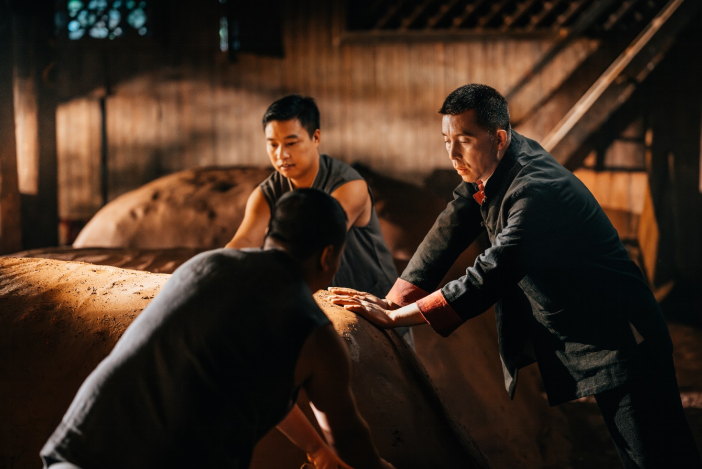
五粮液工匠群像:传承与创新的千年守护者——五一劳动节致敬每一位酿酒劳动者
Zhong Jin Zai Xian· 2025-05-01 12:26
Core Insights - The article highlights the dedication and craftsmanship of six artisans at Wuliangye, showcasing their commitment to preserving traditional Chinese liquor-making techniques while adapting to modern practices [1][11]. Group 1: Artisan Profiles - Shidegang, a skilled technician and representative of intangible cultural heritage, emphasizes the importance of sensory experience in brewing, using both scientific measures and personal intuition to ensure quality [2][4]. - Yuan Shihua, who began his career at Wuliangye at age 20, reflects on the challenges of maintaining traditional brewing standards and the importance of adhering to established processes to improve both quality and yield [5][7]. - Yu Cong, a university graduate, shares his journey from confusion to mastery in the brewing process, highlighting the physical and mental challenges faced by new entrants in the industry [8][10]. - Wang Daijun illustrates the internal promotion system at Wuliangye, discussing the balance between respecting traditional methods and implementing standardized practices in team management [9]. - Chen Xiaobo, who has progressed from apprentice to team leader, stresses the significance of strict adherence to traditional brewing methods to ensure product quality [9]. - Yan Jia, a former soldier, embodies the spirit of perseverance and dedication, adapting quickly to the demands of the brewing industry and emphasizing the importance of detail in the brewing process [10]. Group 2: Cultural Significance - The artisans represent a broader narrative of labor and craftsmanship in the Chinese liquor industry, embodying the values of tradition, innovation, and dedication [1][11]. - The article serves as a tribute to the unsung heroes of the industry, celebrating their contributions to the preservation and evolution of Chinese liquor culture [1][11].