
工艺美术

Search documents
(新春见闻)北京:景泰蓝皇家艺术庙会启幕
Xin Lang Cai Jing· 2026-02-18 11:07
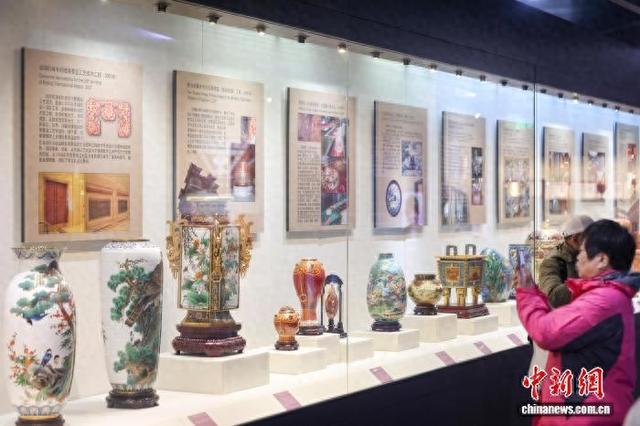
Group 1 - The 13th Jingtailan Royal Art Temple Fair opened in Beijing on February 18, marking the second day of the Lunar New Year [2] - The theme of this year's fair is "Golden Silk Color Painting Celebrating the New Spring: Enamel Temple Fair Brings Blessings" [2] - The event aims to provide citizens and tourists with an immersive cultural experience that combines intangible cultural heritage skills with traditional New Year customs [2] Group 2 - Visitors have the opportunity to create their own Jingtailan artworks under the guidance of craft artists [6] - The fair features various cultural and creative products, including Year of the Horse-themed refrigerator magnets [8] - The event showcases a variety of Jingtailan art pieces for public viewing [9]

从“触网”到“融网” 老字号仍需下功夫
Bei Jing Shang Bao· 2026-02-11 16:31
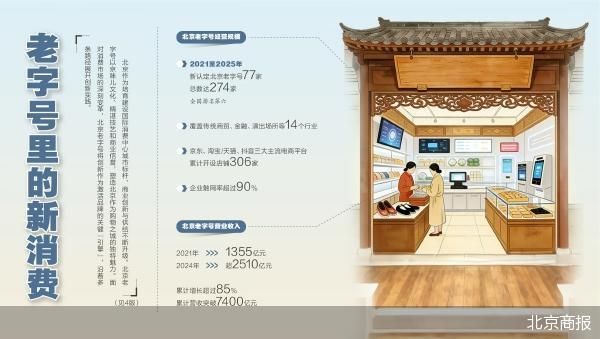
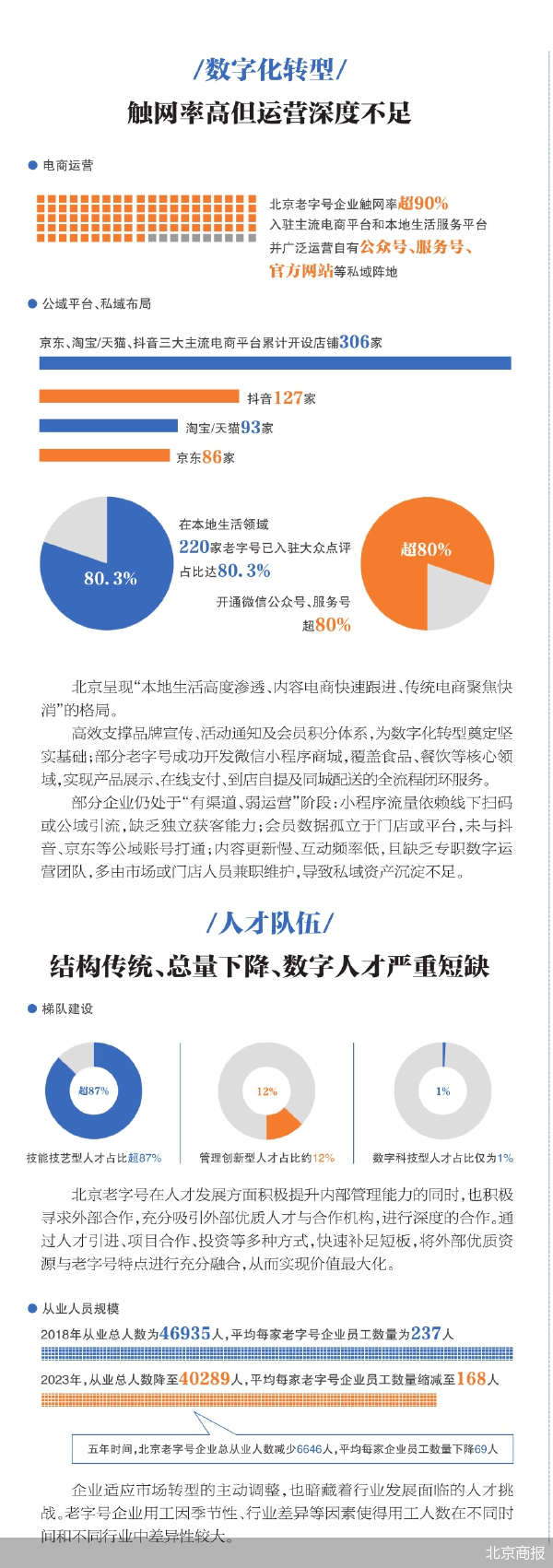
Core Insights - The core viewpoint of the article emphasizes the digital transformation and online expansion of traditional Chinese brands, particularly in Beijing, as they adapt to changing consumer markets and urban functions [1][3]. Digital Transformation and E-commerce - 90% of traditional brands in Beijing have entered the e-commerce space, with significant achievements in digitalization and innovative marketing, although some face challenges in operational capabilities [1][3]. - By the end of 2024, 274 traditional brands in Beijing are expected to utilize various digital channels, achieving an online reach rate exceeding 90% [3]. - These brands have opened a total of 306 stores across major e-commerce platforms, with Douyin (127 stores), Taobao/Tmall (93 stores), and JD.com (86 stores) being the most prominent [3]. - Over 50% of traditional brands are engaging in live streaming sales, particularly in sectors like food and crafts, with Douyin being the primary platform for these activities [3]. Operational Challenges - Many traditional brands still struggle with operational difficulties, particularly in non-food sectors, where product conversion and operational capabilities are weak [7]. - Issues such as reliance on offline traffic for brand mini-programs and isolated membership data hinder effective customer acquisition and personalized marketing [7]. - The fragmentation of data across various platforms prevents the creation of unified user profiles, complicating targeted marketing efforts [7]. Talent Shortage - The talent composition in traditional brands shows a significant mismatch for digital transformation, with only 1% being digital technology professionals, while over 87% are skilled artisans [8][9]. - There is a pressing need for hybrid talent who understand both brand heritage and digital marketing strategies to effectively engage with younger consumers [9]. Intellectual Property Protection - Traditional brands face challenges related to intellectual property, including complex historical rights and weak trademark protection awareness [10][11]. - The report highlights the need for proactive measures in intellectual property defense, especially against trademark infringement and counterfeiting [10][12]. - The Beijing Traditional Brand Association aims to enhance the capacity of these brands to protect their intellectual property through collaborative efforts with various regulatory bodies [12].
多渠道布局 老字号走向线上仍要下更多功夫
Bei Jing Shang Bao· 2026-02-11 12:13
Core Insights - Traditional brands in Beijing are actively pursuing digital transformation and online presence, with 90% of them already engaged in e-commerce [1][4] - The report highlights the need for improved operational capabilities among these brands, as many face challenges in converting online traffic into sales [6][7] Digital Transformation Efforts - As of the end of 2024, 274 traditional brands in Beijing have established a significant online presence, with over 90% utilizing various digital channels [4] - These brands have opened a total of 306 stores across major e-commerce platforms, including 127 on Douyin, 93 on Taobao/Tmall, and 86 on JD [4] - 80.3% of these brands have also joined local service platforms like Dazhong Dianping, indicating a strong digital engagement [4] Live Streaming and Consumer Engagement - Live streaming has become a prominent strategy, with over 50% of brands participating in this format to connect with consumers [5] - Douyin serves as the primary platform for these live streams, utilizing innovative formats to engage younger audiences [5] Operational Challenges - Many traditional brands still struggle with operational efficiency, particularly those outside the food and beverage sector [6] - Issues include reliance on offline channels for customer acquisition and fragmented customer data across various platforms [6] Talent Shortage - The workforce in traditional brands is heavily skewed towards skilled artisans (87%), with only 1% being digital technology professionals [7] - There is a pressing need for talent that combines knowledge of brand heritage with digital marketing and data analytics skills [7] - The lack of integrated systems for customer management and marketing hampers the ability to adapt to market changes [7]
春节错月致1月CPI同比涨幅回落,反内卷带动相关领域价格改善
Di Yi Cai Jing· 2026-02-11 04:17
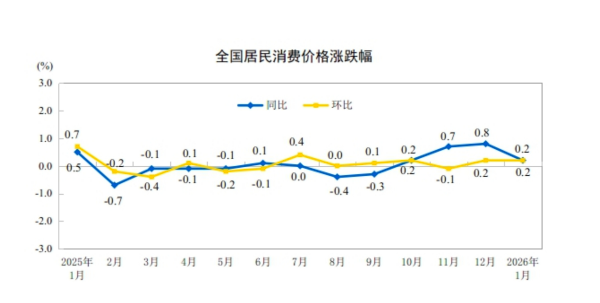
Group 1: Consumer Price Index (CPI) - In January, the CPI increased by 0.2% month-on-month and year-on-year, reflecting a decrease of 0.6 percentage points compared to December [1] - The decline in CPI is attributed to the Spring Festival timing and a significant drop in energy prices, which decreased by 5.0%, impacting CPI by approximately 0.34 percentage points [3] - Core CPI, excluding food and energy, rose by 0.8% year-on-year and 0.3% month-on-month, marking the highest increase in six months, indicating a steady recovery in consumer demand [3] Group 2: Producer Price Index (PPI) - The PPI rose by 0.4% month-on-month in January, marking the fourth consecutive month of increase, with an expansion of 0.2 percentage points from the previous month [5] - Factors contributing to the PPI increase include the ongoing construction of a unified national market and rising demand in certain industries [5] - Prices in sectors such as photovoltaic, battery, cement, and steel have shown positive improvements due to the "anti-involution" policies implemented last year [5] Group 3: Industry-Specific Price Changes - In January, prices for cement manufacturing and lithium-ion battery manufacturing increased by 0.1%, continuing a four-month upward trend [5] - The price of photovoltaic equipment and components shifted from a 0.2% decrease to a 1.9% increase, while basic chemical raw materials saw a 0.7% increase [5] - The prices of non-ferrous metal mining and smelting industries rose significantly, with silver smelting prices increasing by 38.2% and copper smelting by 8.4% [6] Group 4: Future Price Trends - The National Bureau of Statistics indicates that favorable factors for moderate price recovery are accumulating, supported by policies aimed at boosting consumption and stabilizing market expectations [6] - The implementation of coordinated fiscal and financial policies is expected to gradually expand consumer demand, providing a foundation for stable price operations [6] - Emphasis on industry self-regulation and capacity management is anticipated to further enhance price recovery in key sectors [6]
黄南:51人获省工艺美术大师、民间工艺师称号
Xin Lang Cai Jing· 2026-02-07 17:44
Core Insights - Huangnan Tibetan Autonomous Prefecture has been recognized for its significant achievements in cultivating and expanding the talent pool of arts and crafts, with a total of 51 artisans and folk artists approved, ranking first among all cities and prefectures in Qinghai Province [1] - The recognition of artisans, including 4 artists awarded the title of Master of Arts and Crafts, reflects a strong commitment to enhancing the quality of the cultural industry in the region [1] - The total number of arts and crafts masters and folk artists in Huangnan has reached 1,280, indicating a robust development in the sector and the establishment of new benchmarks and teams for innovative growth [2] Summary by Categories Talent Development - Huangnan Prefecture has achieved a high approval rate of 85% for recommended candidates, with 51 out of 60 individuals successfully recognized as masters and folk artists [1] - The region has a total of 1,280 arts and crafts masters and folk artists, including 10 national masters and 58 provincial masters, showcasing a diverse and skilled workforce [2] Industry Impact - The recognition of artisans is expected to enhance the enthusiasm and engagement of arts and crafts personnel in Huangnan, contributing to the high-quality development of the cultural industry [1] - The annual training capacity for arts and crafts personnel exceeds 2,000 individuals, indicating a strong commitment to fostering talent and innovation within the industry [2]
以人文经济引领历史经典产业高质量发展
Xin Lang Cai Jing· 2026-02-01 22:24
Core Insights - The high-quality development of historical classic industries in Sichuan is centered around the creative transformation of deep cultural values, integrating cultural, social, and economic values for mutual enhancement [1][2][3] Group 1: Historical Classic Industries Definition and Importance - Historical classic industries are defined as those that carry deep historical culture, unique craftsmanship, and regional characteristics, with a focus on consumer goods [2] - The core asset of historical classic industries is their rich "cultural capital," which includes unique craftsmanship, brand stories, and emotional connections with consumers [3] Group 2: Sichuan's Unique Advantages - Sichuan has a rich and distinctive industrial lineage, with notable sectors such as the liquor industry represented by Sichuan liquor, and textile industries like Shu brocade and Shu embroidery, which embody the region's cultural heritage [4] - These industries serve as tangible expressions of Sichuan's culture and valuable economic resources, with high-quality development aimed at converting static cultural capital into dynamic economic value [4] Group 3: Opportunities and Challenges - The historical classic industries in Sichuan are experiencing a revival driven by strong cultural capital, emotional connections with consumers, and an improving policy environment [5] - However, there are challenges in transforming cultural narratives into engaging experiences, forming innovative ecosystems, and diversifying value creation models [6][7] Group 4: Development Strategies for the 14th Five-Year Plan - To achieve high-quality development, Sichuan must focus on deepening cultural value, upgrading brand narratives, and creating modern brand storytelling through various media [8] - Building a talent development framework that includes a diverse range of professionals is essential for fostering innovation and bridging traditional craftsmanship with modern design [9] - Expanding experiential boundaries and promoting deep integration of industries through immersive cultural experiences can enhance consumer engagement and value creation [10] - Strengthening the connection to local roots and ensuring sustainable development through community involvement and ecological preservation is crucial for the long-term success of these industries [11]
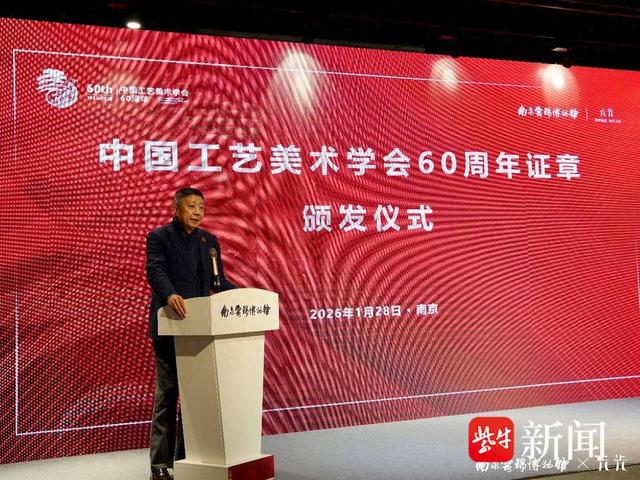
中国工艺美术学会证章颁发仪式在南京云锦博物馆举行
Xin Lang Cai Jing· 2026-01-31 04:03
Core Viewpoint - The 60th anniversary ceremony of the China Arts and Crafts Society highlights the importance of traditional craftsmanship and its role in modern society, emphasizing the need for innovation in the preservation and development of arts and crafts [1][3][5]. Group 1: Ceremony Highlights - The ceremony took place at the Nanjing Yunjin Museum, honoring 265 recipients, including master craftsmen, professors, and grassroots artists, with the oldest being 102 years old [1][3]. - The youngest recipient, Jian Mingwei, represents the younger generation's commitment to inheriting traditional skills and adapting them to contemporary needs [3]. Group 2: Future Directions - The future of Chinese arts and crafts should focus on "innovative inheritance," transforming traditional practices into modern necessities while maintaining the uniqueness and scarcity of handcrafted products [5][7]. - There is a call for the integration of education and industry, positioning education as a source of innovation for the arts and crafts sector [5]. - The aim is to elevate arts and crafts from the periphery of consumption to the center, making them fashionable and essential in daily life [7].
从砚台雕刻师到产业领航员:一名党员工匠的“砚都”赋能记丨粤匠担当 兴农之道⑤
Nan Fang Nong Cun Bao· 2026-01-12 04:06
Core Viewpoint - The article highlights the transformation of Zheng Tianxu from a traditional craftsman to an industry leader, emphasizing the need for innovation and adaptation in the craft industry to attract younger generations and ensure sustainability [5][6]. Group 1: Industry Challenges - The craft industry has been facing a decline, with older artisans retiring and younger individuals showing little interest in traditional crafts [10][12]. - Zheng identified three main barriers for youth engagement: long learning periods with slow results, low industry recognition and unstable income, and a disconnect between traditional techniques and modern aesthetics [13][14]. Group 2: Talent Development - Zheng took on a leadership role in the Zhaoqing Craft Art Association to shift focus from personal achievements to industry development [15][16]. - He established a talent development system that includes collaboration between schools and enterprises, mentorship from masters, and incentive competitions [17][18]. - Zheng designed comprehensive courses covering core techniques and integrated the spirit of craftsmanship into the curriculum [19][20]. Group 3: Market Transformation - Zheng recognized the need to reposition the traditional Duan inkstone from a luxury item to a more accessible product for everyday use [25][28]. - Under his guidance, the industry began exploring lifestyle-oriented products, such as portable inkstones and home decor items featuring Duan inkstone designs [29][30]. - An example includes the "Star Lake Moonlight" portable inkstone, which was redesigned to be smaller and lighter while retaining essential artistic features [30][31]. Group 4: Industry Collaboration - The Zhaoqing craft art industry has historically been fragmented, with many artisans and small businesses operating independently [42][43]. - Zheng emphasized the importance of building platforms for collaboration, leading to the establishment of the Bay Area Craft Art Boutique Exhibition, which showcased over 2,000 works and attracted more than 50,000 visitors [46][47]. - The Shenzhen Cultural Expo has also played a crucial role in promoting the Duan inkstone industry, serving as a platform for sales, brand exposure, and cultural exchange [49][51]. Group 5: Future Vision - Zheng envisions creating a national craft art exchange center and a digital museum for Duan inkstones, aiming to double the total output value of the Zhaoqing craft art industry within five years [61]. - He believes that personal creativity is linked to the overall prosperity of the industry, indicating a long-term commitment to both personal and industry growth [63][64].

北交所策略专题报告:北证文创国潮主线浮现:从柏星龙AI文创到朱炳仁铜上市辅导
KAIYUAN SECURITIES· 2025-12-28 10:44
Group 1 - The cultural industry in China has shown rapid growth, with cultural enterprises achieving revenue of 11 trillion yuan in the first three quarters of 2025, representing a year-on-year increase of 7.9% [2][18][19] - The cultural service sector leads the industry with a revenue of 60,626 billion yuan and a growth rate of 11.9%, accounting for 55.3% of the total revenue [2][19][21] - The new cultural business formats have seen significant growth, with 16 sub-sectors generating 48,860 billion yuan, a year-on-year increase of 14.1%, outpacing the overall industry growth [2][18][19] Group 2 - The report highlights the performance of specific companies, such as Baixinglong, which is focusing on the C-end market with its original IP "One-Eyed Planet" and aims to cater to the emotional economy of Generation Z [2][38][42] - Taihu Snow, a leading silk product company, has integrated traditional craftsmanship with modern design, achieving a revenue of 4.02 billion yuan in the first three quarters of 2025, with a net profit of 23.16 million yuan [2][35][50] - The report notes that 37 new companies related to the consumer service sector were listed on the New Third Board in 2025, with an average revenue of 931 million yuan and an average net profit of 90.67 million yuan for 2024 [4][74] Group 3 - The report indicates that the eastern region of China accounts for 79.9% of the cultural enterprises' revenue, with significant growth rates observed in both the eastern and western regions [2][24][28] - The content creation and production, creative design services, and news information services have shown remarkable growth rates of 14.0%, 13.2%, and 11.6% respectively [2][23][21] - The cultural industry has benefited from substantial government investment, particularly in cultural tourism, which has accelerated the development of cultural consumption [2][29][31]
第17届山东工艺美术博览会暨“山东手造”精品展26日开幕
Da Zhong Ri Bao· 2025-12-18 01:01
Core Insights - The 2025 Shandong Arts and Crafts Expo and "Shandong Handmade" Boutique Exhibition will take place from December 26 to 29 at the Shungeng International Convention and Exhibition Center in Jinan, marking the 17th consecutive event since 2009 [1] Group 1: Event Details - Over 300 exhibitors have been confirmed for the expo, showcasing more than 10,000 high-quality items across 11 categories, including craft carving, ceramic arts, and lacquerware [1] - The exhibition area will cover 14,100 square meters, featuring eight distinctive sections, including exhibitions from 16 cities in Shandong, neighboring provinces, and innovative works from students and teachers [1] Group 2: Industry Overview - During the 14th Five-Year Plan period, Shandong's arts and crafts industry has established a dual-engine drive of "living heritage of traditional skills" and "modern industrial system construction," maintaining a top-three position nationally in terms of enterprise quantity, workforce scale, industrial cluster total, and export earnings for five consecutive years [2] - The industry employs approximately 1 million people, with 220 enterprises above designated size, generating an average annual main business income exceeding 200 billion yuan, and exporting to over 130 countries and regions [2] - The sector has created over 450,000 jobs contributing to rural revitalization, and during the 14th Five-Year Plan, three new Chinese arts and crafts masters were added, bringing the total to 109, a 35% increase from the 13th Five-Year Plan [2]