估值错配

Search documents
又有私募自购!
Zhong Guo Ji Jin Bao· 2026-01-19 09:30
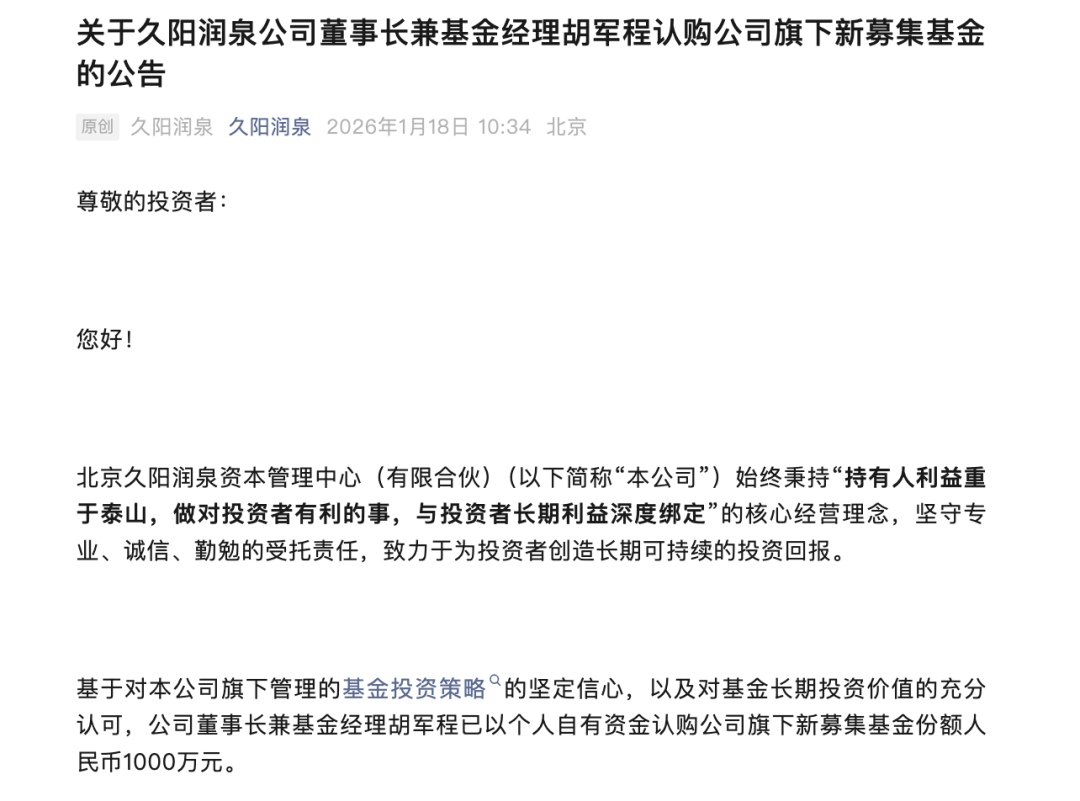
Core Viewpoint - Multiple private equity firms in China have actively engaged in self-purchase actions, indicating confidence in the market and their own products [1][3]. Group 1: Self-Purchase Actions - Jiu Yang Run Quan Capital announced that its chairman and fund manager, Hu Jun Cheng, personally subscribed to new fund shares worth RMB 10 million [1]. - Yuan Fang Fund announced a self-purchase of no less than RMB 4 million for its Yuan Fang Han Ze Growth No. 1 private equity securities investment fund [1][3]. - Hu Jun Cheng expressed that personal investment in the fund demonstrates confidence in the market, despite concerns about potential market corrections [3]. Group 2: Market Confidence and Trends - The private equity confidence index for A-shares recorded 124.94 in January 2026, a slight increase of 0.48% from December 2025, indicating improved confidence among private equity managers [5]. - The average position of subjective long-biased private equity funds remained at 78% as of December 2025, with 93.8% of funds maintaining positions above 50%, reflecting stable market sentiment [5]. - Analysts suggest that the current market liquidity is relatively abundant, and the combination of policy support and improved fundamentals presents numerous investment opportunities [6]. Group 3: Investment Focus Areas - Resource and technology sectors are highlighted as key investment areas for many private equity firms, with a focus on scarce resources and high-quality companies in technology and brand expansion [7]. - Investment strategies include maintaining high positions in cyclical industries, benefiting from rapid AI development, and focusing on monopolistic industries with high dividend rates [7].

德邦紧急停牌:一个必须在牌照、股权、上市地位层面动刀子的事
Sou Hu Cai Jing· 2026-01-10 18:36
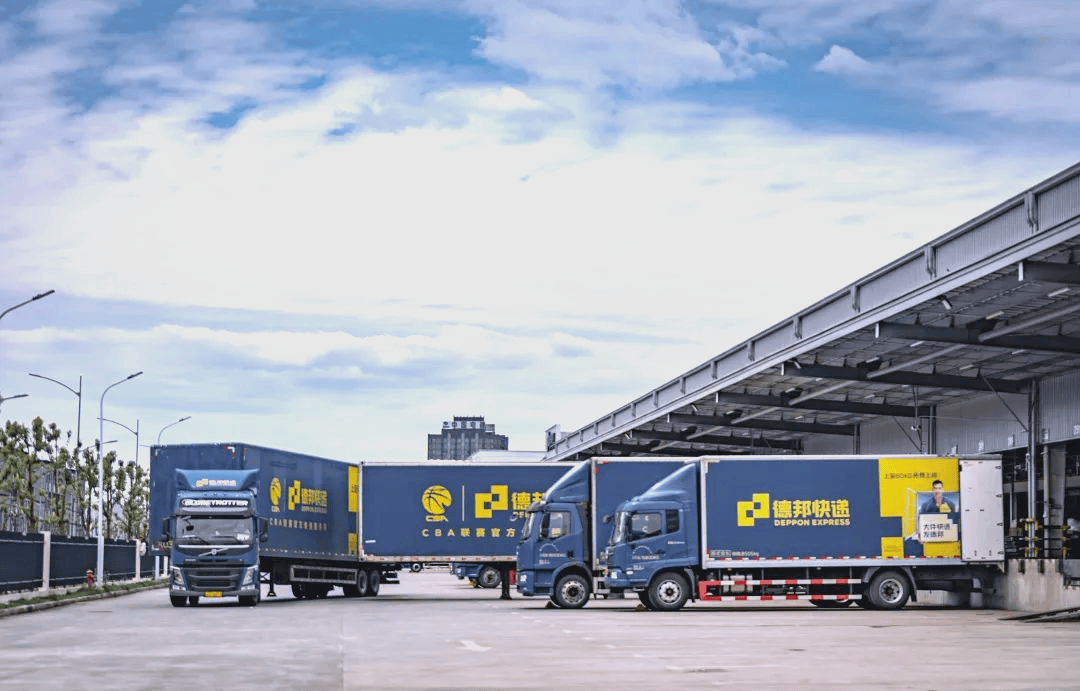
Core Viewpoint - The article discusses the valuation mismatch between logistics companies, particularly focusing on the comparison between SF Express, JD Logistics, and Deppon Logistics, highlighting that the market undervalues JD Logistics and Deppon despite their operational capabilities being comparable to SF Express [1][4]. Group 1: Reasons for Suspension - The suspension of Deppon is not justified by mere operational changes such as merging distribution centers or adjusting routes, as these are common practices in the logistics industry [3][4]. - The real issue behind the suspension is that the upcoming changes cannot be executed under normal trading conditions, indicating a significant shift in the company's operational or structural identity [3][4]. Group 2: Market Valuation Discrepancies - There is a structural valuation mismatch in the logistics sector, where the same logistics network is valued differently across capital markets, leading to a significant disparity in market capitalization [6][7]. - SF Express maintains a market capitalization close to 200 billion yuan, while JD Logistics and Deppon are valued much lower despite having similar operational scales [6][7]. Group 3: Identity and Market Perception - SF Express benefits from a clear and consistent identity in the capital market, which allows for a coherent valuation framework, unlike many logistics companies that suffer from fragmented identities [8][9]. - The article emphasizes that the ability to secure favorable financing conditions is increasingly tied to a company's market identity, which can influence its competitive position in the logistics industry [9][10]. Group 4: Implications of Valuation Mismatch - The persistent undervaluation of companies like Deppon can limit their financing options, acquisition flexibility, and ability to withstand market fluctuations, ultimately affecting their operational capabilities [9][10]. - The article concludes that merely improving operational efficiency is insufficient for companies to address the valuation mismatch; a strategic focus on identity and market positioning is essential for future success [10][11].