低温烫伤

Search documents
杭州女子一觉睡醒长出大水泡!这个习惯很多人有,已进入高发期
Xin Lang Cai Jing· 2026-02-08 14:25
Core Viewpoint - The article highlights the dangers of low-temperature burns, particularly during winter, emphasizing that common heating methods can lead to serious skin injuries that are often overlooked [1][2]. Group 1: Definition and Risks of Low-Temperature Burns - Low-temperature burns occur from prolonged contact with heat sources at temperatures between 44°C and 50°C for over 6 hours, or at 55°C for just 1 minute, leading to severe skin damage [2]. - Initial symptoms include redness and itching without significant pain, making it easy to ignore until severe damage occurs [2]. Group 2: Unsafe Practices to Avoid - Direct application of heating pads or hot water bottles on the skin can cause burns if used for more than 4 hours, and it is recommended to use a thin layer of clothing as a barrier [3]. - Electric blankets should not be left on all night; they should be turned off after preheating, and heavy blankets should not be placed on top [4]. - Heating devices should not blow directly on the elderly or children for extended periods, and a safe distance of at least 30 cm should be maintained [5]. - Using heating devices while intoxicated or asleep increases the risk of low-temperature burns due to decreased sensitivity [6]. Group 3: First Aid Steps for Burns - Immediate action includes rinsing the affected area with cool running water for 15-20 minutes to reduce skin temperature and damage [7]. - Clothing should be gently removed from the burn area, and if stuck, it should be cut away to prevent further injury [8]. - The burn area should be covered with a clean cloth to protect it from infection, and blisters should not be broken [9]. - Common home remedies like toothpaste or oils should be avoided as they can worsen the condition and complicate medical assessment [10]. Group 4: When to Seek Medical Attention - Medical attention is crucial if the burn area has blisters, is larger than a palm's size, or affects sensitive areas like the face, hands, or joints, especially for vulnerable populations such as the elderly, children, and diabetics [11].
看不见的“温柔刀” 冬季低温烫伤高发需警惕
Xin Lang Cai Jing· 2026-01-30 09:20
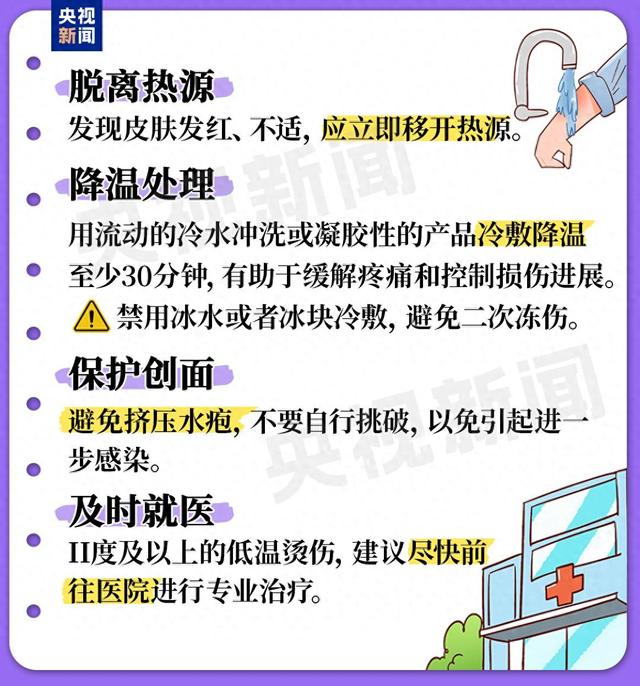
Group 1 - The article discusses the risks associated with using warming tools such as hot water bags, heating pads, and electric blankets, which can lead to low-temperature burns if not used properly [1][2] - Low-temperature burns, also known as cold burns, occur when the skin is in contact with heat sources at temperatures between 44°C and 50°C for extended periods, causing progressive damage to skin layers [1][4] - The pain sensation from low-temperature burns is less pronounced compared to high-temperature burns, making them easier to overlook, which can lead to severe skin damage by the time symptoms appear [4][5] Group 2 - The severity of low-temperature burns can range from first-degree (redness and mild swelling) to third-degree burns (skin necrosis), with varying symptoms based on the depth of the burn [3][4] - Research indicates that the degree of damage is positively correlated with the duration of contact at temperatures between 44°C and 51°C, with specific time thresholds for skin damage [4] - Preventive measures include avoiding direct skin contact with warming tools, limiting usage to no more than two hours on the same area, and removing heat sources before sleep [5][7]

医生提醒:低温烫伤易被忽视
Xin Lang Cai Jing· 2026-01-15 17:24
Core Viewpoint - Recent incidents of low-temperature burns from hot springs have been reported, highlighting the risks associated with prolonged exposure to high-temperature water, particularly in the context of consumer safety in the wellness industry [1][2]. Group 1: Incident Overview - A woman in Chongqing suffered second-degree low-temperature burns after soaking in a 43°C hot spring for half an hour, initially feeling comfortable but later developing painful blisters [2]. - Medical professionals indicate that low-temperature burns occur from prolonged exposure to temperatures around 50°C, which is common in hot springs [2]. Group 2: Risk Factors - Prolonged soaking in hot springs, especially above 43°C, significantly increases the risk of skin damage after 15 minutes [3]. - Localized pressure on the skin, such as resting against hot surfaces, can also elevate the likelihood of burns [3]. - Vulnerable populations, including the elderly, infants, and individuals with certain medical conditions, are at higher risk for low-temperature burns [3][4]. Group 3: Safety Guidelines - Recommended practices include limiting soaking time to 15-20 minutes and incorporating breaks to cool down and hydrate [5]. - Maintaining distance from hot surfaces and avoiding prolonged contact with them is advised [5]. - Special populations should avoid hot springs altogether, particularly those with recent health issues or conditions that affect skin sensitivity [5]. - It is crucial to avoid soaking on an empty or full stomach and after alcohol consumption [5]. - Immediate action should be taken if symptoms like redness or blisters occur, including cooling the affected area and seeking medical attention if necessary [6][7].
警惕“温暖陷阱”防范低温烫伤
Xin Lang Cai Jing· 2026-01-13 07:26
Core Viewpoint - The increasing use of heating devices such as electric blankets, warmers, hot water bags, and small heaters during winter poses a risk of low-temperature burns, particularly among vulnerable populations like the elderly, children, and diabetic patients [1] Group 1: Definition and Characteristics of Low-Temperature Burns - Low-temperature burns occur when skin is in prolonged contact with heat sources ranging from 41°C to 60°C, leading to deeper tissue damage despite milder pain compared to high-temperature burns [2] - These burns can be misdiagnosed as ordinary redness, delaying treatment and potentially resulting in scarring or chronic ulcers [2] Group 2: Vulnerable Populations - Elderly individuals may not sense temperature changes due to skin aging and reduced sensitivity, making them more susceptible to burns [3] - Diabetic patients often experience peripheral neuropathy, which diminishes their ability to perceive heat, increasing their risk of injury [3] - Infants and young children, due to their delicate skin and inability to communicate discomfort, are also at high risk [3] - Individuals with neurological impairments, those under anesthesia, intoxicated, or sedated may not recognize the danger of prolonged exposure to heat sources [3] Group 3: Safe Heating Practices - Common practices that can lead to low-temperature burns include prolonged exposure to heating devices on the same body part, high temperatures from electric blankets, and inadequate use of hot water bags [4] - Recommendations for safe use include keeping hot water bag temperatures below 50°C, using towels as barriers, and ensuring electric blankets are turned off after preheating [4] - Maintaining a safe distance from heaters and avoiding prolonged exposure to the same area are crucial [4] - Regular skin checks for vulnerable individuals using heating devices are advised to catch early signs of burns [4] Group 4: Purchasing Guidelines for Heating Devices - When purchasing heating devices, it is essential to choose products with 3C certification, temperature control protection, and automatic shut-off features, while avoiding outdated or damaged items [5] Group 5: First Aid for Low-Temperature Burns - Immediate actions for suspected low-temperature burns include removing the heat source and cooling the affected area with running water for 15-30 minutes [6] - It is important to avoid home remedies and seek professional medical help, especially if blisters or significant skin changes occur [6] - Emphasizing safety during winter heating is crucial to prevent minor injuries from escalating into serious health issues [6]
用冰处理烫伤会进一步损伤皮肤?关于低温烫伤这些要知道
Xin Lang Cai Jing· 2026-01-12 06:39
Core Viewpoint - The article emphasizes the importance of safety when using heating devices during colder temperatures, particularly highlighting the risk of "low-temperature burns" [1]. Group 1: Low-Temperature Burns - Many patients treated for burns at Kunming Medical University First Affiliated Hospital have suffered from low-temperature burns due to improper use of heating devices [1]. - Low-temperature burns can occur when the skin is in contact with a heat source of 44°C to 50°C for more than 40 minutes, and initial pain may not be noticeable [1]. Group 2: First Aid for Burns - Immediate treatment is crucial when a burn occurs; if clothing is covering the burn, it should not be removed directly but cut away with scissors [3]. - It is advised not to burst blisters or apply toothpaste, as these actions can cause further damage to the skin [3]. Group 3: Treatment Recommendations - The first step in treating any burn is to cool the affected area with water at a temperature between 15°C and 25°C; ice should be avoided to prevent further skin damage [6]. - Cover the burn with a clean cloth or gauze and seek medical attention promptly [6]. - When using heating devices, it is recommended to keep the water temperature in hot water bags not too high and to use thick blankets to prevent direct skin contact [6].
冬日取暖 医生提醒“当心低温烫伤”
Yang Shi Wang· 2026-01-12 00:25
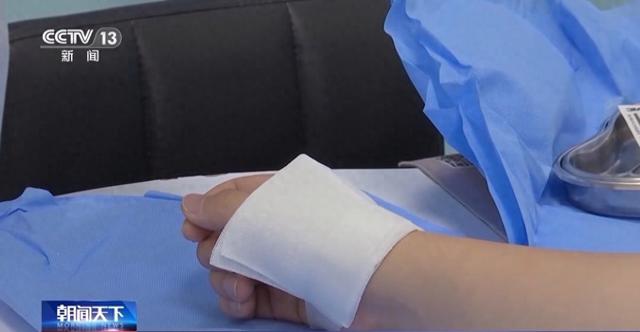
Core Viewpoint - The article emphasizes the increased usage of heating devices due to dropping temperatures and highlights the importance of safety precautions to prevent "low-temperature burns" [1] Group 1 - The article notes that various heating devices are being used more frequently as temperatures decrease across different regions [1] - Medical professionals are advising the public to be cautious while using heating equipment to avoid injuries [1]
一觉醒来“又红又疼”!福州有医院近期接诊十几例!超半数是年轻人
Xin Lang Cai Jing· 2026-01-09 10:26
Core Viewpoint - The article highlights the rising cases of low-temperature burns in Fuzhou due to improper use of heating devices during the recent cold snap, particularly among young people who often underestimate the risks associated with such injuries [2][4]. Group 1: Incident Reports - A student named Xiao Li suffered a third-degree burn on his left calf after using a hot water bottle for warmth while sleeping, leading to severe infection and requiring professional treatment [1][3]. - The hospital's wound repair clinic has seen over ten cases of low-temperature burns in just one week, with a significant number of patients being young adults, contrary to the previous belief that such injuries primarily affected the elderly [4]. Group 2: Medical Insights - The attending physician explained that low-temperature burns can be insidious, as the initial pain is minimal, allowing for deep tissue damage to occur without immediate awareness [3][4]. - Symptoms of low-temperature burns include initial redness and swelling, followed by numbness and the formation of dark blisters, which can lead to skin necrosis and infection if not treated promptly [4]. Group 3: Safety Recommendations - To prevent low-temperature burns, the physician advises the public to follow four safety guidelines when using heating devices: 1. Ensure heat sources are insulated with 1-2 layers of clothing and avoid direct skin contact, moving the device periodically, and limiting contact to no more than 30 minutes [5]. 2. Maintain water temperature in hot water bottles below 50°C and only preheat electric blankets before sleep, ensuring they are turned off afterward [5]. 3. Vulnerable populations, such as the elderly and those with diabetes, should use lower temperatures (≤40°C) and check their skin regularly [6]. 4. Avoid sleeping with heating devices to reduce the risk of burns due to decreased skin sensitivity during sleep [6].
V观话题丨开电热毯睡太沉醒来屁股淤青!天冷了,你会正确使用取暖神器吗?
Xin Lang Cai Jing· 2025-12-23 04:36
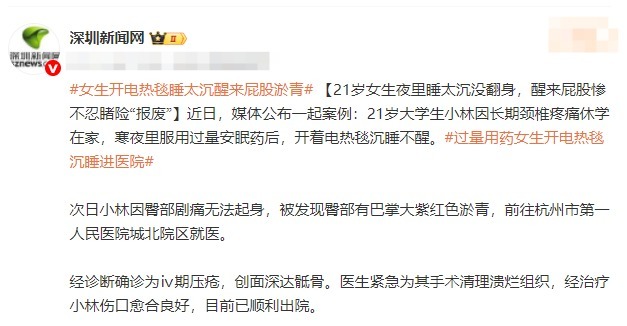
Core Viewpoint - The article highlights the risks associated with using heating devices such as electric blankets, particularly the potential for low-temperature burns, as evidenced by a recent case involving a university student who suffered severe skin damage due to prolonged use of an electric blanket [1]. Group 1: Incident Overview - A 21-year-old university student experienced severe skin damage (IV stage pressure sore) after using an electric blanket while under the influence of sleep medication [1]. - The incident has sparked discussions among netizens regarding the quality and safety of electric blankets [3][4]. Group 2: Prevention Guidelines - Recommendations for preventing low-temperature burns include controlling the temperature of heating devices and avoiding direct skin contact [5]. - Users are advised to turn off heating devices after warming the bed and to monitor skin sensations for any discomfort [5]. - In case of skin redness or discomfort, immediate cooling with running cold water or gel products is recommended, and severe cases should seek medical attention [6].
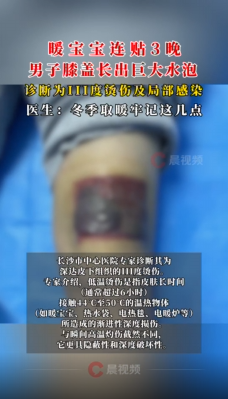
连贴三晚,膝盖深Ⅲ度烫伤!很多人冬天都在用
Xin Lang Cai Jing· 2025-12-21 21:44
Core Viewpoint - The article highlights the risks associated with using heating products during winter, particularly the danger of low-temperature burns, as illustrated by a case of a man suffering a third-degree burn from prolonged use of a heating pad [1][3]. Group 1: Incident Overview - A 45-year-old man in Changsha experienced severe burns after using a heating pad at 45°C on his knee for three consecutive nights, leading to a diagnosis of third-degree burns [3]. - The incident serves as a cautionary tale about the potential dangers of seemingly harmless heating products during cold weather [1][3]. Group 2: Prevention Tips - Maintain a safe distance when using heating devices like heaters and electric blankets, especially when caring for vulnerable individuals such as the elderly and children [4]. - When using hot water bottles, do not overfill them and wrap them in a towel to prevent low-temperature burns [5]. - Follow the instructions for self-heating pads, ensuring a safe distance between the product and the skin [7]. - It is advisable to turn off electric blankets before sleeping and to use those with automatic temperature control and overheating protection features [7].
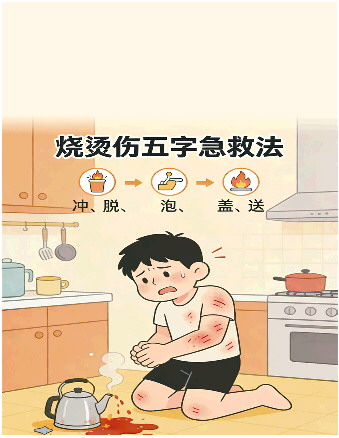
冬季烧烫伤,牢记五字急救法
Xin Lang Cai Jing· 2025-12-19 17:24
Core Viewpoint - The article emphasizes the increased risk of burns in children during winter, particularly low-temperature burns, which are often underestimated by parents due to their subtle onset and serious consequences [2][3][4]. Group 1: Types of Burns - Low-temperature burns are a significant concern in winter, caused by prolonged contact with objects slightly above body temperature, leading to deeper skin damage [3][4]. - Contact burns occur suddenly when children touch high-temperature objects, with common sources including heating devices and hot liquids [5][6]. Group 2: Risk Scenarios - High-risk scenarios for low-temperature burns include prolonged contact with heating pads, electric blankets, and direct skin contact with heat sources [4]. - Common sources of contact burns include household heating devices, hot water pipes, and kitchen items like hot pots and tea cups [5][6]. Group 3: Prevention Strategies - To prevent low-temperature burns, parents should use protective coverings for heating devices and ensure they are not in direct contact with children's skin [7]. - For contact and hot water burns, physical barriers and proper placement of hot items are crucial, along with supervision during cooking and bathing [7]. Group 4: First Aid Procedures - In case of burns, the recommended first aid steps include cooling the burn with running water, removing clothing carefully, soaking the area, covering it with a clean cloth, and seeking medical attention if necessary [8]. - Parents are advised against using home remedies that could worsen the situation and to follow the established first aid protocol to minimize harm [8]. Group 5: Importance of Prevention - The article stresses that preventing burns is far more critical than treating them, urging parents to remain vigilant and address safety hazards in the home during the winter [9].