电热毯

Search documents
2026取暖电器行业简析报告
MCR嘉世咨询· 2026-03-16 01:40
Investment Rating - The report provides a positive investment outlook for the heating appliance industry, highlighting robust growth potential driven by policy support and consumer demand [4]. Core Insights - The heating appliance industry in China is projected to maintain steady growth from 2021 to 2025, with market size increasing from 328 billion to 770 billion yuan, reflecting a compound annual growth rate (CAGR) of approximately 29.1% [4][20]. - The industry has evolved through four stages: initial development, rapid growth, accelerated upgrading, and high-quality development, transitioning from basic heating functions to smart, energy-efficient, and scenario-based solutions [4][9]. - The market is increasingly driven by both policy initiatives promoting clean heating and rising consumer demand, particularly in non-central heating regions of southern China [4][21]. Market Overview - The heating appliance market is categorized into three main segments: electric heating, gas heating, and auxiliary integrated heating devices [4][8]. - Key product categories experiencing significant growth include baseboard/convection heaters, PTC heaters, and air-source heat pump heating machines, while traditional products like electric oil heaters are losing market share [4][20]. Industry Growth Drivers - Policy support for clean heating and energy efficiency standards, along with consumer demand awakening in southern regions, are key growth drivers [4][21]. - By 2025, smart heating products are expected to account for 47.6% of total sales, indicating a shift towards more advanced and user-friendly heating solutions [4][23]. Technological Innovations - The industry has seen a technological evolution from basic heating technologies to smart and green solutions, with AI control and IoT integration becoming mainstream [24][25]. - New materials like graphene and carbon fiber are being increasingly utilized, enhancing energy efficiency and reducing product weight [26][28]. Export Landscape - China is the largest exporter of heating appliances globally, with significant growth in exports to the EU, Japan, and ASEAN countries [32]. - In 2025, the export volume of electric heating appliances is expected to reach 10.615 million units, with a year-on-year growth of 6.18% [32]. Industry Structure - The industry value chain is characterized by a strong collaboration between upstream raw material suppliers, midstream manufacturers, and downstream sales channels, with profits skewed towards midstream brands and downstream channels [33][34]. - The market concentration is increasing, with the top five brands' market share rising from 58% in 2021 to 76% in 2025 [40]. Consumer Trends - Consumer preferences are shifting from basic heating needs to a demand for comfort, safety, and smart features, with a notable increase in the popularity of high-end and energy-efficient products [49]. - The market is witnessing a diversification of usage scenarios, with portable and waterproof products gaining traction in various environments [49].

欧洲冬天取暖难的问题,竟被浙江人破解了,他们是咋闷声发大财的
Sou Hu Cai Jing· 2026-02-26 13:09
Core Insights - The article highlights how the energy crisis in Europe during 2022 led to a surge in demand for heating appliances, particularly electric blankets and heaters from China, specifically from Cixi, Zhejiang [1][3][5] Group 1: Impact of the Energy Crisis - The energy crisis was triggered by the Russia-Ukraine conflict, which resulted in sanctions against Russia and a significant disruption in Europe's energy supply, leading to skyrocketing energy prices [3][11] - European consumers, who traditionally relied on central heating and natural gas, faced a survival crisis and turned to Chinese heating products as a solution [5][11] Group 2: Cixi's Manufacturing Advantage - Cixi, with over 2,000 home appliance manufacturers and more than 10,000 supporting enterprises, was uniquely positioned to meet the urgent demand for heating devices, achieving an export value of 3.35 billion yuan in heating appliances to the EU, a 55.2% increase [7][9] - The local supply chain in Cixi allowed for rapid production and delivery of heating devices, showcasing a "capillary-level" capability in manufacturing [9][19] Group 3: European Manufacturing Challenges - The crisis exposed the hollowing out of European manufacturing, where many brands had outsourced production to China, resulting in a dependency on imports for essential heating equipment [13][15] - In 2022, 70% of heating equipment in the EU was imported, with over 60% coming from China, highlighting a significant reliance on Chinese manufacturing [15][21] Group 4: Shifts in Consumer Behavior and Political Landscape - The demand for Chinese heating products led to a backlash against the European elite's environmental policies, with rising support for right-wing parties as citizens prioritized immediate needs over long-term environmental goals [17][19] - The situation illustrated a contradiction in EU policies, where efforts to reduce reliance on Chinese products in high-tech sectors contrasted with increasing dependence in consumer goods [21][23] Group 5: Future of Cixi's Manufacturing - Cixi's manufacturers are evolving from mere OEMs to brand creators, with a significant increase in self-owned brands registered in the EU, rising from 12% to 28% of exports [27][29] - The focus is shifting towards innovation and technology, with local companies developing advanced heating solutions that exceed EU standards, indicating a transformation in the competitive landscape [27][29] Group 6: Long-term Implications - The article suggests that the surge in heating demand is not a one-time event but reflects deeper issues in European energy policy and the resilience of Chinese manufacturing capabilities [33] - The future of Sino-European trade will likely revolve around regulatory standards rather than tariffs, presenting both challenges and opportunities for Chinese companies [31][33]


河南省 鹤壁市市场监督管理局发布复合肥料等14种产品质量监督抽查结果
Zhong Guo Zhi Liang Xin Wen Wang· 2026-02-24 08:03
Core Viewpoint - The quality supervision inspection conducted by the Hebi Market Supervision Administration revealed that out of 244 batches of 14 types of products, 19 batches were found to be non-compliant with standards, highlighting concerns regarding product quality in the region [1][2]. Group 1: Inspection Results - A total of 127 business entities were sampled, and 225 batches of products met the required standards, including safety helmets, cement, and electric bicycle batteries [1]. - The non-compliant products included composite fertilizers, insulation materials, and bedding products, indicating specific areas of quality concern [1]. Group 2: Regulatory Actions - The Hebi Market Supervision Administration has mandated local market regulatory departments to take strict legal actions against the identified issues, ensuring compliance with relevant laws and regulations [2]. Group 3: Consumer Guidance - Consumers are advised to purchase products from reputable and licensed physical stores or well-known e-commerce platforms to avoid substandard products [3]. - It is recommended that consumers check for complete product labeling, including manufacturer information and safety certifications, before making a purchase [4]. - Retaining purchase receipts is crucial for consumers to report any quality issues to market regulatory authorities [4].
遵义市家用电器消费提示
Sou Hu Cai Jing· 2026-02-12 02:52
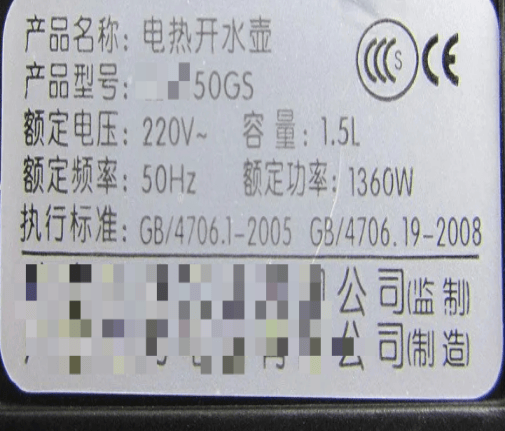
Core Viewpoint - The article emphasizes the importance of safety when purchasing and using household appliances, especially during the upcoming Spring Festival, highlighting guidelines for consumers to ensure product quality and safety. Group 1: Product Selection Guidelines - Consumers should check product name, manufacturer details, specifications, voltage, power parameters, and safety certifications on the product label [1] - The appearance and craftsmanship of appliances should be inspected, looking for quality features such as smooth surfaces and secure connections [4] - The CCC certification is crucial as it serves as a mandatory safety certification for household appliances, and products without this certification pose significant safety risks [8] Group 2: Recommended Purchase Channels - It is advised to purchase appliances from reputable sources such as large appliance stores, brand-specific shops, and authorized online platforms [9][10] - Consumers should be cautious of low-priced products from unlicensed vendors, as these may be substandard or counterfeit [5] Group 3: Safety Usage Tips - Proper layout of sockets and appliances is essential to prevent accidents [8] - Consumers should regularly replace aging appliances to avoid fire hazards and ensure safety [12] - Electrical devices should be used according to the manufacturer's instructions, and consumers should avoid overloading circuits [12][13] Group 4: Electrical Safety Rules - Key safety rules include not using damaged appliances, avoiding wet hands when handling electrical devices, and not overloading power outlets [16][17] - Regular checks of household wiring and devices are recommended to ensure safe operation [14]
AI预判、精准调配,苏宁易购开通春节服务“绿色通道”
Huan Qiu Wang· 2026-02-11 11:26
Core Insights - Su Ning Yi Gou has launched an emergency response mechanism to assist vulnerable groups, such as the elderly, during the winter season, ensuring timely delivery and installation of essential heating appliances [1][3] - The company utilizes AI technology to optimize emergency delivery and repair services, enhancing efficiency and precision during the busy holiday season [3][5] - Over 10,000 engineers will be on duty during the Spring Festival, ready to address urgent repair needs, with a focus on high-frequency winter appliances [5] Group 1 - Su Ning Yi Gou has implemented a "green channel" for emergency services, allowing for rapid delivery of essential small appliances like heaters and power banks within 30 minutes [1] - The company collaborates with instant retail platforms like Meituan to ensure quick access to necessary products for customers in need [1][3] - For larger appliances, engineers can respond to urgent repair requests within 2 hours, ensuring the safe operation of household devices during winter [1] Group 2 - The "AI smart brain" system analyzes historical consumption data and regional weather patterns to predict demand for seasonal products, optimizing inventory allocation [3] - The company has prepared common spare parts in advance for frequently used winter appliances, enhancing repair efficiency [5] - Su Ning Yi Gou aims to provide a comforting service experience, emphasizing the importance of both product delivery and customer care during the winter season [5]


江苏省盐城市市场监管局发布2025年度冬季小家电产品市级专项监督抽查信息
Zhong Guo Zhi Liang Xin Wen Wang· 2026-02-06 07:08
Core Viewpoint - The report from the Yancheng Market Supervision Administration indicates that the quality inspection of winter small household appliances for the year 2025 showed no non-compliance among the 25 batches tested, reflecting a positive trend in product quality in this sector [2]. Group 1: Quality Inspection Results - The Yancheng Market Supervision Administration conducted a special quality inspection for winter small household appliances, with a total of 25 batches planned for testing [2]. - All 25 batches tested were found to be compliant with quality standards, indicating effective regulatory oversight and quality assurance in the market [2]. Group 2: Product Categories and Companies - The inspection covered various product categories, including electric kettles, liquid heaters, multifunctional electric pots, heaters, humidifiers, and electric blankets [3][5]. - Notable manufacturers involved in the inspection include Guangdong Midea, Hangzhou Joyoung, and Shenzhen Skyworth, among others, showcasing a diverse range of companies in the small appliance sector [3][5].




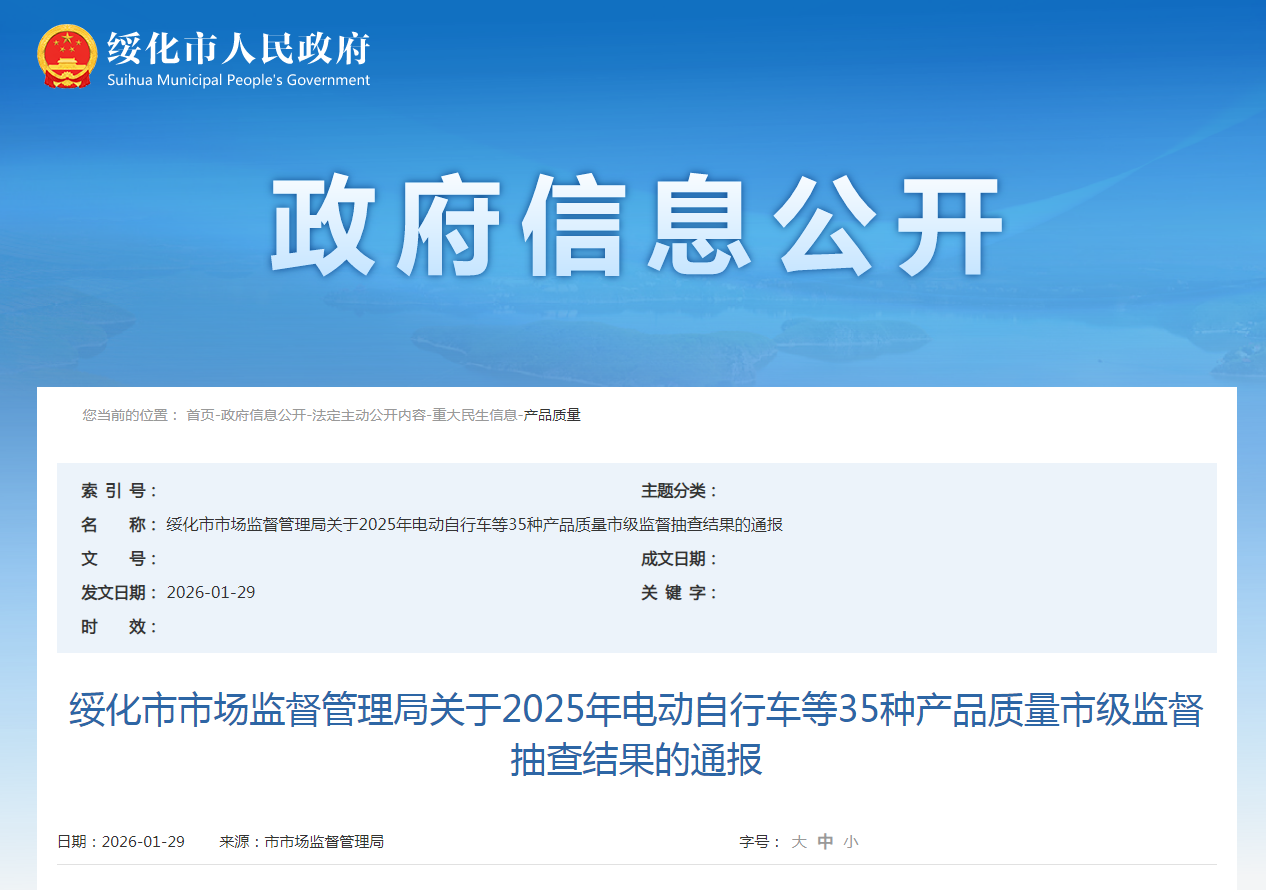
黑龙江省绥化市市场监督管理局通报2025年电动自行车等35种产品质量市级监督抽查结果
Zhong Guo Zhi Liang Xin Wen Wang· 2026-02-05 08:38
Summary of Key Points Core Viewpoint The report from the Shuanghua City Market Supervision Administration highlights the results of a quality supervision inspection conducted on 35 types of products, including electric bicycles, revealing that 9 batches were found to be non-compliant out of 139 batches tested across 121 enterprises [3]. Group 1: Inspection Results - A total of 121 enterprises were inspected, comprising 27 production enterprises and 94 distribution enterprises [3]. - Out of 139 batches tested, 9 batches were identified as non-compliant, with 2 batches from production enterprises and 7 batches from distribution enterprises [3]. Group 2: Non-Compliant Products - Non-compliant products included electric bicycles, electric blankets, building energy-saving insulation materials, plastic shopping bags, gas stoves, and gas detectors [4]. - Specific issues identified in non-compliant products included problems with battery safety, power connections, environmental requirements, and combustion conditions [4][5]. Group 3: Compliant Products - The report also lists compliant products, which include various electric bicycles, electric blankets, and building materials, indicating a significant number of products met the required standards [5][6]. - The compliance rate for the inspected products reflects the overall quality control measures in place within the industry [5].




江苏省如皋市市场监管局九华分局开展冬季电热水袋专项检查
Xin Lang Cai Jing· 2026-02-04 08:14
Core Viewpoint - The article highlights the proactive measures taken by the Jiangsu Province Rugao City Market Supervision Bureau to ensure the safety and quality of heating products during the winter season, focusing on electric blankets, electric heating pads, and electric heaters [1] Group 1: Regulatory Actions - The Market Supervision Bureau is intensively inspecting the quality and safety risks of heating products, particularly in supermarkets and specialized electrical stores [1] - Key safety indicators such as product sales records, 3C certification marks, and product compliance certificates are being thoroughly checked [1] - The inspection includes detailed verification of components like power cords, plugs, and temperature control systems to ensure compliance with national standards [1] Group 2: Legal Education and Compliance - The enforcement personnel are integrating law enforcement with legal education, informing operators about the Product Quality Law and the Certification and Accreditation Regulations [1] - Operators are being educated on the requirements for product traceability, verification of purchase, and the prohibition of selling products without proper labeling and certification [1] - The bureau emphasizes the importance of operators fulfilling their responsibilities regarding product quality and safety [1] Group 3: Future Actions - The bureau plans to use the current inspections as an opportunity to conduct sampling tests on problematic products identified during the checks [1] - Non-compliant products found during sampling will face penalties to maintain quality safety standards [1] - The overarching goal is to protect consumers' legal rights and ensure a safe winter experience [1]
看不见的“温柔刀” 冬季低温烫伤高发需警惕
Xin Lang Cai Jing· 2026-01-30 09:20
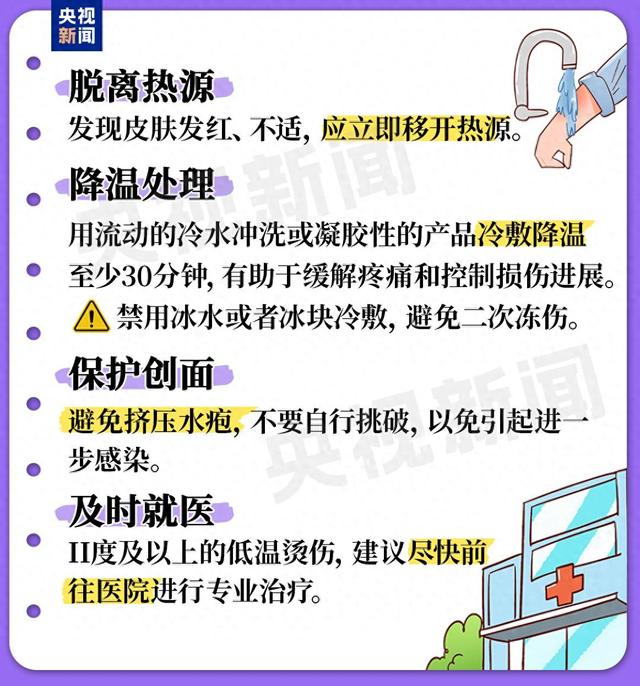
Group 1 - The article discusses the risks associated with using warming tools such as hot water bags, heating pads, and electric blankets, which can lead to low-temperature burns if not used properly [1][2] - Low-temperature burns, also known as cold burns, occur when the skin is in contact with heat sources at temperatures between 44°C and 50°C for extended periods, causing progressive damage to skin layers [1][4] - The pain sensation from low-temperature burns is less pronounced compared to high-temperature burns, making them easier to overlook, which can lead to severe skin damage by the time symptoms appear [4][5] Group 2 - The severity of low-temperature burns can range from first-degree (redness and mild swelling) to third-degree burns (skin necrosis), with varying symptoms based on the depth of the burn [3][4] - Research indicates that the degree of damage is positively correlated with the duration of contact at temperatures between 44°C and 51°C, with specific time thresholds for skin damage [4] - Preventive measures include avoiding direct skin contact with warming tools, limiting usage to no more than two hours on the same area, and removing heat sources before sleep [5][7]
疯抢中国过冬八件套,天然气飙涨40%,欧洲人订单排到明年春
Sou Hu Cai Jing· 2026-01-24 17:46
Core Insights - European households are increasingly purchasing Chinese-made heating devices due to a nearly 40% rise in heating costs over the past two years, reflecting economic pressures and changes in global supply chains [1][3][11] Group 1: Market Trends - The demand for portable heating devices surged in Europe during the 2023 winter due to a rare cold wave, leading to shortages in stores [3] - Many Europeans are turning to cross-border e-commerce platforms to buy Chinese "winter essentials," with factories in Yiwu and Cixi working overtime to meet the increased orders [3][5] - The export of heating appliances from China to the U.S. saw a 35% year-on-year increase in 2022, indicating a strong reliance on Chinese products during extreme weather [5] Group 2: Product Innovation - Chinese heating products are becoming popular due to their smart, portable, and energy-efficient features, such as Bluetooth-controlled electric shawls and battery-powered heating clothing [7] - Social media platforms are filled with users showcasing their experiences with Chinese heating products, highlighting their growing appeal [7] Group 3: Global Impact - In 2023, China's export value of small heating appliances grew by approximately 28%, maintaining its position as the world's leading exporter [9] - Various countries, including Japan and Canada, have also turned to Chinese heating solutions during winter crises, further establishing the global presence of Chinese manufacturing [9] Group 4: Consumer Behavior - The trend of purchasing Chinese heating devices reflects a broader desire for practical and cost-effective solutions among consumers facing extreme weather and energy shortages [11] - The "winter essentials" from China not only provide warmth but also demonstrate the resilience and growth of the Chinese manufacturing industry [11]