低温雨雪冰冻天气

Search documents
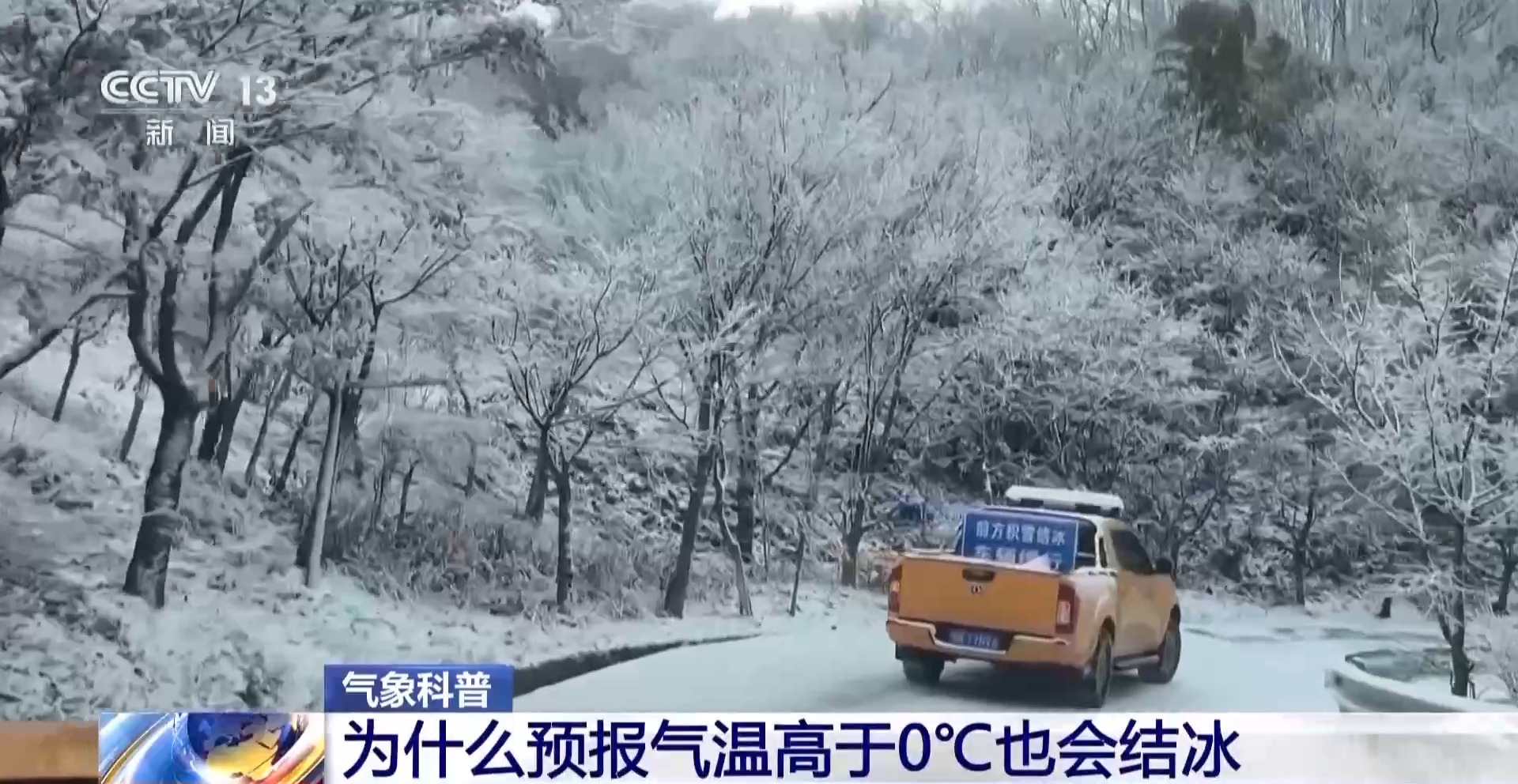
视频丨冻雨不是雪 盘点低温雨雪冰冻天气常见误区
Yang Shi Xin Wen Ke Hu Duan· 2026-01-25 13:37
Core Viewpoint - The article highlights common misconceptions regarding low-temperature rain, snow, and ice weather, emphasizing the importance of accurate understanding to improve safety and response efficiency during such conditions [1][5]. Group 1: Weather Phenomena - Precipitation forms are complex and diverse, with freezing rain and snow often causing confusion due to their different formation processes and characteristics [3]. - Snow forms from water vapor in high-altitude clouds directly crystallizing into ice, while freezing rain consists of supercooled water droplets that freeze upon contact with surfaces, creating a smooth ice layer [3]. Group 2: Temperature Misconceptions - A common misconception is that ice only forms when temperatures are below 0°C; however, surface temperatures can be affected by various factors, leading to freezing even when air temperatures are above 0°C [5][7]. - The temperature reported in weather forecasts refers to the air temperature measured at 1.5 meters above ground, which may differ from the actual surface temperature due to radiation cooling and other effects [7]. Group 3: Composite Disasters - Low-temperature rain, snow, and ice disasters are not isolated weather events but rather composite disasters resulting from the combination of cold waves, low temperatures, rain, snow, and ice [9]. - The destructive power of these disasters arises from the synergistic effects of low temperatures and precipitation, leading to prolonged impacts on infrastructure and various sectors, including electricity, communication, transportation, agriculture, and public health [9].

低温雨雪冰冻登场 多条国省干线局部路段封闭管控
Xin Lang Cai Jing· 2026-01-25 13:03
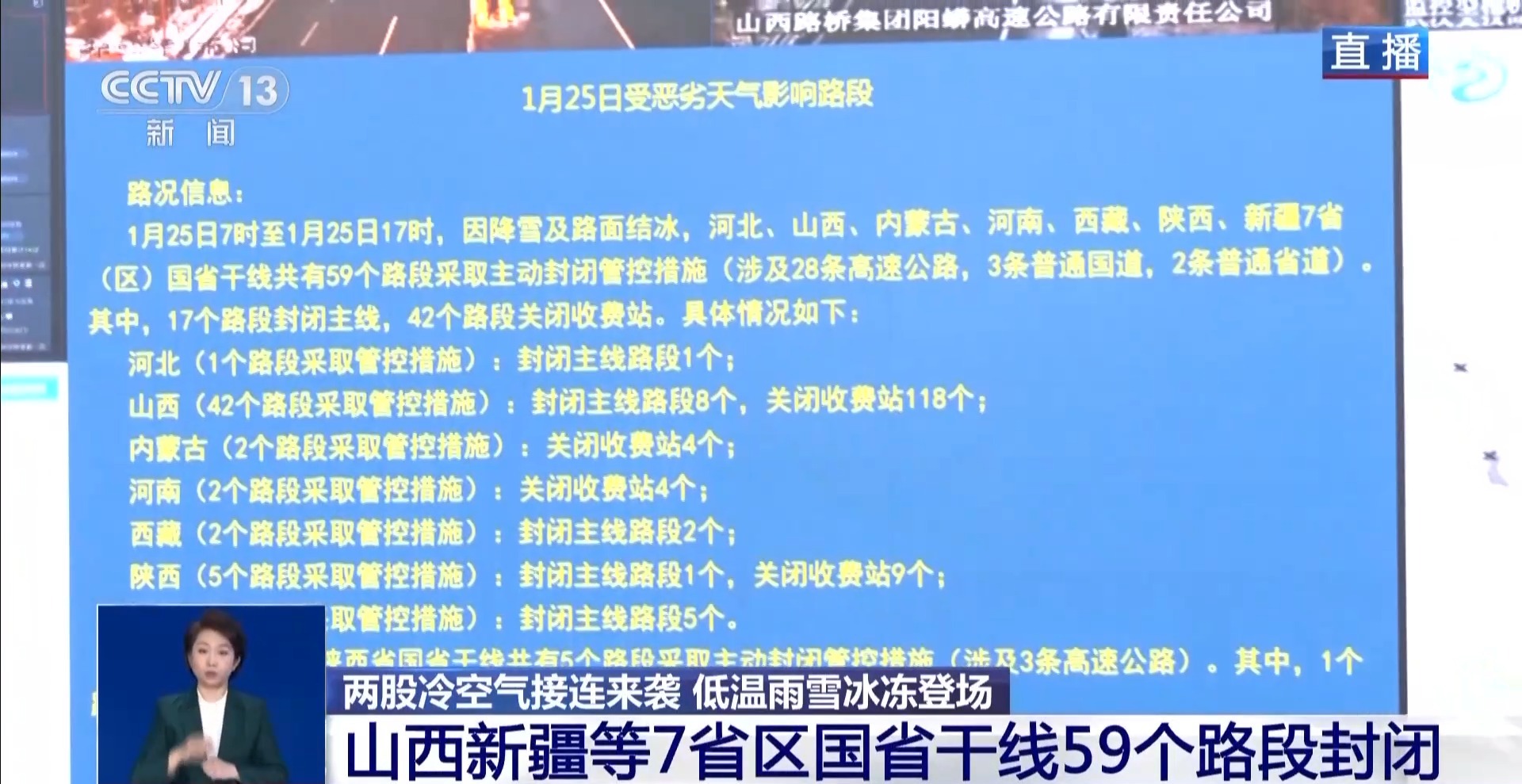
Weather Impact on Transportation - Two cold air masses will affect China from today until next week, causing frequent temperature fluctuations in the central and eastern regions [1] - The first cold air mass is expected to bring a temperature drop of 3-6°C, with local areas experiencing drops of over 8°C from the 25th to the 27th [1] - The second cold air mass will follow from the 29th to the 31st, leading to further temperature decreases of 4-8°C, with some areas seeing drops around 10°C [1] Transportation Disruptions - As of today, 59 road sections across seven provinces (Hebei, Shanxi, Inner Mongolia, etc.) have been closed due to snow and icy conditions [3] - These closures include 28 expressways, 3 national highways, and 2 provincial roads, with additional closures in Shaanxi due to fog [3] - In Shanxi, highways are reported to have thick snow accumulation, and parts of Hubei are experiencing freezing rain, which can lead to hazardous driving conditions [5] Safety Measures and Public Response - Local authorities in Shanxi are actively clearing snow and ice to ensure safe transportation, utilizing both mechanical and manual methods [8] - The public is advised to remain cautious while traveling, especially in areas experiencing freezing rain, as it can significantly increase stopping distances and lead to accidents [5][7] - Tourists visiting scenic areas like Wutai Mountain are reminded to prioritize safety while enjoying the winter landscape [9][10] Coastal Weather Effects - Recent low temperatures have led to significant sea ice formation along the coast of Dalian, with the ice area reaching its peak [12] - The ice conditions are reported to be similar to last year, with no new cold air expected to significantly increase the ice area in the coming week [14] - Local maritime authorities are monitoring the situation closely to assess the impact on shipping activities [18]
气象科普:盘点低温雨雪冰冻的常见误区
Yang Shi Wang· 2026-01-24 17:00
Group 1 - The article discusses the impact of low-temperature rain, snow, and freezing weather on road conditions and travel disruptions [1] - It highlights common misconceptions about winter weather, such as equating freezing rain with snow, which can affect safety and risk management [1] - The piece emphasizes the importance of scientifically understanding low-temperature weather phenomena to improve response efficiency and prevent accidents [1]
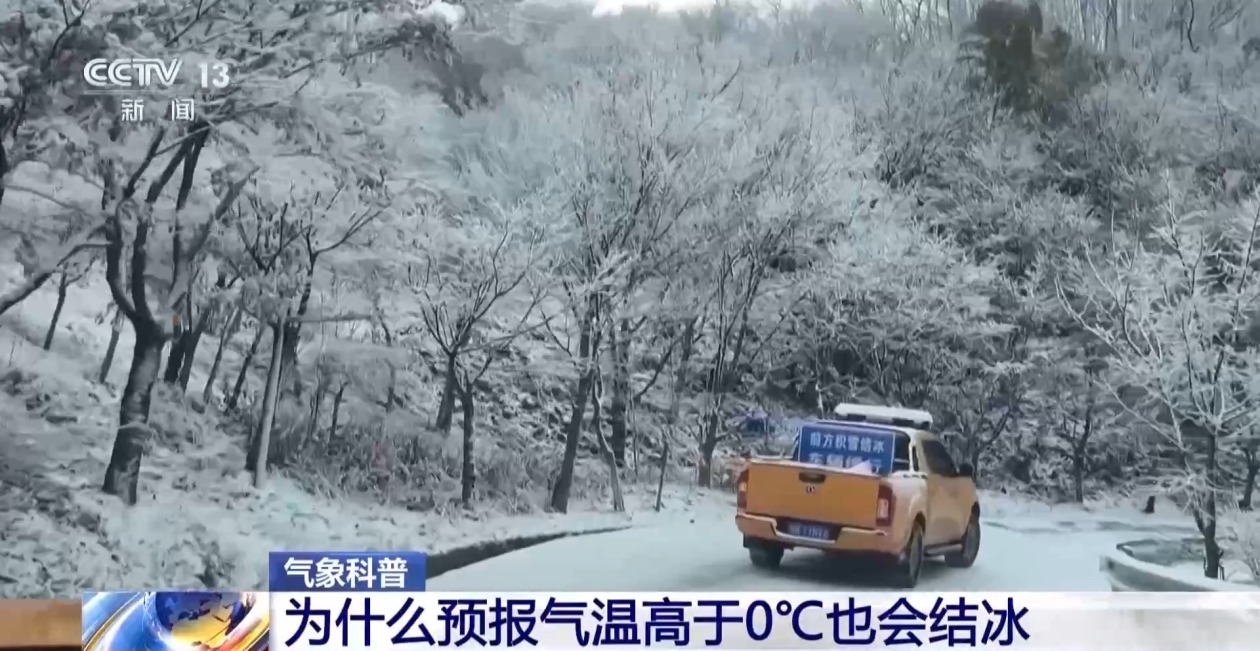
冻雨不是雪 盘点低温雨雪冰冻天气常见误区
Xin Lang Cai Jing· 2026-01-24 09:19
Core Viewpoint - The article emphasizes the misconceptions surrounding low-temperature rain, snow, and freezing weather, highlighting the differences between freezing rain and snow, and the complexities of low-temperature weather phenomena [1][3][7]. Group 1: Weather Phenomena - Freezing rain and snow are both winter precipitation types, but they differ in formation and appearance. Snow forms from water vapor in high-altitude clouds, while freezing rain consists of supercooled water droplets that freeze upon contact with surfaces [1]. - A common misconception is that ice only forms when temperatures are below 0°C. However, surface temperatures can drop below 0°C due to factors like radiative cooling, even when air temperatures are above freezing [3][5]. Group 2: Impact of Low-Temperature Weather - Low-temperature rain, snow, and freezing disasters are not isolated weather events but rather a combination of cold waves, low temperatures, rain, snow, and freezing conditions. This compound disaster can have significant and prolonged impacts on infrastructure [7]. - The effects of low-temperature rain and snow can be complex and cumulative, affecting various sectors such as electricity, communication, transportation, agriculture, and public health [7].
本周末前全省低温持续
Zheng Zhou Ri Bao· 2026-01-21 00:50
Group 1 - The recent cold wave and snowstorm from January 17 to 20 is the strongest since the beginning of winter, with significant impacts across the province [1] - Snow accumulation ranged from 5 to 12 centimeters in most areas, with some regions experiencing 12 to 18 centimeters [1] - Temperature drops were substantial, with maximum temperatures decreasing by 14℃ to 25℃, and minimum temperatures dropping by 4℃ to 18℃, breaking historical records for January [1] Group 2 - The snow and cold weather are beneficial for soil moisture retention and crop safety during winter, laying a good foundation for spring agricultural production [2] - The cold conditions may pose risks to late-sown winter wheat and facilities for vegetables, increasing the likelihood of cold damage [2] - The weather event has effectively increased humidity in forest areas, reducing the fire risk level to 1 to 2 [2] Group 3 - From January 21 to 23, the weather is expected to transition from cloudy to clear, with minimum temperatures ranging from -10℃ to -8℃ across most areas [3] - A new weather system is anticipated from the night of January 24 to 25, bringing rain and snow, with some areas potentially experiencing heavy snowfall [3]
长江南京段:停航部分客渡运航线 管控船舶1100余艘
Zhong Guo Xin Wen Wang· 2026-01-20 11:38
Group 1 - The Nanjing Maritime Safety Administration has implemented temporary traffic control measures on the Yangtze River due to rain and snow, affecting over 1,100 vessels, including small ships, container ships, and dangerous goods vessels [1][2] - Three passenger ferry routes have been suspended, and tourist boats on the Yangtze River have also halted operations [1] - A total of 58 personnel involved in water-related construction have been evacuated as part of the safety measures [1] Group 2 - Since the onset of the inclement weather, the Nanjing Maritime Safety Administration has deployed over 180 personnel and more than 60 vessels to oversee the adjustment of navigation plans and ensure safety measures against wind, ice, and snow [2] - The administration has established 24-hour emergency standby points along the Yangtze River, with 38 emergency vessels on standby, including 10 patrol boats and 28 emergency tugboats [2] - The Central Meteorological Observatory issued a blue cold wave warning and continued to issue yellow warnings for freezing conditions and blue warnings for strong winds, forecasting widespread cold wave and low-temperature snow and ice conditions in Jiangsu from January 18 to 23 [2]

中国多地迎来低温雨雪冰冻天气 各部门以“雪”为令保通畅保民生
Yang Shi Wang· 2026-01-20 06:27
Group 1 - The cold wave continues to impact southern China, with yellow ice warnings issued by the Central Meteorological Observatory, predicting freezing rain or ice pellets in regions such as Guizhou, Hunan, Guangxi, Yunnan, and Jiangxi on January 20 and 21 [1] - Strong snowfall has been recorded in Henan, Anhui, and Hubei since January 19, with the temperature dropping to 0°C in central Hunan and eastern Hubei [2] - Henan is experiencing its strongest winter low-temperature rain and snow, with significant snowfall reported in Sanmenxia, where 10 cm of snow accumulated over 10 hours and temperatures dropped to -10°C [4] Group 2 - Schools in Zhengzhou, Luohe, and Xinyang have announced continued closures on January 20 due to the heavy snowfall, with resumption dates to be determined [5] - In Hefei, Anhui, the education department has allowed students to choose between home learning or attending school on January 20 and 21, while some train services have been temporarily suspended due to the weather [9] - The Chongqing Meteorological Station issued a yellow warning for road icing, with severe icing reported on national highways, prompting local authorities to organize ice removal operations [11]
长沙今早下“雪籽”了,体感温度-8℃!湖南发布低温雨雪冰冻黄色预警
Xin Lang Cai Jing· 2026-01-20 03:28
Group 1 - The weather forecast for Changsha indicates that the minimum temperature will drop below freezing, with a perceived temperature of -8°C, and snowfall expected in urban areas and moderate to heavy snow in mountainous regions [2] - On January 20, residents were awakened by the sound of ice pellets falling, which are a type of solid precipitation brought by the cold wave, making roads more prone to icing compared to regular snowflakes [3] - The Hunan Meteorological Station issued a yellow warning for low temperatures, rain, and snow, predicting that most areas in the province will experience freezing rain, sleet, or snow, with minimum temperatures expected to be below 0°C [7] Group 2 - The Jinggang'ao Expressway, a key route for entering and exiting Changsha, has been monitored for road conditions, with preventive measures such as the application of de-icing agents initiated to ensure safety and smooth traffic flow [7] - As of January 20 at 8 AM, traffic on the expressway was reported to be generally normal, although there were slowdowns on specific sections like the Heishi Pu Bridge [7]

江苏海事局:停航客渡运航线14 条 撤离涉水施工相关人员千余人
Xin Lang Cai Jing· 2026-01-19 15:09
Core Viewpoint - The Jiangsu Maritime Safety Administration has reported significant disruptions in maritime operations due to severe cold wave and strong winds, leading to the suspension of passenger ferry routes and the evacuation of personnel from water-related construction sites [1] Group 1: Maritime Operations - A total of 14 passenger ferry routes have been suspended as of 3 PM on January 19 due to adverse weather conditions [1] - The administration has evacuated 1,072 personnel involved in water-related construction activities [1] - Temporary control measures have been implemented for small vessels, with 6,564 small ships being managed under these regulations [1] Group 2: Weather Alerts - The Central Meteorological Observatory issued continued yellow alerts for cold waves, freezing temperatures, and snowstorms as of 10 AM on January 19 [1] - The forecast indicates a widespread cold wave with strong winds, low temperatures, and rain and snow from January 18 to 23, particularly affecting the northern and central regions with moderate to heavy snowfall and localized blizzards [1]
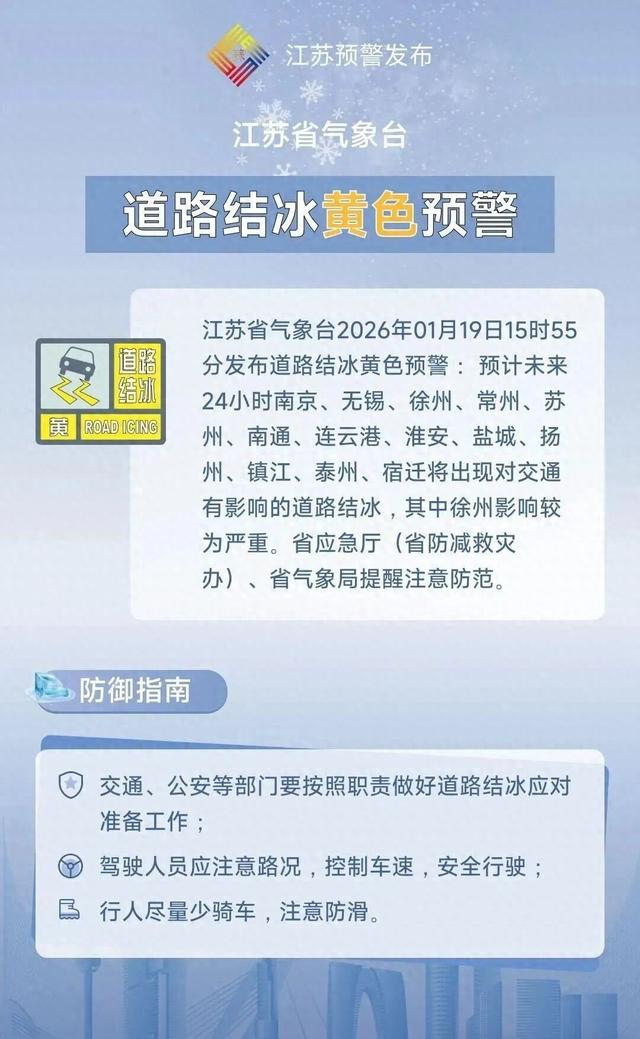
注意!江苏多个景区临时闭园,13市都将出现对交通有影响的道路结冰
Huan Qiu Wang· 2026-01-19 13:42
Weather Alerts - Jiangsu Meteorological Station issued a yellow alert for road icing, predicting significant impacts on traffic in cities including Nanjing, Wuxi, Xuzhou, and others within the next 24 hours, with Xuzhou facing the most severe conditions [1][2] Traffic Management - Due to low temperatures and icy conditions, traffic control measures have been implemented across the province, including a secondary traffic control on highways with a speed limit of 60 km/h and a ban on certain vehicles [5] Tourist Attractions - Several tourist attractions in Jiangsu, including Yinxinghu Resort and Nanjing Happy Valley, announced temporary closures from January 19 to 21 due to adverse weather conditions, with refunds available for purchased tickets [6][10][14]