住宅附赠率

Search documents
「附赠率」不该也不能成为主旋律
3 6 Ke· 2025-11-25 02:45
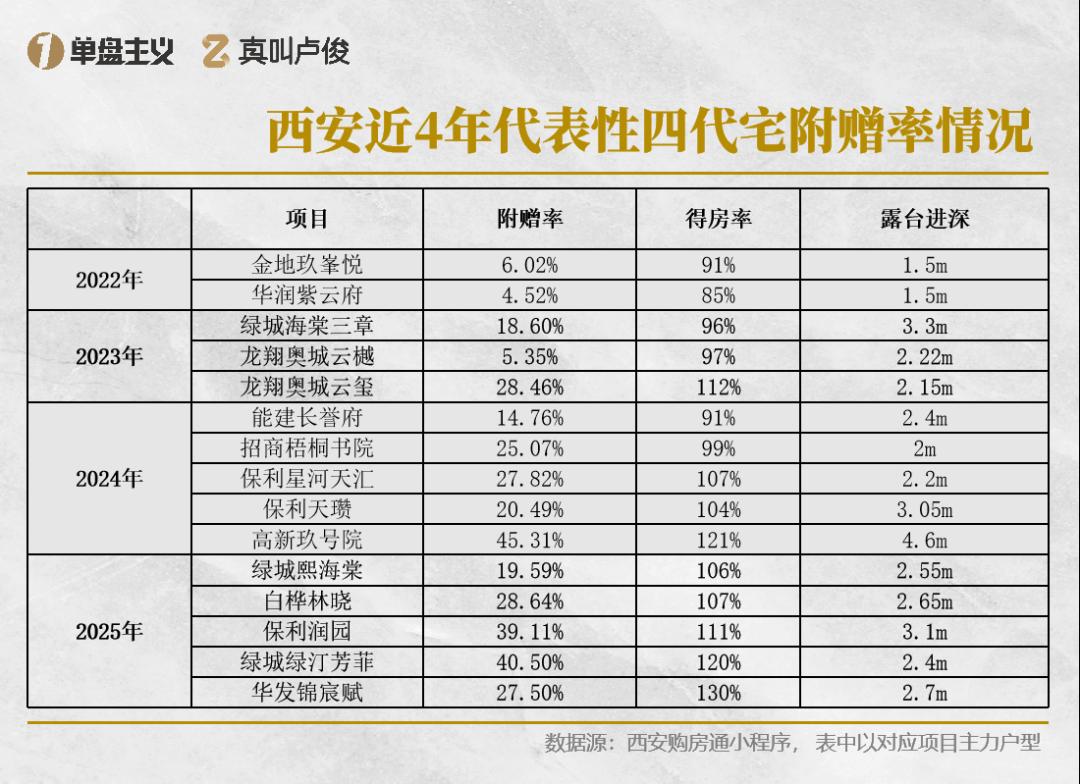
Core Viewpoint - The real estate market in 2025 is witnessing a competitive trend among developers to offer additional usable space, with many projects exceeding a 100% usable area ratio, indicating a shift in sales strategies and product offerings [1][5]. Group 1: Market Trends - Developers are increasingly engaging in a competition to provide additional space, with some projects offering up to 40% more area than the original size, reflecting a significant change in market dynamics [1][5]. - The concept of "Fourth Generation Housing" has gained traction, with developers focusing on maximizing usable space through design innovations such as larger balconies and terraces [1][5]. - In cities like Xi'an, the additional area ratios for Fourth Generation Housing have consistently increased over the past three years, with many projects achieving usable area ratios above 100% [1][3]. Group 2: Financial Implications - The increase in additional area offerings is seen as a way to enhance product appeal and address local government budget constraints, as higher land sale prices can alleviate financial pressures [5][9]. - The national land market has experienced a significant contraction, with a 25% decrease in the area of commercial land sold and a 33% drop in transaction value year-on-year as of October 2025 [7]. - The strategy of increasing usable space without lowering land prices is viewed as a method to enhance land value and market attractiveness [9][11]. Group 3: Consumer Impact - The trend of offering more usable space is perceived as beneficial for consumers, allowing them to receive greater value for their investment, effectively reducing the impact of shared areas [10][11]. - New regulations have led to a notable increase in the absorption rates of new projects, with some cities reporting absorption rates of up to 75% for Fourth Generation Housing compared to only 20% for traditional housing [10][11]. - However, despite the apparent benefits, the long-term sustainability of this trend raises questions about its impact on overall market demand and consumer purchasing power [11][12]. Group 4: Design and Quality Concerns - The focus on maximizing additional space has led to concerns about the quality of living environments, with some designs compromising essential aspects such as natural light and ventilation [16][19]. - Issues related to the structural integrity and safety of large balconies and terraces have been highlighted, raising questions about the long-term maintenance and safety of these designs [18][21]. - The industry's emphasis on additional area offerings may detract from other critical innovations in residential design, potentially leading to a homogenization of products [19][22]. Group 5: Regulatory Environment - Regulatory tightening is anticipated as cities like Guangzhou and Chengdu prepare to implement new rules to curb excessive area offerings, indicating a shift towards more sustainable development practices [25][26]. - The real estate sector is transitioning from a phase of rapid expansion to one focused on quality improvement and sustainable development, aligning with broader urbanization trends [25][26].

住房“附赠率”,不该成为主旋律
虎嗅APP· 2025-11-24 09:58
Core Viewpoint - The article discusses the rising trend of "附赠率" (additional area) in the real estate market, particularly focusing on the concept of "四代宅" (fourth-generation housing), which has become a competitive strategy among developers to attract buyers by offering more usable space than the actual purchase area [5][10][12]. Group 1: Market Trends - In 2025, many housing projects are expected to offer additional areas, with some achieving effective rates exceeding 100% [6][10]. - The competition among developers has led to significant increases in附赠率, with some projects in cities like Xi'an showing rates as high as 45.31% [8][10]. - The trend of offering additional area is seen as a response to a cooling land market, where developers are incentivized to enhance the perceived value of their properties without lowering land prices [15][22]. Group 2: Impact on Buyers and Developers - The increase in附赠率 is perceived as beneficial for buyers, allowing them to receive more usable space for the same price, effectively reducing the impact of shared areas [24][25]. - Developers are encouraged to adopt this strategy as it improves sales rates and accelerates cash flow, with some new regulations positively impacting market dynamics [23][24]. - However, the article raises concerns about the sustainability of this trend, questioning whether continuously increasing附赠率 can genuinely stimulate long-term market demand [12][29]. Group 3: Challenges and Risks - The article highlights potential risks associated with the high附赠率, including design compromises that may affect living comfort and safety [33][36]. - There are concerns about the long-term maintenance and safety of these properties, particularly regarding structural integrity and the management of additional features like large balconies [39][40]. - The focus on increasing附赠率 may detract from other essential aspects of housing design, leading to a lack of innovation in the industry [44][46]. Group 4: Future Directions - The article suggests that the industry should consider alternative strategies beyond the附赠率 competition, such as differentiating land use and focusing on genuine living quality [46][52]. - It emphasizes the need for regulatory measures to curb excessive附赠率 practices, indicating a shift towards quality over quantity in housing development [56].