住宅开发

Search documents
万科A跌0.43%,成交额3.53亿元,后市是否有机会?
Xin Lang Cai Jing· 2026-03-12 07:19
Core Viewpoint - Vanke A's recent performance shows a slight decline in stock price, with a focus on its rental housing and property management business, which continues to expand and adapt to market demands [1][11]. Group 1: Financial Performance - For the period ending September 30, 2025, Vanke A reported a revenue of 161.39 billion yuan, a year-on-year decrease of 26.61%, and a net profit attributable to shareholders of -28.02 billion yuan, down 56.14% year-on-year [9][18]. - The company has distributed a total of 103.03 billion yuan in dividends since its listing, with 8.06 billion yuan distributed over the last three years [19]. Group 2: Business Operations - The rental housing business, including non-consolidated projects, achieved a revenue of 3.70 billion yuan, reflecting a 7% year-on-year growth, with the expansion of 40,600 new rental units and 11,100 newly opened units during the reporting period [2][11]. - Vanke's property service segment operates in 100 cities, managing 3,051 projects, and focuses on high-quality residential property services [3][12]. Group 3: Strategic Initiatives - The company is actively responding to national policies on affordable housing, with 125,700 units included in the affordable rental housing category [2][11]. - Vanke's subsidiary, Wanwu Cloud, has launched the "Wanwu Cloud City" brand, aiming to enhance urban service efficiency through digital and mechanized operations [3][12]. Group 4: Market Position - Vanke has been recognized in the Fortune Global 500 list, ranking 356th in 2016 and 307th in 2017, indicating its strong position in the urban construction and living services sector [3][13]. - The company is focused on the most dynamic economic regions in China, including the three major economic circles and key cities in the central and western regions [3][13].

美国新屋销售去年年底出现回升
Xin Lang Cai Jing· 2026-02-20 15:36
Group 1 - The core point of the article highlights a rebound in new home sales in the U.S. at the end of last year, driven by significant sales incentives from developers and a slight decrease in financing costs [1][2] - The U.S. government reported that new single-family home sales surged in November, with an annualized rate of 745,000 units in December, surpassing Bloomberg economists' expectations of 730,000 units [2][3] - The report indicates that the growth from October to November was the largest since August 2022 [3] Group 2 - The median sales price in December fell by 2% year-over-year to $414,400, with only three months in 2025 expected to show no year-over-year price decline [4] - Although new homes account for only about 15% of total home sales in the U.S., the strong performance at the end of 2025 provides a positive signal for the overall sluggish real estate market [4]
未来城星寰时代建筑高度低于规综要求,考虑城市天际线塑造
Xin Lang Cai Jing· 2026-02-09 06:55
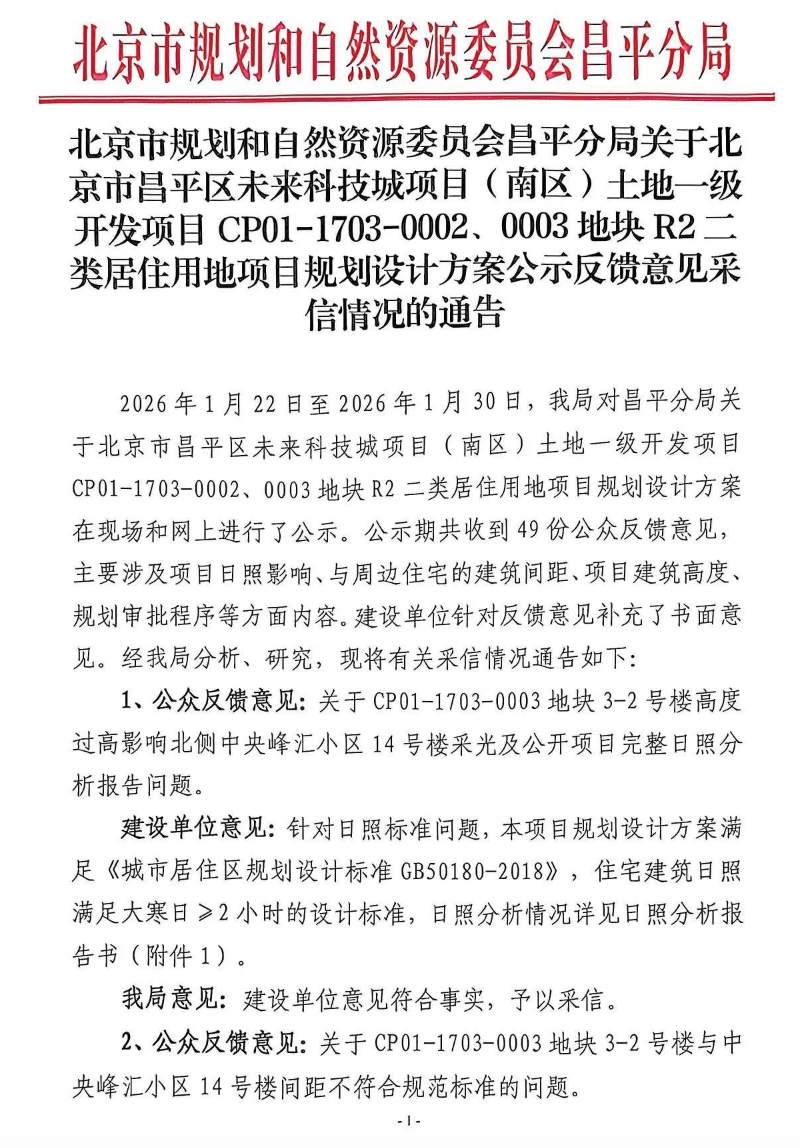
Core Insights - The project "Future City · Xinghuan Era" is located in the Changping Future Science City and is the first residential project in the area following the "Good Housing" policy, aiming to create a "Central Park Cultural Aesthetic Community" [5][30] - The project covers an area of approximately 2.86 hectares with a total construction area of about 99,525.276 square meters, including 63,525.626 square meters above ground [9][5] - The project consists of 15 residential buildings with a total of 647 housing units, with an average unit size of 95.55 square meters [6][9] Project Details - The project has a floor area ratio of 2.17 and a building height of 54.75 meters, with a green space ratio of at least 30% [9][5] - The residential units are designed with high efficiency, featuring various layouts and generous balcony depths, with some units offering additional non-counted space [22][24] - The project includes both high-rise and low-rise buildings, with specific configurations for each block to optimize space and light [10][12][13] Infrastructure and Connectivity - The project is strategically located near the core area of the Energy Valley, which is recognized as a hub for energy innovation and has attracted over 300 energy enterprises [33][30] - The area is well-connected by the recently opened Line 17 of the subway, enhancing accessibility to major urban centers and facilitating commuting for residents [31][30] - A cultural facility of 20,141.633 square meters is planned to complement the residential development, aimed at fostering community engagement and cultural exchange [29][28] Community and Amenities - The design includes pedestrian-friendly streets and shared spaces to promote community interaction while ensuring vehicle separation [20][18] - The project is surrounded by various educational and commercial resources, including schools and shopping centers, enhancing its appeal to families [34][30] - A significant park, the Energy Valley Central Park, is under construction nearby, contributing to the ecological and recreational environment of the area [34][30]

深深房A涨2.22%,成交额1.68亿元,主力资金净流出715.61万元
Xin Lang Cai Jing· 2026-02-09 06:50
Core Viewpoint - The stock of Shenzhen Real Estate (Group) Co., Ltd. (深深房A) has shown mixed performance, with a recent increase in share price but significant fluctuations over the past months, indicating potential volatility in the real estate sector [1][2]. Group 1: Stock Performance - As of February 9, 深深房A's stock price increased by 2.22% to 22.59 CNY per share, with a trading volume of 1.68 billion CNY and a market capitalization of 228.53 billion CNY [1]. - Year-to-date, the stock has risen by 2.59%, with a 1.03% increase over the last five trading days, a 1.85% increase over the last 20 days, but a decline of 14.37% over the last 60 days [1]. Group 2: Financial Performance - For the period from January to September 2025, 深深房A reported a revenue of 8.99 billion CNY, representing a year-on-year growth of 331.66%, and a net profit attributable to shareholders of 1.45 billion CNY, reflecting a significant increase of 2791.57% [2]. - Cumulative cash dividends since the company's listing amount to 11.81 billion CNY, with 61.71 million CNY distributed over the past three years [3]. Group 3: Shareholder Information - As of September 30, 2025, the number of shareholders for 深深房A increased by 5.69% to 38,400, with an average of 0 shares per shareholder [2]. - Among the top ten circulating shareholders, Hong Kong Central Clearing Limited holds 6.9351 million shares, an increase of 1.8974 million shares compared to the previous period [3].

盈新发展涨2.19%,成交额3.76亿元,主力资金净流入1974.60万元
Xin Lang Cai Jing· 2026-02-06 06:05
Core Viewpoint - Yingxin Development's stock has shown volatility with a recent increase of 2.19%, but has experienced a year-to-date rise of 22.01% and a decline of 2.68% over the past five trading days [1] Group 1: Stock Performance - As of February 6, Yingxin Development's stock price is 3.27 CNY per share, with a total market capitalization of 19.201 billion CNY [1] - The company has seen a net inflow of main funds amounting to 19.746 million CNY, with significant buying and selling activity [1] - Year-to-date, the stock has been on the龙虎榜 (top trading list) twice, with the latest instance on January 16, where net buying reached 150 million CNY [1] Group 2: Financial Performance - For the period from January to September 2025, Yingxin Development reported a revenue of 1.169 billion CNY, a year-on-year decrease of 48.38%, and a net profit attributable to shareholders of -486 million CNY, a decline of 682% [2] - The company has not distributed any dividends in the last three years, with a total payout of 1.428 billion CNY since its A-share listing [3] Group 3: Shareholder Information - As of September 30, 2025, the number of shareholders for Yingxin Development is 72,100, reflecting a decrease of 4.15% from the previous period [2] - The average number of circulating shares per shareholder has increased by 4.33% to 64,813 shares [2] - Among the top ten circulating shareholders, the Southern CSI Real Estate ETF has reduced its holdings by 254,600 shares [3]

滨江集团涨2.26%,成交额7560.81万元,主力资金净流入245.18万元
Xin Lang Cai Jing· 2026-02-04 02:08
Core Viewpoint - Binhai Group's stock has shown significant growth in early 2025, with a notable increase in revenue and net profit year-on-year, indicating strong performance in the real estate sector [1][2]. Group 1: Stock Performance - On February 4, Binhai Group's stock rose by 2.26%, reaching 11.76 CNY per share, with a trading volume of 75.61 million CNY and a turnover rate of 0.24% [1]. - Year-to-date, Binhai Group's stock price has increased by 17.01%, with a 4.63% rise over the last five trading days, 15.98% over the last 20 days, and 8.39% over the last 60 days [1]. Group 2: Financial Performance - For the period from January to September 2025, Binhai Group achieved a revenue of 65.514 billion CNY, representing a year-on-year growth of 60.64%, and a net profit attributable to shareholders of 2.395 billion CNY, up by 46.60% [2]. - Since its A-share listing, Binhai Group has distributed a total of 4.735 billion CNY in dividends, with 1.313 billion CNY distributed over the past three years [2]. Group 3: Shareholder Information - As of January 30, 2025, the number of shareholders in Binhai Group decreased by 8.16% to 27,400, while the average number of circulating shares per shareholder increased by 8.88% to 98,054 shares [2]. - Among the top ten circulating shareholders, the third-largest is the Fuguo Tianhui Growth Mixed Fund, holding 50 million shares, a decrease of 3 million shares from the previous period [2].

城建发展跌2.14%,成交额2.66亿元,主力资金净流出2360.37万元
Xin Lang Cai Jing· 2026-02-02 06:02
Core Viewpoint - Beijing Urban Construction Investment Development Co., Ltd. has shown fluctuations in stock performance, with a recent decline in share price despite an overall increase since the beginning of the year. The company is primarily engaged in real estate development, which constitutes the majority of its revenue [1][2]. Financial Performance - For the period from January to September 2025, the company achieved a revenue of 19.31 billion yuan, representing a year-on-year growth of 64.20%. The net profit attributable to shareholders was 0.765 billion yuan, reflecting a growth of 40.24% [2]. - Cumulative cash dividends since the company's A-share listing amount to 5.243 billion yuan, with 0.519 billion yuan distributed over the past three years [3]. Stock Market Activity - As of February 2, the stock price of the company was 5.50 yuan per share, with a market capitalization of 11.417 billion yuan. The stock has increased by 8.48% year-to-date but has seen a decline of 9.69% over the last five trading days [1]. - The company has appeared on the "Dragon and Tiger List" five times this year, with the most recent appearance on January 19, where it recorded a net buy of -19.4937 million yuan [1]. Shareholder Structure - As of September 30, 2025, the number of shareholders was 47,600, a decrease of 1.74% from the previous period. The average circulating shares per person increased by 1.77% to 43,583 shares [2]. - The top ten circulating shareholders include various ETFs and investment funds, with notable changes in holdings among major shareholders [3].

城建发展跌2.07%,成交额1.28亿元,主力资金净流出1920.77万元
Xin Lang Zheng Quan· 2026-01-30 02:10
Core Viewpoint - Beijing Urban Construction Investment Development Co., Ltd. has shown fluctuations in stock performance, with a recent decline in share price despite a year-to-date increase, indicating potential volatility in the market [1][2]. Group 1: Stock Performance - On January 30, the stock price of Beijing Urban Construction fell by 2.07% to 5.68 CNY per share, with a trading volume of 1.28 billion CNY and a turnover rate of 1.07%, resulting in a total market capitalization of 11.79 billion CNY [1]. - Year-to-date, the stock has increased by 12.03%, but it has experienced a decline of 11.94% over the last five trading days [1]. - The stock has appeared on the "Dragon and Tiger List" five times this year, with the most recent appearance on January 19, where it recorded a net buy of -19.49 million CNY [1]. Group 2: Company Overview - Beijing Urban Construction was established on December 30, 1998, and listed on February 3, 1999, primarily engaged in real estate development, equity investment, and commercial real estate operations [2]. - The company's revenue composition is heavily weighted towards real estate development, accounting for 97.24% of total income, with minor contributions from leasing and other services [2]. - As of September 30, the company reported a revenue of 19.31 billion CNY for the first nine months of 2025, reflecting a year-on-year growth of 64.20%, and a net profit attributable to shareholders of 0.765 billion CNY, up 40.24% [2]. Group 3: Shareholder Information - Cumulative cash dividends since the company's A-share listing amount to 5.243 billion CNY, with 0.519 billion CNY distributed over the past three years [3]. - As of September 30, 2025, the number of shareholders decreased by 1.74% to 47,600, while the average circulating shares per person increased by 1.77% to 43,583 shares [2][3]. - Notable institutional shareholders include Southern CSI Real Estate ETF and Hong Kong Central Clearing Limited, both of which have reduced their holdings compared to the previous period [3].
空中花园竟是坑!第四代住宅住感差,降价15%仍无人接盘
Sou Hu Cai Jing· 2026-01-27 18:01
Core Viewpoint - The concept of "fourth-generation residential buildings" is being criticized for its unrealistic promises and the negative experiences of homeowners, leading to significant dissatisfaction and financial loss [1][3][18] Group 1: Concept and Expectations - The "fourth-generation residential" concept has gained popularity, promising a living experience that integrates nature and luxury, but the reality often falls short of these expectations [3][5] - Initial marketing campaigns depict these homes as idyllic spaces, but the actual living conditions reveal numerous issues, including pest infestations and maintenance challenges [5][12] Group 2: Homeowner Experiences - Many homeowners report severe pest problems, including rodents and insects, which are exacerbated by the communal nature of these buildings, leading to a "tragedy of the commons" scenario [7][9] - The maintenance of these properties often becomes a financial burden, with costs for pest control and plant care exceeding initial expectations, leading to frustration among residents [8][11] Group 3: Structural and Safety Concerns - Structural integrity is a significant concern, as the weight of soil and plants on balconies poses risks of leaks and damage, which are costly to repair [9][13] - The design of these buildings can create safety hazards, including increased fire risks due to the presence of flammable vegetation and potential security issues from complex balcony structures [13][16] Group 4: Financial Implications - The high property management fees associated with these developments, which can be 80% to 150% higher than standard residential fees, do not correlate with the quality of service provided, leading to further dissatisfaction [11][18] - As a result of these compounded issues, properties marketed as "dream homes" are struggling in the secondary market, with significant price drops and a lack of buyer interest [18]
2026日本房产市场前瞻:东京「独涨」还能走多远?
Sou Hu Cai Jing· 2026-01-26 11:39
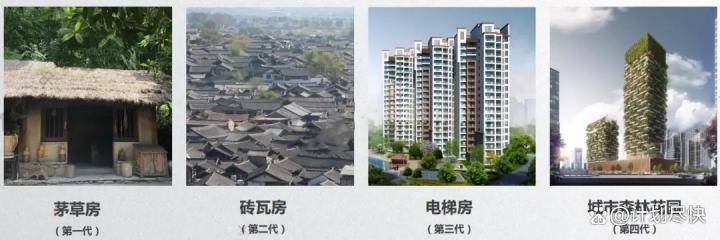
Core Insights - The Japanese real estate market, particularly in Tokyo, is transitioning from a phase of "overall increase" to one requiring "fine judgment" among investors [1] - The upcoming 2026 market is characterized by Tokyo's dominance, but underlying structural differentiation and a ceiling effect in urban tower prices are changing market dynamics [2] Macroeconomic Environment - The Bank of Japan raised the policy interest rate to 0.75% in December 2025, signaling a departure from the "ultra-low interest rate era" and a consensus on rising funding costs [4] - Despite the macroeconomic changes, the Tokyo real estate market is increasingly driven by investment rather than basic housing needs, leading to a significant price increase [6] Investment Trends - The influx of foreign capital is a key driver of the robust performance in Japan's real estate investment market in 2025, as geopolitical tensions prompt a search for "safe, transparent, and predictable" investment destinations [6] - Japan remains an attractive option for foreign investors, with a projected total real estate investment of approximately 6 trillion yen in 2025, continuing into 2026 [8] Market Characteristics - The proportion of foreign buyers in new condominium projects in central Tokyo is rising, with some developments seeing over 20% foreign ownership [10] - High-end projects in areas like Minato have over 50% ownership by foreign entities and corporations, indicating a trend towards financialization of Tokyo's residential market [11] Housing Market Dynamics - The income required to purchase new condominiums in central Tokyo is substantial, with families needing an annual income of 20 to 30 million yen [11] - The supply of new condominiums is nearing a bottom, leading to limited price increase potential, while the second-hand market shows signs of inventory buildup [11] Policy Changes - Recent tax reforms have expanded the eligibility for housing loan tax deductions, which may inadvertently drive up housing prices in the short term [13][14] - The market is expected to see price adjustments in the second half of 2026, particularly in the second-hand market, as demand weakens [15] Future Outlook - The Japanese real estate market is entering a new phase where asset allocation and operational capabilities will determine success [16] - The investment logic is shifting from "buy and hold" to a focus on asset selection, location, and cash flow [17] - Investors are advised to adopt a rational approach rather than emotional decision-making in the current market environment [18]