体温计替代

Search documents
销量飙涨,多家门店卖断货,价格翻倍!水银温度计即将停产
2 1 Shi Ji Jing Ji Bao Dao· 2025-12-12 01:14
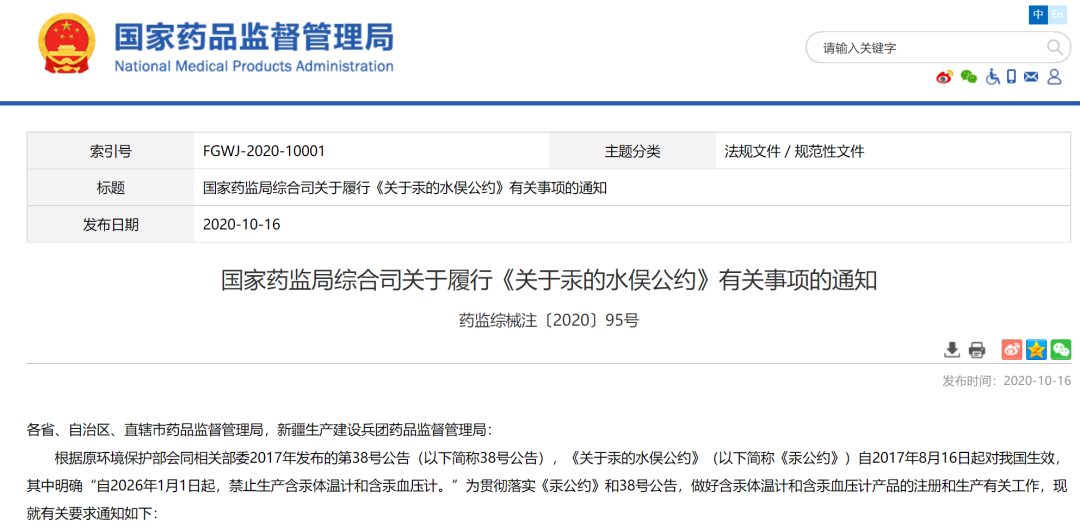
Core Viewpoint - The market for mercury thermometers is experiencing a surge in demand due to the upcoming ban on their production starting January 1, 2026, as part of China's commitment to the Minamata Convention on Mercury, leading to a stockpiling trend among consumers [2][11]. Group 1: Market Dynamics - Many consumers are purchasing multiple mercury thermometers at once, with reports of individuals buying four to five units per visit [2][12]. - The price of mercury thermometers has increased significantly, with some products now selling for 15 to 20 yuan each, compared to a normal price of around 6 yuan [12]. - Several pharmacies have reported that their stocks of mercury thermometers are running low or have sold out entirely [1][12]. Group 2: Regulatory Background - The ban on mercury thermometers is part of a broader global initiative to phase out hazardous materials, with many countries having already implemented similar bans [8]. - The Minamata Convention on Mercury, which took effect in China in 2017, mandates the prohibition of the production of mercury-containing thermometers and sphygmomanometers by 2026 [8][11]. Group 3: Safety Concerns - Mercury is highly toxic and poses significant health risks, including acute poisoning symptoms and long-term neurological damage [8]. - The environmental impact of mercury is also a concern, as it can accumulate in the food chain and disrupt ecological balance [8]. Group 4: Alternatives and Trends - Alternatives to mercury thermometers, such as non-mercury glass thermometers, electronic thermometers, ear thermometers, and forehead thermometers, are gaining popularity [13]. - Recent data indicates that sales of electronic thermometers have increased by over 100% year-on-year, reflecting a shift towards safer and more advanced monitoring solutions [13][14]. - The ear thermometer is noted for its accuracy in measuring core body temperature and is becoming a preferred choice in many medical settings [14].