
电子体温计

Search documents
欧姆龙以多元公益实践,深化在华可持续发展承诺
Xin Lang Cai Jing· 2026-01-30 06:14
Core Viewpoint - The article emphasizes that Omron Group is committed to sustainable development and social contribution in China, integrating environmental sustainability into its corporate governance and operations while fostering community engagement and employee participation [1][5]. Environmental Sustainability - Omron integrates environmental sustainability into its corporate governance structure and operational processes, establishing a systematic management framework to promote green practices [1] - The company utilizes ISO 14001, ISO 50001, and ISO 45001 standards, along with RBA guidelines, to create a comprehensive governance system that covers environmental performance, energy efficiency, employee welfare, and business ethics [1][2] - Omron's local operations in China have achieved recognition, such as Omron Electronic Components (Shenzhen) Co., Ltd. being awarded "Shenzhen Green Factory" [2] Community Engagement - Omron leverages its core business capabilities in industrial automation, healthcare, and component solutions to enhance the sustainability and professionalism of its community projects [3] - The company has established joint laboratories with multiple universities, training over 7,000 graduates to supply high-quality talent to the industry [3] - In healthcare, Omron Health Care (China) Co., Ltd. has donated electronic thermometers to medical institutions and provided atrial fibrillation screening services to approximately 30,000 elderly residents [3] Employee Participation - Employee involvement is crucial for the success of Omron's community initiatives, with numerous activities organized to encourage participation [4] - In 2025, Omron (Shanghai) Co., Ltd. organized blood donation events, and employees contributed time and clothing to support schools and communities in Yunnan and Sichuan [4] - Employees have transitioned from being "participants" to "co-creators," fostering emotional connections between the company and the community [4] Future Outlook - As part of its "Shaping the Future 2030" long-term strategic plan, Omron aims to deepen its social contribution practices in China [5] - The company views sustainable development as a cornerstone for creating long-term value with all stakeholders and plans to explore innovative models for corporate social value contribution [5] - Omron intends to collaborate with employees, communities, and partners to build a more inclusive and resilient future [5]
水银体温计禁产令生效 电子体温计成主流
Xin Lang Cai Jing· 2026-01-11 22:25
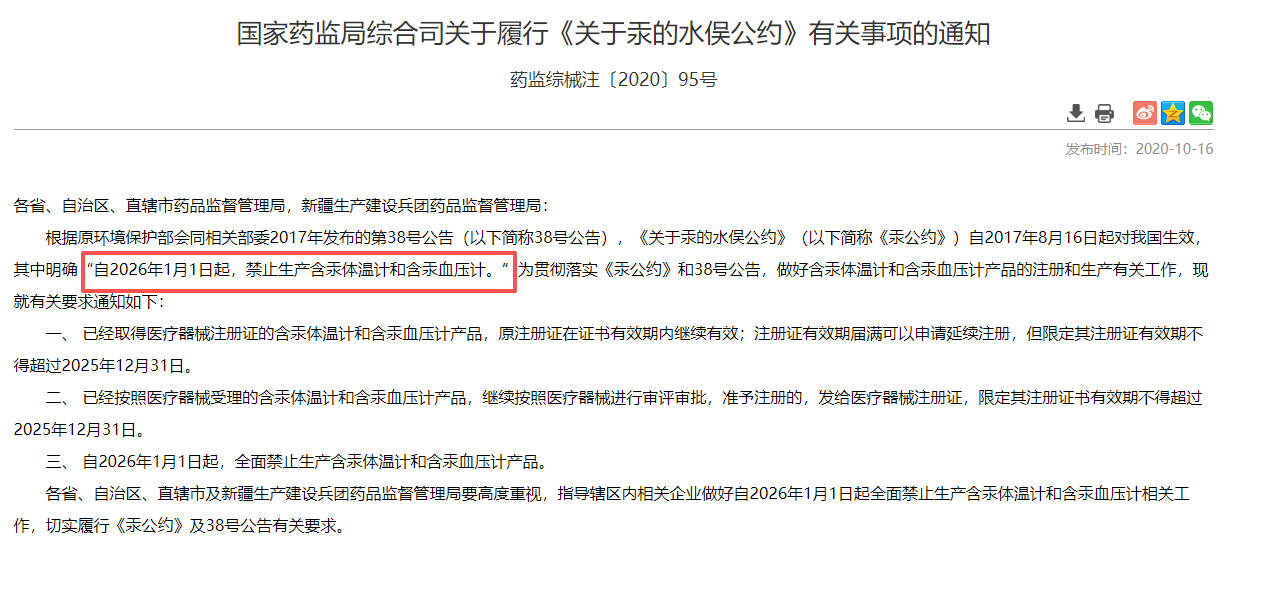
Core Viewpoint - The production of mercury thermometers and blood pressure monitors will be completely banned in China starting January 1, 2026, in compliance with national regulations aimed at reducing environmental and health risks associated with mercury [1][2]. Group 1: Market Response - The price of mercury thermometers currently ranges from 6 to 8 yuan, while electronic thermometers and infrared forehead thermometers are priced from tens to hundreds of yuan [1]. - Many pharmacies have shifted to selling electronic measuring products, with only a few still having limited stock of mercury thermometers [1]. - Following the announcement of the ban, there has been a surge in demand for remaining mercury thermometers, with some stores reporting rapid sales of their inventory [1]. Group 2: Consumer Attitudes - Consumer opinions on the transition from mercury to electronic thermometers vary, with some parents trusting mercury thermometers for their accuracy, while others prefer electronic options for safety and convenience [2]. - Concerns about the toxicity of mercury and the potential for environmental contamination have driven the decision to phase out mercury thermometers [2]. Group 3: Regulatory Background - The ban on mercury thermometers is part of China's commitment to the Minamata Convention on Mercury, which addresses the health and environmental risks posed by mercury [2]. - The National Medical Products Administration issued a notification in October 2020, clearly stating the prohibition of manufacturing mercury thermometers and blood pressure monitors starting in 2026 [2].
水银体温计退场 准备好迎接电子测温了吗
He Nan Ri Bao· 2026-01-07 23:13
Core Viewpoint - The production of mercury thermometers will officially cease on January 1, 2026, due to safety and environmental concerns, marking a significant shift in the healthcare industry towards safer alternatives like electronic thermometers and ear thermometers [3]. Group 1: Market Transition - The market is transitioning away from mercury thermometers, with pharmacies already removing them from shelves. For instance, a pharmacy in Zhengzhou reported that they sold out of mercury thermometers over two weeks ago, while another still had a few remaining, which have seen price increases due to limited supply [3][4]. - A wholesale dealer noted that as manufacturers stop production, the remaining stock is becoming scarce, leading to inevitable price hikes [3]. Group 2: Hospital Adaptation - Hospitals are also adapting to the change, with many departments, such as the pediatric emergency department, having fully switched to electronic thermometers. These devices are preferred for their safety and efficiency, providing results in seconds [4]. - However, some hospitals still use mercury thermometers for specific cases, such as confirming temperatures in already febrile patients, indicating a transitional phase where both types coexist [4]. Group 3: Public Perception and Expert Insights - There is a lingering public concern regarding the accuracy of electronic thermometers compared to traditional mercury ones. Many parents express anxiety over discrepancies in readings from different electronic devices [5]. - Experts emphasize that the shift away from mercury thermometers is part of a global trend and a crucial step in preventing mercury pollution. They assert that electronic thermometers are capable of meeting daily health monitoring needs [5].

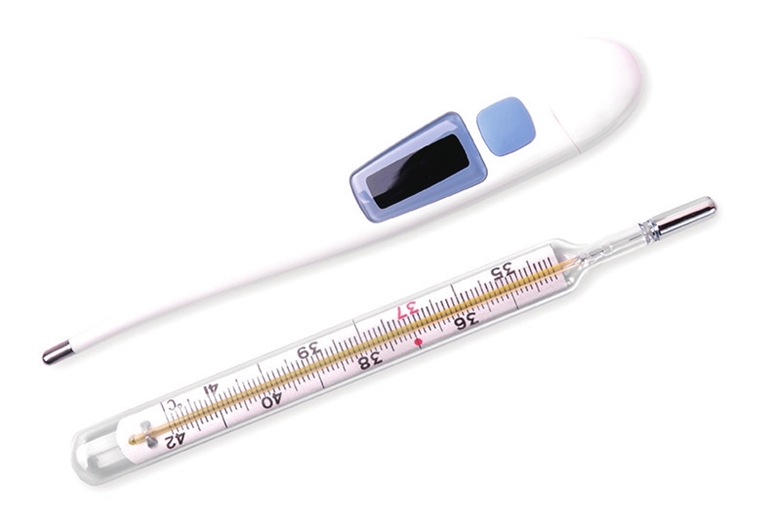
水银体温计药店普遍存货不多
Qi Lu Wan Bao· 2026-01-07 00:05
Core Viewpoint - The production ban on mercury thermometers and related mercury-containing medical devices will take effect on January 1, 2026, leading to a shift in consumer preferences towards alternative thermometer options [1][2]. Group 1: Market Situation - As of January 4, 2026, local pharmacies in Jinan are experiencing a limited supply of mercury thermometers, with prices slightly increasing but not significantly [1]. - Various types of thermometers are available, including electronic thermometers priced between 22.2 yuan and 48 yuan, and a popular non-mercury glass thermometer priced at 19.8 yuan, which is gaining traction among consumers [1][2]. - The most common mercury thermometer has recently faced stock shortages, with only a few remaining in local pharmacies [1]. Group 2: Consumer Preferences - Many consumers, like Ms. Zhang, express skepticism about the accuracy of electronic thermometers, leading to a preference for mercury thermometers, although they are now sold out [2]. - Healthcare professionals, such as nurses, indicate that both ear thermometers and mercury thermometers are still in use, with no clear directive to eliminate mercury thermometers entirely [2]. - The recommendation for consumers is to choose thermometers based on their specific needs, with mercury thermometers suggested for accuracy in safe environments, while electronic thermometers are recommended for convenience, especially in households with children or elderly individuals [2].
今年起,水银体温计全面停产
Xin Lang Cai Jing· 2026-01-02 17:27
Core Viewpoint - The production of mercury thermometers will be completely banned in China starting January 1, 2026, marking the end of an era for this nearly 300-year-old health tool [1] Group 1: Market Response - The news of the ban has led to increased interest among consumers, with some older individuals preferring to stock up on traditional mercury thermometers while younger families are opting for electronic alternatives [2][3] - Sales of mercury thermometers have seen a rise in both offline and online markets, with online sales reportedly doubling in the past two weeks as consumers rush to purchase them before they become unavailable [3] Group 2: Safety and Health Concerns - The decision to phase out mercury thermometers is largely driven by safety and environmental concerns, as nearly half of reported mercury poisoning cases are linked to broken thermometers [3] - The dangers of mercury exposure, including damage to the central nervous system, have been highlighted as a significant reason for the transition to safer alternatives [3] Group 3: Expert Recommendations - Pediatric experts have emphasized the efficiency and safety of electronic thermometers, noting that traditional mercury thermometers are outdated and do not meet the fast-paced demands of modern clinical settings [4] - Proper usage and maintenance of electronic thermometers are crucial for accurate readings, with recommendations provided for ensuring their effectiveness [5][6]
水银体温计今日起停产,替代产品怎么选?
Xin Hua Wang· 2026-01-01 04:49
Core Viewpoint - The National Medical Products Administration of China will ban the production of mercury thermometers and sphygmomanometers starting January 1, 2026, leading to the phase-out of mercury thermometers and raising public concerns about the accuracy of electronic alternatives [2]. Group 1: Accuracy and Public Perception - Many consumers express skepticism about the accuracy of electronic thermometers compared to mercury ones, fearing misdiagnosis due to inaccurate readings [3]. - Qualified electronic thermometers have no significant difference in accuracy compared to mercury thermometers, with a permissible error range of ±0.1-±0.2℃, meeting clinical diagnostic requirements [3]. - Proper usage is crucial for accurate readings; for instance, ear thermometers must be correctly positioned, and electronic thermometers should be allowed to stabilize before measurement [5]. Group 2: Market Dynamics and Pricing - The market offers a wide range of thermometer types, with prices varying significantly from tens to hundreds of yuan; mercury thermometers typically cost between 8-15 yuan, while electronic thermometers range from 15-40 yuan for entry-level models and over 100 yuan for high-end products [6]. - The price difference is influenced by material costs and brand value; non-mercury thermometers made from gallium-indium-tin alloys are generally more expensive than mercury ones [13]. - As production capacity increases, the price of non-mercury thermometers is expected to drop below 10 yuan [13]. Group 3: Transition and Disposal of Mercury Thermometers - The industry has been transitioning to non-mercury thermometers for several years, with existing mercury thermometer stocks still legally sellable until their expiration [14]. - Hospitals are phasing out mercury thermometers, with a complete ban expected in pediatric and maternal institutions by 2025-2027 [16]. - Safe disposal of broken mercury thermometers is critical, and residents are advised to seek professional services for proper handling [16].
水银体温计今日起停产 替代产品怎么选?
Xin Hua Wang· 2026-01-01 01:57
Core Viewpoint - The National Medical Products Administration (NMPA) has announced a ban on the production of mercury thermometers and sphygmomanometers starting January 1, 2026, marking the end of mercury thermometers in the market. The accuracy of alternative electronic and infrared thermometers is a major concern for the public [3][20]. Group 1: Regulations and Transition - The new regulation will phase out mercury thermometers, with existing compliant products allowed to be sold until their expiration dates [20]. - Hospitals are expected to stop purchasing mercury thermometers, with a complete phase-out planned between 2025 and 2027, particularly in pediatric and maternal-child health institutions [20]. Group 2: Accuracy and Consumer Concerns - Many consumers express skepticism about the accuracy of electronic thermometers compared to mercury ones, fearing misdiagnosis due to perceived inaccuracies [4]. - Medical professionals assert that qualified electronic thermometers have no significant difference in accuracy compared to mercury thermometers, with an acceptable error range of ±0.1-±0.2°C [4][3]. Group 3: Market Dynamics and Pricing - The market for thermometers is diverse, with prices ranging from 8-15 yuan for mercury thermometers to over 300 yuan for high-end infrared models [8][15]. - The cost difference in thermometers is influenced by materials used, brand value, and technological features, with non-mercury thermometers expected to drop below 10 yuan as production scales up [15]. Group 4: Disposal and Environmental Concerns - There is a lack of comprehensive recycling channels for mercury thermometers for ordinary residents, and proper disposal is crucial to prevent environmental hazards [21]. - Some pharmacies are willing to participate in the collection of expired mercury thermometers, but emphasize the need for support and infrastructure to ensure safe disposal [21].
水银体温计退出 替代品选购攻略来啦!
Xin Lang Cai Jing· 2025-12-29 04:48
Core Viewpoint - China will ban the production of mercury thermometers and sphygmomanometers starting January 1, 2026, due to health and environmental concerns, marking the end of an era for mercury-based medical devices [1][2]. Group 1: Health Risks of Mercury - Mercury, contained in traditional thermometers, poses significant health risks, including acute symptoms like headaches and chronic effects such as damage to the central nervous system and kidneys [2][3]. - Sensitive populations, including children and pregnant women, are at risk of irreversible harm, such as developmental delays and fetal deformities due to mercury exposure [3]. Group 2: Environmental Impact - Mercury is a neurotoxic heavy metal that can accumulate in the food chain, posing risks to marine life and human health [4]. - The biological magnification of mercury can lead to high concentrations in marine organisms, which can ultimately affect human consumers [4]. Group 3: Transition to Alternative Products - The market is shifting towards electronic and non-mercury alternatives, which are safer and more user-friendly [8]. - Various alternatives include gallium-indium-tin thermometers, electronic thermometers, ear thermometers, and forehead thermometers, each with unique features and accuracy levels [8][10]. Group 4: Usage and Safety Guidelines - Existing mercury thermometers can still be used if intact and within the registration validity period, but users should be aware of the associated risks and proper handling methods [5]. - In case of breakage, specific steps must be followed for safe cleanup, including ventilation and proper collection of mercury beads [6][7]. Group 5: Accuracy of Electronic Devices - Concerns about the accuracy of electronic thermometers exist, with reported discrepancies of up to 1°C among different brands [10]. - It is crucial to choose products with medical device registration and to follow proper usage instructions to ensure reliable readings [10].
水银体温计,为何禁产
Ren Min Ri Bao· 2025-12-17 22:11
Core Viewpoint - China will completely ban the production of mercury thermometers and blood pressure monitors starting January 1, 2026, marking the end of mercury thermometers in the market due to their toxicity and environmental hazards [1]. Industry Summary - The ban is driven by concerns over the strong toxicity and non-degradability of mercury, which poses greater risks to human health and the ecological environment compared to traditional temperature measurement tools [1]. - Currently popular alternatives in the market include electronic thermometers, ear thermometers, and forehead thermometers, which offer various advantages over mercury thermometers [1]. Consumer Insights - Mercury thermometers present several inconveniences for consumers, such as small font size for readings, difficulty in reading, and safety hazards due to breakage [1]. - Industry experts indicate that electronic thermometers, when used correctly, provide high accuracy and meet daily needs, while being safer than mercury thermometers. These products feature clear digital displays, simple operation, and high safety, making them suitable for different user groups [1].
水银温度计停产在即,替代产品早已布局
Qi Lu Wan Bao· 2025-12-17 09:30
Core Viewpoint - Starting from 2026, China will prohibit the production of mercury thermometers and blood pressure monitors, leading to a surge in sales of existing mercury thermometers as consumers rush to stock up before the ban takes effect [1] Group 1: Market Response - The sales of mercury thermometers have increased significantly, with reports of some stores running out of stock and consumers purchasing multiple units [1][2] - Online prices for mercury thermometers have risen, with most now priced above 12 yuan, and some stores reporting a tenfold increase in weekly sales [2] - The market for non-mercury glass thermometers and electronic thermometers is also seeing increased demand, with some products already sold out [2] Group 2: Consumer Preferences - Many consumers express a preference for mercury thermometers due to perceived accuracy compared to electronic thermometers, which are often seen as less reliable [3] - A survey of various thermometers showed that while mercury thermometers generally recorded higher temperatures, non-mercury glass and electronic thermometers provided similar readings [4][5] Group 3: Industry Trends - The non-mercury thermometer market in China has been developing for nearly 20 years, with a market size of 2.5 billion yuan in 2019, accounting for over 50% of the global market [5] - Despite a 217% year-on-year increase in non-mercury thermometer production expected by 2025, market share remains below 30%, indicating room for growth [6] - The industry is projected to maintain a compound annual growth rate of over 8% in the coming years, with smart electronic thermometers growing at a rate of 30% annually [6]