
供应链一体化服务

Search documents
五大物流巨头,谁将赢得行业终极之战?
Xin Lang Cai Jing· 2025-12-26 07:31
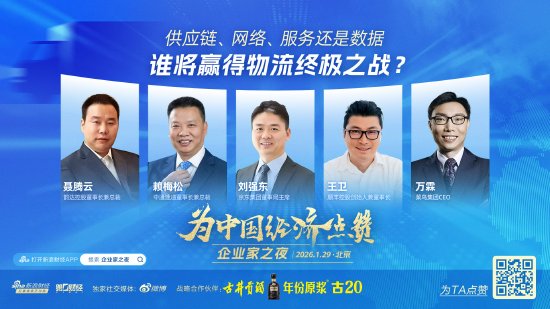
Core Viewpoint - The logistics industry is undergoing significant transformation driven by technological advancements and diverse consumer demands, impacting operational efficiency and overall economic vitality [1][6]. Group 1: Industry Overview - The logistics sector is described as a vital component of the economy, influencing both business operations and consumer experiences [1][6]. - Key elements of competition in the logistics industry include supply chain optimization, network layout improvement, service quality enhancement, and data technology application [1][6]. Group 2: Company Highlights - Yunda Holdings, led by Chairman Nie Tengyun, emphasizes technology-driven logistics, advancing digital supply chain construction and optimizing network structure to enhance sorting efficiency and delivery speed [3][10]. - ZTO Express, under Chairman Lai Meisong, reported a package volume of 9.57 billion in Q3 2025, a year-on-year increase of 9.8%, with adjusted net profit rising by 5.0% to RMB 2.51 billion and revenue reaching RMB 11.86 billion, up 11.1% [3][10]. - JD Group, led by Liu Qiangdong, achieved logistics revenue of RMB 55.1 billion in Q3 2025, a 24.1% year-on-year growth, with adjusted net profit of RMB 2.02 billion, driven by overseas business expansion [4][11]. - SF Holding, under Wang Wei, strengthened its position in the high-end logistics market, achieving revenue of RMB 225.26 billion in the first three quarters of 2025, a growth of 8.89%, and a net profit of RMB 8.31 billion, up 9.07% [4][11]. - Cainiao Group, led by CEO Wan Lin, made significant progress in building a global smart logistics network, achieving rapid cross-border transportation and precise delivery, with daily package volume in Latin America showing triple-digit growth [5][12].




西宁机场国际货运量首次突破100吨
Zhong Guo Min Hang Wang· 2025-09-22 07:29
Core Insights - The international cargo transport volume at Xining Caojiabao International Airport has surpassed 100 tons for the first time, marking a significant milestone for the export of Qinghai salmon and highlighting the critical role of air logistics in enhancing the region's economy and activating its unique highland industries with a year-on-year growth of 900% [1][4] Group 1: Air Logistics and Regional Development - Xining Airport serves as an important air hub connecting Northwest China with South Asia and Southeast Asia, facilitating the integration of air logistics with regional industrial development [2] - The Qinghai Airport Company and the Qinghai Logistics Branch have aligned their efforts with the province's "Four Land" construction strategy, transforming air logistics advantages into strong momentum for industrial upgrades [2][5] Group 2: Efficiency and Service Upgrades - Air logistics has improved transportation efficiency and optimized service processes, creating a more competitive supply chain system in Northwest China [3] - Customized logistics solutions have been developed to meet diverse customer needs, enhancing the reliability and timeliness of international freight services while reducing logistics costs for local enterprises [3] Group 3: Strategic Support for Open Development - The breakthrough in international cargo volume reflects the strategic support of air logistics for the open development of Northwest China, overcoming challenges related to geographical remoteness and high costs [4] - The air logistics network enables rapid access for local products to international markets and facilitates the entry of advanced equipment and raw materials into the region, promoting deep integration with domestic and international markets [4] Group 4: Future Potential and Growth - The Xining Airport and Qinghai Logistics Branch plan to further explore the potential of air logistics to drive regional industries by expanding international cargo routes and enhancing cooperation with upstream and downstream enterprises [5] - Continuous improvement of the air logistics network and service capabilities is expected to facilitate the global distribution of Northwest products and attract more global resources to the region, supporting industrial upgrades and rural revitalization [5]