
供应链协同效应

Search documents
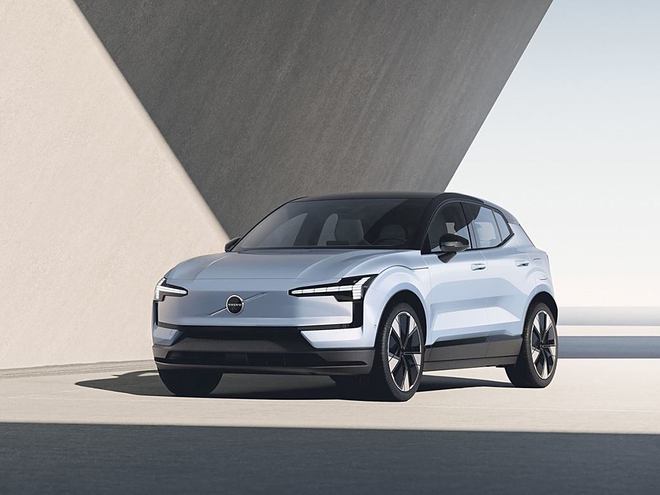
沃尔沃汽车2025年财报出炉,销量71万辆,营业利润3亿瑞典克朗
Jin Rong Jie· 2026-02-05 09:37
Core Insights - Volvo Cars reported a decline in global sales and financial performance for the year 2025, with total sales of 710,000 vehicles, a 7% decrease year-on-year [1] - The company's annual revenue was 357.3 billion Swedish Krona, down 11% compared to the previous year [1] - Operating profit (EBIT) fell to 300 million Swedish Krona, a staggering 99% drop from 22.3 billion Swedish Krona in 2024, resulting in an EBIT margin of only 0.1%, down from 5.6% in 2024 [1] Performance Drivers - The decline in performance was attributed to several factors including trade tariffs, weak demand, pricing pressures, and the cancellation of electric vehicle subsidies in the United States [2] - CEO Håkan Samuelsson indicated that the company streamlined its organizational structure by cutting 3,000 positions, reducing indirect and variable costs, and enhancing collaboration with Geely to achieve supply chain synergies [2] - Volvo aims to improve its operating capital situation while scaling back planned investments, with a target to further reduce indirect and variable costs by at least 5 billion Swedish Krona in 2026, building on the achievements of 2025 [2]

车展现场揭秘:均胜电子如何用“汽车基因”切入机器人赛道
Jiang Nan Shi Bao· 2025-05-06 11:16
Core Insights - Junsheng Electronics officially launched its latest products in the robotics field at the 2025 Auto Show in Shanghai, including various sensor kits and solutions for battery management, lightweight exoskeletons, and wireless charging [1] - The company aims to develop robotics as its "second curve," leveraging synergies from its core components to drive innovation in robotics technology [1] Group 1: Robotics Component Breakthroughs - Battery management systems (BMS) and sensors are critical upstream components for humanoid robots, with Junsheng achieving breakthroughs in these areas due to its experience in automotive electronics [2] - The "Xingchi" system developed by Junsheng integrates high-voltage platforms and advanced cooling technologies, improving charging efficiency by 40% and reducing energy loss risks by 70% [3][2] - The new wireless charging technology achieves over 90% efficiency, allowing robots to operate without cables and enhancing their endurance by 30% [3] Group 2: Technical Synergies and Market Position - Junsheng's entry into the robotics sector is facilitated by the high technical similarity between automotive electronics and robotics, allowing for a smooth transition of technology [6] - The company has established itself as a major supplier in the automotive sector, providing solutions across various domains, which can be directly applied to robotics [7] - The global humanoid robot market is projected to reach between $38 billion and $205 billion by 2035, indicating significant growth potential for Junsheng's robotics initiatives [8] Group 3: Strategic Partnerships and Future Plans - Junsheng has initiated a strategic partnership with Shanghai Zhiyuan New Technology Co., focusing on core technology development and customized solutions for robotics [9] - The company plans to develop its robotics business in five phases, including enhancing core component R&D and building a global industrial ecosystem [8] - Junsheng's recent financial performance, with projected revenues of 55.864 billion yuan in 2024, supports its ongoing investments in technology and innovation [9]
