保险+生态模式

Search documents
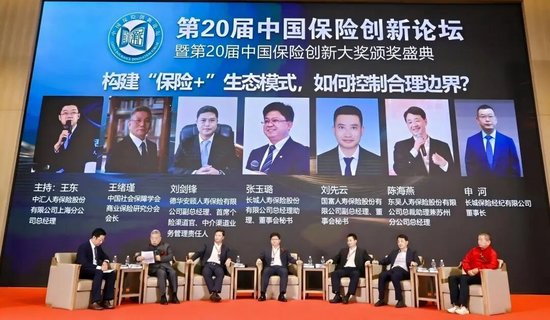
圆桌对话:构建“保险+”生态模式,如何控制合理边界?
Xin Lang Cai Jing· 2025-12-25 05:50
Core Viewpoint - The discussion at the 20th China Insurance Innovation Forum focused on constructing an "insurance + ecosystem" and how to control reasonable boundaries within this framework [1][19]. Group 1: Strategic Boundaries and Ecosystem Construction - The core logic of strategic boundaries is based on the capability circle and the ecosystem as a scene, emphasizing the need for collaboration between capability output and scene feedback [3][21]. - The insurance industry's capability circle must be defined by irreplaceability, focusing on risk pricing, actuarial technology, and asset-liability management, while avoiding blind expansion into non-financial sectors that could erode financial stability [3][21]. - The ecosystem should be defined by complementary value rather than mere accumulation, focusing on service accessibility and standardization, and acting as a connector rather than a full-chain owner [4][22]. Group 2: Internal and External Ecosystem Development - A healthy insurance ecosystem requires both internal and external dimensions, with internal ecosystems fostering agent growth and external ecosystems integrating quality medical resources and health management services [6][24]. - The aging population and evolving customer demands necessitate a shift towards comprehensive solutions that combine insurance with health and wellness services [7][24]. - Companies should focus on building a sustainable internal environment that supports agents and enhances external partnerships to create a vibrant industry future [6][24]. Group 3: Asset-Light Strategies for Smaller Firms - Smaller insurance firms should adopt asset-light, high-efficiency strategies, focusing on building specialized teams and standardizing service products to enhance market competitiveness [8][25]. - The integration of external quality resources rather than heavy asset investments allows smaller firms to construct adaptable ecosystems that support high-quality development [10][26]. - Establishing efficient resource allocation and quality control systems is crucial for ensuring stable customer experiences and operational reliability [9][26]. Group 4: Integration of Health Services - The integration of health services into the insurance ecosystem is essential for transforming low-frequency insurance needs into high-frequency, essential demands, thereby enhancing sales and reducing risks [11][28]. - Companies are encouraged to recognize their capability boundaries and focus on resource integration rather than attempting to expand into all areas [11][28]. - Collaborations with healthcare institutions can enhance customer experience and loyalty while providing significant benefits to both clients and insurance companies [12][29]. Group 5: Evolving Marketing Strategies - The industry is shifting from a "hunter mentality" to a "farmer mentality," focusing on nurturing long-term customer relationships through continuous health services rather than viewing customers as one-time transactions [30][31]. - Insurance companies are now expected to offer not just policies but also their core capabilities, fostering partnerships that leverage mutual strengths [31][32]. - Establishing clear ecological boundaries is vital for ensuring the health and security of the ecosystem, focusing on core competencies while allowing for open collaboration with partners [32][33].

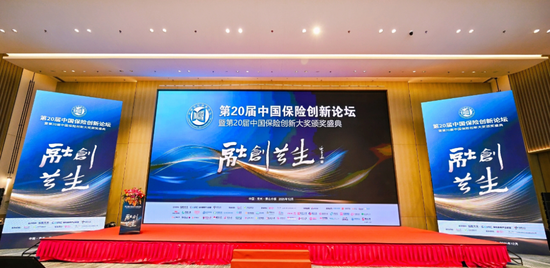
第20届中国保险创新论坛暨第20届中国保险创新大奖颁奖盛典在常州隆重举行
Xin Lang Cai Jing· 2025-12-19 09:03
Core Viewpoint - The 20th China Insurance Innovation Forum, themed "Co-creation and Symbiosis," aims to address challenges and innovations in the insurance industry amidst an aging society, new regulatory policies, and the explosion of AI technology [1][3][41]. Group 1: Forum Overview - The China Insurance Innovation Forum, initiated in 2006, has evolved into an annual event that combines various forums focused on insurance product innovation, culture, and health care [3][43]. - The forum serves as a platform for discussing the insurance industry's challenges and innovations at a critical juncture, particularly as the 14th Five-Year Plan concludes and the 15th begins [3][43]. Group 2: Key Speakers and Insights - Notable speakers included former Vice Chairman of the China Insurance Regulatory Commission Wei Yingning, who emphasized the need for deeper integration, more vibrant innovation, and improved ecological systems within the industry [5][46]. - Liu Canfang, Chairman of Jiangsu Jiuzhou Investment Group, expressed a desire for collaboration in the integration of insurance and health care industries to contribute to high-quality development [8][48]. - Zhang Yingbin, the forum chairman, highlighted that future winners in the insurance sector will be those who understand customers, manage risks effectively, and integrate ecosystems [10][50]. Group 3: Research and Reports - He Zhiguang, Executive Chairman of the Insurance Health and Care Industry Alliance, released the "2025 Annual Research Report on China's Insurance Health and Care Industry," noting that insurance is becoming an effective tool for national development strategies [14][54]. - Chen Pojian, Chairman of Ruihua Health Insurance, discussed the opportunities and challenges posed by an aging society and called for more precise regulatory guidance for specialized health insurance companies [16][56]. Group 4: Industry Trends and Innovations - The forum addressed the digital transformation of life insurance marketing, emphasizing the need for a customer-centric service system and the integration of technology for precise marketing and efficient operations [27][67]. - Discussions included the impact of new accounting standards on insurance companies' revenue and profit measurement, necessitating timely adjustments in business strategies [22][62]. Group 5: Awards and Recognition - The 20th China Insurance Innovation Awards ceremony recognized outstanding contributions in brand building and product development within the insurance sector [40][80]. - The awards serve as a review of the industry's progress and commitment to high-quality transformation over the past year [40][80].