数据与合规

Search documents
圆桌对话:构建“保险+”生态模式,如何控制合理边界?
Xin Lang Cai Jing· 2025-12-25 05:50
Core Viewpoint - The discussion at the 20th China Insurance Innovation Forum focused on constructing an "insurance + ecosystem" and how to control reasonable boundaries within this framework [1][19]. Group 1: Strategic Boundaries and Ecosystem Construction - The core logic of strategic boundaries is based on the capability circle and the ecosystem as a scene, emphasizing the need for collaboration between capability output and scene feedback [3][21]. - The insurance industry's capability circle must be defined by irreplaceability, focusing on risk pricing, actuarial technology, and asset-liability management, while avoiding blind expansion into non-financial sectors that could erode financial stability [3][21]. - The ecosystem should be defined by complementary value rather than mere accumulation, focusing on service accessibility and standardization, and acting as a connector rather than a full-chain owner [4][22]. Group 2: Internal and External Ecosystem Development - A healthy insurance ecosystem requires both internal and external dimensions, with internal ecosystems fostering agent growth and external ecosystems integrating quality medical resources and health management services [6][24]. - The aging population and evolving customer demands necessitate a shift towards comprehensive solutions that combine insurance with health and wellness services [7][24]. - Companies should focus on building a sustainable internal environment that supports agents and enhances external partnerships to create a vibrant industry future [6][24]. Group 3: Asset-Light Strategies for Smaller Firms - Smaller insurance firms should adopt asset-light, high-efficiency strategies, focusing on building specialized teams and standardizing service products to enhance market competitiveness [8][25]. - The integration of external quality resources rather than heavy asset investments allows smaller firms to construct adaptable ecosystems that support high-quality development [10][26]. - Establishing efficient resource allocation and quality control systems is crucial for ensuring stable customer experiences and operational reliability [9][26]. Group 4: Integration of Health Services - The integration of health services into the insurance ecosystem is essential for transforming low-frequency insurance needs into high-frequency, essential demands, thereby enhancing sales and reducing risks [11][28]. - Companies are encouraged to recognize their capability boundaries and focus on resource integration rather than attempting to expand into all areas [11][28]. - Collaborations with healthcare institutions can enhance customer experience and loyalty while providing significant benefits to both clients and insurance companies [12][29]. Group 5: Evolving Marketing Strategies - The industry is shifting from a "hunter mentality" to a "farmer mentality," focusing on nurturing long-term customer relationships through continuous health services rather than viewing customers as one-time transactions [30][31]. - Insurance companies are now expected to offer not just policies but also their core capabilities, fostering partnerships that leverage mutual strengths [31][32]. - Establishing clear ecological boundaries is vital for ensuring the health and security of the ecosystem, focusing on core competencies while allowing for open collaboration with partners [32][33].


5.8亿收购!AI医疗巨头加码肿瘤大模型
思宇MedTech· 2025-08-25 04:08
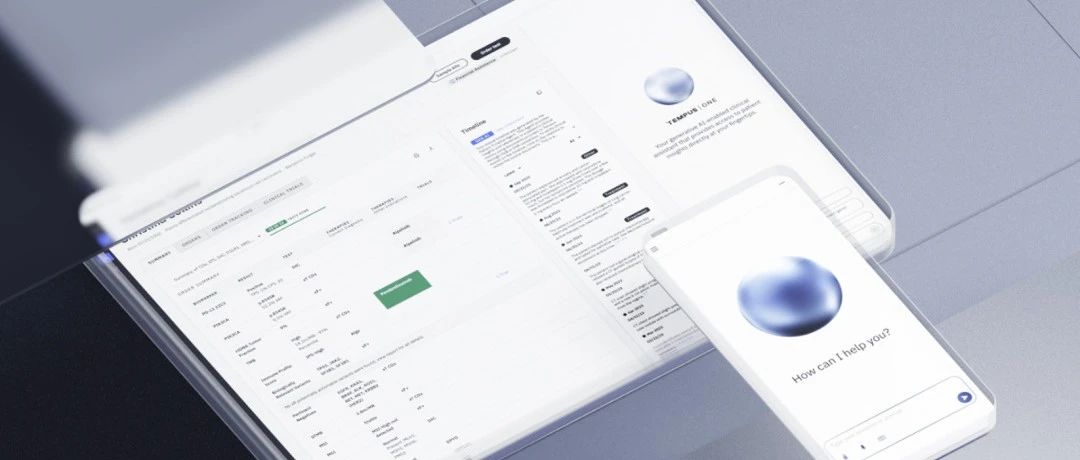
Core Viewpoint - The acquisition of Paige by Tempus AI for approximately $81.25 million is a strategic move that significantly enhances Tempus's capabilities in the AI medical field, particularly in oncology, by integrating Paige's extensive pathology data and FDA-approved applications into Tempus's existing multi-modal model strategy [2][11]. Group 1: Paige's Unique Assets - Paige has accumulated nearly 7 million digital pathology slides and corresponding clinical data, making it a leader in pathology AI with exclusive data resources [3][5]. - The company has developed one of the world's first foundational pathology models based on 2.3 million whole slides and has partnered with Microsoft to create PRISM2, which connects pathology images with language models [5]. - Paige's AI tools have received FDA 510(k) approval and breakthrough device designation, allowing them to integrate into clinical workflows effectively [5][10]. Group 2: Tempus's Ambitions - Tempus has built a vast multi-modal database, including genomic testing results and real-world clinical data from over 5 million patients, as well as imaging resources [6][8]. - The company aims to create a comprehensive multi-modal foundational model that covers the entire cancer diagnosis and treatment chain, with a recent $200 million collaboration with AstraZeneca and Pathos AI to achieve this goal [8][10]. Group 3: Industry Observations - The acquisition signals a shift in the AI medical landscape towards resource integration, where data and compliance are becoming more critical than algorithm performance [11][12]. - The combination of Paige's pathology data and Tempus's molecular and clinical data creates a complete tumor database, establishing a "data loop" that will be difficult for competitors to replicate [12][13]. - The case highlights the challenges faced by domestic companies in the AI medical field, emphasizing the need for long-term data accumulation, clinical integration, and compliance to achieve commercial value [14][15].