
生态圈

Search documents
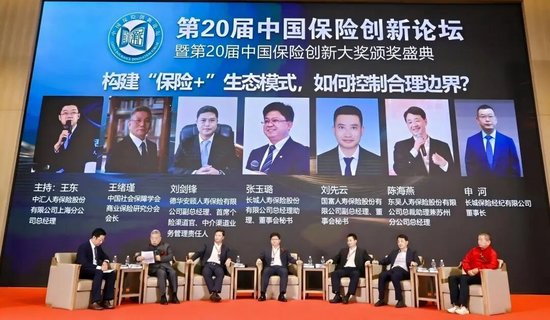
圆桌对话:构建“保险+”生态模式,如何控制合理边界?
Xin Lang Cai Jing· 2025-12-25 05:50
Core Viewpoint - The discussion at the 20th China Insurance Innovation Forum focused on constructing an "insurance + ecosystem" and how to control reasonable boundaries within this framework [1][19]. Group 1: Strategic Boundaries and Ecosystem Construction - The core logic of strategic boundaries is based on the capability circle and the ecosystem as a scene, emphasizing the need for collaboration between capability output and scene feedback [3][21]. - The insurance industry's capability circle must be defined by irreplaceability, focusing on risk pricing, actuarial technology, and asset-liability management, while avoiding blind expansion into non-financial sectors that could erode financial stability [3][21]. - The ecosystem should be defined by complementary value rather than mere accumulation, focusing on service accessibility and standardization, and acting as a connector rather than a full-chain owner [4][22]. Group 2: Internal and External Ecosystem Development - A healthy insurance ecosystem requires both internal and external dimensions, with internal ecosystems fostering agent growth and external ecosystems integrating quality medical resources and health management services [6][24]. - The aging population and evolving customer demands necessitate a shift towards comprehensive solutions that combine insurance with health and wellness services [7][24]. - Companies should focus on building a sustainable internal environment that supports agents and enhances external partnerships to create a vibrant industry future [6][24]. Group 3: Asset-Light Strategies for Smaller Firms - Smaller insurance firms should adopt asset-light, high-efficiency strategies, focusing on building specialized teams and standardizing service products to enhance market competitiveness [8][25]. - The integration of external quality resources rather than heavy asset investments allows smaller firms to construct adaptable ecosystems that support high-quality development [10][26]. - Establishing efficient resource allocation and quality control systems is crucial for ensuring stable customer experiences and operational reliability [9][26]. Group 4: Integration of Health Services - The integration of health services into the insurance ecosystem is essential for transforming low-frequency insurance needs into high-frequency, essential demands, thereby enhancing sales and reducing risks [11][28]. - Companies are encouraged to recognize their capability boundaries and focus on resource integration rather than attempting to expand into all areas [11][28]. - Collaborations with healthcare institutions can enhance customer experience and loyalty while providing significant benefits to both clients and insurance companies [12][29]. Group 5: Evolving Marketing Strategies - The industry is shifting from a "hunter mentality" to a "farmer mentality," focusing on nurturing long-term customer relationships through continuous health services rather than viewing customers as one-time transactions [30][31]. - Insurance companies are now expected to offer not just policies but also their core capabilities, fostering partnerships that leverage mutual strengths [31][32]. - Establishing clear ecological boundaries is vital for ensuring the health and security of the ecosystem, focusing on core competencies while allowing for open collaboration with partners [32][33].

硬派越野车的“新三样”革命
Zhong Guo Qi Che Bao Wang· 2025-09-08 02:44
Core Insights - The Chengdu Auto Show is witnessing a revolution in the rugged off-road vehicle segment, with the introduction of smart electric off-road vehicles, indicating a shift from traditional fuel-powered models to electric and intelligent designs [2][10] - Consumers are demanding off-road vehicles that not only perform well but also integrate smart technology and lifestyle features, reflecting a change in market expectations [2][6] Electric Drive Transformation - The transition to electric drive is significantly reshaping the performance boundaries of off-road vehicles, with electric systems reducing fuel consumption and emissions, thus aligning with regulatory requirements [3] - The Fangcheng Leopard 8, equipped with a 2.0T hybrid system, showcases impressive performance with a maximum power output of 550 kW and a torque of 760 N·m, achieving 0-100 km/h in just 4.8 seconds while maintaining a fuel consumption of 1.79 L/100 km [3] Intelligent Driving Systems - The integration of intelligent driving technologies is redefining traditional perceptions of rugged off-road vehicles, with features like advanced driver assistance systems becoming standard [6][7] - The Haval Tank 500 and Dongfeng Warrior M817 are examples of vehicles that incorporate sophisticated sensor systems and autonomous driving capabilities, enhancing the driving experience in challenging terrains [6][7] Ecosystem Redefinition - The development of a connected ecosystem is transforming off-road vehicles into "mobile ecological platforms," catering to diverse lifestyles and outdoor activities [8][10] - The trend of "urban and wild" versatility is evident in new vehicle launches, with brands emphasizing lifestyle integration and outdoor capabilities [8] Market Dynamics - The rugged off-road vehicle market is evolving from a niche segment to a mainstream category, driven by the adoption of electric, intelligent, and ecosystem-oriented features [10] - The shift towards "light off-road" vehicles is blurring the lines between traditional off-roaders and urban SUVs, expanding the potential user base [10]
