健康城市建设

Search documents
滨州市参加健康城市高质量发展会议分享实践经验
Qi Lu Wan Bao· 2026-01-25 01:50
近年来,滨州市以"身心同治、健康共进"理念系统推进健康城市建设。城乡一体筑牢健康基础,建成医疗、中医、公卫应急救援"三大区域中心",县域医 共体全部达标,村卫生室全面提升。点面融合构建心理服务体系,出台全国首部社会心理服务地方法规,发布"心安城市"建设指标,织密"四网"并打造多 个心理服务地标。多元共建优化健康生态,成功创成全国文明城市、国家森林城市等,构建"10分钟健身圈",获评国家康养示范城市,"家健康"品牌形成 全国示范。 此次会议为滨州市提供了向全国展示健康滨州建设成效的高层次平台,也为进一步对接国家资源、借鉴先进地区经验创造了契机。下一步,滨州市将继续 深化"心安城市"与"家健康"等服务品牌,推动健康治理体系与能力现代化,为健康中国建设贡献更具辨识度的"滨州路径"。 滨州市卫生健康委党组书记、主任,二级巡视员董希国作为特邀嘉宾参会,出席健康城市蓝皮书发布仪式,并在"践行健康中国战略、实现健康城市内涵 式发展"圆桌对话环节发言,阐述了滨州市作为"红黄蓝绿古"五色兼备的文化名城,在健康城市建设中融合地方特色,打造健康城市品牌的做法。 齐鲁晚报.齐鲁壹点赵旭 1月17日,健康城市建设高质量发展会议暨健康城 ...

《中国健康城市建设研究报告》发布
Zhong Guo Jing Ji Wang· 2026-01-20 08:31
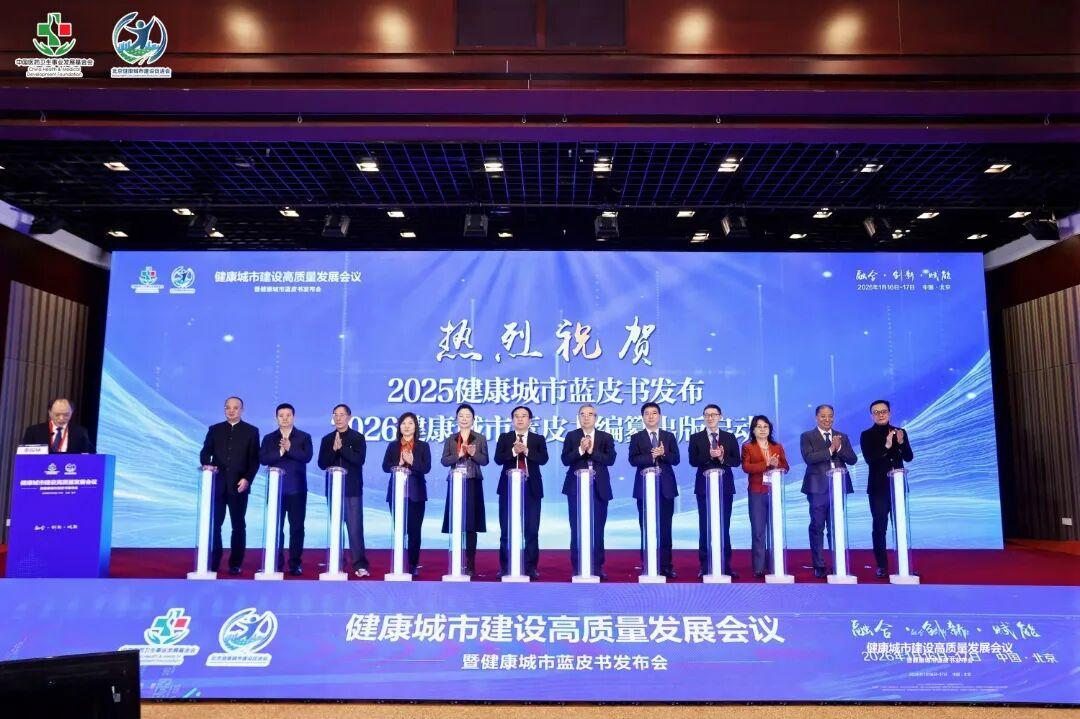
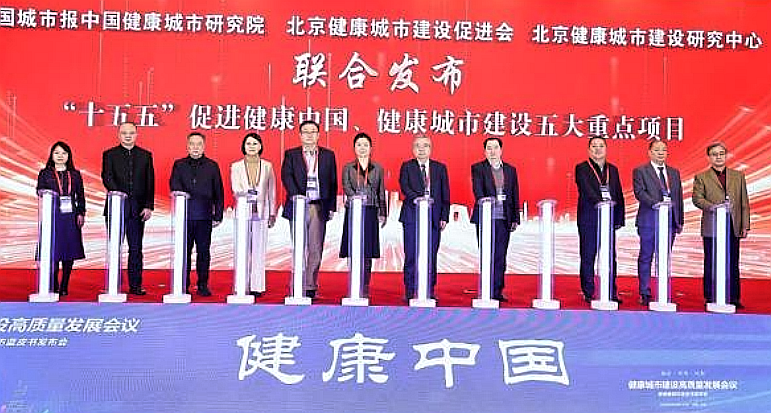
中国医药卫生事业发展基金会王丹理事长表示,健康城市作为健康中国战略落地生根的关键支点与生动载 体,正以其蓬勃的实践活力,诠释着中国式现代化的深厚内涵。未来将继续深耕医药卫生公益慈善沃土,致 力于推动学术前沿与实践需求同频共振、深度融合。 中国社会科学院社会科学文献出版社副社长梁艳玲表示,健康城市蓝皮书的出版是健康城市建设理论创新和 实践探索的重要成果,为提升人民健康水平和城市发展质量注入新的思想动力。 会上,启动了2025健康城市蓝皮书发布暨2026健康城市蓝皮书编纂出版项目,并联合发布"十五五"促进健康 中国、健康城市建设五大重点项目。 由中国医药卫生事业发展基金会、北京健康城市建设促进会联合举办的健康城市建设高质量发展会议暨健康 城市蓝皮书《中国健康城市建设研究报告(2025)》《北京健康城市建设研究报告(2025)》(以下简称健康城市蓝 皮书)发布会于1月17日在北京国际会议中心举行。来自国家有关部委、高校、企事业单位、卫生医疗机构以 及全国20多个省(自治区、直辖市)爱国卫生系统的相关领导、专家、学者以及健康产业企业负责人300余人参 加了会议。 据悉,健康城市蓝皮书坚持从专业角度对中国健康城市建设的 ...
清华城市健康指数2025:北京领跑,杭州升至第二
Jing Ji Guan Cha Wang· 2025-12-23 12:03
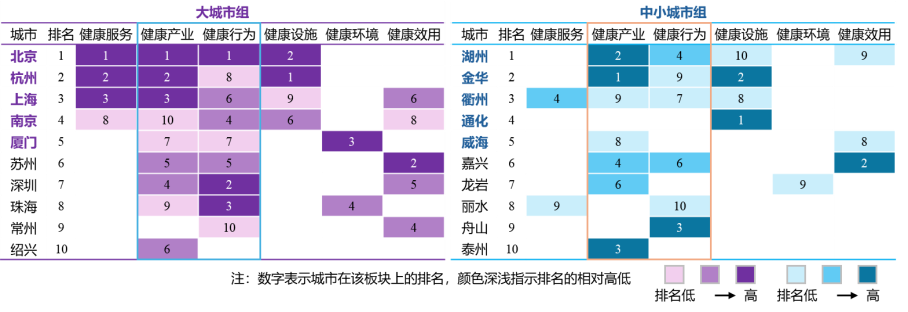
Core Insights - The "Tsinghua Urban Health Index 2025" report categorizes cities into large (89 cities) and medium-small (207 cities) groups based on population size, utilizing multi-source health big data for evaluation [1] - The evaluation framework includes six primary indicators: health services, health industry, health behavior, health facilities, health environment, and health outcomes, with higher scores indicating better urban health status [1] - High-quality development in health industry and health behavior is a common characteristic among leading cities in both large and medium-small groups [1] Large Cities Group - The top cities in the large group are Beijing, Hangzhou, Shanghai, Nanjing, and Xiamen, with Hangzhou excelling in health facilities, services, and industry, surpassing Shanghai to rank second [1] - The report highlights that the Yangtze River Delta, Pearl River Delta, and other major city clusters remain in the top tier [1] Medium-Small Cities Group - The leading cities in the medium-small group are Huzhou, Jinhua, Quzhou, Tonghua, and Weihai [1] Thematic Research Areas - The report explores three themes: "medical informationization," "ice and snow sports," and "Su Super" events, aiming to address challenges in health city construction [5] - In medical informationization, major cities like Beijing, Shanghai, Chengdu, Shenyang, and Urumqi account for over half of the projects, while provinces like Zhejiang, Sichuan, Guangdong, Beijing, and Shandong show high activity in intelligent health projects [5] - The ice and snow sports industry exhibits a "south needs, north supplies" pattern, with southern cities like Nanjing and Shenzhen showing strong demand, while northern cities like Harbin and Zhangjiakou have supply advantages [5] International Comparison - The report compares 36 international cities, including London and New York, with 16 domestic cities like Beijing and Shanghai across five aspects: medical services, lifestyle behaviors, urban greening, environmental quality, and health outcomes [6] - Chinese cities excel in health outcomes, medical services, and urban greening, with Hong Kong, Shenzhen, and Hangzhou showing outstanding health outcomes, while Beijing, Shanghai, and Hangzhou rank among the top five globally in medical services [6] Future Research Directions - The research team will continue to monitor and evaluate the implementation of the "health priority development" strategy during the 14th Five-Year Plan period, focusing on tracking research, effectiveness assessment, and policy studies to promote high-level health city construction [8]
全国首部!体重管理,立法了
Xin Lang Cai Jing· 2025-12-20 02:38
Core Viewpoint - Hangzhou has become the first city in China to legislate on weight management through the "Hangzhou Municipal Health Promotion Regulation," effective January 1, 2024, marking a significant step in promoting public health initiatives [1][3]. Group 1: Legislative Framework - The regulation aims to manage residents' weight through various measures, including promoting reasonable diets, adequate exercise, and maintaining a healthy weight [3][5]. - The legislation encourages collaboration among food producers, restaurant services, and employers to implement health-oriented dietary practices, such as reducing salt, fat, and sugar [3][5]. Group 2: Health Promotion Initiatives - The regulation includes the construction of health public service facilities, such as parks and accessible exercise areas, to promote physical activity among residents [3][5]. - A health points reward system will be explored, allowing residents to earn points for participating in health education and fitness activities, which can be exchanged for health services [3][5]. Group 3: Context and Background - Hangzhou has been proactive in health city initiatives and has established itself as a pilot city for health city construction, with significant achievements in public health [5][7]. - The city has seen over 15 million participants in fitness activities, leveraging the legacy of the Asian Games to enhance public health services [5][7]. Group 4: Health Statistics and Goals - By 2024, the average life expectancy in Hangzhou is projected to reach 84.18 years, with health literacy among residents expected to rise to 46.52% [7]. - Over 25% of children and adolescents aged 6-17 in Hangzhou are reported to be overweight or obese, prompting targeted health management strategies [5][7].
南通以点上突破推动卫生健康事业整体跃升项目试点领航“健康城市”新境界
Xin Hua Ri Bao· 2025-09-13 23:54
Group 1 - The core viewpoint of the articles highlights the advancements in healthcare services in Nantong, focusing on improving elderly care, integrating innovative medical technologies, and enhancing healthcare accessibility [1][2][7][8] Group 2 - Nantong has launched the "Disability and Dementia Prevention Intervention Course," which has benefited over 500 elderly individuals across 18 communities, showcasing a significant improvement in their health conditions [1] - The city has established a regional demonstration medical innovation platform, emphasizing the integration of basic research with clinical innovation and collaboration with educational institutions [2] - The implementation of an AI diagnostic platform has significantly reduced the time for detecting bone density abnormalities, demonstrating the effectiveness of technology in clinical settings [3] Group 3 - Nantong's digital regulatory platform has enhanced the monitoring of healthcare institutions, generating over 124,000 prescription warnings and ensuring timely responses to potential issues [4] - The establishment of a "Cardiac Network" in Hai'an has improved emergency response times for cardiac patients, with over 27,000 ECG diagnoses completed [5][6] Group 4 - The collaboration between Nantong's traditional Chinese medicine hospital and local health service centers has improved access to herbal medicine, serving over 1,500 residents [7] - The city is exploring the addition of nursing homes in grassroots medical institutions to meet the rising demand for integrated medical and nursing care [8] - Nantong aims to create a healthcare system that is more reliable, effective, and satisfactory for the public, with a focus on enhancing the quality of medical facilities [8]
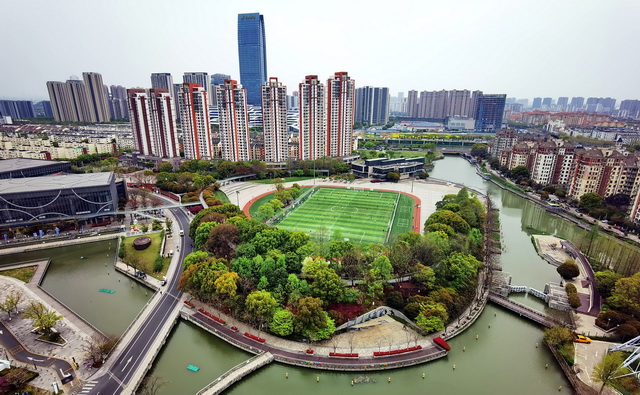
报告建议城市开放更多公共绿地空间,展现绿地健康效益
Di Yi Cai Jing· 2025-04-13 03:12
Core Insights - The construction of green spaces in residential areas should be based on a green coverage rate of over 30%, with the addition of water features to enhance health benefits [1][2][3] - Urbanization in China is accelerating, with a projected urbanization rate exceeding 70% by 2030, making the resolution of urban health issues critical for the Healthy China strategy [1] - The report emphasizes the significant correlation between the quantity and accessibility of blue-green spaces and residents' health, highlighting the need for equitable distribution [2][3] Group 1 - The report suggests that the construction of blue-green spaces in residential areas can significantly improve various dimensions of health and life satisfaction, particularly when water features are included [3] - Accessibility to green spaces around residential areas is a key indicator affecting residents' health, while the accessibility of blue spaces mainly influences life satisfaction [3] - The report advocates for urban green space renewal to incorporate natural water bodies, creating more riverside open spaces to enhance residents' landscape experience [3] Group 2 - The Beijing Health Report calls for systematic governance to protect natural ecological foundations and enhance ecological safety resilience [5] - It emphasizes the need to expand urban green space and improve the quality of ecological services in urban and rural areas [5] - The report highlights the importance of creating garden-style public spaces to enhance the well-being of residents [5]