
健康第一理念

Search documents
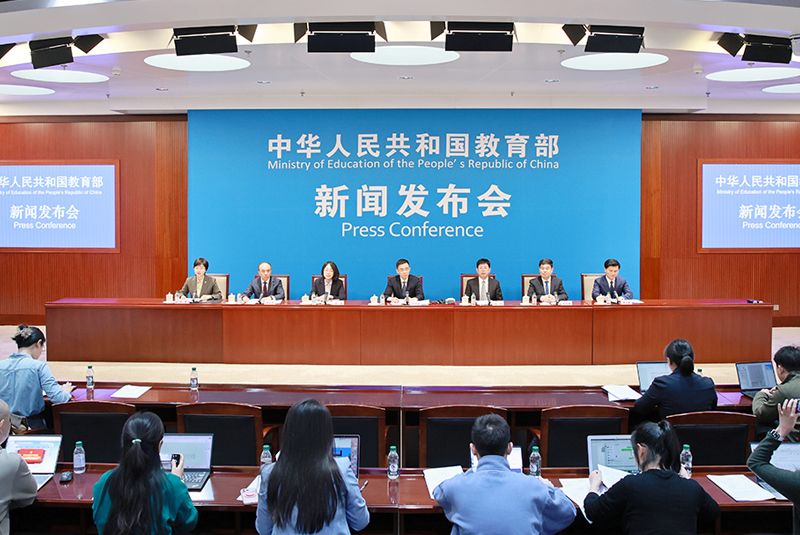
21现场|学校从“分数第一”转向“健康第一”,难在哪?
2 1 Shi Ji Jing Ji Bao Dao· 2026-02-27 13:20
Core Viewpoint - The Ministry of Education aims to promote the construction of "healthy schools" across all schools in China by 2030, emphasizing a shift from a "score-first" to a "health-first" approach in education [1]. Group 1: Key Initiatives - The "Guiding Opinions" outline three key strategies for promoting the transition: full participation, mandatory standards, and enhanced assessment [3]. - It mandates that middle and primary school students engage in at least 2 hours of comprehensive physical activity daily, while university students in their third year or above must participate in at least 3 sessions of vigorous extracurricular physical exercise weekly [3]. - Schools are required to conduct at least one all-participation arts exhibition each semester and establish a "Labor Week" each academic year [3]. Group 2: Standards and Requirements - The construction of healthy schools includes foundational hard standards such as implementing "Internet + Bright Kitchen" in school canteens, ensuring that college students receive at least one first aid training during their time on campus, and equipping schools with independent psychological counseling rooms [3]. - Schools are encouraged to adapt these standards based on local conditions, ensuring widespread compliance [3]. Group 3: Policy and Governance - The success of healthy school initiatives must be integrated into educational supervision and explored as a prerequisite for school evaluations and awards [3]. - Local governments are urged to shift their educational development perspectives, with some provinces already incorporating student myopia rates and physical health standards into their comprehensive assessments of city development [3]. - The correct educational performance perspective is crucial for the implementation of the "health-first" concept [3].

反转:“我的体育是数学老师教的!”——学校体育改革调研之一
Huan Qiu Shi Bao· 2025-05-07 03:40
Core Viewpoint - The article discusses the ongoing sports reform in primary and secondary schools in Anhui, China, highlighting the shift in educational philosophy towards prioritizing physical health and activity for students [1][8]. Group 1: Implementation of Sports Activities - Schools are now required to implement one physical education class and two hours of physical activity daily, which involves significant adjustments in scheduling, staffing, and facilities [1][8]. - In response to the increased demand for physical education, many cultural subject teachers are taking on roles as physical education teachers, leading to innovative teaching experiences and improved student engagement [2][3]. Group 2: Teacher Involvement and Training - The New City Experimental School has trained 41 part-time teachers to ensure quality in physical education, encouraging them to participate in regular sports curriculum research activities [3]. - The involvement of teachers from various subjects in physical education has not only addressed staffing shortages but has also fostered a closer relationship between teachers and students, enhancing the overall learning environment [2][3]. Group 3: Utilization of Space for Activities - Schools are creatively utilizing available spaces for physical activities, including classrooms and hallways, to accommodate multiple classes and activities simultaneously [4][5][6]. - The concept of "giving children space to breathe" is being embraced, with schools organizing outdoor activities in parks and farms to promote physical engagement [7]. Group 4: Scheduling and Efficiency - Schools are finding ways to integrate more physical education into the weekly schedule, with some classes achieving up to six physical education sessions per week by adjusting other subjects' time allocations [8]. - The local education authority emphasizes the importance of a mindset shift towards prioritizing health, which has led to innovative solutions and a more vibrant school atmosphere [8][9].