
教育政绩观

Search documents
21现场|学校从“分数第一”转向“健康第一”,难在哪?
2 1 Shi Ji Jing Ji Bao Dao· 2026-02-27 13:20
Core Viewpoint - The Ministry of Education aims to promote the construction of "healthy schools" across all schools in China by 2030, emphasizing a shift from a "score-first" to a "health-first" approach in education [1]. Group 1: Key Initiatives - The "Guiding Opinions" outline three key strategies for promoting the transition: full participation, mandatory standards, and enhanced assessment [3]. - It mandates that middle and primary school students engage in at least 2 hours of comprehensive physical activity daily, while university students in their third year or above must participate in at least 3 sessions of vigorous extracurricular physical exercise weekly [3]. - Schools are required to conduct at least one all-participation arts exhibition each semester and establish a "Labor Week" each academic year [3]. Group 2: Standards and Requirements - The construction of healthy schools includes foundational hard standards such as implementing "Internet + Bright Kitchen" in school canteens, ensuring that college students receive at least one first aid training during their time on campus, and equipping schools with independent psychological counseling rooms [3]. - Schools are encouraged to adapt these standards based on local conditions, ensuring widespread compliance [3]. Group 3: Policy and Governance - The success of healthy school initiatives must be integrated into educational supervision and explored as a prerequisite for school evaluations and awards [3]. - Local governments are urged to shift their educational development perspectives, with some provinces already incorporating student myopia rates and physical health standards into their comprehensive assessments of city development [3]. - The correct educational performance perspective is crucial for the implementation of the "health-first" concept [3].

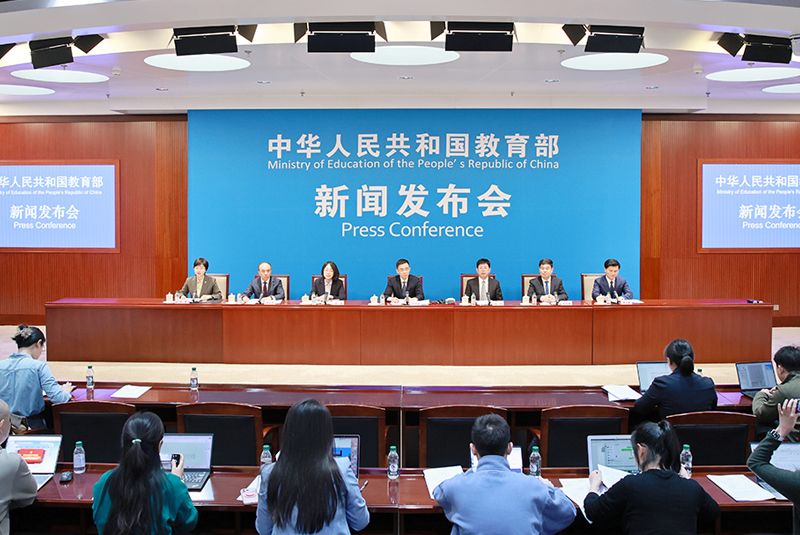
学校从“分数第一”转向“健康第一”,难在哪?
2 1 Shi Ji Jing Ji Bao Dao· 2026-02-27 13:19
Core Viewpoint - The Ministry of Education has released guidelines aimed at promoting the construction of "healthy schools" across the nation by 2030, emphasizing a shift from a "score-first" to a "health-first" approach in education [1][2]. Group 1: Guidelines and Standards - The guidelines propose that all schools in China should implement comprehensive physical activity for students, with a minimum of 2 hours of physical activity daily for primary and secondary students, and at least 3 sessions of intense extracurricular sports per week for university students [1]. - Schools are required to conduct at least one arts exhibition each semester and establish a "Labor Week" annually for students at all levels [1]. - Basic standards for healthy school construction include the implementation of "Internet + Bright Kitchen" in school canteens, mandatory first aid training for college students, and the establishment of independent psychological counseling rooms [1]. Group 2: Implementation and Evaluation - The construction of healthy schools is seen as conflicting with traditional exam-oriented education, necessitating the inclusion of health school construction outcomes in educational supervision and evaluation [2]. - Local governments are encouraged to adopt a new educational development perspective, with some provinces already incorporating student health metrics, such as near-sightedness rates and physical fitness levels, into their high-quality development assessments [2]. - The success of the "health-first" concept is contingent upon the correct educational performance evaluation by local authorities [2].
市教委:开学不强制作业检查,不违规考试
Xin Lang Cai Jing· 2026-02-26 18:39
Core Points - The city education committee has announced that there will be no mandatory homework checks or unauthorized exams for the upcoming spring semester of 2026 [1] - The committee emphasized the importance of reducing homework burdens to improve educational quality, aligning with the Ministry of Education's regulations on homework duration [1] - There will be strict measures against unauthorized weekly and monthly tests, with a focus on controlling the number of exams and their difficulty levels [1] Group 1: Homework and Exam Management - The education committee has mandated that schools must not enforce mandatory homework checks [1] - Unauthorized exams, including weekly and monthly tests, will be eliminated, and the number of exams and their difficulty will be strictly controlled [1] - The focus is on reducing homework load to enhance the quality of education [1] Group 2: Educational Philosophy and Goals - The committee advocates for a correct educational performance perspective, emphasizing moral education and the comprehensive development of students [1] - There is a strong opposition to short-term metrics such as exam scores and admission rates, promoting a long-term sustainable development approach [1] Group 3: Additional Focus Areas - Specific deployments were made regarding campus safety, student mental health, educational management, enrollment order governance, and home-school collaboration [1]
破除“清北崇拜”是个系统工程
Jing Ji Guan Cha Bao· 2025-07-24 10:09
Core Viewpoint - The controversy surrounding the emphasis on prestigious universities like Tsinghua and Peking University reflects a broader issue in the education system, where the pursuit of high admission rates to these institutions may lead to a distorted view of education itself [1][2][3] Group 1: Education System and Institutional Pressure - Some schools invest heavily in preparing students for admission to top universities, as the admission rates can directly impact the school's reputation and the teachers' evaluations [2] - The pressure to achieve high admission rates is a systemic issue, where the focus on prestigious universities can lead to a utilitarian approach to education [2][3] Group 2: Societal Influence and Parental Expectations - Parents often view the admission rates to top universities as a significant factor in choosing schools for their children, driven by societal values that favor prestigious institutions [3] - The interaction between society, the education system, and individual choices creates a cycle that perpetuates the worship of top universities [3] Group 3: Emerging Trends in Higher Education Choices - There is a growing trend where high-scoring students are opting for new research universities or vocational colleges instead of traditional prestigious institutions, indicating a shift in educational values [4] - Examples include Westlake University and Fuyao University surpassing traditional universities in admission scores, suggesting a diversification of educational choices [4]