健康学校建设

Search documents
让学生“身上有汗、眼里有光”!教育部作出新部署
Xin Lang Cai Jing· 2026-02-28 01:38
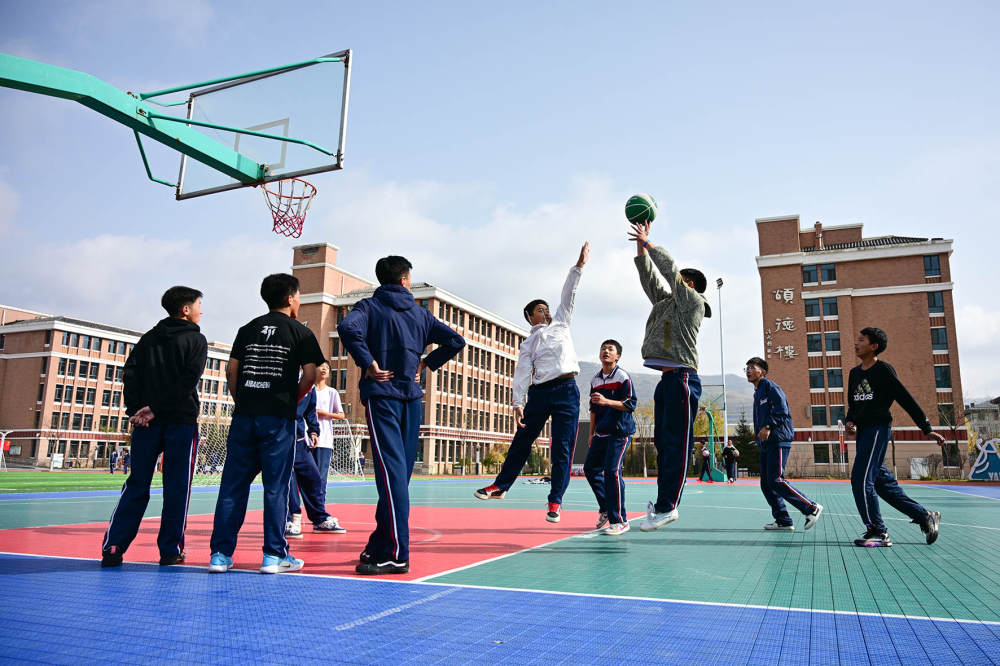
Core Viewpoint - The Ministry of Education has issued guidelines to promote the construction of healthy schools, emphasizing the importance of student health and well-being in the context of building a strong education system and a healthy China [1] Group 1: Health Issues and Guidelines - Current issues among students include problems related to physical fitness, vision, weight, and mental health, which the guidelines aim to address [1] - The guidelines focus on key areas affecting student health, including physical education, mental health, and vision protection [2][3] Group 2: Implementation and Standards - The guidelines mandate that middle and primary school students engage in at least 2 hours of comprehensive physical activity daily and implement a "15-minute break" for physical activity [3] - The Ministry of Education has developed reference standards for healthy school construction, covering areas such as obesity prevention, food safety, and first aid education [3] - Schools are encouraged to create unique educational environments tailored to local conditions, enhancing health education and services [3]
从“分数优先”转向“健康第一”——健康学校建设全面启动
Xin Lang Cai Jing· 2026-02-27 20:32
Core Viewpoint - The Ministry of Education has issued guidelines to promote the construction of "healthy schools," shifting focus from academic performance to the overall health and well-being of students [1][2]. Summary by Relevant Sections Overall Requirements - The guidelines aim to address various health issues among students, including physical fitness, vision, weight, mental health, and food safety [1]. - A clear timeline is established: by 2027, pilot projects for healthy schools will be completed; by 2030, the "health first" educational philosophy will be widely accepted; and by 2035, high-quality healthy schools will be fully established [1]. Key Tasks - The guidelines outline key tasks such as enhancing physical education, mental health education, and food safety, as well as implementing comprehensive measures to prevent myopia among children and adolescents [2][4]. - Specific reference standards for health schools are set for primary and secondary schools, kindergartens, and universities [2]. Main Measures - Reference standards include requirements for daily physical activity, food safety measures in school canteens, and mandatory labor education classes [3]. - The construction of healthy schools is framed as a systematic approach, integrating various interventions to create a supportive environment for student health [3]. Organizational Support - The guidelines emphasize the need for continuous health education, improved health management systems, and enhanced resources [4]. - The focus is on transforming the educational approach from "score first" to "health first," integrating health literacy into the overall educational framework [4][5]. Implementation Examples - Seven provinces, including Beijing and Shanghai, have initiated pilot programs involving over 540 schools to explore effective paths for healthy school construction [6]. - Specific practices include creating a comprehensive system that encompasses cultural, educational, practical, and safety aspects of health promotion in schools [5].
教育部选取7省份540余所学校试点健康学校建设
Xin Lang Cai Jing· 2026-02-27 19:29
Core Viewpoint - The Ministry of Education has issued guidelines to promote the construction of healthy schools, emphasizing the "health first" educational philosophy to enhance student health and create a supportive environment for their growth [1][2]. Group 1: Implementation Phases - The construction of healthy schools will occur in three phases: by 2027, high standards for pilot schools will be achieved, and a set of replicable cases will be established; by 2030, the "health first" philosophy will be widely adopted, significantly improving health education and conditions in schools; by 2035, higher quality healthy schools will be universally established [1]. - Seven pilot provinces, including Beijing, Hebei, and Guangdong, have been selected to implement the three-year action plan for healthy school construction, involving over 540 schools [1]. Group 2: Health Education and Standards - Continuous promotion of health education and the establishment of a health education mechanism are prioritized, alongside enhancing health management capabilities and improving the health environment in schools [2]. - Reference standards for healthy school construction have been developed for primary, secondary, and higher education institutions, covering key areas such as physical education, mental health, and food safety, with 16 standards for primary and secondary schools and 9 for higher education [2]. - These standards are designed to be achievable for schools and serve as practical guidelines for local implementation [2].
“课间15分钟”写入教育部指导意见
Xin Lang Cai Jing· 2026-02-27 19:29
Core Viewpoint - The Ministry of Education has issued guidelines to promote a "15-minute break" for students, marking a shift towards a healthier school environment, with a comprehensive plan for health school construction from 2027 to 2035 [1][3]. Group 1: Health School Construction - The definition of a health school has evolved to encompass a holistic educational approach, integrating moral, intellectual, physical, aesthetic, and labor education [3]. - By 2027, a pilot program for health school construction will be completed, with replicable experiences developed [3]. - By 2030, the "health first" concept will be widely adopted, significantly improving health education and conditions in schools [3]. - By 2035, higher quality health schools will be established nationwide [3]. Group 2: Physical and Mental Health Initiatives - The guidelines propose eight key tasks to enhance students' physical and mental health, including a comprehensive sports program with a minimum of 2 hours of physical activity daily [4]. - The implementation of a "15-minute break" during school hours is mandated to promote relaxation and physical activity [4]. - A focus on mental health is emphasized, with the establishment of a nationwide student psychological health monitoring system and a strengthened team of psychological health teachers [4]. Group 3: Safety and Nutrition - Food safety measures are to be strictly enforced, including training for staff and the establishment of a meal accompaniment system [5]. - Life safety education will be integrated into the curriculum, promoting emergency rescue knowledge and skills, along with the provision of automated external defibrillators (AEDs) in schools [5].
健康第一!新学期动起来
Xin Lang Cai Jing· 2026-02-27 19:29
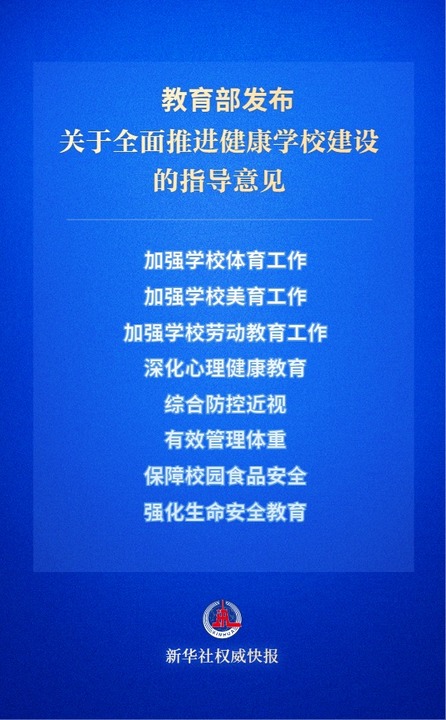
Core Viewpoint - The article outlines a three-phase plan for building a "Healthy School" system in China, aiming for comprehensive health education and improved student health by 2035 [1] Phase Goals - By 2027, the plan aims to complete the three-year action plan for building a strong education system, establishing health school construction pilot programs, and developing standards for health school work [1] - By 2030, the "Health First" education concept is expected to be widely adopted, with significant improvements in health education and conditions in schools, leading to better student health outcomes [1] - By 2035, the goal is to establish higher quality health schools universally [1] Key Tasks - Strengthening school sports work by implementing a student fitness plan, ensuring that middle and primary school students engage in at least 2 hours of physical activity daily, and promoting extracurricular sports activities [1] - Enhancing aesthetic education by fully implementing art courses to help students develop 1-2 artistic specialties [1] - Promoting labor education by integrating labor habits into education and encouraging skill and achievement showcases among students [1] - Deepening mental health education by building a robust team of mental health teachers and establishing a national monitoring system for student mental health [1] - Comprehensive prevention of myopia by focusing on key stages in early education and implementing detailed prevention measures [1] - Effective management of student weight by enhancing obesity prevention efforts and fostering collaboration between families and schools [1] - Ensuring food safety on campuses by strictly regulating food service management and training staff accordingly [1] - Strengthening life safety education by incorporating emergency rescue knowledge into the curriculum and equipping schools with necessary emergency devices [1]
教育部:实施中小学生肥胖防控工作方案
Xin Lang Cai Jing· 2026-02-27 17:29
Core Viewpoint - The Ministry of Education has released guidelines to promote the construction of "healthy schools" in China, aiming for significant improvements in student health and educational standards by 2035 [1]. Group 1: Goals and Timeline - By 2027, high standards for the construction of healthy schools will be achieved, with a comprehensive reform pilot program in place [1]. - By 2030, the "health first" educational philosophy will be widely adopted, with significant enhancements in health education and student health conditions [1]. - By 2035, a higher quality of healthy schools is expected to be universally established [1]. Group 2: Key Tasks for Healthy School Construction - Implementation of a student physical fitness plan, ensuring that students engage in at least 2 hours of physical activity daily, including a "15-minute break" [2]. - Encouragement of psychological health education through local and school-based courses, with a focus on key growth periods for students [2]. - Development of a national student psychological health monitoring and early warning system, along with health assessment tools [2]. - Establishment of obesity prevention plans for students, promoting healthy diets and nutritional education, with weekly food menus published [2]. - Strengthening collaboration between medical and educational institutions to manage student weight issues and provide targeted interventions [2]. - Enhancement of aesthetic education, labor education, food safety, and life safety education within schools [2]. - Inclusion of healthy school construction outcomes in educational supervision and evaluation criteria [2].
推行“课间15分钟”首次写入教育部指导意见 一图读懂
Yang Shi Xin Wen· 2026-02-27 16:50
Group 1 - The Ministry of Education has issued guidelines to enhance physical education, aesthetic education, and labor education in schools, mandating that students engage in at least 2 hours of comprehensive physical activities daily [1][5] - The guidelines promote a 15-minute break between classes and encourage universities to offer diverse physical education courses for students from the third grade onwards, including graduate students [1][5] - There is a focus on mandatory labor education courses for students at all levels, emphasizing the importance of practical skills and labor habits [6][8] Group 2 - The initiative aims to improve mental health education by training teachers to better identify and address students' psychological issues, alongside establishing a nationwide monitoring system for student mental health [6][9] - The guidelines also address the prevention of myopia, particularly in early childhood and primary education, with a goal to reduce myopia rates more rapidly [6][9] - Schools are required to ensure food safety, with strict regulations on school meal management and the training of staff responsible for food safety and nutrition [9][10] Group 3 - The "Health First" educational philosophy is to be widely promoted, with significant improvements in health education and conditions in schools, leading to better student health outcomes [3][4] - By 2027, the plan includes eight key tasks aimed at establishing a comprehensive health school framework across all educational institutions [4][5] - The initiative seeks to create a higher quality of health schools, ensuring that health education is integrated into the curriculum and that emergency response skills are taught [9][10]


教育部:健康学校食堂要实现视频监控无死角
Xin Lang Cai Jing· 2026-02-27 15:21
Core Viewpoint - The Ministry of Education has issued guidelines to promote the construction of healthy schools, emphasizing the importance of food safety on campuses and the implementation of strict management protocols for school dining services [1] Group 1: Food Safety and Management - The guidelines stress the need for schools to ensure food safety, with school principals being held accountable as the primary responsible persons [1] - Schools are required to implement "Internet + Bright Kitchen" standards, ensuring video monitoring covers the entire food processing process [1] Group 2: Health Monitoring and Standards - The guidelines establish measurable and assessable standards for the construction of healthy schools across primary, secondary, and higher education institutions, structured around indicators, guarantees, and measures [1] - A target is set for the continuous improvement of students' physical health monitoring rates, and schools must ensure that students participate in at least one first aid training during their time on campus [1] - The guidelines aim to create a comprehensive safety net for physical and mental health, addressing societal and parental concerns regarding children's healthy development [1]
新华鲜报丨让学生“身上有汗、眼里有光”!教育部作出新部署
Xin Hua She· 2026-02-27 15:01
Core Viewpoint - The Ministry of Education has issued guidelines to promote the construction of health schools, emphasizing the importance of student health and development in building a strong education system and a healthy China [1] Group 1: Health Issues and Solutions - Current issues among students include problems related to physical fitness, vision, weight, and mental health, which the guidelines aim to address through comprehensive health school initiatives [3] - The guidelines focus on key tasks and measures for building health schools, providing clarity on what local schools need to prioritize [3] Group 2: Implementation and Standards - Schools are encouraged to enhance physical activity, with a mandate for students to engage in at least 2 hours of physical activity daily and implement a "15-minute break" for physical activities [5] - The guidelines also emphasize the importance of mental health education, food safety in schools, and the establishment of practical standards for health school construction, covering areas such as obesity prevention and emergency education [5] - The Ministry of Education plans to guide schools in creating unique educational environments that enhance health education and services, aiming for students to achieve a healthy body and positive mindset [5]
从“分数第一”到“健康第一”:有多难,怎么做
2 1 Shi Ji Jing Ji Bao Dao· 2026-02-27 13:46
Core Viewpoint - The core focus of the article is the promotion of a "health first" approach in schools, as outlined in the Ministry of Education's recent guidelines, which aim to shift the educational emphasis from academic scores to student health [10][12][16]. Group 1: Health School Construction - The Ministry of Education has issued guidelines to promote the construction of health schools, with a goal to cover every school by 2030, currently having over 540 pilot health schools [10][11]. - The guidelines include eight key tasks that focus on various aspects of student health, such as physical education, mental health, and nutrition [10][11]. - The electronic science and technology university's affiliated primary school has successfully implemented a daily physical activity program, achieving an average of 3 hours of exercise per day for students [5][10]. Group 2: Implementation Challenges - There is a contradiction between the "health first" philosophy and the existing exam-oriented education system, necessitating a shift in educational performance evaluation by local governments and educational departments [3][12][16]. - Parents often express concerns that increased physical activity may detract from academic performance, highlighting the need for a cultural shift towards valuing health in education [13][14]. Group 3: Collaborative Efforts - The construction of health schools requires a collaborative approach involving government, educational institutions, families, and society to effectively address health issues among students [16][17]. - Local governments, such as in Shandong Province, are integrating student health metrics into their educational performance evaluations to ensure accountability and promote health initiatives [17].