
健康需求

Search documents
林里柠檬茶获融资;东鹏饮料通过港交所聆讯;费列罗任命新董事长
Sou Hu Cai Jing· 2026-01-19 07:42
Investment Dynamics - Beijing Ruifen Biotechnology Co., Ltd. has completed a C round financing of over 1 billion yuan, led by Xingxiang Capital, with Ruipeng Xiangyu Fund participating. The funds will be used to promote commercialization and new capacity construction, accelerating R&D innovation and market expansion in both human and animal health platforms [3]. - The lemon tea brand "Linlee" has completed a tens of millions A round financing, with Qianhai Ark Fund as the sole investor. The funds will primarily be used for brand building, supply chain upgrades, and organizational improvements. Linlee has over 1,900 stores across 31 provinces and over 200 cities, targeting a GMV of 2.7 billion yuan by 2025 [6]. - Unilever Ventures has invested in two Indian beauty brands, Secret Alchemist and SkinInspired, to increase its presence in the Indian market. SkinInspired is a high-end skincare brand, while Secret Alchemist is a pioneer in pure perfume in India [8]. Listing Dynamics - Dongpeng Beverage Group has passed the listing hearing on the Hong Kong Stock Exchange, with Huatai International, Morgan Stanley, and UBS as joint sponsors. The company aims for a target transaction scale of approximately 1 billion USD, with plans to start pre-listing promotions soon [9][10]. - Dongpeng Beverage is recognized as China's leading functional beverage company, with the highest revenue growth among the top 20 listed soft drink companies globally [10]. Brand Dynamics - Xibei Catering will close 102 stores nationwide, accounting for 30% of its total stores. This decision follows a significant external crisis related to pre-made dishes, leading to a 50% year-on-year decline in store revenue [12]. - Condé Nast's fashion magazine "GQ" is set to return with a new account, GQStudio, indicating a revival of the brand after previous collaborations fell through [14]. Personnel Dynamics - Achilles Ion Gabriel will step down as the creative director of Camper and CamperLab after over six years. The internal creative team will take over the creative direction following his departure [16]. - Ferrero Group has appointed Massimo Micieli as the new chairman, marking a transition period for the family-controlled global candy giant [19]. - Mondelez has appointed Claudio Parrotta as the executive vice president and global chief supply chain officer, responsible for managing a complex global supply chain [22]. - Heineken's CEO Dolf van den Brink will resign on May 31, 2026, after over 28 years with the company, with a search for a new CEO already underway [25].



升降桌市场迎质变:《今日家居》调研揭示健康需求激增,倒逼产业核心技术升级
Sou Hu Cai Jing· 2025-12-04 09:43
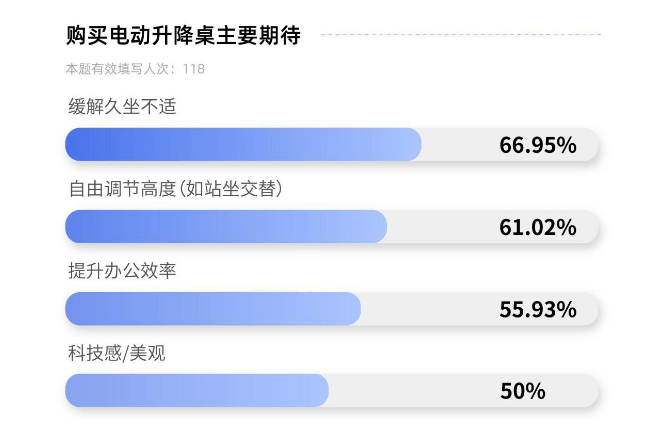
Core Insights - The report highlights that over 30% of respondents sit for more than 9 hours daily, indicating a growing health demand that drives market growth [1] - The Chinese office furniture market is undergoing a significant transformation, with health, practical intelligence, and personalization emerging as the three core factors influencing consumer decisions [1] - The competition in the electric height-adjustable desk market is shifting from basic functionality to a focus on "system reliability," prompting upgrades in core technologies across the industry [1][4] Health Demand Driving Product Upgrades - 32% of respondents report sitting for over 9 hours a day, making health management for prolonged sitting a pressing need [1] - 67% of office workers expect electric height-adjustable desks to alleviate physical discomfort, while 61% consider the ability to adjust height freely as a core feature [1] Smart and Practical Needs - 43% of respondents identify smart technology as a key area for improvement in office environments, with a strong preference for practical features over flashy technology [2] - Basic functionalities such as stable height adjustment (38%), one-button operation (37%), and reminders for prolonged sitting (25%) are prioritized over advanced technologies [2] Demand for Personalization - 25% of employees express dissatisfaction with the comfort of their current desks, highlighting a significant gap between standardized products and individual needs [2] - There is a call for solutions that offer personalized adaptations, such as reminders for prolonged sitting, favorite position settings, app control, and sensitive anti-collision protection [2] Industry Focus on Quality and Reliability - The emerging consumer trends are raising the bar for product quality and reliability in height-adjustable desks, with the lifting system becoming a key differentiator in product quality and brand reputation [4] Importance of Core Technology Suppliers - Suppliers that can effectively address user pain points are increasingly valued, as evidenced by LINAK, which has over 80% overall satisfaction among surveyed users, reflecting market recognition for high technical standards and reliable solutions [5] Technological Innovations - LINAK has introduced patented technologies such as the PIEZO™ anti-collision technology and the Desksensor™ dual-sensor system for obstacle detection, enhancing user safety during height adjustment [7] - The Kick&Click™ quick desk frame solution allows for "zero-screw" installation, significantly lowering the usage threshold [7] - LINAK's new EXPERIENCE™ series features a height adjustment speed of 80mm/s, 25,000 cycle tests, and a 10-year warranty, setting a new performance standard in the industry [7] Consumer Willingness to Pay for Quality - 9% of respondents plan to purchase a height-adjustable desk within a year, and half are willing to pay up to 30% more for quality, health, and personalized office experiences [9] - The shift from "making do" to "demanding quality" in office environments indicates that the competition in the electric height-adjustable desk market will extend beyond aesthetics and materials to core technologies [9] Localized Innovation and Adaptation - LINAK has focused on localized innovation since entering the Chinese market in 2005, establishing a research center in 2008 to collaborate with local designers and manufacturers [10] - The company has developed customized solutions for local scenarios, such as high-density workstations and home offices, ensuring stronger load-bearing and compact structures [10] - LINAK's service network in China has received high recognition for its responsiveness, with engineers addressing parts issues on the same day [12]
【2025美好生活高峰论坛】Worldpanel消费者指数大客户总监刘建永:新消费浪潮下的快消品市场变革与升级路径
Jing Ji Guan Cha Wang· 2025-11-27 08:58
Core Insights - The forum highlighted the transformation of the fast-moving consumer goods (FMCG) market in China amid a dual-cycle economic context, indicating new growth opportunities and consumer trends despite a slowdown in market growth [1][2]. Market Adjustment Under Dual-Cycle Context - The annual growth rate of China's FMCG market has decreased from over 5% to 2% over the past decade, influenced by a slowdown in GDP growth and a decline in natural population growth [2]. - Changes in consumer behavior are notable, with a 40% increase in the number of purchasing channels compared to ten years ago, leading to intensified competition in the industry [2]. - Consumers are shifting from bulk buying to on-demand purchasing, necessitating a reevaluation of supply chain management and product innovation strategies by companies [2]. Channel Reconstruction of Consumption Landscape - Three major trends in channel transformation were identified: growth in lower-tier cities, explosive growth in instant retail, and the rise of out-of-home consumption scenarios [3]. - The growth rate in county and town markets significantly outpaces that of first-tier cities, with a shift from large supermarkets to smaller, more localized retail formats [3]. - Instant retail services, such as 30-minute delivery, are rapidly penetrating the market, while out-of-home consumption in tourism, dining, and sports venues is becoming a new growth driver, with notable increases in customer traffic [3]. Consumer Segmentation Driving New Consumption Logic - Changes in population structure are releasing new consumption potential, with distinct trends in the single-person economy and the silver economy [4]. - One-person households focus on emotional value consumption, leading to significant growth in categories like pet spending and ready-to-eat products, while the silver demographic is divided into pre-silver (ages 45-60) and silver (60+) groups, each with different consumption needs [4]. - Health-related demands vary across age groups, indicating a need for companies to develop precise consumer profiles and product matrices [4]. Cultural Confidence Leading to Domestic Brand Revival - Domestic brands are experiencing a resurgence, gaining market share even in traditionally foreign-dominated sectors like infant formula and cosmetics, by integrating traditional Chinese medicine and cultural elements [5]. - Successful examples include collaborations with cultural symbols and innovative product offerings that resonate with consumers' emotional connections [5]. - The practice of cultural empowerment is diverse, with brands leveraging cultural narratives to enhance brand value and consumer engagement [5]. Strategic Upgrading Paths in Response to Market Changes - Companies are encouraged to focus on outdoor consumption scenarios, target the silver and single-person economies, and enhance cultural empowerment through health concepts and IP collaborations [6]. - The evolution of health demands permeates all trends, reflecting consumers' dual pursuit of physical and mental well-being [6]. - Companies that effectively adapt to scenario alignment, consumer segmentation, and cultural empowerment are likely to gain a competitive edge in the evolving FMCG landscape [6].
Third Space获投资;八马茶业通过上市聆讯;复朗集团总裁将辞任
Sou Hu Cai Jing· 2025-10-14 14:41
Investment Dynamics - Yonghui Supermarket has established a new trading company in Beijing with a registered capital of 10 million yuan, focusing on food internet sales, telecommunications, and internet information services, which could create additional revenue streams for the company in the long term [3] - Third Space, a luxury gym in London, secured a £75 million bank loan from OakNorth, following a previous loan of £38.5 million in June 2023, indicating investor confidence in the gym's growth potential amid increasing consumer health demands [5] - Guizhou Southern Dairy announced the suspension of its listing application on the Beijing Stock Exchange due to the need for supplementary audit matters, with projected 2024 revenue of 1.817 billion yuan and net profit of 209 million yuan, ranking 20th among 36 listed dairy companies [7] - Eight Horse Tea has passed the listing hearing at the Hong Kong Stock Exchange, aiming for a main board listing with projected revenues of 1.818 billion yuan, 2.122 billion yuan, and 2.143 billion yuan from 2022 to 2024, showing growth rates of 16.8% and 1.0% for 2023 and 2024 respectively [10][11] - Haidilao has opened a budget conveyor sushi restaurant in Hangzhou, indicating its strategy to diversify into the sushi market, leveraging its supply chain to create a differentiated product offering [13] Brand Dynamics - Luckin Coffee has launched a venue leasing cooperation across 39 cities, focusing on school locations, which is expected to enhance brand coverage in a rapidly growing coffee market [19] - LOEWE and Swiss sports brand On have collaborated to launch a limited edition Cloudsolo sneaker, which is anticipated to generate high-margin revenue for LOEWE while attracting high-net-worth customers for On [16] Personnel Dynamics - Cargill appointed Andrew MacPherson as the new CEO of Teys, coinciding with Cargill's acquisition of Teys, which is expected to enhance operational capabilities and market reach [22][23] - China Resources Beer announced a management reshuffle, appointing Jin Hanquan as executive director and president, which aims to strengthen leadership amid increasing competition in the premium beer segment [26] - The global luxury fashion group, Richemont, announced the resignation of its CEO and CFO, Chen Jiyu, who will leave on October 27, 2025, raising questions about the future leadership and performance of the group [28]



兴业证券:椰子水赛道分层竞争加剧 场景多元+质价比驱动市场扩容
Zhi Tong Cai Jing· 2025-08-18 07:25
Group 1 - The core viewpoint is that leading companies in the coconut water market have significant supply chain advantages and stable channels, with multi-category collaboration driving growth [1][2] - IFBH (06603) is identified as a leading player in the domestic coconut water market, leveraging a light asset model for cost advantages and enhancing brand influence through celebrity endorsements and cross-industry collaborations [1][2] - The health-driven demand for coconut water is supported by its low sugar content and natural electrolytes, establishing a stable consumption structure across various scenarios such as office (45%), sports (32%), and home (18%) [1][3] Group 2 - The global coconut water market is experiencing rapid expansion, with the market size projected to grow from $2.52 billion in 2019 to $4.99 billion by 2024, reflecting a CAGR of 14.7% [2] - The Greater China market is leading this growth, with a projected increase from $0.1 billion to $1.09 billion, achieving a remarkable compound growth rate of 60.8% [2] - The competitive landscape is evolving, with a shift from a highly concentrated market to a more diversified one, where leading brands like Vita Coco maintain their positions while new entrants like IFBH rapidly gain market share [2] Group 3 - The Chinese coconut water market is transitioning from a high-end niche to mass consumption, with the mainstream price range dropping to 6-8 RMB per 500ml, and distribution expanding to convenience stores and lower-tier cities [3] - The per capita consumption of coconut water in China is currently low at 0.1 liters, indicating significant growth potential compared to markets like the US and Hong Kong [3] - The industry is expected to reach a scale of 18 billion RMB by 2029, driven by expanding consumption habits and increased availability across various channels [3]
