通信

Search documents
抄底布局?
第一财经· 2026-03-26 10:51
Market Overview - The A-share market is experiencing an adjustment pattern, with the Shanghai Composite Index opening lower and showing volatility, primarily due to weak support from heavyweight sectors [5] - The Shenzhen Component and ChiNext Index have seen larger adjustments, with previously leading sectors such as computing power, CPO, and consumer electronics collectively realizing profits, contributing to the decline [5] Trading Activity - A total of 915 stocks rose, but there is a clear divergence with more stocks declining than rising [6] - Lithium materials stocks, including lithium mines, electrolytes, and membranes, performed well, while the power sector continued to show strength. However, popular sectors like photovoltaic equipment, insurance, wind power, national defense, and AI applications have seen adjustments [7] Capital Flow - The total trading volume in both markets decreased by 10.8%, indicating a shift towards risk aversion among investors, with funds moving from high-valuation tech growth sectors (AI, photovoltaic, telecommunications) to undervalued defensive and cyclical sectors [7] - Institutional investors are reallocating funds significantly from sectors such as electronics, computers, media, and gaming, while increasing positions in energy metals, basic chemicals, and power reform stocks [9] Investor Sentiment - Retail investors are entering the market to buy low-priced, small-cap defensive stocks (batteries, lithium mines, power), while reducing exposure to high-valuation tech stocks and speculative themes [9] - The sentiment among retail investors shows that 75.85% are optimistic about the market [10] Positioning - As of March 26, 30.20% of investors increased their positions, while 15.78% reduced their holdings, with another 30.20% remaining neutral [13] - The average position held by investors indicates a significant portion is still holding onto their investments, with 51.66% fully invested and 9.82% in cash [19] Profitability - A survey indicates that 4.35% of investors have achieved over 50% profit, while 4.05% have profits between 20% to 50%. Conversely, 45.05% are facing losses of less than 20% [21]


阵容拉满!30+电池展商齐聚2026 FINE先进电池大会
DT新材料· 2026-03-19 16:06
Core Insights - High safety, long endurance, and low-cost battery technology are crucial for the development of emerging industries such as electric vehicles, smart robotics, low-altitude economy, data center energy storage, consumer electronics, and communication [1] - The 2026 FINE Advanced Battery and Energy Materials Exhibition will focus on high-performance lithium batteries, solid-state batteries, and sodium batteries, featuring over 200 exhibitors showcasing cutting-edge technologies and materials [1] Industry Overview - The event will take place from June 10-12, 2026, at the Shanghai New International Expo Center, with participation from over 30 battery manufacturers including leading companies like CATL, BYD, and Gotion High-Tech [3][1] - The exhibition aims to facilitate communication among industry elites and showcase the latest products and technological advancements in battery manufacturing [1] Key Exhibitors - **Zhongke Goneng**: Established in October 2022, focuses on solid-state battery technology and has developed a continuous production line for sulfide solid electrolytes [3] - **Jin Yu New Energy**: Founded by a team of young PhDs from Peking University, specializes in solid-state battery R&D and has launched a production line for 1.2 GWh solid-state batteries [5] - **Jinghe Energy**: Focuses on sulfide solid electrolytes and solid-state batteries, with plans for small-scale delivery in 2026 and large-scale production in 2027 [7] - **Penghui Energy**: A leading battery manufacturer with 25 years of experience, focusing on solid-state and sodium-ion batteries, and has completed its pilot line for solid-state batteries [9] - **TianNeng Battery**: A major player in the battery industry, recognized for its closed-loop ecosystem from design to recycling, and has a strong patent portfolio [10] Technological Innovations - **Xingchu Century**: A global provider of intelligent microgrid solutions, has initiated R&D in sodium-ion batteries and achieved international certification for its products [12] - **Xibei Power**: Focuses on high-performance sodium-ion battery technology and has secured significant orders from major manufacturers [13] - **Guoneng Energy**: Achieved rapid advancements in sodium battery technology and has launched the first domestic production line for sodium-ion batteries [14] Event Agenda - The conference will include various forums focusing on solid-state batteries, sodium batteries, humanoid robot batteries, and AI data center energy storage, among others [37] - Over 80 industry experts will share insights and reports, with an expected attendance of over 1,000 participants [35]


万和财富早班车-20260303
Vanho Securities· 2026-03-03 01:58
Core Insights - The report emphasizes the importance of discovering investment opportunities with a proactive attitude rather than merely relaying information [2] Domestic Financial Market - The Shanghai Composite Index closed at 4182.59, with a rise of 0.47% [4] - The Shenzhen Component Index closed at 14465.79, showing a decrease of 0.2% [4] - The ChiNext Index closed at 3294.16, down by 0.49% [4] Macro News Summary - The China Securities Regulatory Commission held a seminar to discuss the "14th Five-Year Plan" for foreign institutions in the capital market, focusing on key initiatives for high-quality development over the next five years [6] - The first national standard system for humanoid robots and embodied intelligence has been released [7] - The National Development and Reform Commission reported that storage chip prices continue to rise and are being passed down to downstream sectors [7] Industry Latest Developments - Two major DRAM manufacturers have issued price increase notices, driven by strong AI demand, with related stocks including Shannon Microelectronics (300475) and Baiwei Storage (688525) [9] - The U.S. Space Force participated in its first combat operation, increasing urgency in space competition, with related stocks including China Satellite (600118) and Haige Communication (002465) [9] - The release of the standard system marks a new phase of standardized development for humanoid robots, with related stocks including Changying Precision (300115) and Wuzhi Electromechanical (300503) [9] Focus on Listed Companies - Light Optoelectronics (688150) plans to establish a "Light Optoelectronics Quartz Fabric R&D Center and Production Base" in Xi'an High-tech Zone [11] - Zhongying Technology (300936) intends to acquire at least 51% of the shares of Yingzhong Electric, which is expected to constitute a major asset restructuring [11] - Yingshi Innovation (688775) has concluded its 337 investigation, allowing for unrestricted import and sale of existing products in the U.S. [11] - Xinmai Medical (688016) has received breakthrough medical device designation from the FDA for its multi-branch stent, which is expected to accelerate entry into international markets [11] Market Review and Outlook - On March 2, the total trading volume in the two markets was 30,207 billion, with 1,103 stocks rising and 4,026 stocks falling [13] - The net capital outflow from the market was 1,192.57 billion, with trading volume increasing by 5,327 billion compared to the previous day [13] - The three major indices opened lower but fluctuated upwards, closing with a bullish pattern [13] - The report indicates that the Shanghai Composite Index is approaching a new high of 4,190, with a generally positive trend [13] - Key sectors showing strong capital inflow include satellite navigation, military, and communication, while AI applications and chip sectors experienced capital outflow [13]
市场早盘震荡调整,中证A500指数下跌0.49%,2只中证A500相关ETF成交额超58亿元
Sou Hu Cai Jing· 2026-02-27 03:50
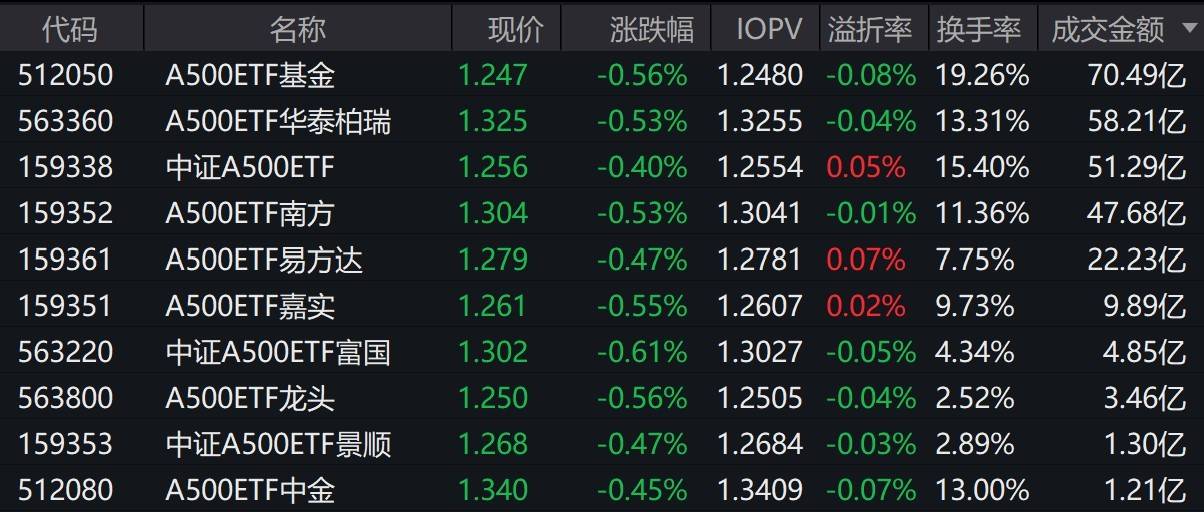
Market Overview - The market experienced fluctuations in the early session, with the ChiNext Index dropping over 1% and the CSI A500 Index declining by 0.49% [1] - The computing power leasing concept saw a collective surge, while the non-ferrous metals sector remained active. In contrast, the semiconductor and communication sectors weakened [1] ETF Performance - As of the morning close, ETFs tracking the CSI A500 Index showed slight declines, with 10 related ETFs having transaction volumes exceeding 100 million yuan, and 2 surpassing 5.8 billion yuan. The A500 ETF Fund and A500 ETF Huatai-PB had transaction volumes of 7.049 billion yuan and 5.821 billion yuan, respectively [1] - Specific ETF performance included: - A500 ETF Fund: Current price 1.247, down 0.56% - A500 ETF Huatai-PB: Current price 1.325, down 0.53% - CSI A500 ETF: Current price 1.256, down 0.40% [2] Analyst Insights - Some brokerages indicated that, from a medium-term perspective, the current economic fundamentals, macro policies, and overseas markets do not support a trend-driven rally in A-shares. They recommend reasonable position control and waiting for macro factors to clarify, as well as for the market to self-select a breakout direction and main sectors [1]
Coherent(COHR):FY26Q2 业绩点评及业绩说明会纪要:业绩增长强劲,1.6T/CPO/OCS 产品稳步推进
Huachuang Securities· 2026-02-08 13:56
Investment Rating - The report assigns a strong buy rating for Coherent, anticipating a performance that will exceed the benchmark index by more than 20% in the next six months [44]. Core Insights - Coherent achieved record revenue of $1.69 billion in FY2026Q2, with a quarter-over-quarter growth of 7% and a year-over-year growth of 17%. The Non-GAAP gross margin improved to 39%, with a Non-GAAP diluted EPS of $1.29, reflecting an 11% quarter-over-quarter increase and a 35% year-over-year increase [3][7]. - The data center and communication segment accounts for over 70% of total revenue, with a year-over-year growth of 34% in Q2. The data center business saw a 36% increase, driven by strong demand for 800G and 1.6T transceivers [8][9]. - The company expects FY2026Q3 revenue to be between $1.7 billion and $1.84 billion, with a Non-GAAP gross margin forecasted between 38.5% and 40.5% [10]. Summary by Sections FY2026Q2 Performance Overview - Coherent reported a strong performance in FY2026Q2 with total revenue reaching a record $1.69 billion, a 7% increase from the previous quarter and a 17% increase year-over-year. Excluding revenue from the recently divested aerospace and defense business, revenue growth was 9% quarter-over-quarter and 22% year-over-year. The Non-GAAP gross margin was 39%, with a Non-GAAP operating margin of 19.9% and a diluted EPS of $1.29 [3][7]. Business Segment Performance 1. **Data Center and Communication Segment** - This segment is the core growth driver, contributing over 70% of total revenue. In Q2, revenue grew 34% year-over-year, with the data center business growing 36% due to strong demand for 800G and 1.6T transceivers. The communication business also performed well, with a 44% year-over-year increase [8][9]. 2. **Industrial Segment** - After excluding the recently divested aerospace and defense business, the industrial segment saw a 4% quarter-over-quarter growth and remained flat year-over-year. The semiconductor industry orders significantly increased in Q2, indicating potential for growth in the upcoming quarters [9]. FY2026Q3 Guidance - Coherent anticipates FY2026Q3 revenue between $1.7 billion and $1.84 billion, including $5 million from the Munich product division before its sale. The Non-GAAP gross margin is expected to be between 38.5% and 40.5%, with total operating expenses projected between $320 million and $340 million [10].

千亿大并购? 宁王和华为“传绯闻”:涉数字能源买卖,可不可信? | 能见派
Xin Lang Cai Jing· 2026-02-06 01:03
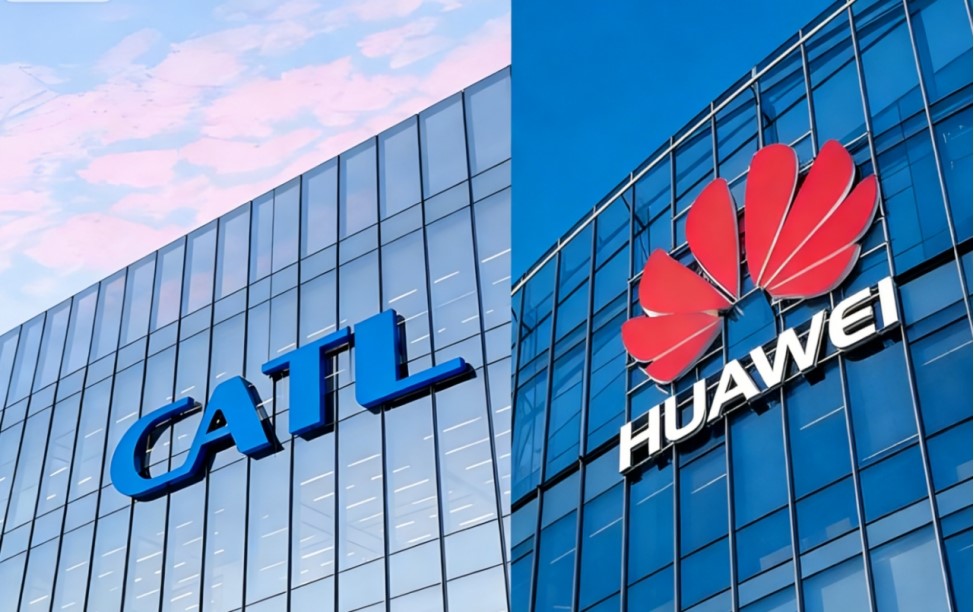
Core Viewpoint - The renewable energy industry is on the verge of a historic trillion-level merger, with reports indicating that CATL is in talks to acquire Huawei Digital Energy, potentially leading to a split sale of its assets [2][17]. Group 1: Acquisition Details - CATL is reportedly negotiating to acquire Huawei Digital Energy, which has entered a substantive phase [2][17]. - Both CATL and Huawei Digital Energy have declined to comment on the acquisition discussions [3][18]. - If the acquisition proceeds, the most affected competitor will be Sungrow Power Supply [3][19]. Group 2: Internal Movements and Market Context - There are indications that Huawei Digital Energy is preparing for potential staff changes, with discussions about severance packages for employees who may not transition to the new company [4][20]. - Huawei's previous statements indicated no plans for an IPO or sale of its digital energy and cloud businesses, raising questions about a shift in strategy [4][21]. - The domestic renewable energy sector has become increasingly competitive, leading Huawei to consider a realignment of its business focus [4][21]. Group 3: Financial Performance - Huawei's Digital Energy business reported a revenue of 68.678 billion yuan in 2024, a 24.4% increase year-on-year, making it the third-largest business segment for Huawei [6][23]. - Despite its strong performance, analysts suggest that Huawei may prioritize investments in AI and communications over digital energy, which could justify a sale [6][23]. Group 4: Competitive Landscape - If the acquisition is finalized, it could create a new giant in the renewable energy sector, reshaping the competitive landscape globally [8][25]. - The merger would significantly impact the inverter market, where Huawei and Sungrow have historically held a combined market share of 55% [9][26]. - Analysts believe that acquiring Huawei Digital Energy would allow CATL to complete its ecosystem, enhancing its competitive position against rivals like BYD and Sungrow [9][26]. Group 5: Pricing Negotiations - There are significant discrepancies in the valuation of Huawei Digital Energy, with reports suggesting Huawei's asking price was around 400 billion yuan, while CATL's offer was approximately 100 billion yuan [7][24]. - The involvement of additional capital in the acquisition process may facilitate negotiations between the parties [7][24]. Group 6: Potential Implications - The acquisition could lead to increased competitive pressure on Sungrow, as CATL would gain substantial advantages in technology, channels, and scale [9][29]. - The merger would necessitate cultural integration between the two companies, which have distinct corporate cultures [10][30]. - Legal scrutiny may arise from the merger, but the likelihood of antitrust issues appears low given the current competitive dynamics [11][31].
盘后播报(2.4)
Sou Hu Cai Jing· 2026-02-04 12:01
Market Overview - The A-share market showed a strong fluctuation today, with the Shanghai Composite Index rising by 0.85% to 4102.20 points, while the Shenzhen Component Index increased by 0.21%. However, the ChiNext Index and the Sci-Tech Innovation Board Index fell by 0.40% and 0.98%, respectively. The total trading volume in the Shanghai and Shenzhen markets was 250.33 billion yuan, a decrease of 62.4 billion yuan from the previous day. Overall, the market sentiment was neutral to weak, with over 3200 stocks rising [1]. Sector Performance - The coal, gold, and dividend sectors led the gains today, while high-volatility sectors such as artificial intelligence, media, and telecommunications experienced pullbacks. Small-cap stocks underperformed large-cap stocks, and growth stocks lagged behind value stocks, indicating a preference for more stable investments [1]. Gold and Silver Market - The Gold ETF from Guotai surged by 4.24%. After two consecutive days of significant declines, gold and silver prices rebounded strongly, with spot gold rising above the 5000 USD mark and spot silver exceeding 90 USD. The rebound in precious metals prices followed a concentrated release of selling pressure, and the implied volatility of gold showed signs of turning upward again after a previous spike and subsequent correction [1]. Coal Sector Insights - The Coal ETF (515220) saw a significant increase of 9.07%, while the Guotai Dividend State-Owned Enterprise ETF (510720) rose by 4.29%. Indonesian officials announced that local miners have suspended spot coal exports to support prices, as current profit margins for miners are low. This suspension is aimed at avoiding default risks due to quota uncertainties, although long-term contracts remain unaffected. The coal sector is expected to benefit from short-term supply-demand catalysts and long-term valuation support due to weakening dollar credit [2]. Transportation Sector Activity - The airport and shipping sectors were active today, driven by the ongoing Spring Festival travel season. With the holiday period being longer this year, a second wave of travel is anticipated. The transportation ETF (561320) increased by 3.10%, supported by a slowing supply growth, high passenger load factors, and expectations of reduced competition, which may lead to improved profitability in the sector [2]. Bond Market Trends - Following an initial over-allocation by banks at the beginning of the year, the bond market has experienced a slow upward trend, although recent movements have shown hesitation. The ten-year government bond ETF (511260) has been primarily fluctuating, with a slight increase of 0.05% over the past five days. Short-term interest rates may still have room to decline, but a narrow range of fluctuations is expected in the medium to long term. A strategic allocation approach is recommended over short-term trading, with a focus on medium-duration government bond ETFs [2].
突发!马斯克,重大宣布!
Sou Hu Cai Jing· 2026-02-03 01:16
Core Viewpoint - SpaceX has acquired xAI, an artificial intelligence company also owned by Elon Musk, to integrate resources in aerospace, AI, and communications, aiming to create a super innovative platform covering both Earth and outer space [1]. Group 1: Acquisition Details - The acquisition is valued at $250 billion, representing a premium over xAI's $230 billion valuation during its last funding round in January [1]. - Post-merger, the combined entity's valuation is expected to exceed $1.25 trillion, with an internal memo indicating a share price of $526.59 [1]. - The merger will consolidate Musk's rocket business, Starlink satellite network, social media platform X, and Grok AI chatbot under one corporate structure [1]. Group 2: Structural Changes - xAI shares will be exchanged for SpaceX shares as part of the merger plan [2]. - Two entities have been established in Nevada to facilitate the transaction, with one being a limited liability company listing SpaceX and its CFO Bret Johnsen as management members [2]. - The second entity lists only Johnsen as the sole executive [2].
一文彻底看懂6G
3 6 Ke· 2026-01-22 04:35
Core Insights - The Chinese government has announced significant advancements in 5G infrastructure, with 4.838 million base stations built and over 1.2 billion users, marking the largest and most advanced information infrastructure globally [1] - The development of 6G has entered its second phase, with over 300 key technologies already reserved, indicating a strong commitment to future advancements in mobile communication [1][27] Group 1: Definition and Differences between 6G and 5G - 6G, or the sixth generation of mobile communication technology, is officially referred to as IMT-2030, as designated by the International Telecommunication Union [3] - Unlike 5G, which primarily focuses on speed, 6G aims for a revolutionary integration of the physical, biological, and digital worlds, enhancing overall connectivity and functionality [6][8] Group 2: Key Technologies and Applications of 6G - The key technological directions for 6G include AI-native communication, integrated communication and sensing, and enhanced spectrum efficiency, among others [12] - 6G is expected to support six major application scenarios, including immersive communication, ultra-reliable low-latency communication, and AI integration, expanding the capabilities beyond those of 5G [14][16] Group 3: Performance Metrics and Capabilities - 6G is projected to achieve peak rates of 50 Gbps to 2 Tbps, significantly surpassing 5G's capabilities [23] - Key performance indicators for 6G include a user experience rate of 1-10 Gbps, latency as low as 0.1 ms, and a connection density of up to 1 billion devices per square kilometer [24] Group 4: Development Timeline and Future Outlook - The timeline for 6G development includes significant milestones, such as the establishment of the IMT-2030 promotion group in 2019 and the initiation of standard development by 3GPP expected by 2029 [28][39] - The first commercial systems for 6G are anticipated to be launched around 2030, with a full-scale deployment expected by 2035 [41]

亚太主要股指集体飘绿,A股化工股爆发,泡泡玛特涨超8%,黄金涨白银跌
2 1 Shi Ji Jing Ji Bao Dao· 2026-01-20 07:23
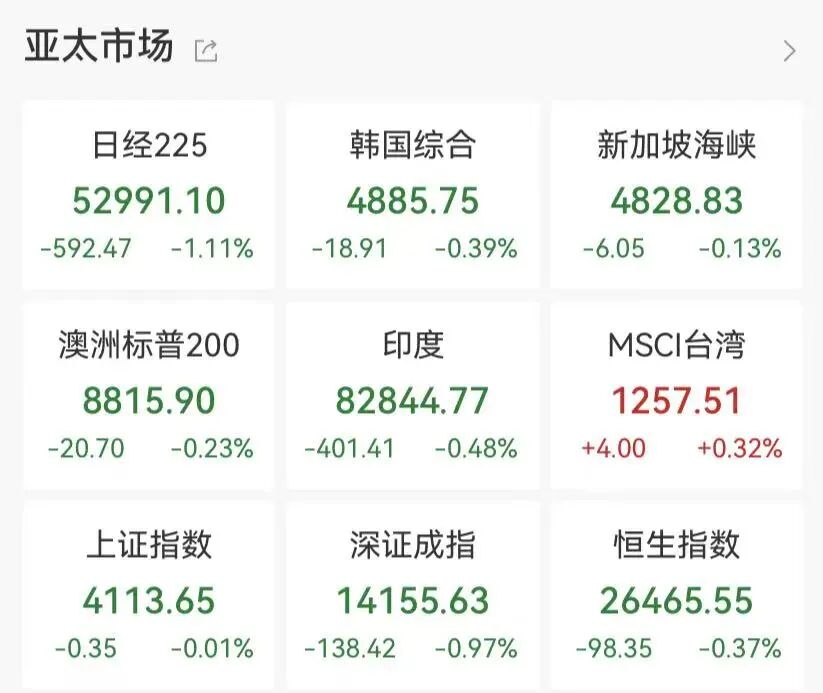
Market Overview - Major Asia-Pacific stock indices collectively declined on January 20, with the Nikkei 225 down by 592.47 points or 1.11%, the KOSPI down by 18.91 points or 0.39%, and the Straits Times Index down by 6.05 points or 0.13% [2] - The A-share market experienced fluctuations, with the Shanghai Composite Index down by 0.01%, the Shenzhen Component down by 0.97%, and the ChiNext Index down by 1.79%. Over 3,100 stocks in the market fell [2] Sector Performance - The satellite internet, CPO, commercial aerospace, and telecommunications sectors led the declines, with commercial aerospace stocks experiencing significant drops, including Shenjian Co. (002361) facing four consecutive trading halts and Aerospace Power (600343) facing two consecutive halts [3] - The chemical sector showed resilience, with over ten constituent stocks hitting the daily limit up, including Hongbaoli (002165), Shandong Heda (002810), Weiyuan Co. (600955), and Hongqiang Co. (002809) [3] - The real estate sector was active, with Dayuecheng (000031) and City Investment Holdings (600649) hitting the daily limit up [3] Hong Kong Market - In the Hong Kong market, the Hang Seng Technology Index fell over 1%, while the Hang Seng Index and Hang Seng China Enterprises Index saw slight declines. Most tech stocks were in the red, with SMIC, Sunny Optical Technology, and BYD (002594) down over 3%, while Xiaomi Group fell over 2%. Ctrip Group rose over 2.5%, and Midea Group (000333) and Baidu Group increased by over 1% [3] Gold and Silver Market - Gold prices rose, with spot gold surpassing $4,700, increasing by nearly 1% and up over 9% year-to-date. In contrast, spot silver fell nearly 0.5%, fluctuating around $94 per ounce [5] - Current prices for gold and silver include: - London Gold: $4,714.235, up by $45.051 or 0.96%, with a year-to-date increase of 9.17% - London Silver: $93.954, down by $0.444 or -0.47%, with a year-to-date increase of 31.26% - COMEX Gold: $4,712.5, up by $35.8 or 0.77%, with a year-to-date increase of 8.78% - COMEX Silver: $93.380, down by $0.900 or -0.95%, with a year-to-date increase of 31.58% [6]