
文化赋能

Search documents
酒行业周度市场观察-20260308
Ai Rui Zi Xun· 2026-03-08 06:21
Investment Rating - The report does not explicitly provide an investment rating for the industry Core Insights - The Chinese beer industry is expected to see production, revenue, and profit growth of 5%, 4%, and 18% respectively in 2025, indicating a shift towards value enhancement [2] - The trend towards low-alcohol beverages is gaining momentum, with consumers preferring to drink less but of higher quality, leading to a significant increase in low-alcohol and health-oriented drinks [2] - The liquor industry is transitioning from a "quantity era" to a "quality era," focusing on high-quality development and technological innovation [5] - The Chinese wine market is undergoing structural changes, with a 26.85% decrease in imported wine volume but a 21.79% increase in average price, indicating a preference for premium and specialty wines [5] - The yellow wine industry is experiencing a nationalization and quality upgrade, with major brands increasing prices and expanding their market presence [6] Industry Environment - The report identifies four major trends in the beer industry for 2026: expansion of non-on-premise channels, growth of non-alcoholic beer, differentiation in craft beer competition, and deepening of local brand premiumization [2] - The liquor industry is seeing a shift towards rational consumption, emphasizing personalized experiences and cultural resonance [2] - The "2026-2030 Guidelines for Quality Improvement and Upgrading of the Liquor Industry" aim to foster high-quality development through technological innovation and cultural empowerment [5] - The Chinese wine market is focusing on white wine, affordable premium options, and diverse consumption scenarios, with brand operation and channel integration becoming key [5] Top Brand Dynamics - Gujing Gongjiu launched a marketing campaign centered around the theme of "going home" during the Spring Festival, enhancing its image as the "national year wine" [9] - Moutai is attracting younger consumers and women through its iMoutai platform, significantly increasing foot traffic in offline stores [9] - Moutai Wine is undergoing systematic changes to achieve growth despite market challenges, optimizing its product structure and increasing brand investment [10] - The yellow wine industry is moving towards nationalization and quality enhancement, with major brands like Guyue Longshan and Kweichow Moutai leading the charge [6][10] - Xifeng Wine is focusing on marketing reform and product upgrades to achieve breakthroughs in the high-end market [13] - Jian Nan Chun is leveraging cultural empowerment and emotional resonance in its marketing strategy to transition from promotional discounts to value enhancement [19]





云南曲靖:非遗“活”起来 年味“热”起来
Xin Lang Cai Jing· 2026-02-19 08:40
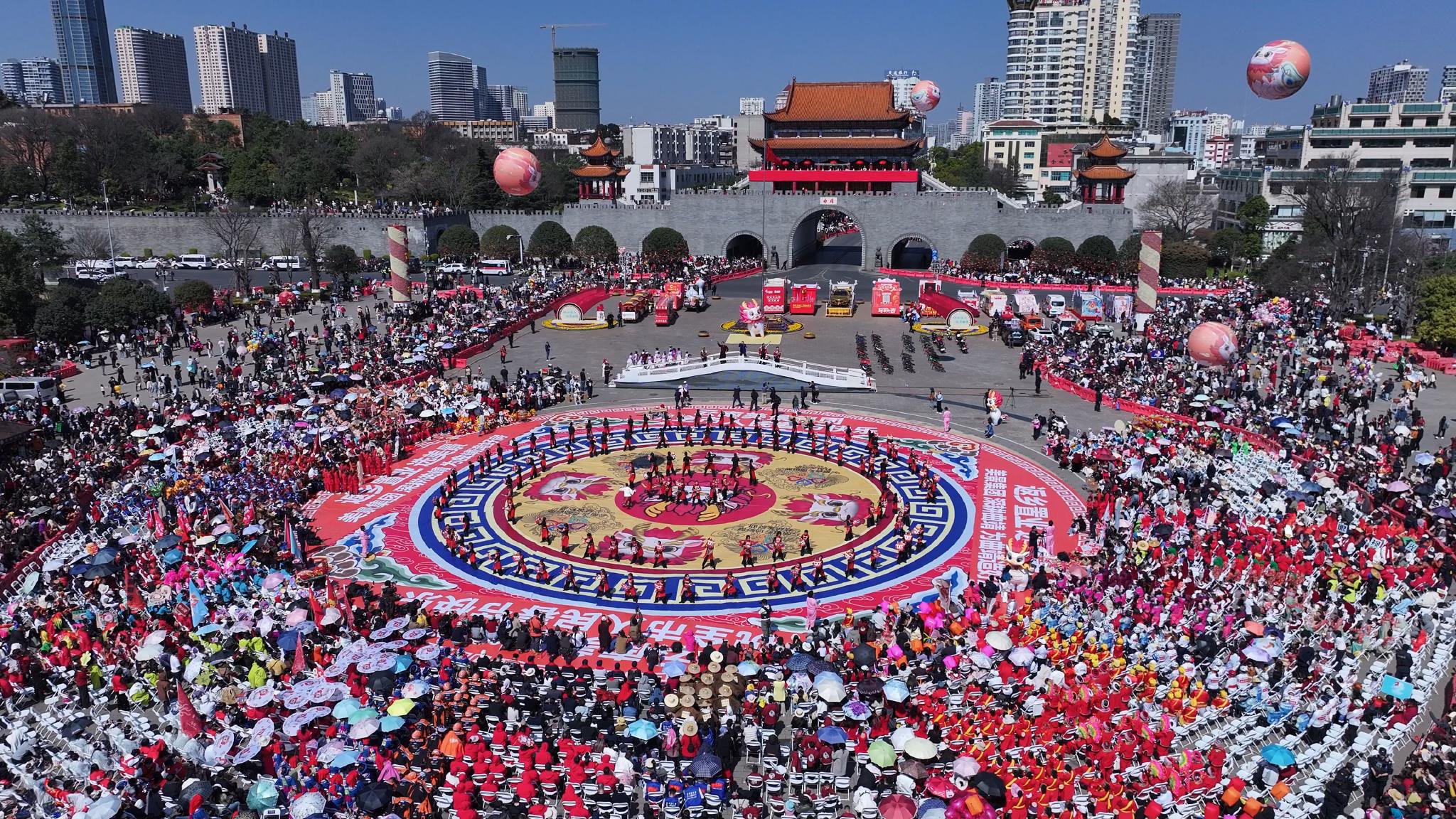
Core Viewpoint - The Spring Festival celebrations in Qujing are centered around "intangible cultural heritage" and "cultural empowerment," showcasing traditional customs in a vibrant and engaging manner [2][8]. Group 1: Cultural Events - The "Thousand People Dance Qilin" event attracted 300,000 participants, featuring 46 performance groups and over 2,600 citizens acting as performers, creating a lively atmosphere [3]. - The event lasted for 5 hours, combining traditional heritage with modern artistic expressions, and was praised by citizens for its engaging and immersive experience [3]. - In Luliang County, local cultural performances highlighted community changes and showcased traditional art forms, emphasizing the importance of local characteristics [5]. Group 2: Cultural Heritage and Community Engagement - The "Bind the Monkey" event in Shizong County is a provincial intangible cultural heritage, where local youth participate in traditional performances, enhancing community involvement and cultural pride [7]. - The influence of the "Bind the Monkey" tradition has spread to multiple villages, promoting local tourism and economic growth through cultural practices [7]. - Various cultural activities, such as the Peony Art Exhibition and intangible cultural heritage lantern festival, have been organized to enhance the festive atmosphere and promote local traditions [8]. Group 3: Economic Impact - The series of cultural activities during the Spring Festival has led to increased tourism and consumer spending in Qujing, revitalizing the local economy [8]. - The integration of traditional events with modern entertainment has created a unique experience for residents and visitors, contributing to the overall cultural and economic landscape of the region [8].

总台春晚哈尔滨分会场|方正剪纸惊艳亮相! “好地方 正当红”叫响全国
Xin Lang Cai Jing· 2026-02-17 17:35
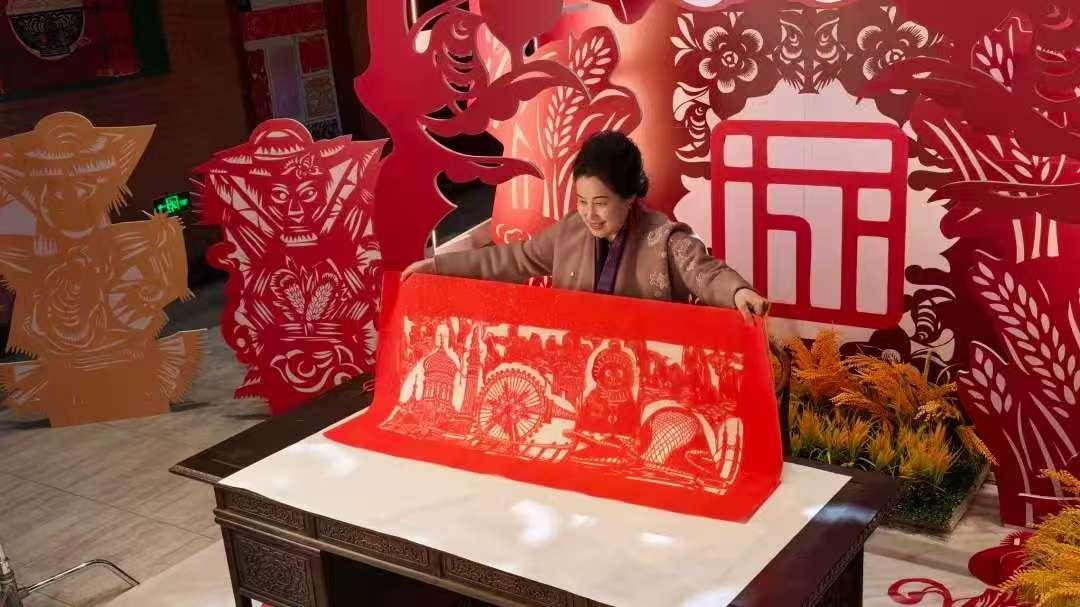
Core Viewpoint - The event showcasing "Fangzheng Paper-Cutting" at the 2026 Spring Festival Gala in Harbin highlights the cultural heritage and regional characteristics of Fangzheng County, promoting its image as a vibrant part of Northeast revitalization [1][6]. Group 1: Cultural Significance - "Fangzheng Paper-Cutting," a national intangible cultural heritage, captivated millions during the Spring Festival Gala, emphasizing its importance in showcasing local culture [1][6]. - The work "Ice and Snow, Golden Mountains and Silver Mountains" by national inheritor Ni Xiumei creatively merges Harbin's ice and snow scenery with urban features, reflecting the unique charm of the city [3]. Group 2: Promotion and Recognition - The series of events leading up to the Spring Festival Gala, including flash activities and participation in various programs, significantly raised the profile of Fangzheng Paper-Cutting [5]. - The selection of Fangzheng Paper-Cutting among many intangible cultural heritage projects for the gala is a source of pride for the local community [5][6]. Group 3: Strategic Development - The appearance at the Spring Festival Gala is part of Fangzheng County's strategy of "cultural empowerment and brand development," aiming to enhance the county's image and promote its unique products [6]. - The county plans to leverage this opportunity to further develop the creative transformation and innovative development of intangible cultural heritage, driving economic growth and promoting local agricultural products [9].
一步一景 一景一味 汇成新时代四川的万千气象
Si Chuan Ri Bao· 2026-02-14 00:25
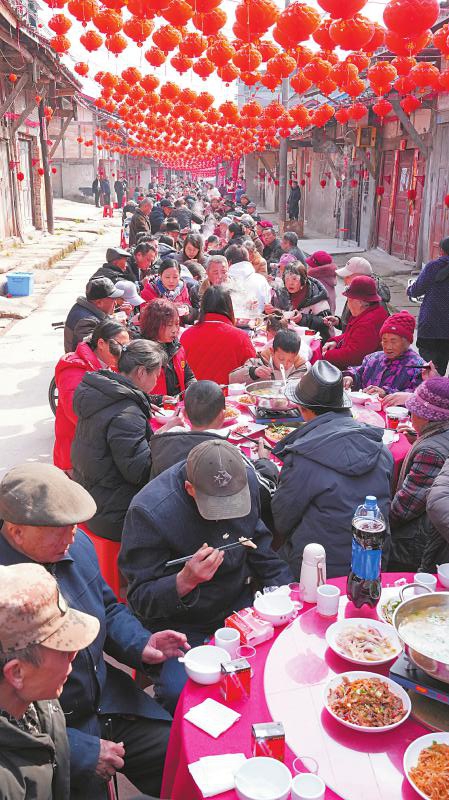
Core Viewpoint - The article highlights the vibrant cultural and tourism activities in Sichuan, showcasing the integration of traditional crafts and modern experiences, which contribute to the region's economic vitality and development potential [12][20]. Group 1: Cultural and Tourism Activities - The "万千气象看四川" theme event took place from February 9 to 12, covering 11 cities and 32 locations, emphasizing the region's dynamic cultural landscape [12]. - Various traditional performances and modern attractions, such as the Sichuan Lantern Festival and the "铁水火龙" parade, illustrate the blend of heritage and contemporary entertainment [14][15]. - The transformation of idle urban spaces into vibrant consumer areas, such as the "汉安·慢时光" project, reflects innovative approaches to enhance local tourism and commerce [15][16]. Group 2: Economic Impact and Development - The cultural tourism sector is supported by a robust policy framework, including a "1+10+N" brand system and over 30 million yuan in tourism vouchers, aimed at boosting local consumption [21]. - The "空天幻境·新春飞行" carnival in Suining sold over 80,000 tickets, showcasing the appeal of aerial experiences as a new tourism highlight [22]. - The Sichuan tea industry, particularly in Luzhou, has developed a comprehensive model combining tea production with tourism and processing, achieving an annual output value of 8.9 billion yuan from 315,000 acres of tea gardens [24]. Group 3: Future Potential - The Chengdu Panda Base has seen a surge in visitors since its trial operation, with daily attendance exceeding 10,000 during peak periods, indicating strong growth potential in the tourism sector [23]. - The integration of cultural heritage into modern consumer products, as seen in the Sanxingdui Museum's creative initiatives, has led to significant sales growth, with expectations to exceed 200 million yuan by 2025 [18]. - The ongoing development of infrastructure projects, such as the coal-electricity integration project in Guangyuan, is expected to create substantial employment opportunities and contribute to local economic growth [24].
学术探讨|城市文化建设驱动城市高质量发展的路径
Xin Lang Cai Jing· 2026-02-13 22:46
Core Viewpoint - The article emphasizes the importance of high-quality urban development as a key task in building a modern socialist country, highlighting the need for a shift from traditional economic growth to a focus on cultural enrichment and quality of life [1]. Group 1: Urban Development and Cultural Integration - Urban development should transition from a capital-driven model to one that prioritizes social connections and cultural values, integrating socialist core values and traditional Chinese culture into urban planning and governance [2]. - Establishing a "cultural pre-positioning" planning mechanism is essential, as seen in Beijing's urban planning that prioritizes historical and cultural preservation [2]. - Implementing a "cultural health check" evaluation system can help monitor public cultural facilities and their usage, influencing government performance assessments and funding allocations [2]. Group 2: Cultural Identity and Community Engagement - The core competitiveness of cities is rooted in cultural identity, which fosters a sense of pride and belonging among residents through shared history and public life [3]. - Initiatives like the "City Memory Preservation Plan" in Nanjing aim to collect and digitize historical materials to enhance community engagement [3]. - Events such as the Harbin Ice and Snow Festival and Qingdao International Beer Festival serve as platforms for cultural recognition and community bonding [3]. Group 3: Cultural Innovation and Economic Development - Cultural integration can drive industrial transformation and social harmony, balancing traditional and modern values while enhancing economic and social benefits [4]. - Strategies like the "Cultural+" industry integration in Xi'an leverage historical cultural IP to stimulate the night economy and related sectors [4]. - Sustainable activation of historical heritage, as demonstrated by the transformation of Beijing's Shougang Park, showcases the potential for cultural resources to contribute to urban development [4]. Group 4: Systematic Approach to Urban Quality - High-quality urban development requires a systematic approach that combines hard infrastructure with the soft power of culture, ensuring a harmonious blend of historical context and contemporary spirit [4]. - Institutional planning, innovative practices, and inclusive cultural services are vital for achieving a resilient, attractive, and sustainable urban future [4].
(新春走基层)“中国白首乌之乡”江苏滨海:文化赋能“土特产” 打造多元消费场景
Sou Hu Cai Jing· 2026-02-12 14:30
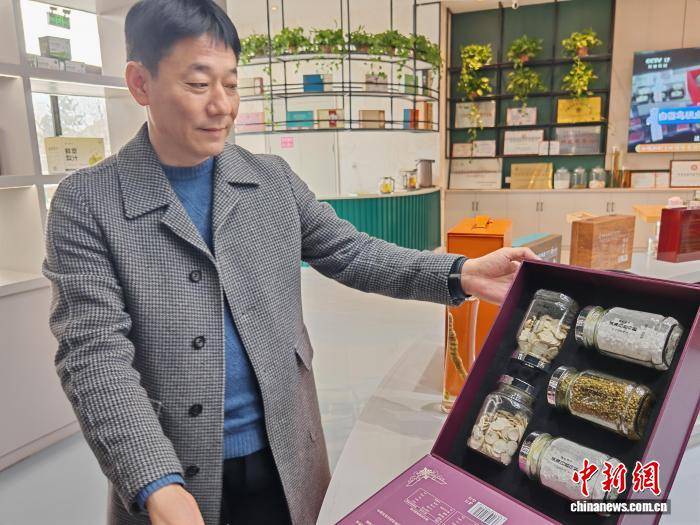
Core Viewpoint - Jiangsu Binhai, known as the "Home of Chinese Polygonatum," is leveraging cultural empowerment to enhance local specialty products and create diverse consumption scenarios [1]. Group 1: Industry Overview - Binhai produces 95% of China's Polygonatum, with plans to expand the planting area to over 5,000 acres by 2025 [1]. - The region's unique natural environment, characterized by alkaline, potassium-rich soil and a diverse water system, contributes to the high quality and yield of Polygonatum [3]. Group 2: Company Initiatives - Chen's Food Company, led by Chen Huawen, employs an "Internet + cooperative + base + farmers" business model to enhance local employment and income [3]. - The company has developed a range of Polygonatum products, including fresh juice, wine, and flower tea, through collaboration with universities and institutions, promoting specialization and scale in the industry [4]. Group 3: Cultural and Tourism Development - The establishment of the Polygonatum Intangible Cultural Heritage Museum showcases the plant's growth environment, historical legends, and traditional techniques, providing immersive experiences for visitors [7]. - Investments in a rural complex, including a camping and industry model, aim to create a tourism area that integrates Polygonatum cultivation, ecological planting, and recreational activities, thereby driving industry growth [7].
福建大黄鱼“游”出产业新变化
Xin Lang Cai Jing· 2026-02-10 21:07
Core Viewpoint - The yellow croaker industry in Ningde, Fujian, is undergoing significant transformation towards ecological, intelligent, and standardized farming practices, with a focus on deep-sea aquaculture and technological advancements in breeding and processing [2][4][5]. Industry Overview - Ningde is the main production area for yellow croaker in China, contributing 80% of the national output, with an industry chain value exceeding 20 billion yuan [1]. - The sales peak for yellow croaker coincides with the approaching New Year, highlighting its importance in the local economy [1]. Aquaculture Innovations - The transition from nearshore to offshore farming has been implemented, with 592 deep-water anti-wind and wave net cages established since 2025 [3]. - The new deep-sea net cages allow for a lower stocking density of 4 fish per cubic meter, enhancing resilience to environmental conditions and increasing capacity by 15 times compared to traditional cages [2]. Breeding Technology - In 2022, 1.5 billion yellow croaker fry were produced in Ningde, accounting for nearly 70% of the region's total fry output [4]. - The breeding process has been digitized, creating traceable records of fry development, which has improved the quality and marketability of the fry [4]. Processing and Product Development - The processing sector has evolved from fresh fish to advanced products like yellow croaker fillets and fish balls, generating over 300 million yuan in annual revenue for companies like Funing Port Fisheries [5]. - Companies are focusing on full-chain development, utilizing all parts of the fish to enhance value, including creating high-protein fish feed from by-products [5]. Brand and Cultural Development - Ningde is actively promoting the yellow croaker as a cultural symbol through the establishment of cultural experience centers and festivals, aiming to enhance brand recognition and market presence [5].
十论广货④丨科技遇见人文,造就“新广货”竞争力
2 1 Shi Ji Jing Ji Bao Dao· 2026-02-09 23:12
Core Insights - The "Guangdong Goods Going Global" initiative represents a significant transformation in China's manufacturing industry, showcasing Guangdong's strength as the leading manufacturing province in China [1][4] - Guangdong produces a substantial portion of the world's electronics, with statistics indicating that for every two televisions and three air conditioners produced in China, one is made in Guangdong [1] - The shift from factor-driven to innovation-driven growth in Guangdong's manufacturing sector highlights the evolution of local companies from OEMs to world-class brands [2][4] Group 1: Manufacturing Strength - Guangdong accounts for 70% of consumer drones, 18% of integrated circuits, and 40% of industrial robots in China, emphasizing its manufacturing dominance [1] - The province has developed a comprehensive industrial ecosystem, enabling rapid production response and innovation efficiency through close collaboration among various sectors [1][4] - The "Shunde-Zhongshan home appliance cluster" exemplifies successful industrial collaboration, contributing nearly 30% of the province's home appliance revenue and fostering global brands like Midea and Galanz [1] Group 2: Innovation and Technology - The transition to innovation-driven growth has led to increased R&D investments, resulting in breakthroughs in core technologies and brand development [2] - Guangdong's new generation of products is characterized by a combination of "hardcore technology and cultural aesthetics," redefining its position in the global value chain [2][3] - Companies like DJI have overcome technical barriers, establishing new standards in aerial imaging and enhancing Guangdong's influence in high-value segments [2] Group 3: Cultural Integration and Market Adaptation - Cultural elements from Guangdong, such as traditional arts and games, are being integrated into modern products, shifting the competitive landscape from price to cultural recognition [3] - Digital technologies are transforming production and sales ecosystems, significantly reducing production cycles and enhancing responsiveness to market demands [3] - The "Guangdong Goods Going Global" initiative is leveraging multi-channel marketing strategies, achieving impressive sales figures in both online and offline platforms [3] Group 4: Future Outlook - The initiative is expected to drive a shift from "manufacturing products" to "manufacturing aesthetics," pushing companies to enhance product quality and brand value [4] - The integration of smart manufacturing and cultural elements in regions like Beijiao Town serves as a model for harmonizing industrial and cultural development [4] - Guangdong's evolution from imitation to leadership in manufacturing reflects a broader systemic transformation, offering a replicable model for global manufacturing [4]
科技遇见人文,造就“新广货”竞争力
2 1 Shi Ji Jing Ji Bao Dao· 2026-02-09 21:56
Core Insights - The "Guangdong Goods Going Global" initiative represents a significant transformation in China's manufacturing industry, showcasing Guangdong's strength as the leading manufacturing province in China [1][6] - Guangdong produces a substantial share of various consumer goods, including 50% of the world's mobile phones and 40% of industrial robots in China, highlighting its critical role in global supply chains [1][6] Group 1: Manufacturing Strength - Guangdong accounts for 50% of the world's mobile phones, 70% of consumer drones, and 18% of integrated circuits, emphasizing its manufacturing dominance [1] - The province has developed a comprehensive industrial ecosystem, enabling rapid production response and innovation efficiency through "one-hour supply" and "one-hour industrial circles" [1][6] Group 2: Evolution of the Industry - The "Shunde-Zhongshan Home Appliance Cluster" in Foshan exemplifies the evolution from independent competition to collaborative synergy, contributing nearly 30% of the province's home appliance revenue [3] - Guangdong's manufacturing has shifted from factor-driven to innovation-driven, with increased R&D investments post-2008 financial crisis leading to breakthroughs in core technologies and brand development [3][4] Group 3: Technological and Cultural Integration - The new generation of Guangdong goods is driven by "hardcore technology + cultural aesthetics," redefining global value chains and transitioning from merely meeting demand to creating demand [4][6] - Digital technologies are reshaping production and sales ecosystems, significantly reducing production adjustment cycles and enhancing market responsiveness [5] Group 4: Future Outlook - The "Guangdong Goods Going Global" initiative is expected to focus on transitioning from "manufacturing products" to "manufacturing aesthetics," pushing companies to enhance product quality and brand value [5][6] - The integration of smart manufacturing and cultural elements in places like Beijiao Town serves as a model for harmonizing industrial development with humanistic values [5][6]

东莞市委书记:探索超大城市乡村振兴样本丨市委书记抓乡村振兴2025年度盘点
Nan Fang Nong Cun Bao· 2026-02-09 13:03
Core Viewpoint - Dongguan is exploring a new model for rural revitalization in the context of a super-large city, focusing on urban-rural integration, industrial strength, and cultural heritage [9][12][55] Group 1: Key Initiatives in Rural Revitalization - The "Hundred Million Thousand Project" serves as a key strategy for promoting rural industry integration into the modern industrial system [10][16] - In 2025, the Dongguan Municipal Committee outlined 17 important work deployments and research speeches related to rural revitalization [8] - The city emphasizes the construction of typical villages and modern industrial parks to enhance industrial competitiveness and promote harmonious rural development [17][20][53] Group 2: Enhancing Living Conditions - Dongguan aims to create a "livable, workable, and tourable" modern rural environment through environmental improvement and resource revitalization [25][30] - The city is implementing a three-in-one rural landscape enhancement system, focusing on landscape control, environmental remediation, and long-term management [29] Group 3: Cultural Empowerment - The municipal government is leveraging local cultural resources to drive rural revitalization, emphasizing the activation of traditional culture and non-heritage resources [33][38] - Efforts are being made to enhance local specialties and promote cultural tourism, integrating cultural resources into economic value [36][37] Group 4: Governance and Participation - Dongguan is innovating mechanisms to enhance multi-party participation in rural governance, focusing on grassroots party organization and community engagement [41][46] - The city is committed to a governance model that combines mechanism innovation, party leadership, and diverse participation to ensure effective rural revitalization [45][46] Group 5: Urban-Rural Integration - The municipal strategy integrates rural revitalization into the broader urban-rural integration development framework, promoting a modern rural form [49][55] - The focus is on enhancing industry, infrastructure, and living conditions to facilitate deep integration of production, city, and people [50][52]
