储能/电池材料

Search documents
国海策略:春季行情还有哪些问题值得关注?
Sou Hu Cai Jing· 2026-01-07 04:00
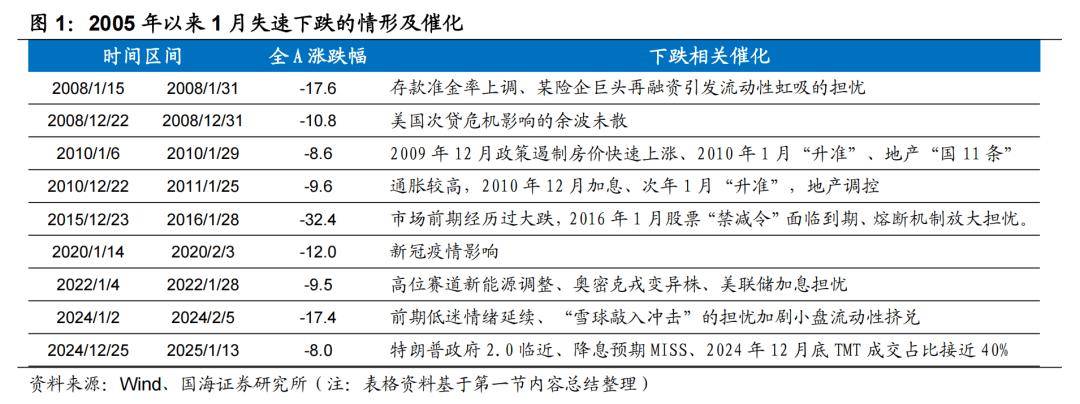
Group 1 - The report discusses the potential for a market downturn in January 2025, similar to previous years, and identifies three main scenarios that could lead to such a decline: macroeconomic overheating, continued low sentiment, and unexpected events [1][12][21] - Historical data shows significant declines in the A-share market during January in various years, with notable drops such as -32.4% in January 2016 and -17.4% in January 2024, often linked to liquidity concerns and policy changes [2][13][19] - Current market conditions suggest a lower probability of a significant downturn due to a supportive regulatory environment and positive market sentiment, with the Shanghai Composite Index showing resilience near the 3800-point support level [21][22] Group 2 - The report indicates that in bull market years, the "spring rally" often begins before the mandatory annual performance disclosures in late January, typically starting around early January [5][24] - Historical analysis shows that industries performing well before the spring rally tend to maintain their momentum, with a 60-70% probability of continued outperformance in the early stages of the rally [6][27] - Industries that have underperformed prior to the spring rally may see a rebound in the latter stages, with probabilities of 50-60% for those that ranked poorly before the rally [7][27] Group 3 - Potential catalysts for the market include possible monetary easing in January, the appointment of a new Federal Reserve chair, and further easing of real estate policies in China [28][29] - Specific industries to watch include media, computing, automotive, and pharmaceuticals, which have seen significant declines recently but were strong performers earlier in the year [32][33] - The report emphasizes the importance of growth sectors, particularly in technology and AI applications, as areas of focus for potential investment during the upcoming spring rally [28][32]