
光伏行业出清

Search documents
毁约式涨价,光伏组件上演“最后的疯狂”
Ge Long Hui· 2026-01-17 13:22
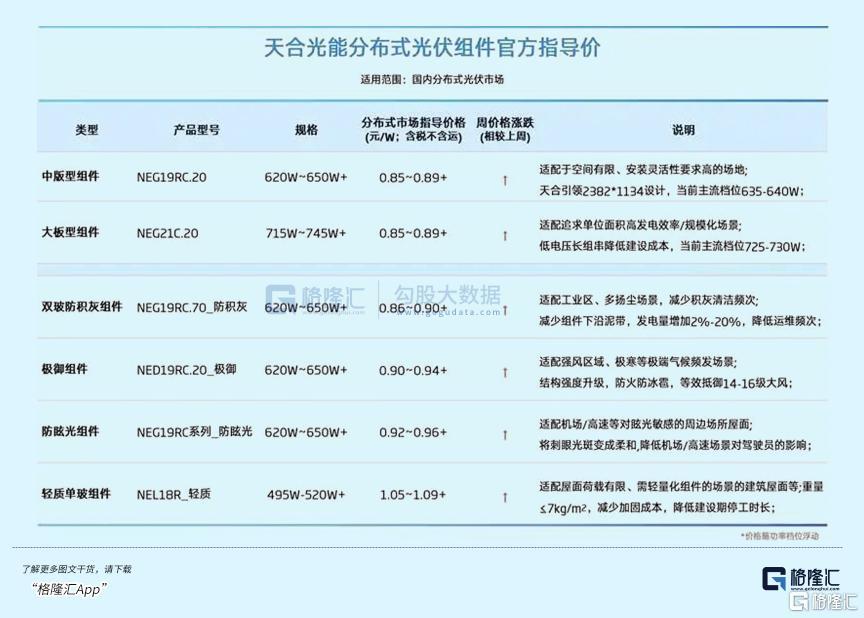
Core Viewpoint - The photovoltaic (PV) module industry is experiencing an unexpected price surge at the beginning of 2026, driven by factors such as the impending cancellation of export tax rebates and rising costs of key materials like silver and aluminum, leading to significant profit compression and potential industry-wide consolidation [1][13][20]. Price Surge and Contract Violations - Several distributed PV investment companies have reported sudden price increases on previously agreed contracts, with some major manufacturers raising prices from 0.73 yuan/W to 0.8 yuan/W [3]. - On January 13, Trina Solar announced collective price increases for various product models, with distributed PV module prices ranging from 0.85 to 0.89+ yuan/W [3]. - A total of 12 module manufacturers raised their prices this week, with increases of 0.04 to 0.15 yuan/W, and some companies have raised prices multiple times within a week [5]. - Reports indicate that some companies are delaying deliveries or demanding price increases, causing significant disruptions in the supply chain for terminal power station installations [5][6]. Causes of Price Increases - The cancellation of export tax rebates, effective April 1, 2026, is a major catalyst for the price surge, as manufacturers rush to ship products before the policy takes effect [6][7]. - The price of silver has skyrocketed, increasing from 7,600 yuan/kg at the beginning of 2025 to 23,688 yuan/kg by the end of the year, resulting in a cost increase of at least 0.16 yuan per watt for PV modules [8][10]. Industry Challenges and Overcapacity - The PV industry is facing severe challenges due to overcapacity, with silicon material production capable of covering more than double the global demand from 2025 to 2027, while actual demand is below 600 GW [13][14]. - Despite the overcapacity, over 40 billion yuan is still being invested in new PV projects, exacerbating supply-demand imbalances [14]. - The cancellation of export tax rebates is expected to be a turning point for the industry, as it has historically provided significant cash flow support to manufacturers [15][16]. Financial Impact on Companies - The removal of export tax rebates will reduce profits for manufacturers significantly, with estimates indicating a loss of 46-51 yuan per 210R module exported [17]. - Many companies are already experiencing negative cash flow, with 41% of listed firms reporting losses, leading to a potential wave of bankruptcies among smaller firms [17][20]. - Major companies like JA Solar and TCL Zhonghuan are reporting substantial losses, with JA Solar expected to lose between 4.5 to 4.8 billion yuan in 2025 [19]. Future Outlook and Industry Consolidation - The anticipated industry consolidation may eliminate over 30% of inefficient capacity, concentrating resources among leading firms with integrated capabilities and advanced technologies [22]. - The industry is expected to emerge healthier post-consolidation, with a focus on identifying valuable investment opportunities in robust companies with strong cash flow and competitive advantages [22].

毁约式涨价!光伏组件上演“最后的疯狂”
Ge Long Hui A P P· 2026-01-17 11:23
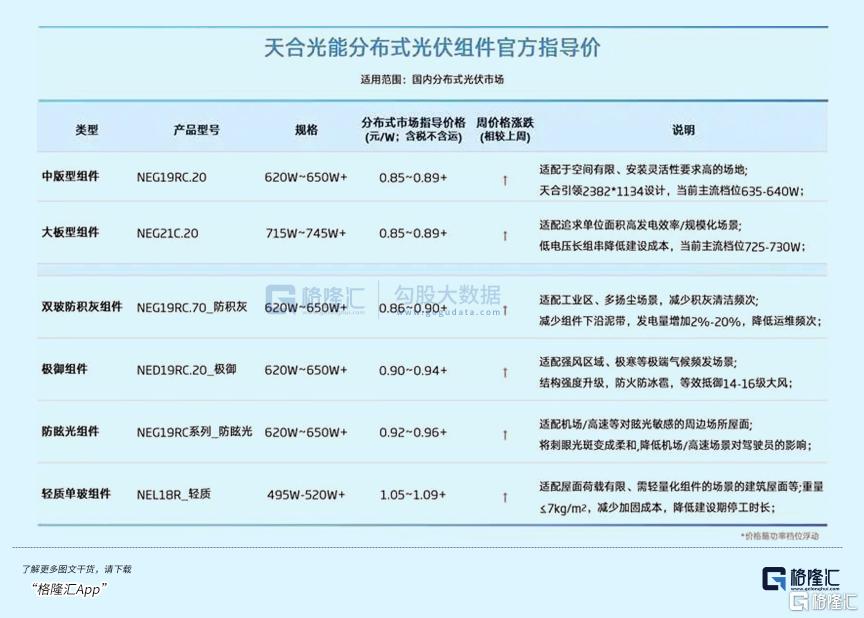
Core Viewpoint - The photovoltaic (PV) module industry is experiencing an unexpected price surge in early 2026, driven by the impending cancellation of export tax rebates and rising costs of key materials like silver and aluminum, leading to significant profit compression and potential industry-wide upheaval [1][7][19]. Price Surge and Market Dynamics - Several distributed PV investment companies have reported sudden price increases on previously agreed contracts, with one leading manufacturer raising prices from 0.73 yuan/W to 0.8 yuan/W [2]. - On January 13, Trina Solar announced a collective price increase for various distributed PV module models, with official guidance prices ranging from 0.85 to 0.89+ yuan/W [2][3]. - A total of 12 module manufacturers raised their prices this week, with increases ranging from 0.04 to 0.15 yuan/W [4]. Cost Factors - The cancellation of export tax rebates, effective April 1, 2026, is a significant catalyst for the price increases, as companies rush to fulfill orders before the policy takes effect [7][8]. - The price of silver has surged over 150% in 2025, increasing its cost share in PV modules from approximately 17% to around 30%, making it the largest cost component [10][13]. - The rising prices of aluminum and other materials have further exacerbated cost pressures, with aluminum's cost share increasing from 8-12% to 12-15% [14][16]. Industry Overcapacity and Challenges - The PV industry is facing severe overcapacity, with silicon production capacity expected to cover more than double the global demand from 2025 to 2027, while actual demand is below 600 GW [17]. - Despite the overcapacity, over 40 billion yuan is still being invested in new PV projects, worsening the supply-demand imbalance [18]. - The cancellation of export tax rebates is anticipated to trigger a brutal industry-wide clearing, with many companies lacking competitive advantages likely to exit the market [19][24]. Financial Impact and Future Outlook - The removal of export tax rebates will significantly reduce profit margins for PV companies, with estimates indicating a profit reduction of 46-51 yuan per 210R module exported [24]. - Many companies are already reporting substantial losses, with projections indicating that the entire PV silicon industry could face losses amounting to hundreds of billions in 2025 [27][28]. - The industry is expected to undergo a significant consolidation, with over 30% of inefficient capacity being eliminated, allowing leading companies with strong technology and global presence to capture over 80% of the market share [29].




光伏“抢装潮”下来了
投中网· 2025-03-31 07:22
以下文章来源于钛媒体 ,作者胡珈萌 钛媒体 . 新鲜犀利的财经见闻,放眼国际的前沿技术,还有罕见披露的内幕消息。钛媒体 (www.tmtpost.com),引领未来商业与生活新知,一个投资者与创新者酷爱聚集的地方。还可下载钛 媒体App,24小时不间断更新和互动。 将投中网设为"星标⭐",第一时间收获最新推送 厂商费劲心思,只为了在这波涨价中尽可能多赚点。 作者丨 胡珈萌 编辑丨 刘洋雪 来源丨钛媒体 抢装、抢货、抢生意、抢发内部政策…… 违规、伪装、违约、还能二次违约…… 近期的光伏行业异常活跃,一些"怪现象"也持续引发热议。 今年2月9日,国家发展改革委、国家能源局联合发布《关于深化新能源上网电价市场化改革 促进新 能源高质量发展的通知》(即业内所称"136号文"),全面推进新能源市场化改革。 不过,相对于未来市场化时代的前景,行业显然更关注政策的"及时雨"效果。 "136号文"设定了差价结算机制,以今年6月1日为限,此前投产的"老项目"("存量项目")的电价 会在市场化价格基础上补差价,此后的"新项目"("增量项目")全部市场化竞价。 再加之此前1月17日出台的《分布式光伏发电开发建设管理办法》,规定一 ...