
爱旭ABC组件

Search documents
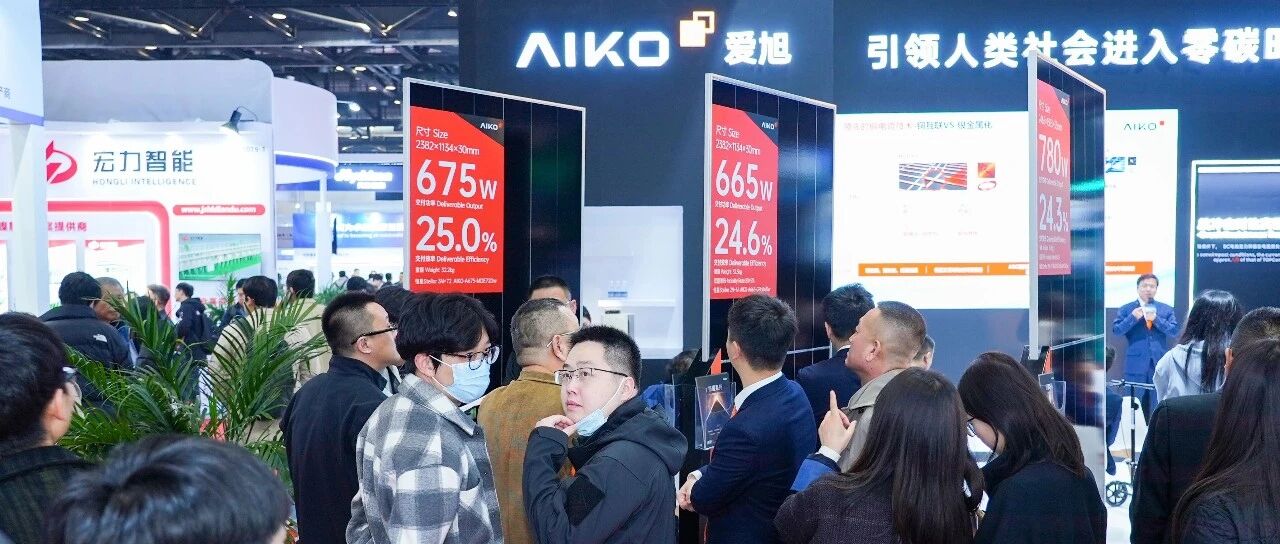
爱旭ABC颠覆式创新诠释集中式场景价值
中国能源报· 2026-03-27 14:22
Core Viewpoint - The article highlights the significant advancements and market recognition of Aiko's ABC solar modules showcased at the 16th China International Clean Energy Expo, emphasizing their efficiency and innovative features [2][3][7]. Group 1: Product Features and Innovations - Aiko has achieved GW-level mass production of BC technology, with ABC modules featuring shadow power optimization, superior temperature coefficients, lower degradation, high-temperature suppression, and crack resistance [3][4]. - The "Star" series ABC modules presented at the expo include 66-cell, 78 large-size, and 72 full-screen modules, with the 72 full-screen module achieving a conversion efficiency of up to 25% [3]. - The ABC modules have a bifaciality rate exceeding 80%, validated by three authoritative testing institutions, showcasing their potential in centralized business scenarios [4]. Group 2: Market Recognition and Achievements - Aiko's ABC modules have been recognized for their differentiated value in the domestic centralized market, successfully winning bids for 6GW of high-efficiency modules from major energy companies like Huadian Group, Datang, and Sinopec [6]. - The increasing demand for high-efficiency solar modules is driven by rising land costs and the comprehensive market entry of renewable energy, with Aiko's ABC modules leading in power output per unit area [7]. Group 3: Future Outlook - Aiko aims to continue focusing on customer-centric innovation to meet diverse client needs, leveraging the efficiency and reliability of ABC modules to help clients maximize value in the evolving market and policy landscape [7].


光伏行业阵痛期:业绩普亏后的生存挑战与破局之路
Xin Lang Cai Jing· 2026-01-21 10:24
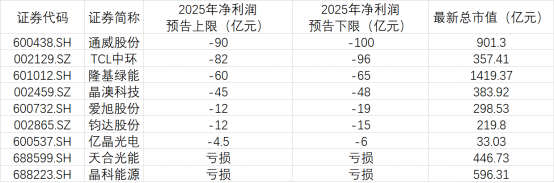
Core Viewpoint - The photovoltaic industry is facing significant challenges, with major companies like Longi Green Energy and Tongwei Co. expected to report substantial losses for 2025, indicating a deepening crisis in the sector [1][17]. Industry Status - Major photovoltaic companies are experiencing severe losses, with Tongwei Co. projected to lose between 90 to 100 billion yuan and Longi Green Energy expected to lose between 60 to 65 billion yuan for 2025 [3][19]. - The overall industry is under pressure, with a notable divergence in performance across different segments; while the polysilicon segment has managed to achieve operational profitability, the battery and module segments are suffering from intensified losses due to low prices [3][19]. - The price structure within the industry is collapsing, with polysilicon prices dropping from a historical peak of 200,000 yuan per ton to around 52,000 yuan per ton, and module prices decreasing by 40% compared to 2023 [4][20]. - The industry is facing overcapacity issues, with low operating rates and a significant decline in the photovoltaic equipment industry index, which fell over 3% in December 2025 [5][21]. Causes of Losses - The core issue in the photovoltaic industry is a severe supply-demand mismatch, driven by irrational capacity expansion and a price war exacerbated by technological homogeneity [6][21]. - Rising raw material costs, particularly silver prices which surged nearly 150% in 2025, are further squeezing profit margins, with silver paste now constituting approximately 17% of the cost structure for photovoltaic components [8][22][23]. - Changes in the policy environment, including adjustments to export tax rebates and stricter capacity controls, are adding complexity to the industry's challenges [9][24]. Path to Resolution - The industry is beginning a difficult process of self-rescue and transformation, with government support aimed at curbing "involution" competition and encouraging capacity reduction [10][25]. - Leading companies are increasing R&D investments to develop higher-efficiency products, such as TOPCon and BC components, to differentiate themselves in the market [10][25]. - There is a push for capacity consolidation within the industry, with new platforms being established to facilitate this process [10][25]. Future Outlook - The industry is expected to enter a phase of consolidation and clearing in 2026, with ongoing policies aimed at reversing involution and gradually reshaping supply-demand dynamics [11][26]. - In the long term, the focus will shift from scale expansion to quality improvement, with leading companies likely to enhance their market share and profitability as weaker players exit the market [11][26].


2026年01月第1周光伏企业官微总阅读数榜单
Xin Lang Cai Jing· 2026-01-14 14:03
Core Insights - The official WeChat public account ranking for the photovoltaic industry in the first week of January 2026 has been released, showcasing the communication performance of various companies based on total reading numbers and other engagement metrics [1]. Group 1: Company Rankings - Tongwei Group ranks first with a total reading count of over 150,000, publishing 13 articles with an average reading of 11,569.10 per article [4][10]. - Jinko Solar follows in second place with over 107,000 total readings from 7 articles, achieving an average reading of 15,287.30 per article [4][10]. - Aiko Solar ranks third with a total reading count of 27,626 from 6 articles, maintaining stable reading numbers around 8,000 for its series [4][10]. - Longi Green Energy and its subsidiary Longi Solar rank fourth and sixth, respectively, with total readings of 14,498 and 8,572 [11][10]. - Trina Solar and JA Solar maintain stable content output, ranking fifth and seventh with total readings of 8,615 and 7,702 [11][10]. Group 2: Notable Articles - Jinko Solar's article titled "Opening the Grand Blueprint for the Next 20 Years" achieved a remarkable reading count of 95,999, significantly contributing to its overall performance [10]. - The article "2025 Major Events of Sungrow" by Sungrow, although not in the top ten, garnered 73,641 readings, marking it as a standout piece in the industry [10]. - Tongwei Group's articles, including "The Power of Role Models!" and others, also received high engagement, with readings of 34,130 and 25,652 respectively [12][10].



BC技术凭啥“出圈”?
中国能源报· 2025-12-30 02:29
Core Viewpoint - The article highlights the emergence of BC (Back Contact) technology as a transformative force in the photovoltaic (PV) industry, shifting from a technical benchmark to a market mainstream solution that addresses industry challenges and opens new growth pathways [1]. Group 1: BC Technology Overview - BC technology places both the positive and negative electrodes on the back of the solar cell, eliminating shading on the front, which increases the area for sunlight absorption and enhances conversion efficiency [4]. - Laboratory tests show that BC cell conversion efficiency has reached 27.55%, outperforming conventional technologies by over 1.2% [6]. - BC technology has successfully addressed industry pain points such as shading, hot spots, and micro-cracking, leading to improved safety and performance in various applications [6]. Group 2: Market Applications and Growth - BC technology has expanded the potential customer base for solar installations, increasing the success rate of customer acquisition from 30% to 60% in certain scenarios [7]. - The technology is applicable across various environments, including residential, commercial, and utility-scale projects, with products designed for specific conditions such as mountainous or desert areas [7][8]. - The market share for BC technology in utility-scale applications is expected to grow by 10% annually in the coming years [8]. Group 3: Industry Collaboration and Innovation - BC technology fosters a new collaborative ecosystem in the industry, moving beyond traditional supply chain relationships to a model of open innovation and shared goals [12]. - Companies are working together to overcome technical challenges, with significant advancements achieved through collaborative efforts, such as the integration of laser technology in production processes [12][13]. - The BC ecosystem has led to innovations in materials, such as high-transparency glass, enhancing the overall value proposition of solar products [13]. Group 4: Value Creation and Market Dynamics - The shift to BC technology represents a transition from price competition to value creation, where companies must focus on delivering tailored solutions to meet diverse customer needs [17]. - BC components have demonstrated higher energy output and aesthetic appeal, particularly in high-value markets like Europe, where they have captured significant market shares [18][19]. - The technology is seen as a key driver for the future of the solar industry, promoting innovation, ecosystem collaboration, and enhanced value creation [19].

BC技术:驱动光伏行业新一轮增长的核心引擎
Zhong Guo Neng Yuan Wang· 2025-12-30 01:26
Core Viewpoint - The BC (Back Contact) technology is emerging as a mainstream solution in the photovoltaic industry, shifting from a technical benchmark to a core engine for growth, addressing the industry's challenges of overcapacity and competition [1][6]. Technology Advancement - BC technology enhances solar cell efficiency by placing both positive and negative electrodes on the back, increasing light absorption and conversion efficiency, with laboratory results showing a conversion rate of 27.55%, outperforming other technologies by over 1.2% [6][8]. - The technology has resolved industry pain points such as shading, hot spots, and micro-cracking, with certifications indicating superior performance in high-temperature and shaded environments [8][9]. - Aiko Solar has successfully implemented BC technology across various applications, including residential, commercial, and utility-scale projects, demonstrating its versatility and effectiveness in extreme conditions [9][10]. Market Dynamics - The market share of BC technology in centralized applications is expected to grow by 10% annually, emphasizing the importance of creating diverse application scenarios for competitive advantage [11]. - The industry is transitioning from a focus on cost competition to value creation, with BC technology redefining the value dimensions of photovoltaic products [19][21]. Collaborative Ecosystem - BC technology fosters a new collaborative ecosystem among companies, moving beyond traditional supply chain relationships to a model of open innovation and shared growth [15][18]. - Companies are working together to overcome technical challenges, enhancing overall industry capabilities and competitiveness [16][17]. Value Creation - The shift towards BC technology allows for higher energy output and safety features, enabling better adaptation to various customer needs and scenarios, thus creating more value [22][23]. - Aiko Solar's products have achieved significant market penetration in high-value regions, with a notable market share in distributed scenarios across Europe and Australia, showcasing the potential for profit growth in the industry [22][23].
直流侧184MW!爱旭ABC中标中国电建渔光互补项目
中国能源报· 2025-12-29 05:40
Core Viewpoint - The successful bid of Zhejiang Aisuo for the 120MW and 45MW fish-solar complementary photovoltaic component procurement projects highlights the strong competitiveness of Aisuo's ABC components in centralized power station scenarios [1][4]. Group 1: Project Details - The two fish-solar complementary projects are located in Xuzhou and Taizhou, Jiangsu Province, with an average annual effective sunlight hours of approximately 1200 hours, indicating favorable solar resources [4]. - The projects face challenges such as high BOS costs and the high-temperature, high-humidity environment, which can impact the long-term power generation and stability of the components [4]. Group 2: Component Advantages - Aisuo's ABC components feature a design without grid line shading, naturally providing high conversion efficiency, resulting in higher power generation compared to traditional components at the 2382*1134 standard size, thus reducing the BOS costs of the power station [4]. - The shadow power generation optimization function of Aisuo's ABC components minimizes the thermal hotspot phenomenon caused by shading, such as bird droppings, and reduces power generation losses due to shading [4]. - Additional features like superior temperature coefficients, high-temperature suppression, and high water resistance packaging make the components resilient in high-temperature and high-humidity environments, lowering operational costs and increasing lifecycle returns for the power station projects [4]. Group 3: Industry Trends - This project marks the first centralized project for China Electric Power Construction Group using BC components, indicating a growing trend among major state-owned enterprises to adopt advanced and efficient components in their projects [5][6]. - As the market for renewable energy power trading matures, the uncertainty of photovoltaic power station revenues is expected to increase, making high-efficiency components and meticulous management standard requirements in the industry [6]. - The high-power, high-safety, high-intelligence, and aesthetically pleasing ABC component products are anticipated to create differentiated value for various customer scenarios, leading society towards a zero-carbon era [6].

装备制造行业观察:工程机械淡季回暖;高效率光伏电池技术加速迭代
Sou Hu Cai Jing· 2025-08-04 05:04
Group 1 - The equipment manufacturing industry is showing structural differentiation, with marginal improvements in the engineering machinery market during the traditional off-season, accelerated demand growth for high-efficiency components driven by photovoltaic battery technology iteration, and short-term pressure on automotive consumption but long-term potential remaining [1][2] - In July, the China Engineering Machinery Market Index (CMI) was 100.73, a year-on-year increase of 5.54% and a month-on-month decrease of 4.20%, indicating a marginal improvement trend despite being a traditional off-season [1] - Leading companies in the engineering machinery sector are demonstrating resilience through technological accumulation and scale effects, with core enterprises offsetting domestic market fluctuations via smart upgrades and overseas market expansion [1][2] Group 2 - The recent procurement by Huadian Group for photovoltaic components, totaling 20GW, emphasizes the demand for N-type high-efficiency components with a conversion efficiency of ≥23.8%, showcasing significant short-term improvement in high-efficiency battery technology [1] - BC (Back Contact) battery technology is becoming a core direction for cost reduction and efficiency enhancement in the industry, facing challenges such as high process complexity and equipment costs, but leading companies are gradually overcoming these technical bottlenecks [2] - The equipment manufacturing industry is undergoing a transformation driven by technology, with smart and green upgrades enhancing the added value of equipment in engineering machinery, while the photovoltaic sector is accelerating its escape from "involution" competition through high-efficiency battery technology iteration [2]
光伏“抢装潮”下来了
投中网· 2025-03-31 07:22
以下文章来源于钛媒体 ,作者胡珈萌 钛媒体 . 新鲜犀利的财经见闻,放眼国际的前沿技术,还有罕见披露的内幕消息。钛媒体 (www.tmtpost.com),引领未来商业与生活新知,一个投资者与创新者酷爱聚集的地方。还可下载钛 媒体App,24小时不间断更新和互动。 将投中网设为"星标⭐",第一时间收获最新推送 厂商费劲心思,只为了在这波涨价中尽可能多赚点。 作者丨 胡珈萌 编辑丨 刘洋雪 来源丨钛媒体 抢装、抢货、抢生意、抢发内部政策…… 违规、伪装、违约、还能二次违约…… 近期的光伏行业异常活跃,一些"怪现象"也持续引发热议。 今年2月9日,国家发展改革委、国家能源局联合发布《关于深化新能源上网电价市场化改革 促进新 能源高质量发展的通知》(即业内所称"136号文"),全面推进新能源市场化改革。 不过,相对于未来市场化时代的前景,行业显然更关注政策的"及时雨"效果。 "136号文"设定了差价结算机制,以今年6月1日为限,此前投产的"老项目"("存量项目")的电价 会在市场化价格基础上补差价,此后的"新项目"("增量项目")全部市场化竞价。 再加之此前1月17日出台的《分布式光伏发电开发建设管理办法》,规定一 ...