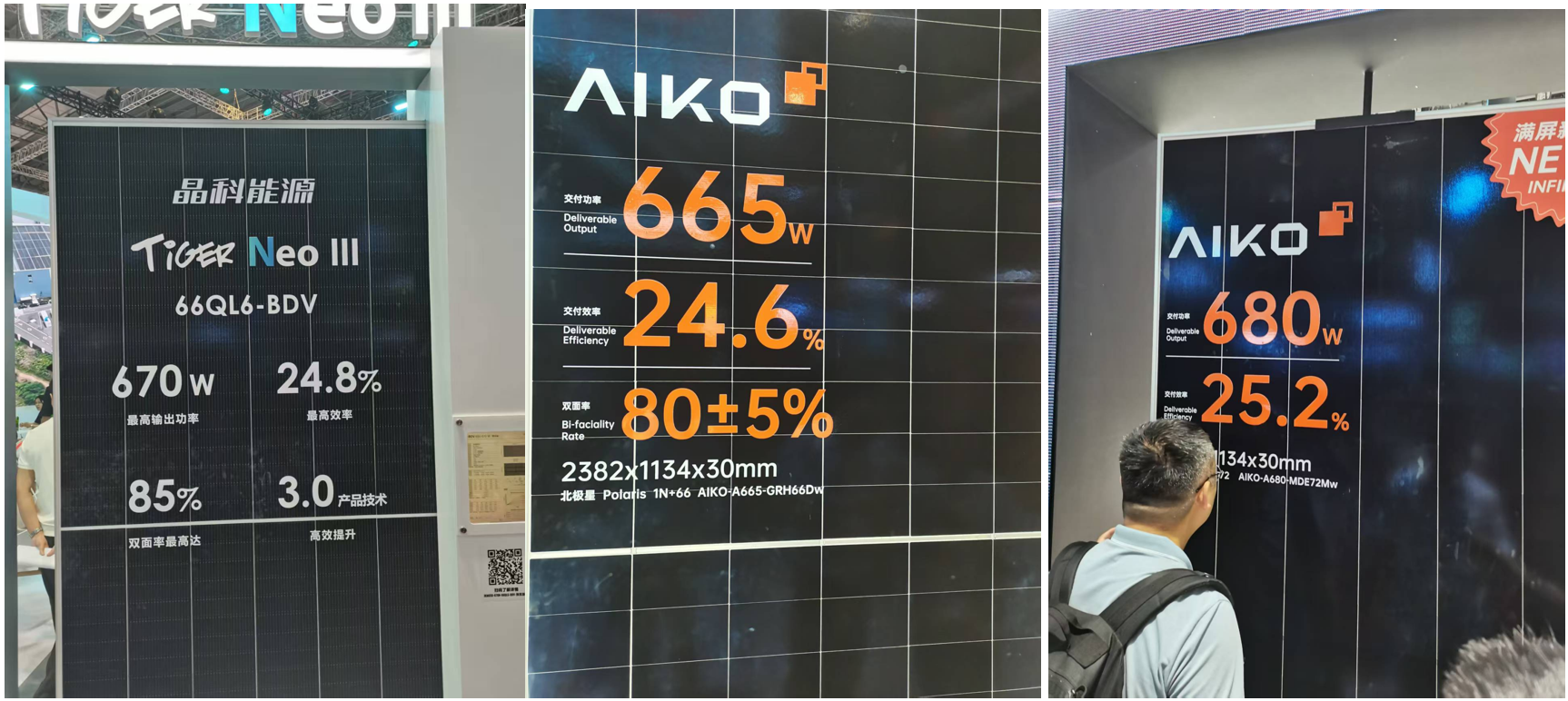
光伏行业差异化竞争

Search documents
行业内卷?这家光伏企业靠新玩法破局
Zhong Guo Ji Jin Bao· 2025-09-05 06:37
Core Insights - The article highlights the innovative approach of Guangyin Technology, a company that has entered the photovoltaic industry amidst challenges like overcapacity and price wars, focusing on unique products that leverage perovskite technology [1][2]. Company Overview - Guangyin Technology is an integrated company specializing in perovskite research and large-scale component production, aiming to transition from high-tech small workshops to large-scale industrial enterprises [4][6]. - The company has set multiple world records in the perovskite field, including breakthroughs in efficiency and production processes [6][8]. Product Innovation - Guangyin Technology has introduced several groundbreaking products, such as a perpetual night light, a plug-free smart camera, and a solar-powered e-bike, which aim to meet fragmented consumer needs for energy solutions [1][9]. - The perovskite solar cells developed by the company can operate effectively in low-light conditions, significantly extending the battery life of various electronic devices [9][10]. Market Strategy - The company focuses on capturing user needs and utilizing advanced technology to address pain points rather than merely pushing technology to the market [7][10]. - Guangyin Technology aims to create a new category of consumer electronics by providing customized solutions that enhance product functionality, even if it means higher initial costs [10][11]. Future Outlook - The company plans to expand into building-integrated photovoltaics (BIPV) and distributed solar power stations in the next 2-5 years, positioning itself as a key player in the energy transition [13][14]. - Guangyin Technology views Shenzhen as a strategic location for its operations due to its innovative environment and proximity to a significant customer base [14].
光伏见底,没那么简单
Hu Xiu· 2025-06-24 06:04
Core Viewpoint - The photovoltaic industry is experiencing a paradoxical situation in 2025, characterized by both vibrant exhibitions and severe structural adjustments, indicating a complex market environment that requires careful navigation [1]. Group 1: Current Market Conditions - The SNEC photovoltaic exhibition in June 2025 attracted over 3,600 exhibitors and an expected 500,000 attendees, showcasing the industry's ongoing interest despite underlying challenges [1]. - The photovoltaic industry is facing unprecedented restructuring and deep adjustments, with significant overcapacity and price wars leading to substantial losses for major companies [1]. - As of June 19, 2025, the average prices for silicon materials, monocrystalline N-type wafers, battery cells, and monocrystalline TopCon modules have decreased by 11.42%, 9.28%, 10.52%, and 4.22% respectively [2]. Group 2: Capital and Financial Dynamics - The capital landscape for the photovoltaic industry has shifted, with traditional funding sources like capital market financing and bank credit becoming increasingly limited, leaving only partial support from local subsidies [4]. - Companies are resorting to price wars instead of reducing production rates, as they receive subsidies that incentivize maintaining higher operational levels [5]. - The expectation of a significant production cut in the third quarter is emerging, with anticipated operational rates decreasing by 10%-15% [7]. Group 3: Technological Differentiation and Market Strategies - The key to breaking through the current market challenges lies in differentiation strategies, particularly in battery technology, as the industry transitions from PERC to newer technologies like TopCon, HJT, and XBC [10][11]. - The increasing recognition of BC batteries at the SNEC exhibition indicates a shift in market dynamics, although large-scale production remains limited [13][14]. - Companies like TCL are exploring integrated solutions combining photovoltaic systems with energy storage and charging stations, aiming to create new market opportunities [17][19]. Group 4: Future Outlook - Industry insiders suggest that the photovoltaic sector may require 1 to 2 years to navigate through the current downturn and find a sustainable path forward [9]. - Companies that successfully avoid homogenization and identify unique market positions are likely to emerge from the cyclical challenges more rapidly [20].