
光入柜内

Search documents
英伟达40亿美元入股光通信龙头,或推动CPO、OCS等产业加速产业化
Xuan Gu Bao· 2026-03-02 23:13
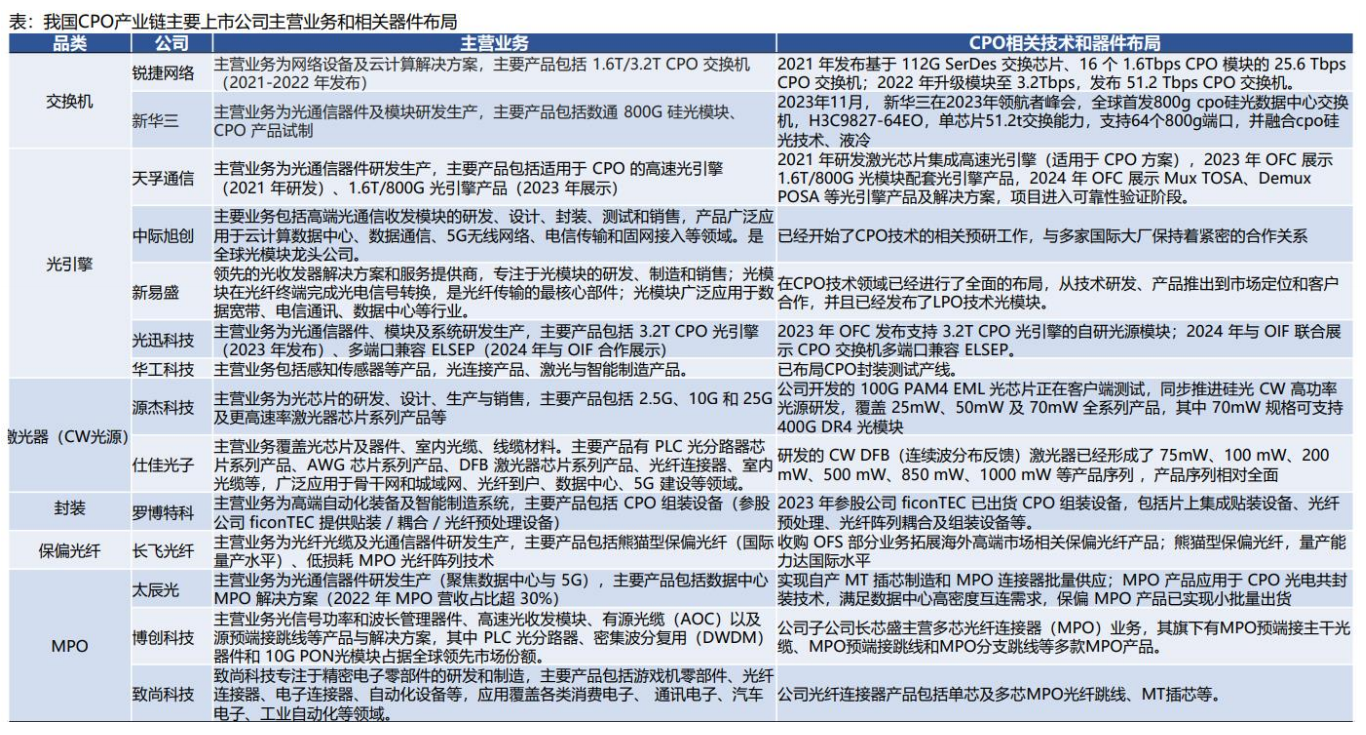
Investment Overview - Nvidia has invested $2 billion each in Lumentum and Coherent to secure the supply of optical devices necessary for AI computing clusters [1] - Lumentum specializes in optical communication, with an order backlog exceeding $400 million for OCS by Q4 2025 [1] - Coherent focuses on OCS LCD solutions and laser sources, serving major clients like Google and Nvidia [1] Market Demand and Growth - The demand for high bandwidth and low power optical interconnects is surging as SerDes rates upgrade to 224Gbps and beyond [1] - OCS technology can reduce the power consumption of AI computing clusters by over 30% [1] - The market for OCS is projected to reach approximately $400 million by 2025 and exceed $2.5 billion by 2029, with a CAGR of 58% over four years [1] Industry Impact - The investment is expected to accelerate technological iterations in optical communication, optical modules, and CPO industries, promoting the trend of "optical into the cabinet" [1] - Major companies like Google are leading the commercialization of MEMS solutions, with significant volume expected by 2026 [1] - Other companies involved in CPO-related technologies include Ruijie Networks, H3C, and others, each contributing to advancements in optical communication devices and modules [1]




未知机构:广发通信海外AI应用提速光入柜内开启光通信投资第二阶段-20260128
未知机构· 2026-01-28 02:20
Summary of Conference Call on Optical Communication and AI Applications Industry Overview - The conference call focused on the optical communication industry and the acceleration of AI applications in North America, particularly among major cloud service providers like Google, Meta, Microsoft, and Amazon [1][2]. Core Insights and Arguments - The return on investment (ROI) for AI is expected to perform well in the upcoming quarterly reports from major cloud companies, indicating a revival of the "ROI-CaPex narrative" [1]. - The emergence of personal AI agents, exemplified by Clawdbot, signifies the beginning of the personal AI agent era, characterized by a "de-app" design that integrates various skills and connects communication software with local environments and models [1]. - On the business side, Claude Cowork is expanding Claude's capabilities from programming to everyday office workflows, marking a significant transformation from tools to collaborators [1]. - The demand for scaling up is anticipated to be significantly driven by AI agents and ultra-long contextual text, which will initiate the second phase of investment in optical communication, referred to as "光入柜内" [2]. Key Recommendations - **Zhongji Xuchuang and Xinyi Sheng**: The supply of optical chips and Faraday rotators from leading manufacturers remains unaffected, maintaining profit forecasts for 2026. The investment logic is shifting towards "光入柜内," which will resonate with total addressable market (TAM) and valuations [2]. - **Tianfu Communication**: The company is expected to reach a turning point in optical chips in Q1 2026, with potential catalysts related to Scale Up at the March GTC event. There are significant expectations for the value of CPO single cabinet units [2]. - **Yuanjie Technology**: The company is accelerating the arrival and process debugging of MOCVD equipment, with optimistic capacity expectations for 2026. It is predicted to have the highest growth rate among global manufacturers in 2027, benefiting from the trends in NPO and CPO [2]. Additional Important Points - The call highlighted the ongoing developments in AI applications and their implications for the optical communication sector, emphasizing the interconnectedness of these technologies and their potential to drive future investments [1][2].
2026投资风口解析:“0到1”的刺激与“1到N”的确定性
Mei Ri Jing Ji Xin Wen· 2026-01-16 06:52
Core Viewpoint - The article discusses the investment opportunities and risks associated with emerging sectors in 2026, emphasizing the importance of identifying "wind" sectors for investment strategies [1][2]. Group 1: Investment Phases - Industries typically progress through three stages: "0 to 1," "1 to n," and "n+," with the first two stages being critical for identifying investment opportunities [1]. - The "0 to 1" stage is characterized by rapid growth but high uncertainty, while the "1 to n" stage represents a more stable growth phase [2]. Group 2: Current "0 to 1" Opportunities - Current sectors in the "0 to 1" phase include commercial aerospace, brain-computer interfaces, and solid-state batteries, which are still in early development stages [1][2]. - The brain-computer interface market is limited, with a potential global market size of only a few billion dollars, yet companies in this space have valuations exceeding this potential [2]. Group 3: Transition to "1 to n" - Successful transition from "0 to 1" to "1 to n" can lead to super wind sectors, but failure to transition can result in investment losses [2]. - Artificial intelligence is highlighted as a sector currently in the "1 to n" phase, with significant growth potential and lower uncertainty compared to "0 to 1" sectors [3][4]. Group 4: AI and Computing Power - In the AI sector, focus should be on upstream computing power, which is essential for AI applications [5]. - The demand for computing power is expected to grow exponentially, driven by major tech companies deploying large-scale computing clusters [6]. Group 5: Semiconductor Equipment - The semiconductor equipment ETF (159516) has seen significant price increases due to advanced process expansions and rising storage prices [8]. - The growth in the semiconductor sector is linked to the need for advanced manufacturing equipment, particularly for high-performance storage chips [8][9]. Group 6: Future Trends - The "光入柜内" (optical integration into cabinets) trend is anticipated to expand the market size for optical modules significantly by 2027 [7]. - The semiconductor industry is advised to focus on upstream equipment and materials, as these areas are likely to benefit first from industry expansion [7].